


Designing and Building AI-Powered Software
Bring the framework, the decisions, and the engineering depth to execute them — same team from strategy to delivery
This is where most AI-powered solutions builds stall

An internal AI experiment stalled. The team has moved on. Nobody is sure whether to fix it or start over.

The CTO is spending more time researching models and architectures than making decisions. The team is waiting.

The AI roadmap exists on paper. Three months into the build, the architecture won't scale, and decisions are being made under pressure.

A PoC worked. Now the CEO, the board, and customers all want something different next — and there's no framework for deciding.

A funding round just closed and investors are expecting AI progress at the next board meeting — but there's nothing production-ready to show.
A competitor just shipped a notable AI feature. The gap is visible. The board has noticed.

These aren't execution failures — they're what happens when AI is built like a function, not like software — without a clear strategy, the right architecture, and the depth to carry it through to production. That's exactly the gap we close.
From AI strategy to production-ready software
We run strategy and engineering with the same team — decisions and cost modelled upfront, outcomes measured continuously, roadmap updated as the AI market evolves
Design
We define what to build, in what order, at what cost, and with what architecture — before a single line of engineering code is written

- Prioritised AI feature roadmap — a sequenced plan of AI features across a 3–12 month horizon, prioritised by business impact
- Cost and unit economics model — inference costs and cost-per-user modelled at scale before engineering starts
- Architecture direction — model choice, build vs buy decisions, data requirements, and vendor selection are documented before a line of code is written
- Competitive analysis — a structured review of AI capability gaps vs competitors to build against market reality
- Success metrics — defined metrics and evaluation criteria so the team knows what done looks like before the build starts
- 90-day execution plan — A concrete brief that translates the strategy into priorities and decision checkpoints for the build phase
For the CEO
A sequenced AI roadmap with architecture and cost model before engineering starts. Milestones and economics you can defend to investors.
For the CTO
Architecture, model choice, and build decisions are documented before your team writes a line of code. Irreversible decisions flagged before they're made.
Build
We take the strategy into production — across AI engineering, data, cloud, and full stack — with the same team that designed it.

- AI Engineering — four levels applied per problem: Research, Application, Integration, and Adoption. Combine LLM orchestration, RAG, and AI-powered workflows.
- Data Engineering — pipelines, feature stores, data quality, and governance built before AI features are scoped.
- Cloud & Infrastructure — deployment, scaling, and cost management across AWS, GCP and Azure, with GPU compute, model hosting built for AI workloads.
- Full Stack Engineering — APIs, frontends, and third-party integrations that connect every layer into a shippable product.
- Product Management — translating business goals into a sequenced, prioritised roadmap that is aligned between the CEO, CTO, and the team.
- AI-augmented delivery — AI applied across requirements, development, code review, QA, and infrastructure - senior engineers focused on judgment — not mechanics.
For the CEO
Working AI in production. Fixed-price or dedicated team with a clear monthly budget. You review outcomes, not the engagement.
For the CTO
A full-stack team covering every layer with no coverage gaps and no context lost from strategy to execution. The team that builds - adapt with context.
Iterate
We monitor, optimise, and evolve the system after launch — as models improve, usage grows, and competitors ship.

- Model monitoring & evaluation — continuous performance tracking, quality thresholds, and improvement cycles before degradation becomes a customer problem.
- Infrastructure optimisation — cost and performance tuned as usage scales, so AI spend stays proportional to revenue.
- Capability expansion — new features and model upgrades rolled out by the team that already knows the architecture and the decisions behind it.
- Strategy revision — as new proven approaches emerge, the roadmap is reviewed and updated continuously — so the team always builds against current market reality.
For the CEO
AI infrastructure costs that stay proportional to revenue as your user base grows — no surprises at scale, no emergency budget conversations at the next board meeting.
For the CTO
Models monitored, evaluated, and improved in production — no silent degradation, no emergency rebuilds, no team starting from scratch when something needs to change.
Technology behind every engagement
Each layer below is applied at the depth your problem requires — defined during strategy, so the team builds the right system once and doesn't rebuild it twice
Creation of AI-Powered Software
End-to-end design and build of your AI product — from strategy through production — with measurable business outcomes, investor-grade architecture, and economics that hold up under scrutiny and scale
AI Product Strategy
A prioritised AI roadmap, architecture plan, and cost model — so your team stops experimenting and starts building AI features that move business metrics. Defined before any production code is written
AI-powered Software Engineering
Engineering AI-powered solutions into your product — from LLM orchestration and RAG to custom model integration. Four levels of depth are applied per problem, so the right approach is chosen before build
Data Engineering as AI Foundation
A reliable, scalable data foundation — pipelines, warehouses, and feature stores — that eliminates data as a blocker for AI delivery and makes every AI initiative faster and cheaper to build and ship
AI Readiness Assessment
An independent review of your AI strategy, architecture, and data infrastructure — so you know exactly what is working, what is at risk, and what to address before any further investment is committed
AI Cost Optimization
Full visibility into your AI cost drivers — inference, compute, and vendor APIs — and a clear optimisation roadmap which protects your margins and keeps AI spend proportional as your user base scales
AI Due Diligence for Investors
A working proof of concept or MVP built to validate the core hypothesis — so you can show real, working results to investors or customers before committing budget and engineering time to a full build
AI Team Augmentation
Experienced AI specialists embedded directly into your engineering team — filling specific capability gaps in ML, data, or AI architecture without the cost, delay, or risk of a full-time senior hire
What AI-powered software actually looks like
Building 25+ AI-powered software shipped to production, we let the results speak for themselves. Explore case studies from companies across Europe and the USA — and see what that experience delivers for your product

AI-powered CRM for private equity investors
An AI-first CRM platform designed to automate document analysis, extract key investment metrics, and enable faster deal evaluation and benchmarking. Fragmented workflows and manual data processing are replaced by a unified system that combines document processing, AI insights, and decision support on a single platform.
Industry
FinTechLocation
USAServices
- AI Systems
- Data Engineering
- Product Engineering
- Cloud Infrastructure
Business Impact
- 65% reduction in time spent on investment research
- 10× faster deal screening and benchmarking
- 40% improvement in deal conversion performance
- Scalable workflows without increasing analyst workload

AI-powered disinformation monitoring platform
An AI-powered platform for detecting, analysing, and tracking disinformation across multiple sources in real time. Manual monitoring and fragmented data sources are replaced with automated ingestion pipelines, AI-based detection, and structured analytics workflows that support scalable content analysis.
Industry
MediaLocation
EuropeServices
- AI Systems
- Data Platforms
- Workflow Automation
- Cloud Infrastructure
Business Impact
- 60% reduction in manual content review workload
- 97% improvement in content verification accuracy
- Real-time monitoring across 4+ platforms and 50+ sources
- Scalable system supporting up to 10M daily content checks

Document analysis solution for private equity
An AI module integrated into CRM that processes large financial documents, extracts structured data, and accelerates investment analysis. Manual document review and data entry are replaced with automated extraction, classification, and structured data pipelines across multiple document formats.
Industry
FinTechLocation
USAServices
- AI Systems
- Data Engineering
- Workflow Automation
Business Impact
- 80% reduction in document processing time
- 15+ hours per week saved per analyst
- Faster deal analysis and decision-making workflows
- Unified pipeline replacing fragmented processes

AI assistant for a private equity investment platform
A CRM-native AI assistant that enables instant access to deal, company, and document data across investment workflows. Manual lookup and fragmented navigation are replaced with a unified interface powered by RAG, LLMs, and agent-based architecture, supporting faster analysis and decision-making.
Industry
FinTechLocation
USAServices
- AI Systems
- Product Engineering
- Data Platforms
Business Impact
- Faster access to deal and company context across the CRM
- Reduced manual effort in pipeline and investment analysis
- Consistent, structured responses grounded in CRM data
- Automated quality evaluation replacing manual checks
Get a clear directionfor our next steps together
AI-powered solutions experience across industries
The data structures, compliance requirements, and performance benchmarks that determine whether an AI-powered software works in production are different in every industry. Generic tooling doesn't account for that — we do.
FinTech
Investment workflows, fraud detection, and lending decisions depend on data that's accurate, structured, and available fast — we build AI systems that replace manual processing with automated pipelines and deliver decision-ready outputs at the speed the business requires.

InsurTech
Underwriting and claims processing generate volumes of unstructured data that manual review can't handle consistently — we deliver AI systems that extract, score, and structure that data with outputs that hold up under compliance scrutiny.

MarTech
Personalisation and journey automation that can't be tied to retention or conversion metrics don't justify the investment — we develop AI-driven capabilities that connect directly to the outcomes the business is trying to achieve.

AdTech
Campaign performance data lives across dozens of platforms, and decisions made on delayed reporting cost money — we design analytics systems that aggregate, calculate, and surface performance metrics in real time across every channel.

EdTech
Learning products that don't adapt to individual behaviour lose users before the value is realised — we engineer AI-powered solutions that personalise over time, improving as engagement and data grow.

MediaTech
Content volume and disinformation spread faster than editorial teams can respond — we ship AI-powered software for detection, verification, and monitoring that operate at scale without depending on human review to keep up.

Why clients choose YTC



- 1
One team from strategy to production
No handoff between plan and execution — the team that defined the architecture builds the system. What was designed is what ships.
- 2
Full-stack AI depth, every layer covered
AI Engineering, Data, Cloud, Full Stack, and PM under one roof. No coverage gaps, no subcontracted unknowns, no layer left to a team that doesn't understand the one above it.
- 3
Architecture decisions made before engineering starts
Model choice, cost modelling, and build are resolved in Phase 1 — so the team builds with intent, not under pressure.
- 4
Every recommendation backed by production experience
Every approach we bring comes from a live engagement — not a framework borrowed from elsewhere and applied without context.
- 5
Low risk to start, high confidence to continue
The strategy phase is fixed price and fixed scope. You know exactly what you're getting before committing to the build.
- 6
An AI traction your investors can scrutinise
Not a roadmap of intentions — a costed, sequenced plan tied to measurable outcomes. Built to hold up under technical due diligence.
Outcomes
AI traction: metrics that investors will judge by
AI traction is the point at which your AI features stop being a cost centre and start being a growth driver. It's not a milestone you celebrate internally — it's evidence visible to customers, competitors, and investors.
You have AI traction when:

Customers open your AI features and use them daily — not once during onboarding

Your cost per AI interaction is known, modelled, and proportional to what each user pays you

Churn analysis shows customers are not leaving because a competitor's AI is better

Your user base is growing and AI is a measurable factor in why people stay and convert

G2, Capterra, or app store reviews mention your AI as a reason to choose you

An investor or acquirer can look under the hood — at your architecture, your data layer, your evaluation framework — and find a real system, not a GPT wrapper
Every month without a clear AI product strategy has a direct cost
Engineering time spent in the wrong direction can't be recovered

Architecture decisions made under pressure become expensive to reverse at scale

Technical debt from unplanned AI experiments slows down the entire product team

Features that fail in production damage trust with customers and investors
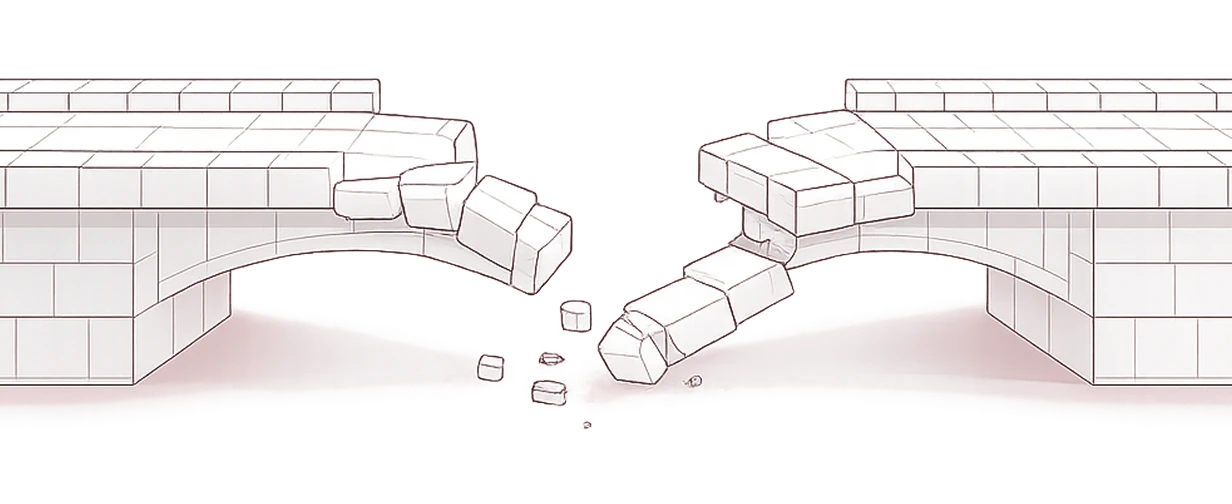
Without results, the next fundraiser gets harder - valuation and terms suffer

Competitors who commit now will be 6-12 months ahead when the market consolidates

Investor confidence erodes as AI promises fail to materialise in the product

The team spends more time researching than building - velocity drops, roadmap slips

The cost of starting is fixed and known. The cost of waiting compounds.

Start with the strategy


Vlad
CEO / AI Consultant / Co-Founder
"The architecture, the cost model, and the roadmap need to be credible — not just in the pitch. We build AI-powered software your investors can audit, and your customers actually use"

Danylo
Head of AI / Co-Founder
"AI-powered software that scores well in evaluation and fails in production almost always fails on data — not on the model itself. Finding that gap in week one costs a conversation. Finding it in month four costs a rebuild."

Yurii
Software Lead / Co-Founder
"Shipping fast feels like progress until the system stops scaling. The teams that slow down at the architecture stage are usually the ones that don't have to stop and rebuild later."

Halyna
Business Analyst
"The most expensive mistake is building the technically correct answer to the wrong question. My job is to make sure we're solving the actual problem before the team writes a line of code."

Oleksii
Product Manager
"An AI feature nobody uses isn't an AI problem — it's a product problem. I make sure every capability we build is tied to a workflow someone actually needs, before engineering time gets spent."

Serhii
DevOps Lead
"AI inference costs at scale are almost never modelled before the build starts. By the time they become a problem, the architecture is already locked. We model them in week one."

Andrii
Frontend Lead
An AI-powered solution that's hard to interact with doesn't get a second chance. Users decide in the first session whether the capability is worth their time - so that's the moment I design for.
A sequenced roadmap and cost model before your team writes a line of code
Ready to integrate AI into your financial operation?
Let's design, build, and scale AI software tailored to your products, workflows, and requirements.
Blog

From experimentation to enterprise capability: the defining AI consulting trends shaping 2026

How AI-generated audio is transforming news consumption; lessons from Yahoo’s new daily digest

A Turning Point for Enterprise AI: What Large-Scale Corporate Partnerships Signal About the Future
Blog
Read allFrom experimentation to enterprise capability: the defining AI consulting trends shaping 2026
How AI-generated audio is transforming news consumption; lessons from Yahoo’s new daily digest