YTC LogoYTC Logo
Cases
AI-powered CRM for private equity investors

AI-powered CRM for private equity investors

AI-powered CRM for private equity investors

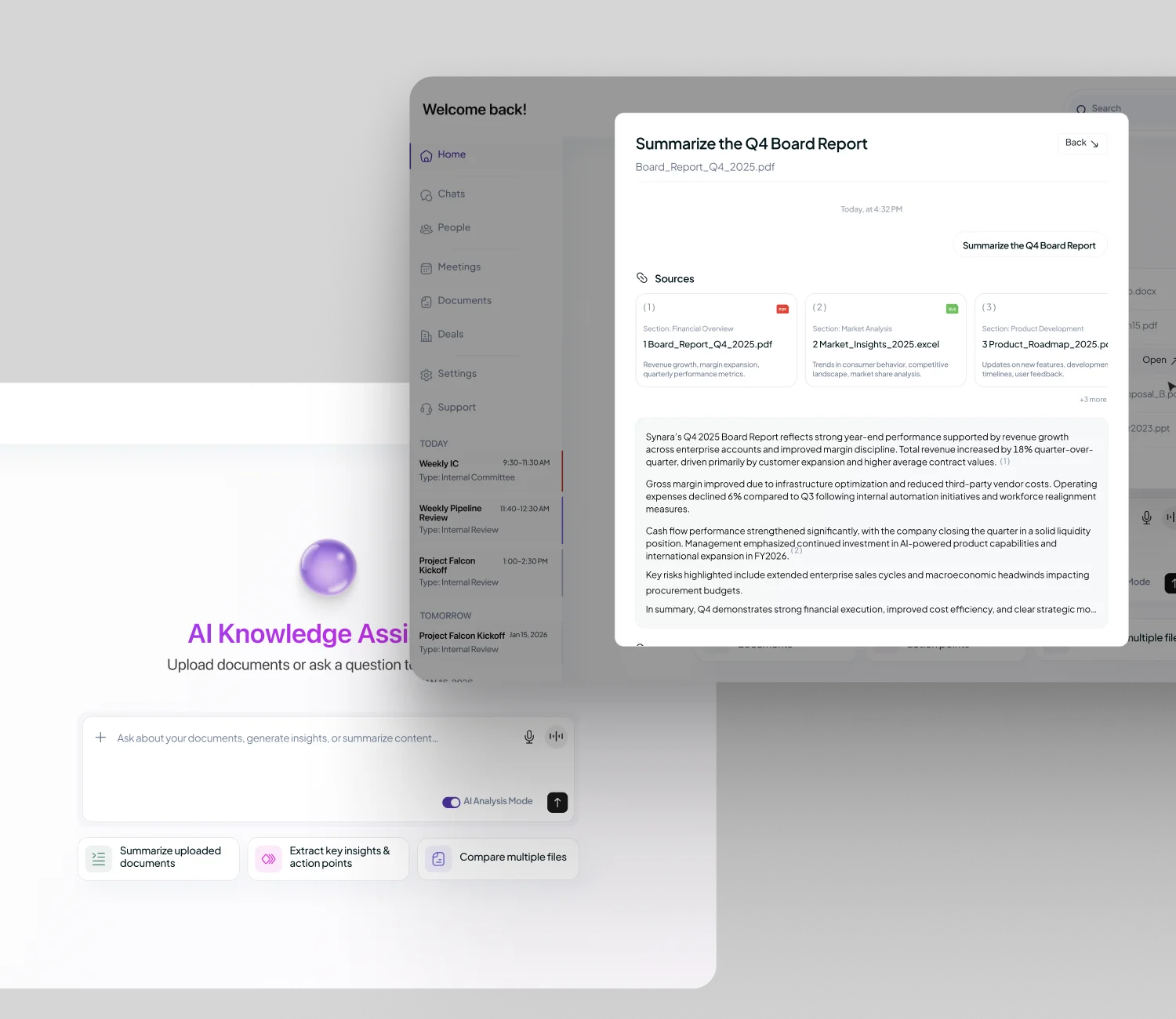
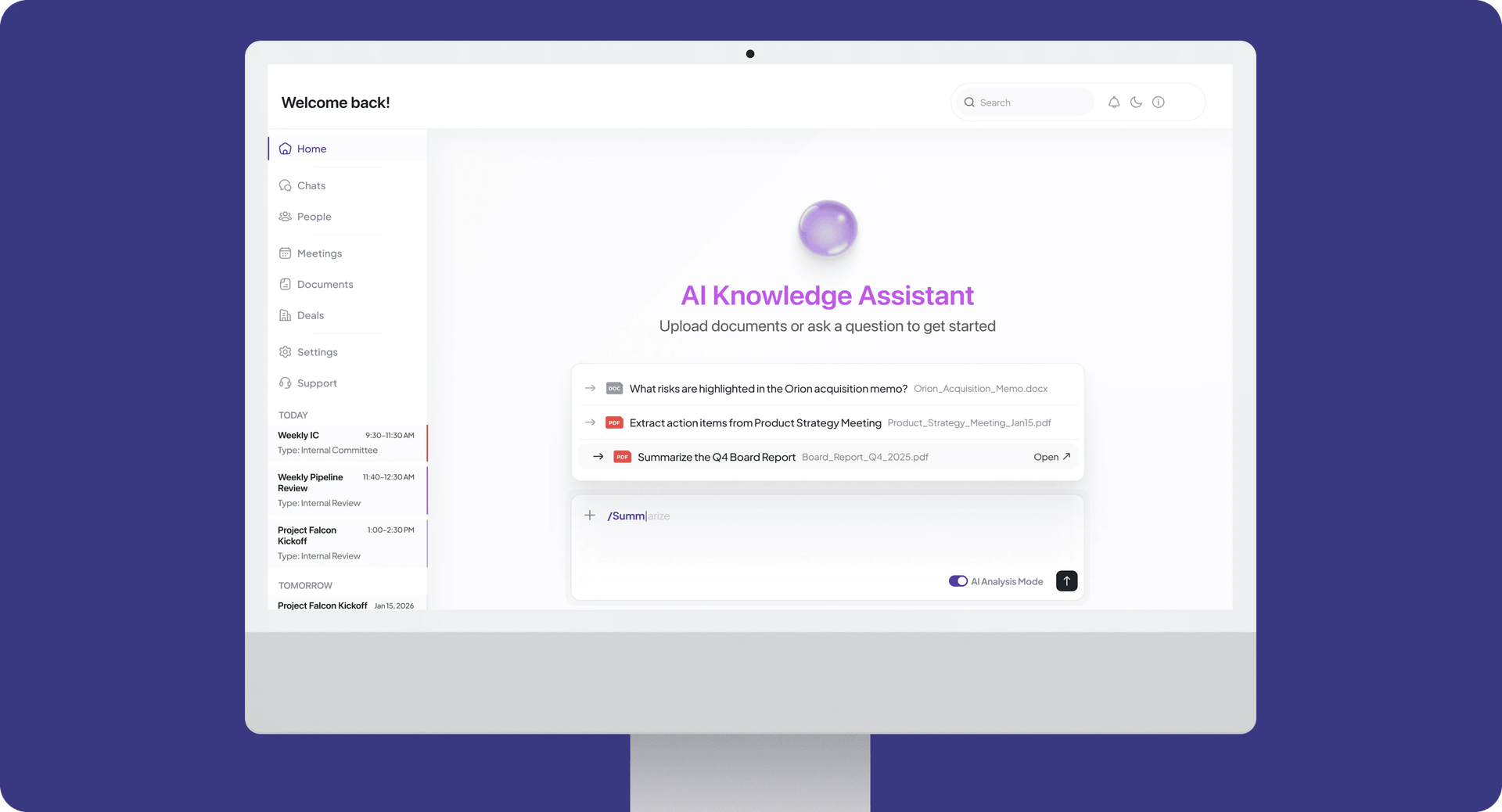
The core innovation is an AI-powered CRM platform that analyzes investment documents using OCR, LLMs, and metric extraction to generate structured insights. The platform enables investors to quickly review company overviews, compare deals, and receive AI-assisted analysis, significantly reducing manual work and accelerating investment decisions.

Industry

FinTech

Client

Under NDA

Region

USA

Main challenges

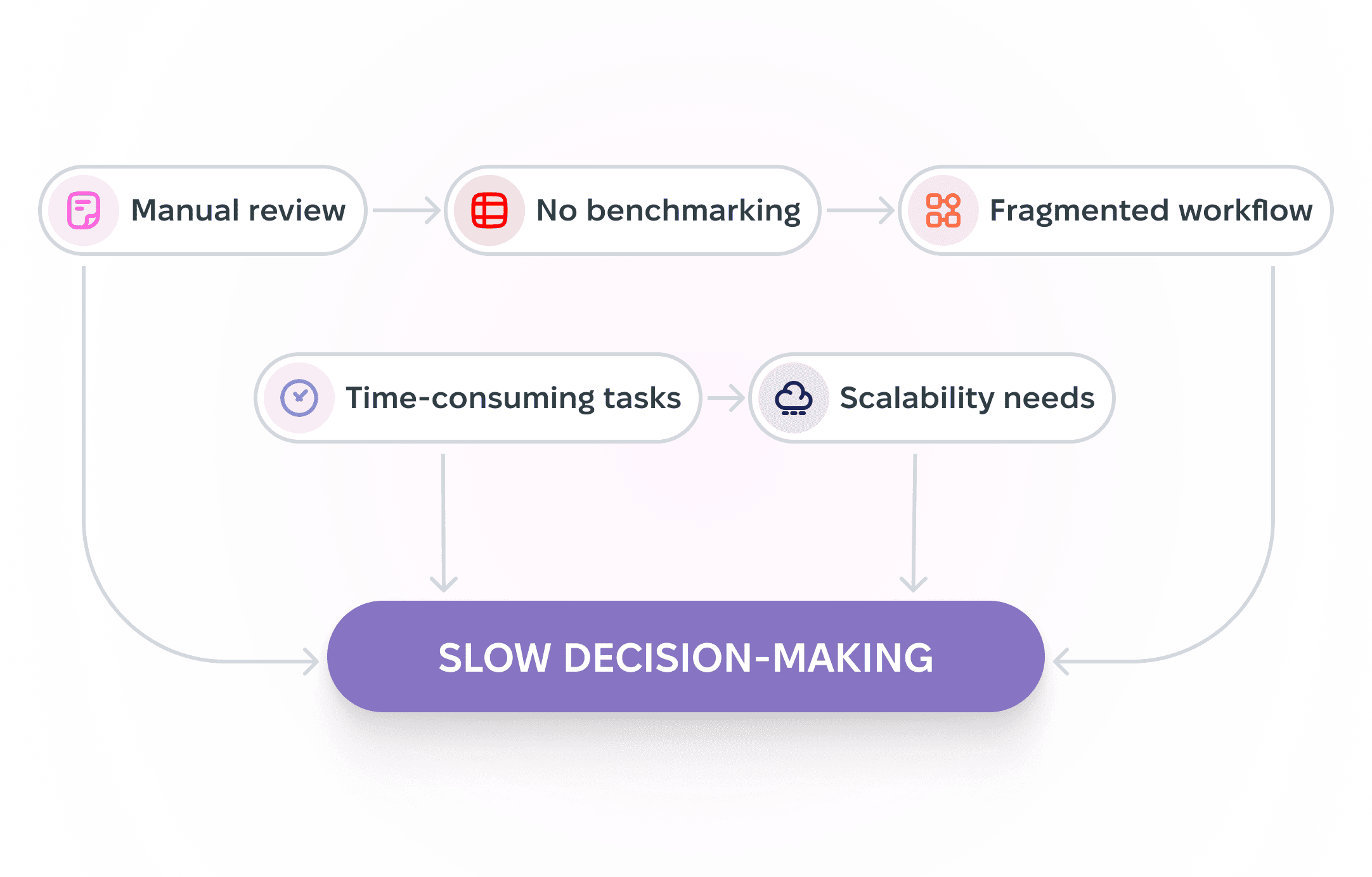
Business Challenge: Manual deal processing slowed investment decision-making

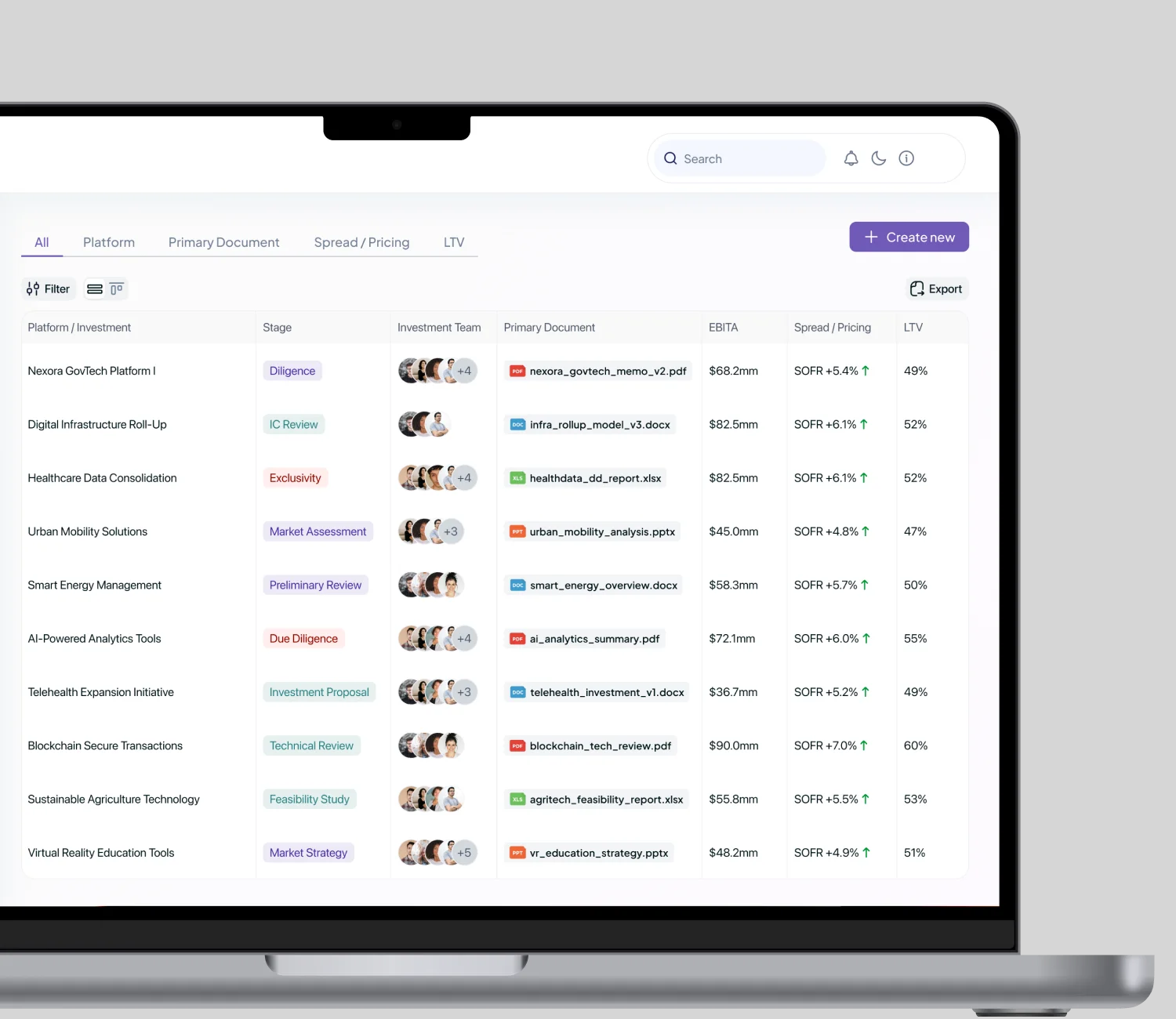
  • Lack of instant deal benchmarking, comparison tools, and unified workflows
  • Manual document processing, metric extraction, and time-consuming collaboration
  • Need for secure and scalable infrastructure to support growing portfolios
Slow decision-making diagram

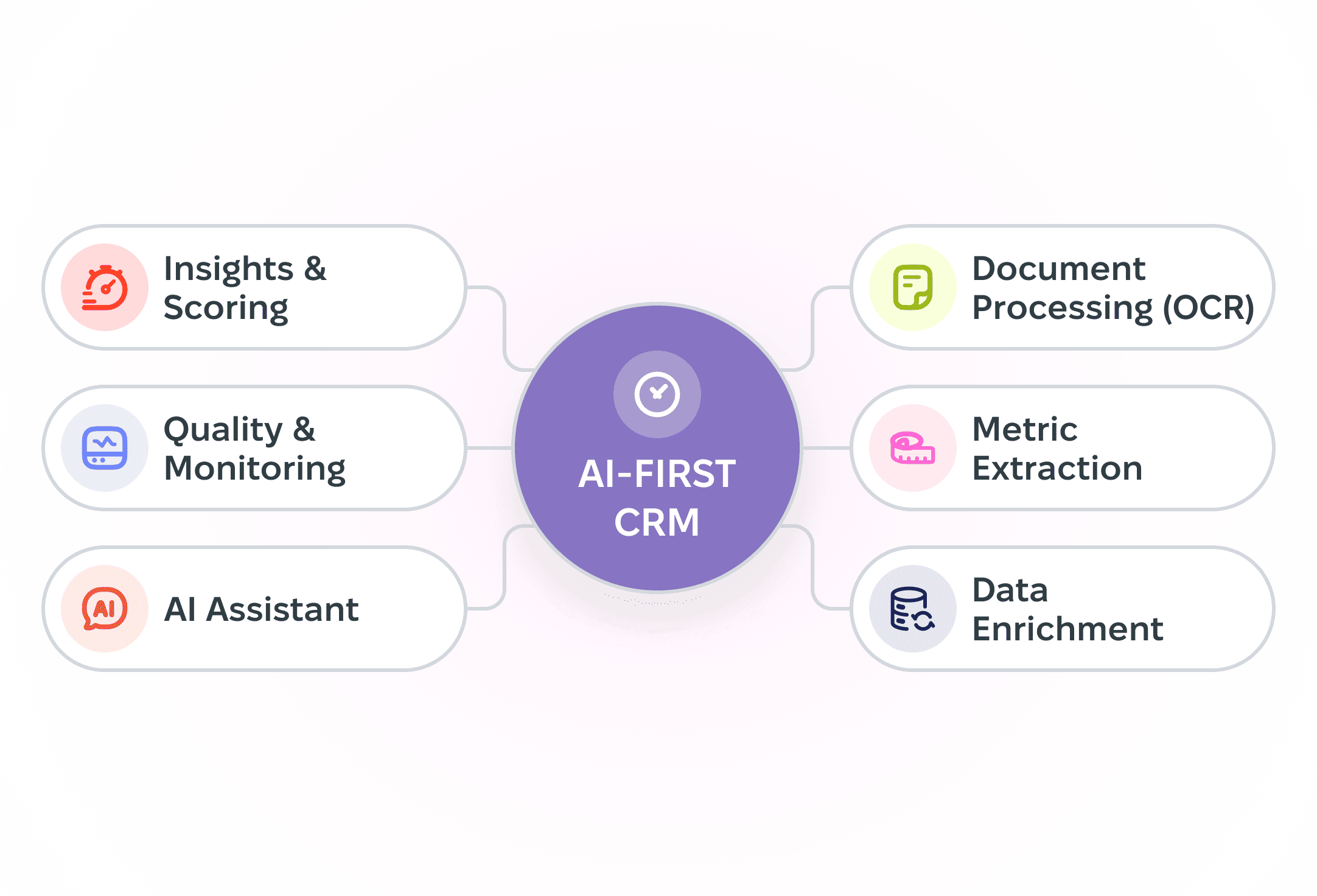
Technical Challenge: Integrating multiple AI capabilities into a single CRM

  • Integration of multiple AI components, including document processing, AI assistant, and data enrichment
  • OCR processing and structured metric extraction from investment documents
  • AI support for document analysis, company insights, and scoring
  • Continuous quality monitoring and improvement of AI outputs
AI-first CRM diagram

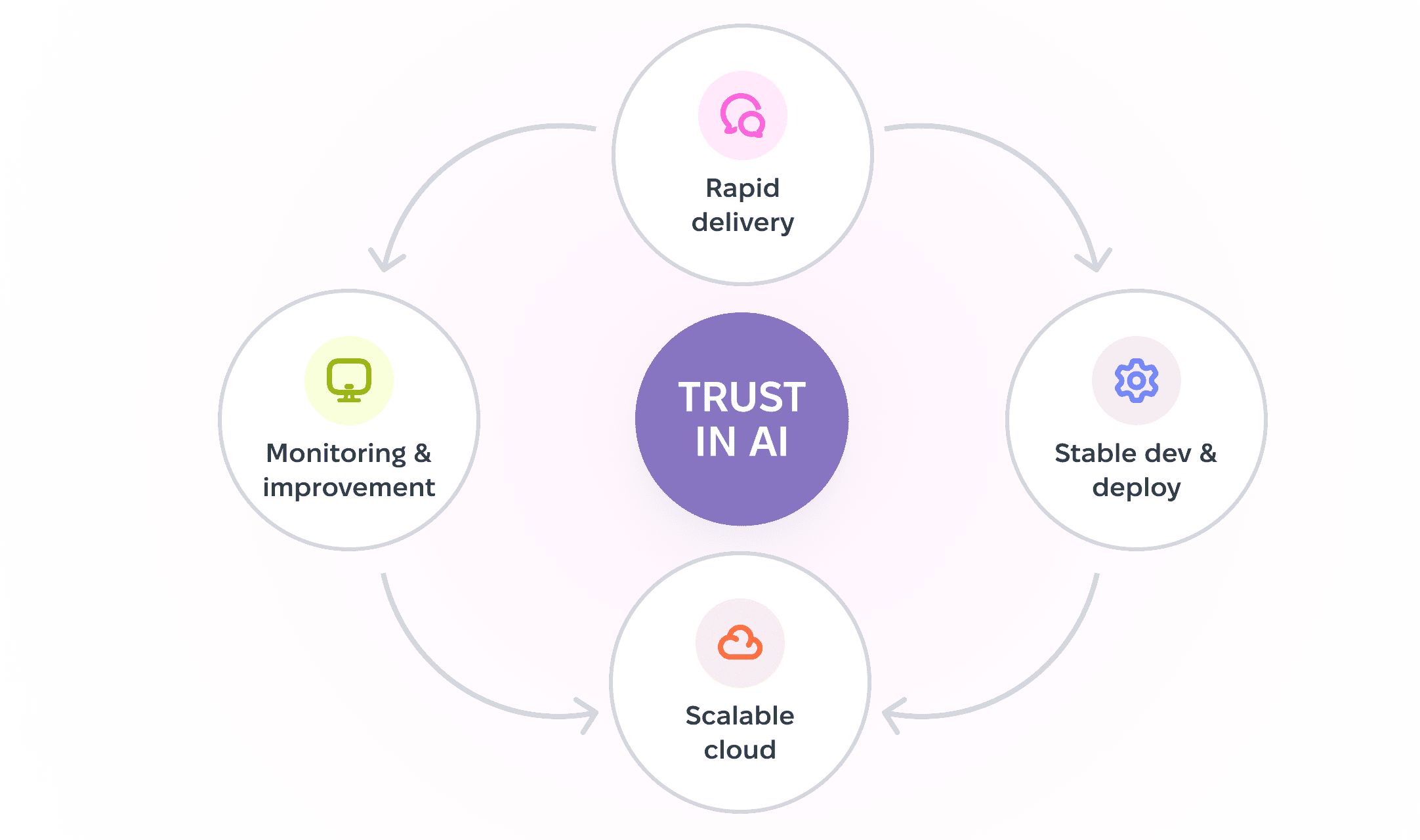
Delivery Challenge: Establishing trust in AI-driven investment tools

  • Need to deliver PoC, MVP, and subsequent releases quickly.
  • Complex AI functionality required stable development and deployment.
  • The platform needed a reliable, scalable, and cost-efficient cloud infrastructure.
  • AI features require continuous monitoring and improvement.
Decision support preview

What we did

To address the client's needs, the team developed an AI-powered CRM platform tailored for private equity investors, integrating multiple AI capabilities into a single system. The solution combines advanced document processing and automated data pipelines to extract key investment metrics, enrich company data, and support faster deal evaluation.

We also implemented AI evaluation mechanisms using the LLM-as-a-Judge approach and Agentic Evals to continuously monitor and improve AI output quality. Built on a secure and scalable Azure cloud infrastructure based on DevOps best practices, the platform enables efficient workflows, intelligent insights, and reliable delivery of new capabilities.

65%

Reduction in time spent on investment research

10X

Faster deal screening and benchmarking across opportunities

100%

Scalable investment workflows without increasing analyst workload

40%

Improvement in deal conversion performance

AI-First CRM Architecture
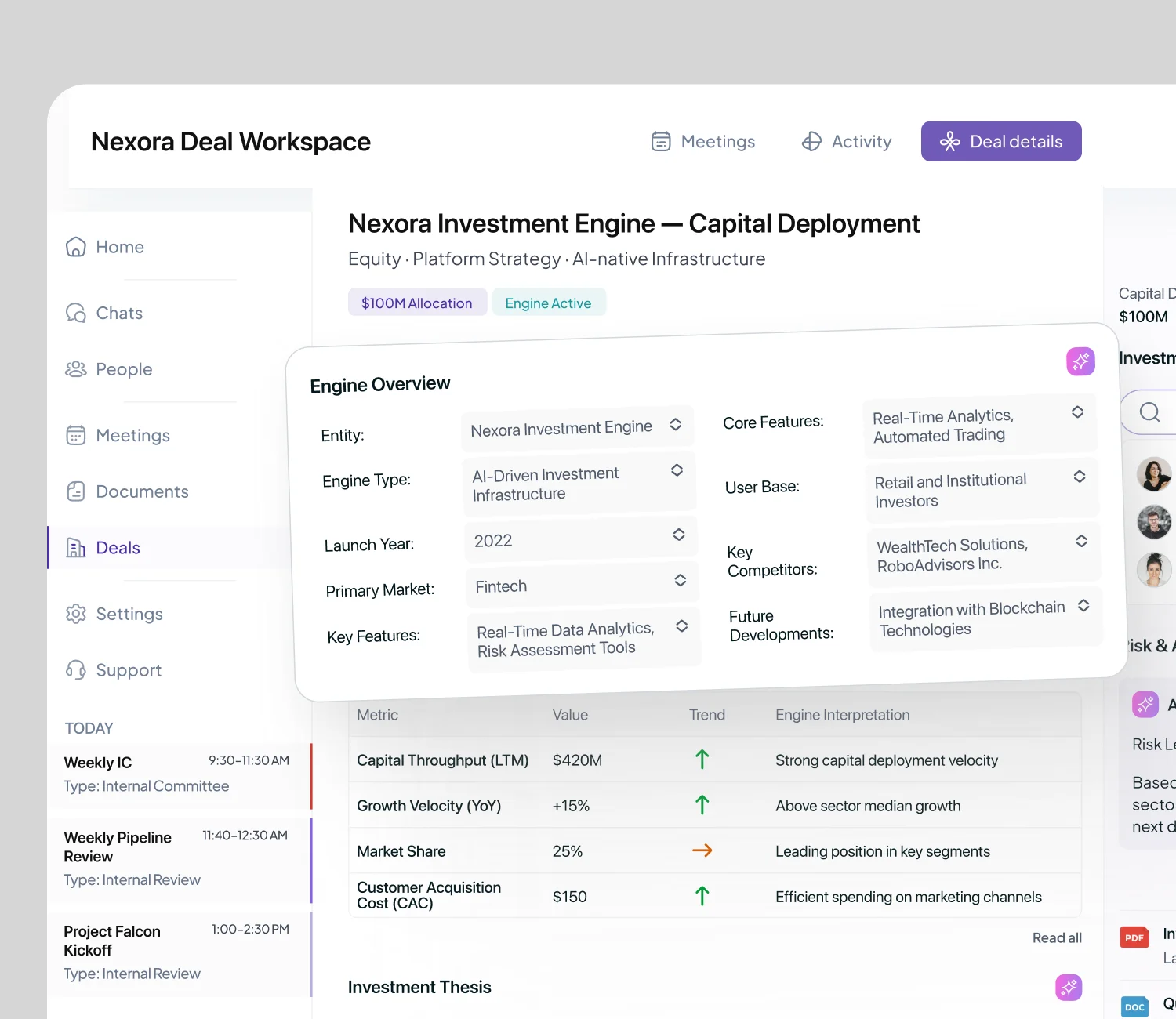
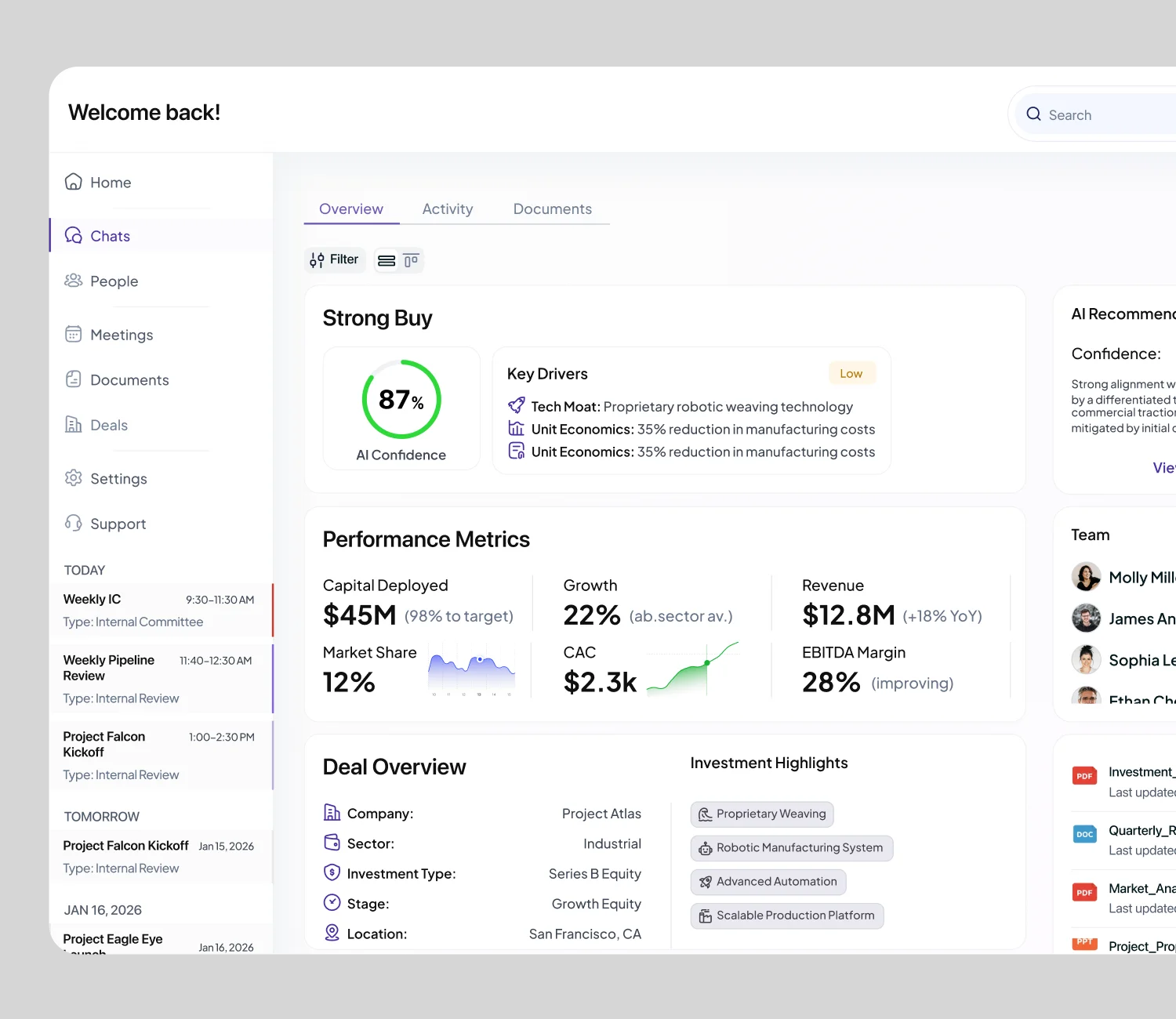
  • Designed and implemented an AI-First CRM platform tailored to Private Equity workflows
  • AI is built into the foundation of the CRM and shapes how the platform processes data and generates insights, rather than acting as an add-on feature.
  • Unified deal sourcing, pipeline management, and investment decision support within a single system.
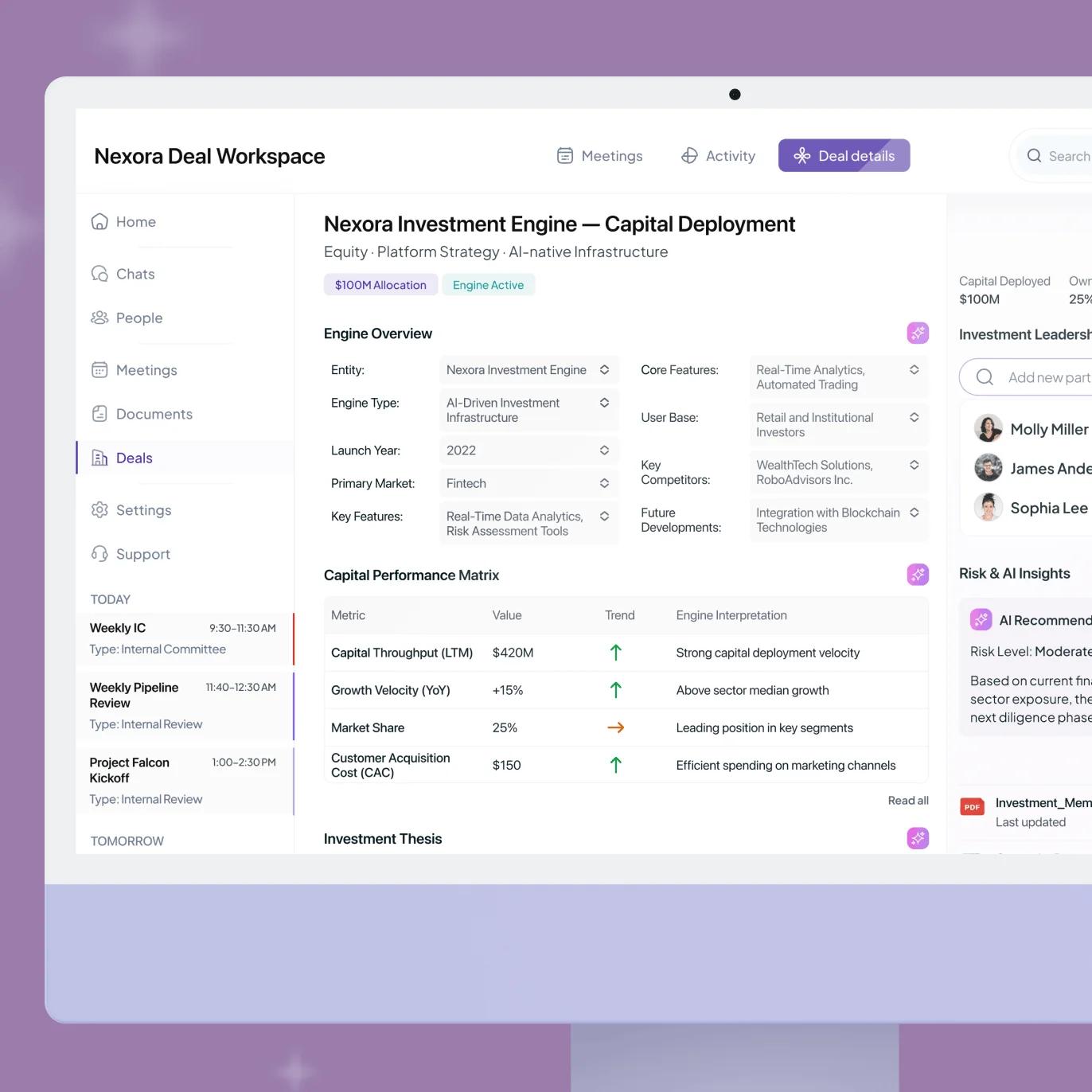
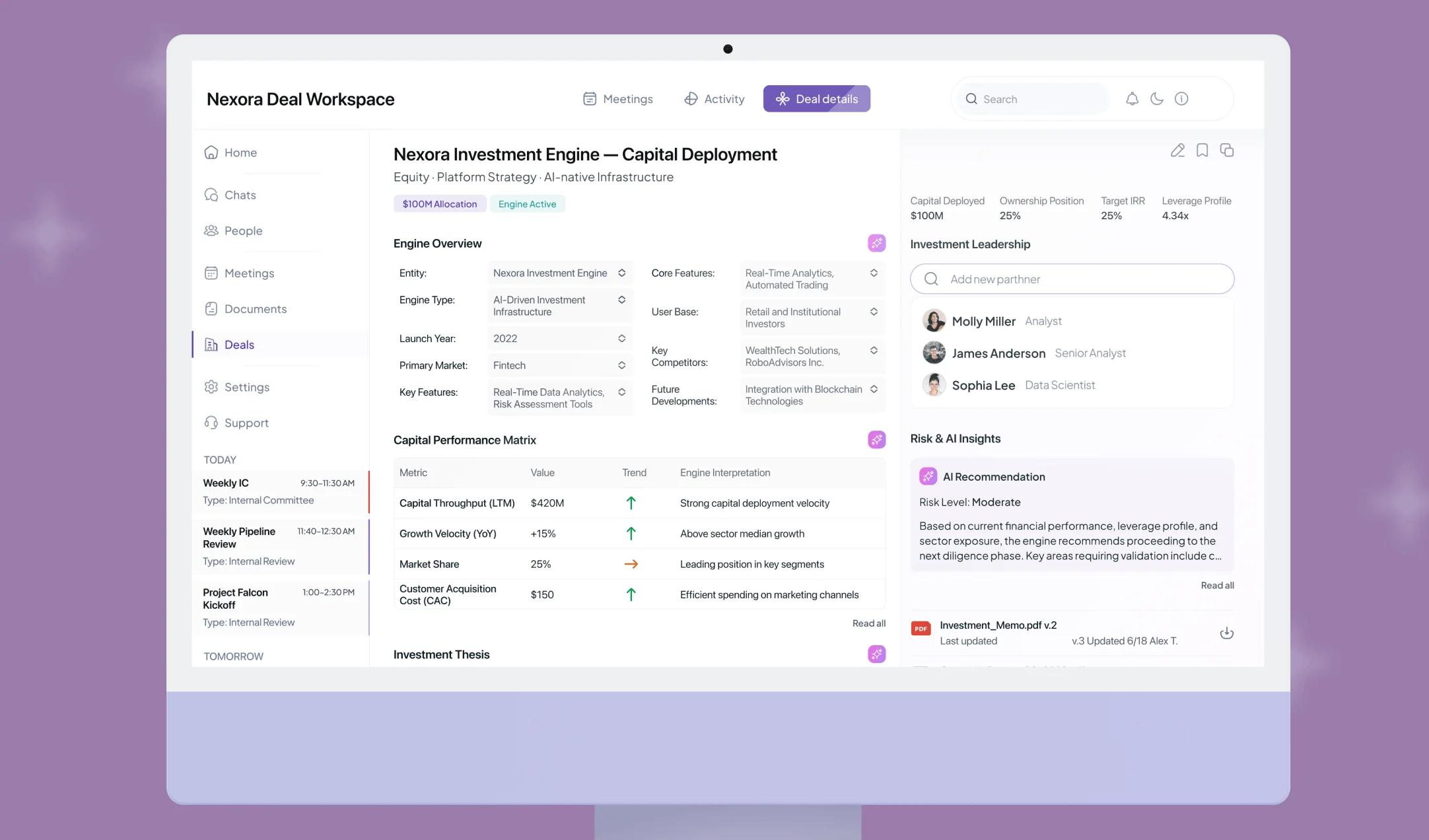
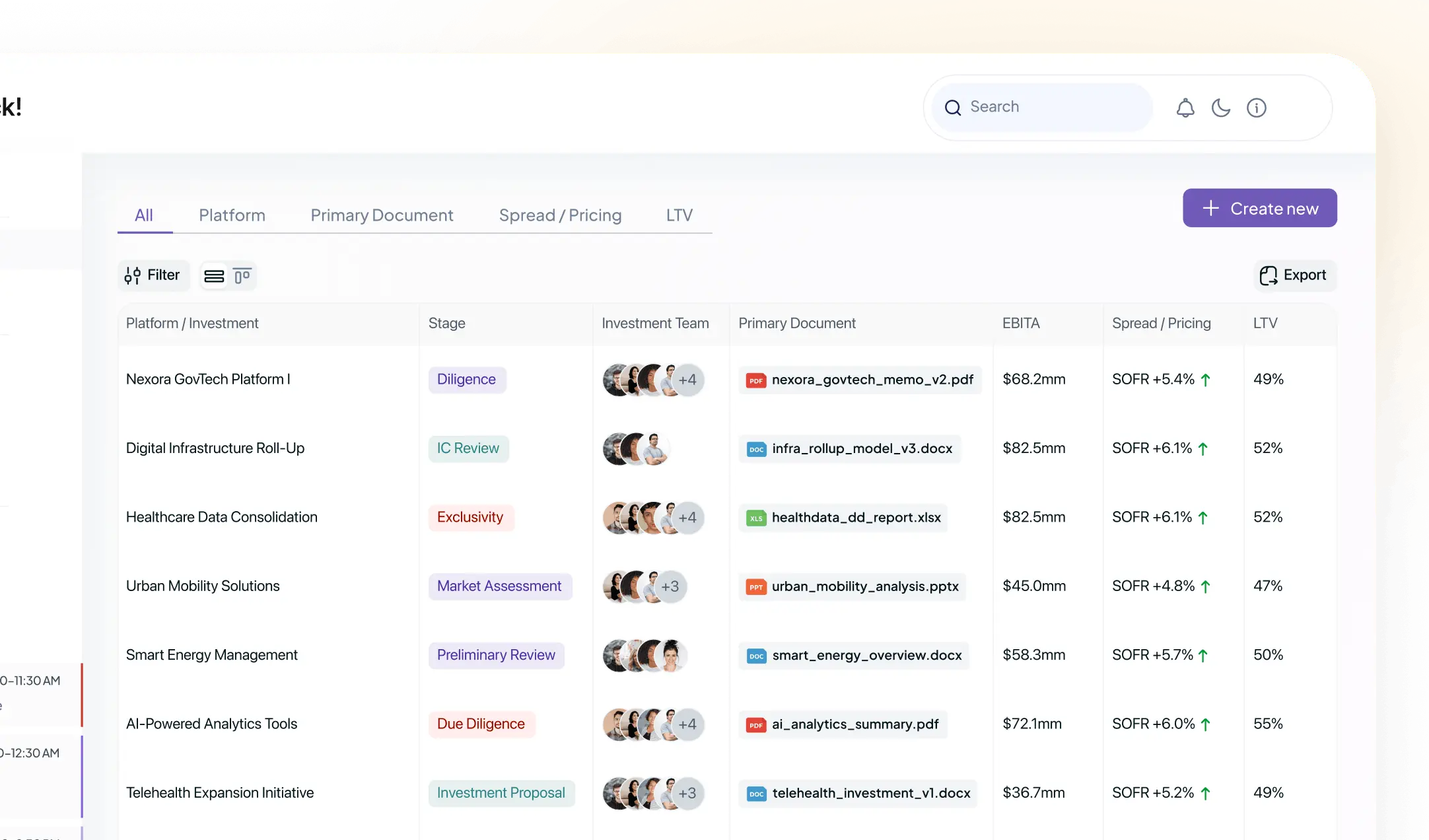
Deal workspace preview

Advanced AI and Data Processing

  • Implemented an AI strategy based on the latest trends and assumptions about future investments in Agents, RAG (Retrieval-Augmented Generation), and Large Language Models (LLMs), ensuring high data accuracy and precision.
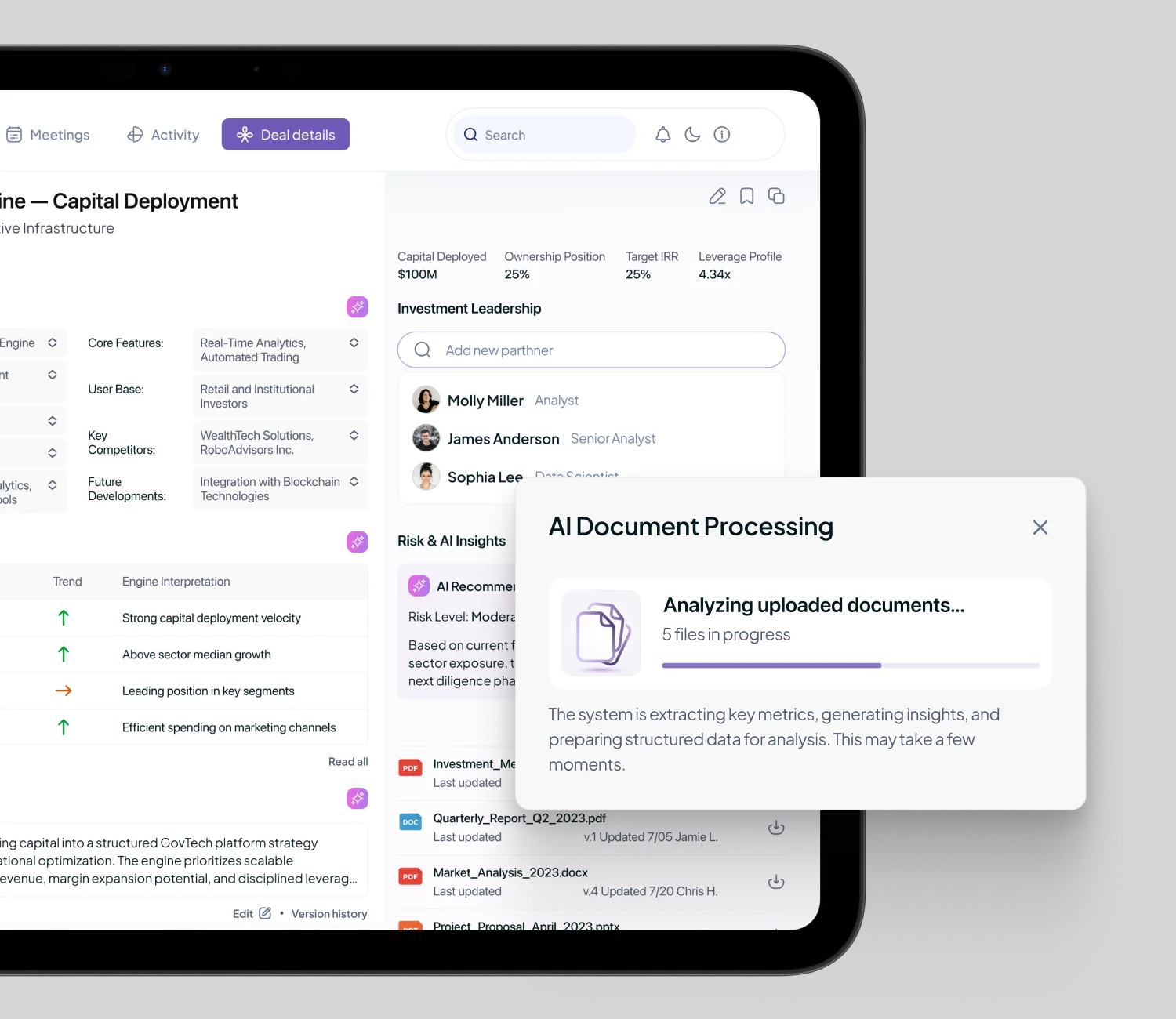
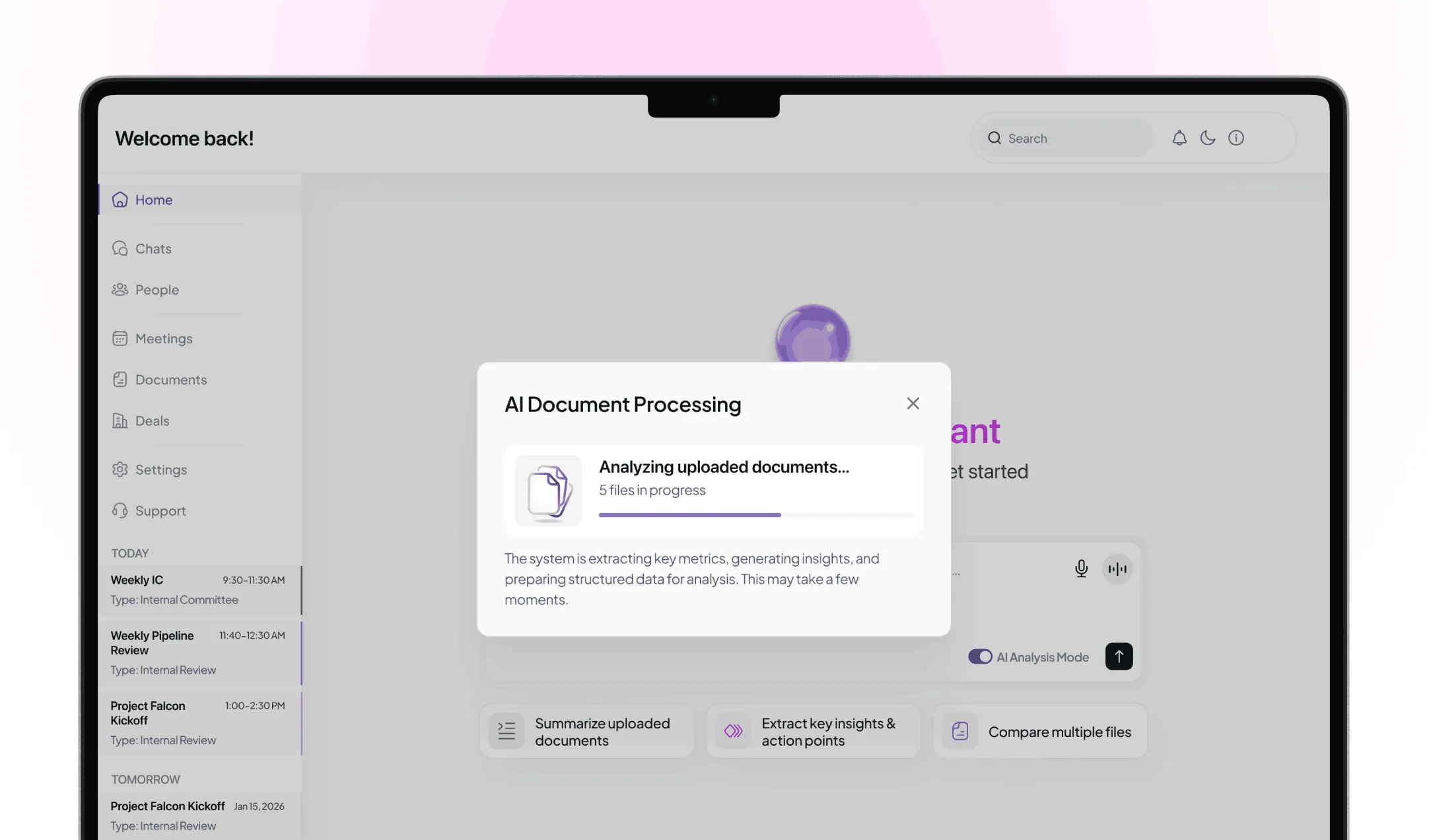
  • Built data pipelines for OCR, document processing, key metric extraction, enrichment, and entity extraction.
  • Enabled automated and key metrics extraction, documents, and structured data generation for decision support.
Data processing preview

AI-Powered Product Features

  • Delivered key user-facing AI capabilities, including document analysis, an AI assistant, company snapshots, and scoring tools.
  • Provided instant deal benchmarking and comparison tools for investment committees.
  • Introduced AI-driven email outreach, follow-ups, collaboration note-taking, and document generation.
Product features preview

AI Data Enrichment and Insights

  • Developed an AI pipeline for extracting and enriching critical company performance metrics.
  • Generated company insights and structured investment data using document analysis and open-source information.
Data enrichment and insights preview

Scalable Cloud Infrastructure

  • Deployed the platform on secure and scalable Azure cloud infrastructure.
  • Ensured reliability, flexibility, cost efficiency, and support for growing client portfolios and global users.
Cloud infrastructure preview

Quality Control and Continuous Delivery
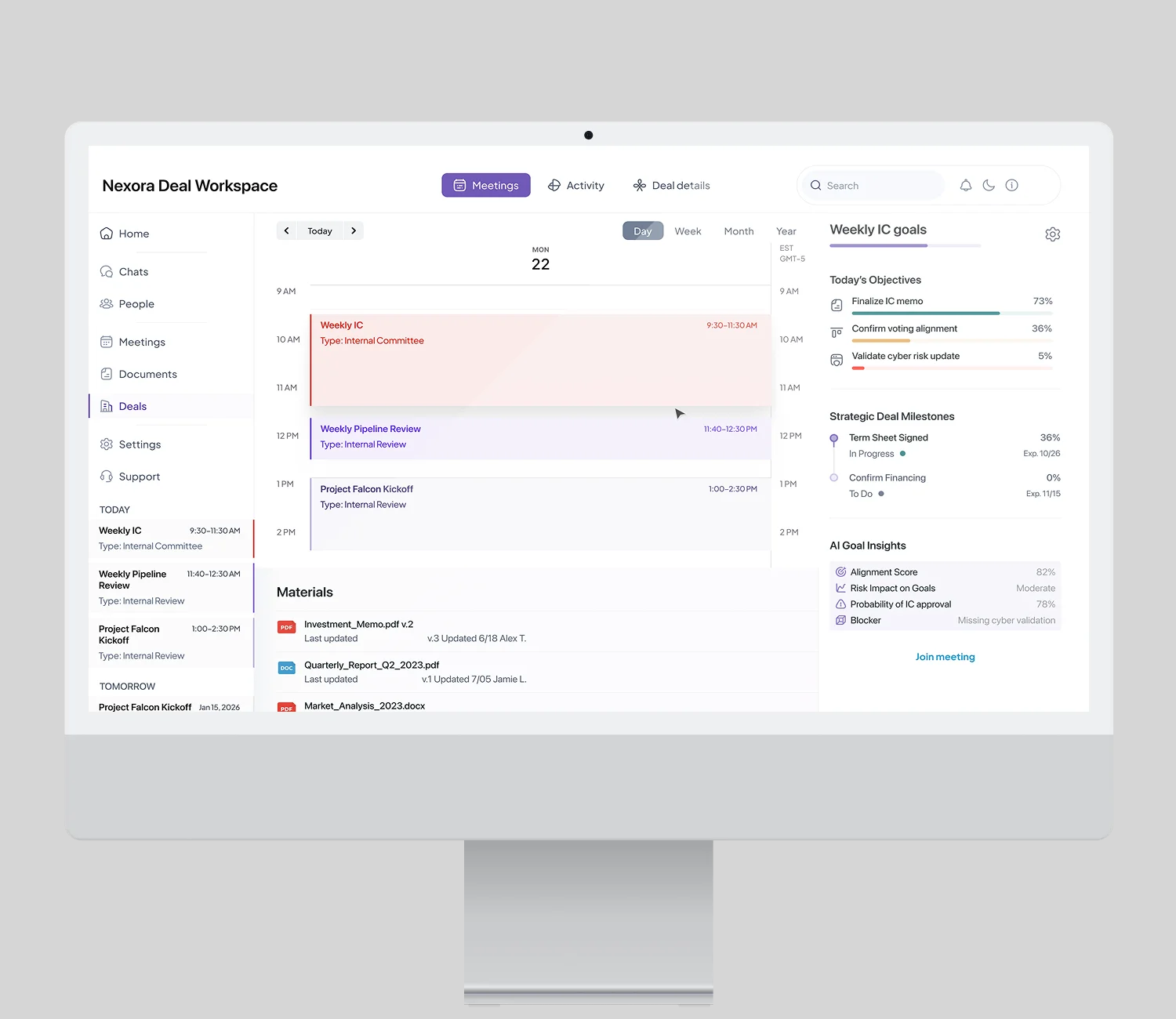
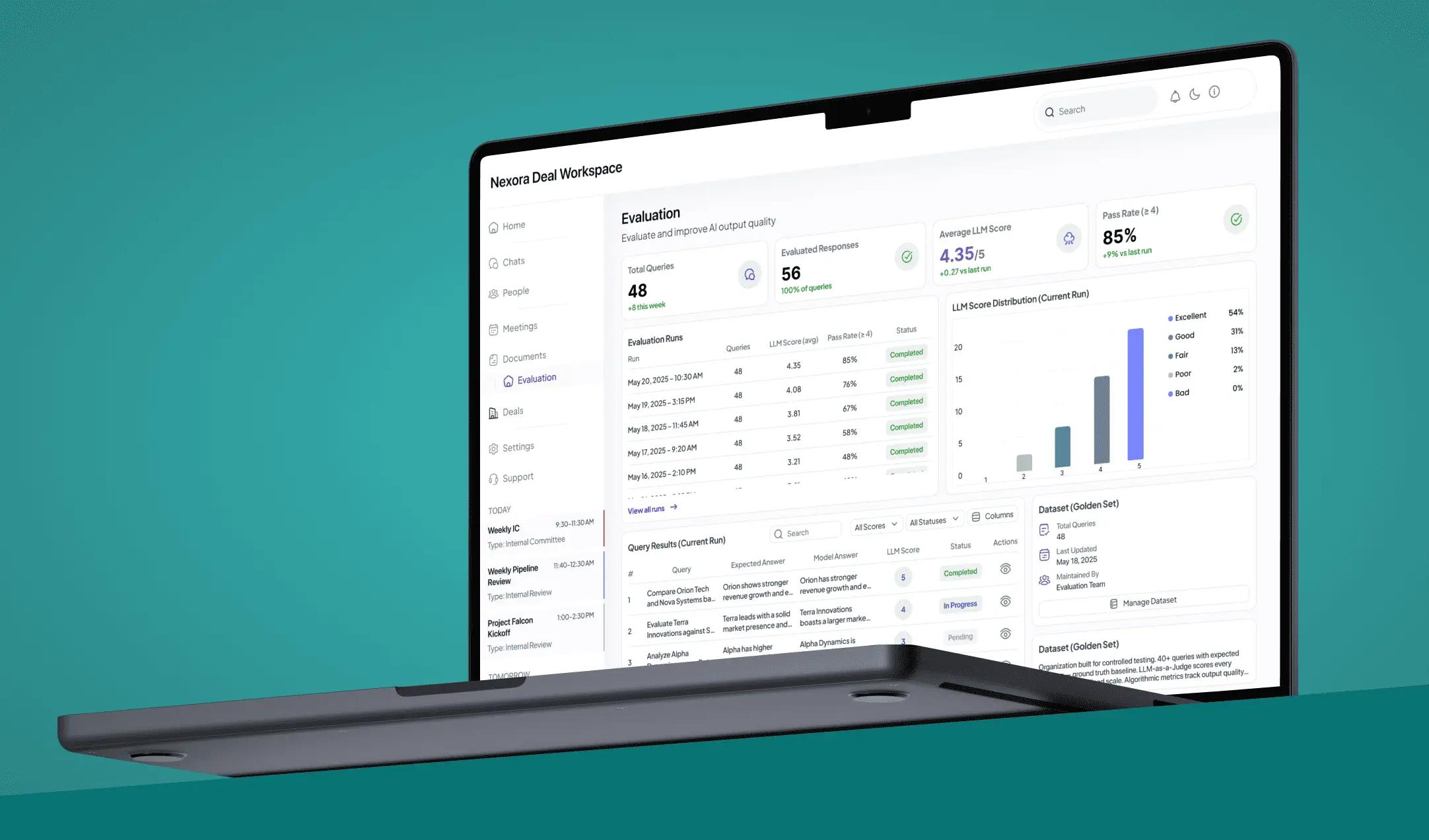
  • Implemented AI quality evaluation mechanisms, including LLM-as-a-Judge and tool-level performance metrics.
  • Established CI/CD pipelines and DevOps best practices for rapid and reliable releases.
  • Built a high-performing development team to deliver PoC, MVP, and further product iterations quickly and effectively.
Quality control and continuous delivery preview

Key results and business value

Automated document analysis preview

Manual document review replaced by automated analysis
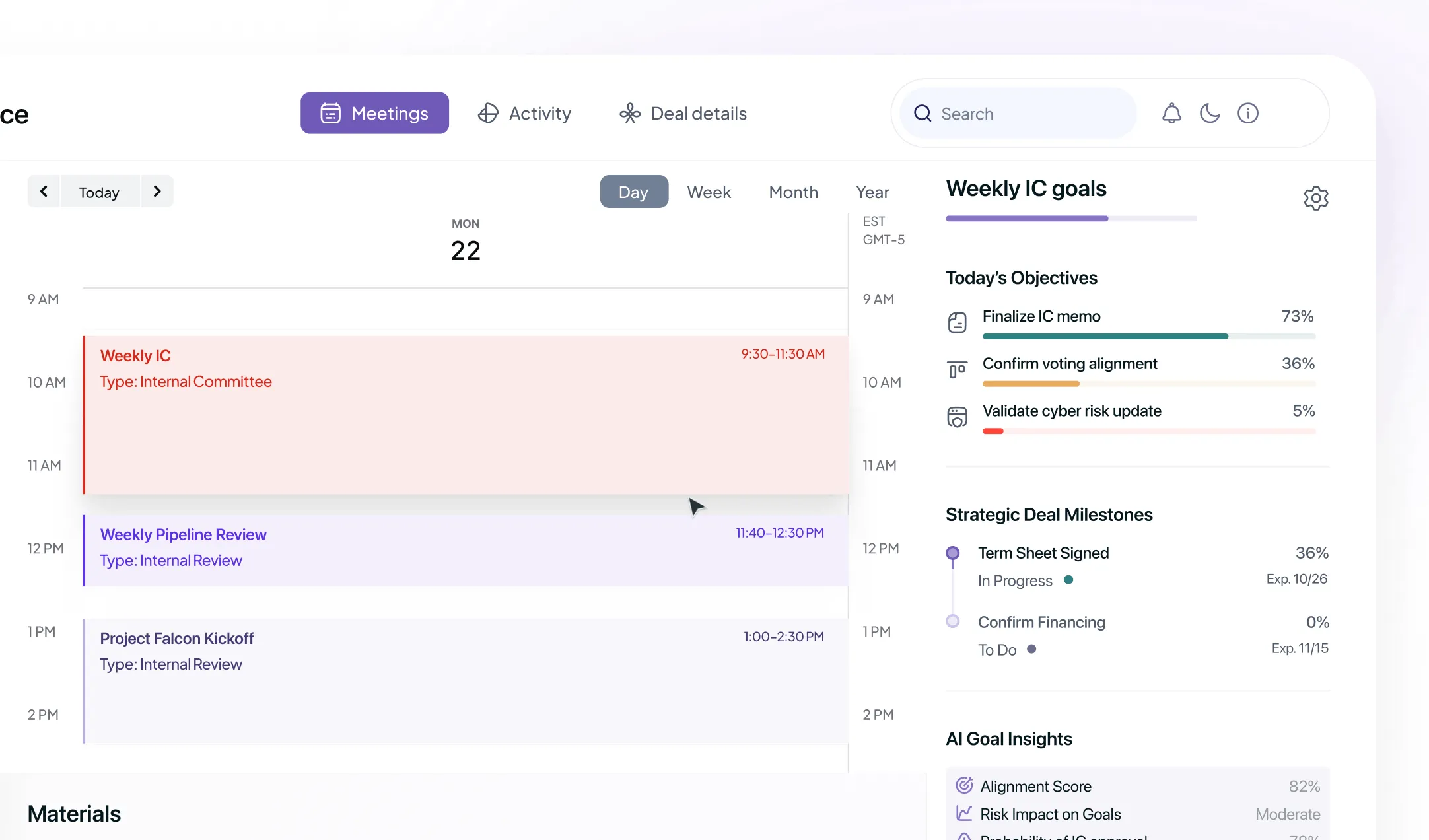
Unified platform preview

Fragmented tools consolidated into a unified platform
Real-time insights preview

Slow deal evaluation transformed into real-time insights
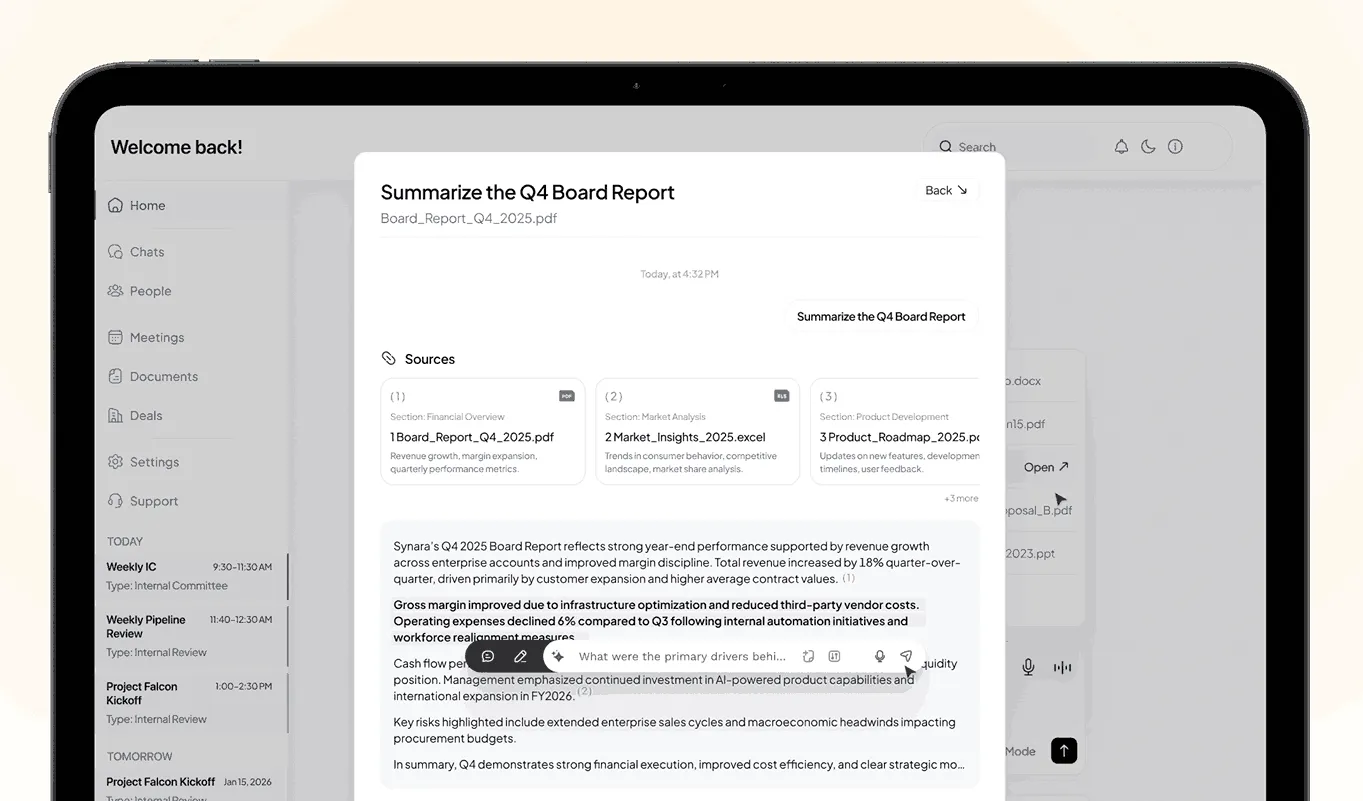
AI-driven decision support preview

Manual workflows enhanced with AI-driven decision support

Features Delivered

Deal workspace preview

Key Capabilities of the AI-powered CRM

  • AI-powered document analysis using OCR and LLMs
  • Automated extraction of key investment metrics
  • Instant deal benchmarking and comparison
  • AI assistant for research and data interaction
  • Automated company snapshots and scoring
  • Unified CRM for deal sourcing and pipeline management
Azure icon

Azure

React icon

React

Python icon

Python

Github icon

Github

Docker icon

Docker

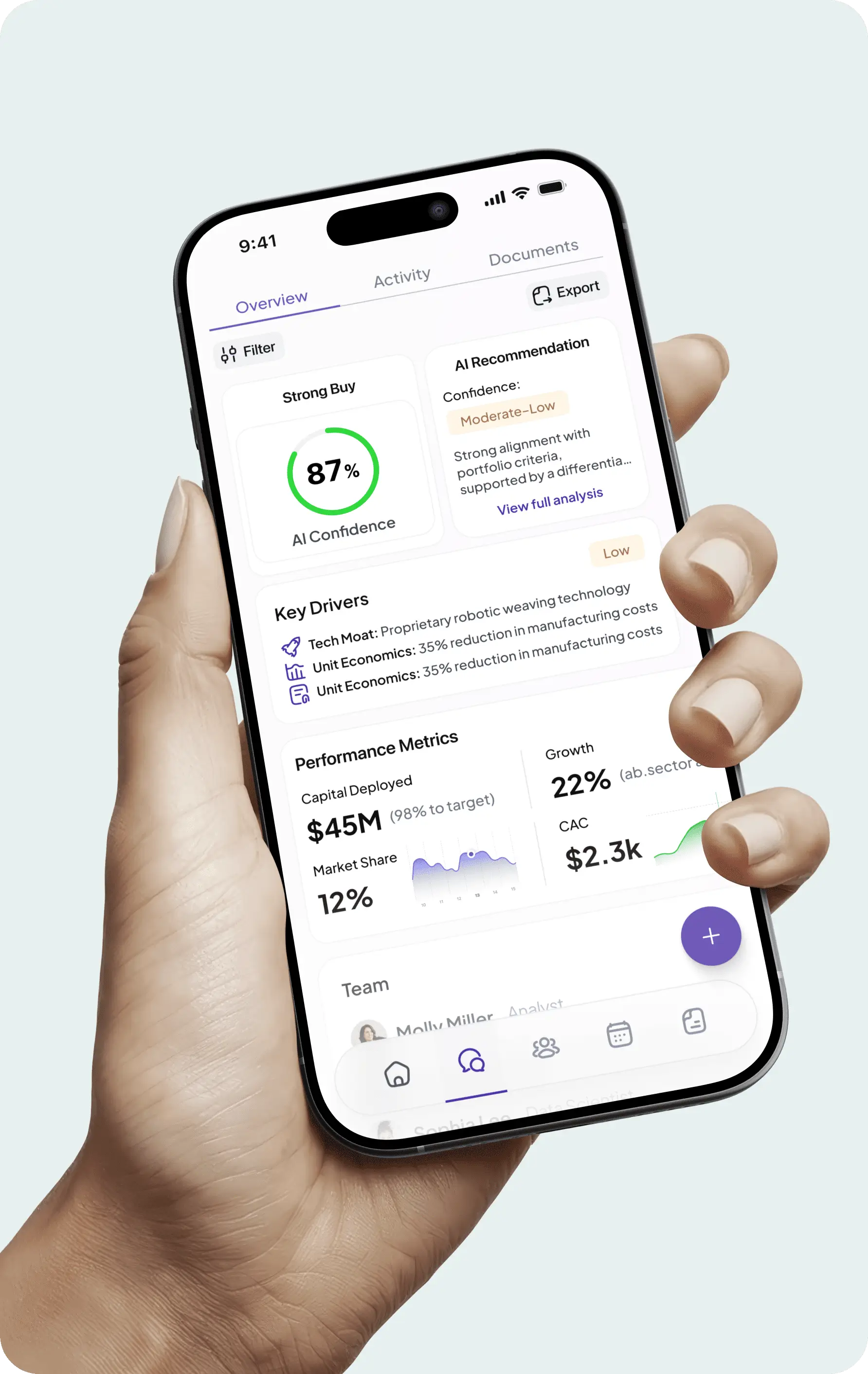
Mobile app preview

Technical Highlights

AI-Driven Features

Implemented an AI strategy using RAG, LLMs, and Agent Orchestration for document processing

Custom CRM Development

Designed and implemented an AI-first CRM platform tailored to private equity workflows

Data Extraction Pipelines

Developed AI pipelines for OCR document processing, metric extraction, and data enrichment

Product Features

Delivered document analysis, AI assistant, company snapshots, scoring, and deal benchmarking tools

Cloud Infrastructure

Utilized Azure for a secure, scalable, and cost-efficient infrastructure, ensuring high performance

Quality Optimization

Implemented LLM-as-a-Judge and tool-level metrics for continuous AI evaluation and quality monitoring

Efficient Development

Established CI/CD pipelines and DevOps practices to efficiently deliver PoC, MVP and subsequent releases

Client Feedback

"The platform dramatically reduces the time required to analyze investment information. Tasks that previously took days can now be completed in hours, while consistent insights across deals help investment teams make faster and more confident decisions."

Chief Technology Officer

Client

Unlock new growth opportunities

Discover how custom software with AI-powered features can help your business move faster, improve workflows, and create new competitive advantages.

Similar solutions we implemented

Related blog posts


Best Practices for Integrating AI into Existing Business Processes
BusinessAI

Best Practices for Integrating AI into Existing Business Processes

Integrating AI into existing business operations is one of the most powerful levers a company can pull — but it’s also one of the riskiest. Many organizations struggle not because AI is flawed, but because their approach to integration fails to respect how their business truly operates. The promise of efficiency, insight, and automation often clashes with legacy systems, culture, and technical debt. Over years of project work and observing successes and failures across industries, several patterns of strong AI integration have emerged. In this article, I outline five best practices — not superficial rules, but deep lessons that require discipline, humility, and ongoing care. These are the guardrails that help AI become a partner, not a disruption. 1. Align AI strategy with business purpose and processes

How to build AI software: a profound guide into the future
AISoftware developmentAI software

How to build AI software: a profound guide into the future

A futuristic concept reserved for labs and sci-fi plots - that's how we imagined AI short time ago. Now? It’s here — and it’s actively reshaping how businesses operate, make decisions, and deliver value. From predictive analytics and recommendation engines to intelligent automation and generative tools, AI is unlocking new opportunities across industries. But turning an AI idea into a working product isn’t magic — it’s strategy, architecture, and execution. Whether you're a founder, product owner, or innovation lead, understanding how to approach AI software development will help you move with confidence and clarity. Here’s a deep, practical guide to building AI software that actually works for your business, your users, and the future.

Advantages of generative AI in software development
AISoftware development

Advantages of generative AI in software development

Learn how generative AI boosts productivity, enhances code quality, and accelerates software innovation.