
YTC LogoYTC Logo
Cases
AI-powered Disinformation Monitoring Platform for Central Europe

AI-powered Disinformation Monitoring Platform for Central Europe

AI-powered Disinformation Monitoring Platform for Central Europe

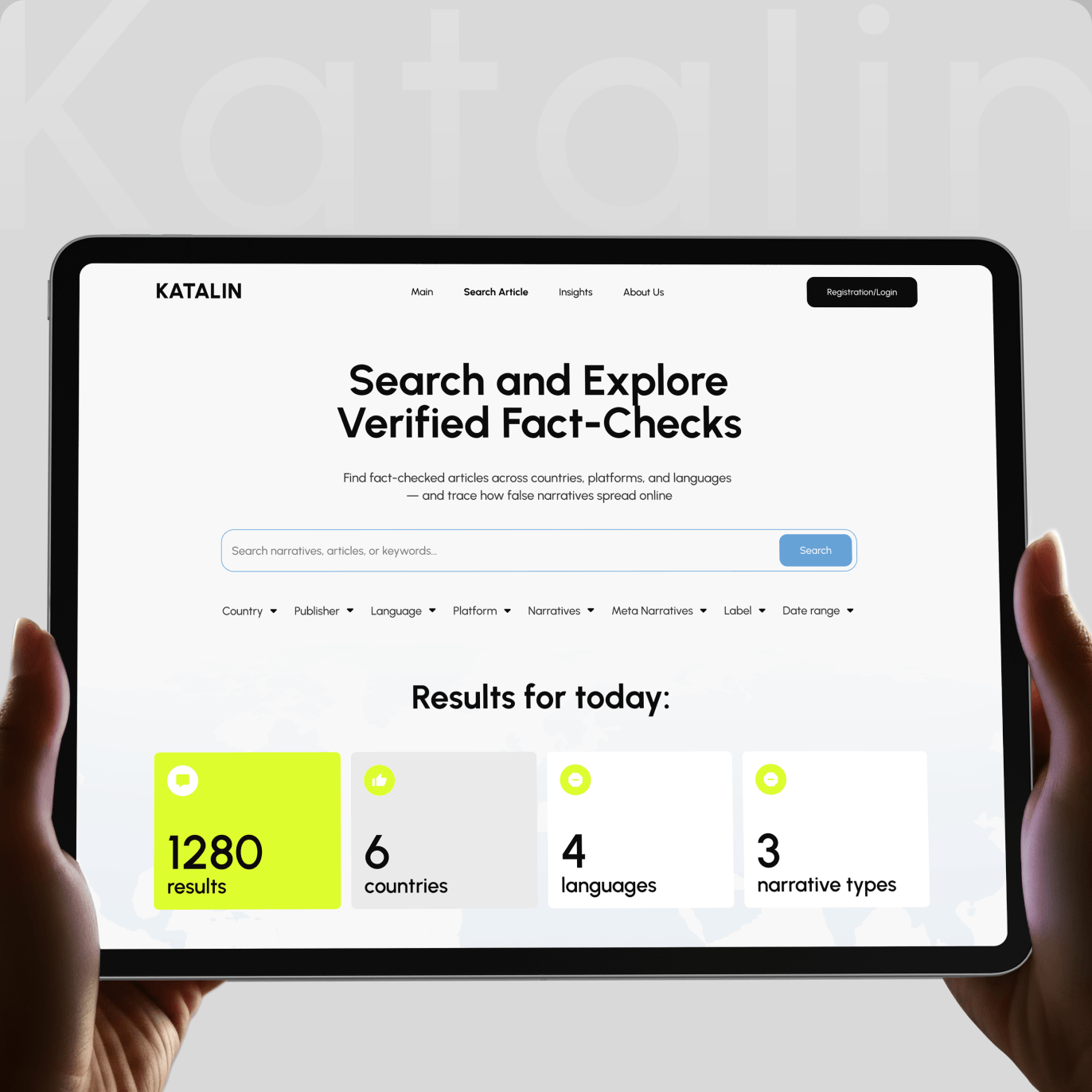
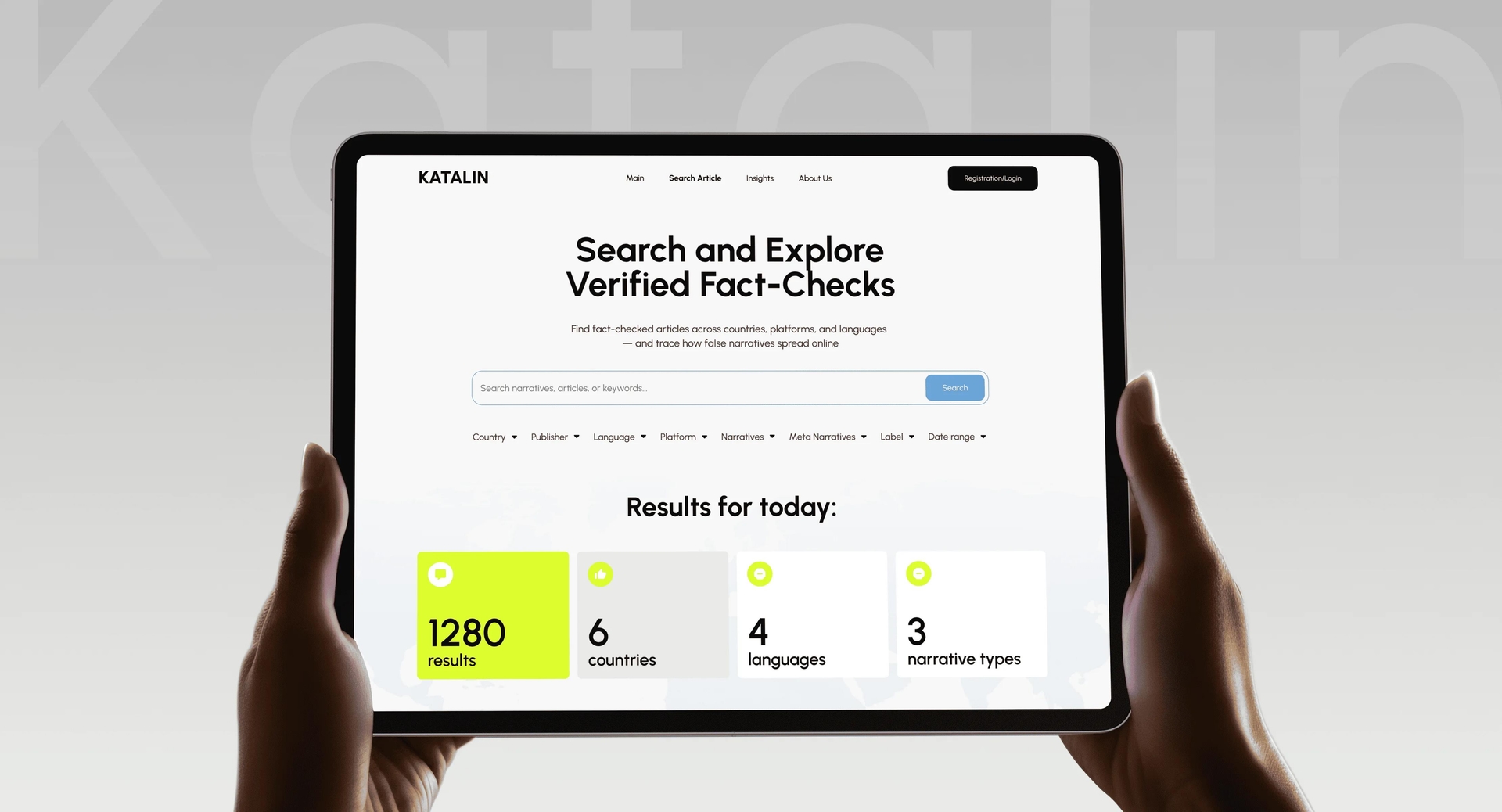
A partnership of Central and Eastern European newsrooms needed an efficient way to track and respond to disinformation across multiple sources. Our solution Katalin is an AI-powered database that detects, analyzes, and monitors disinformation across digital channels, enabling journalists to identify emerging trends, verify content, and assess impact with less manual effort and greater speed and accuracy.

Industry

Media

Client

Science

Region

Europe

Main challenges

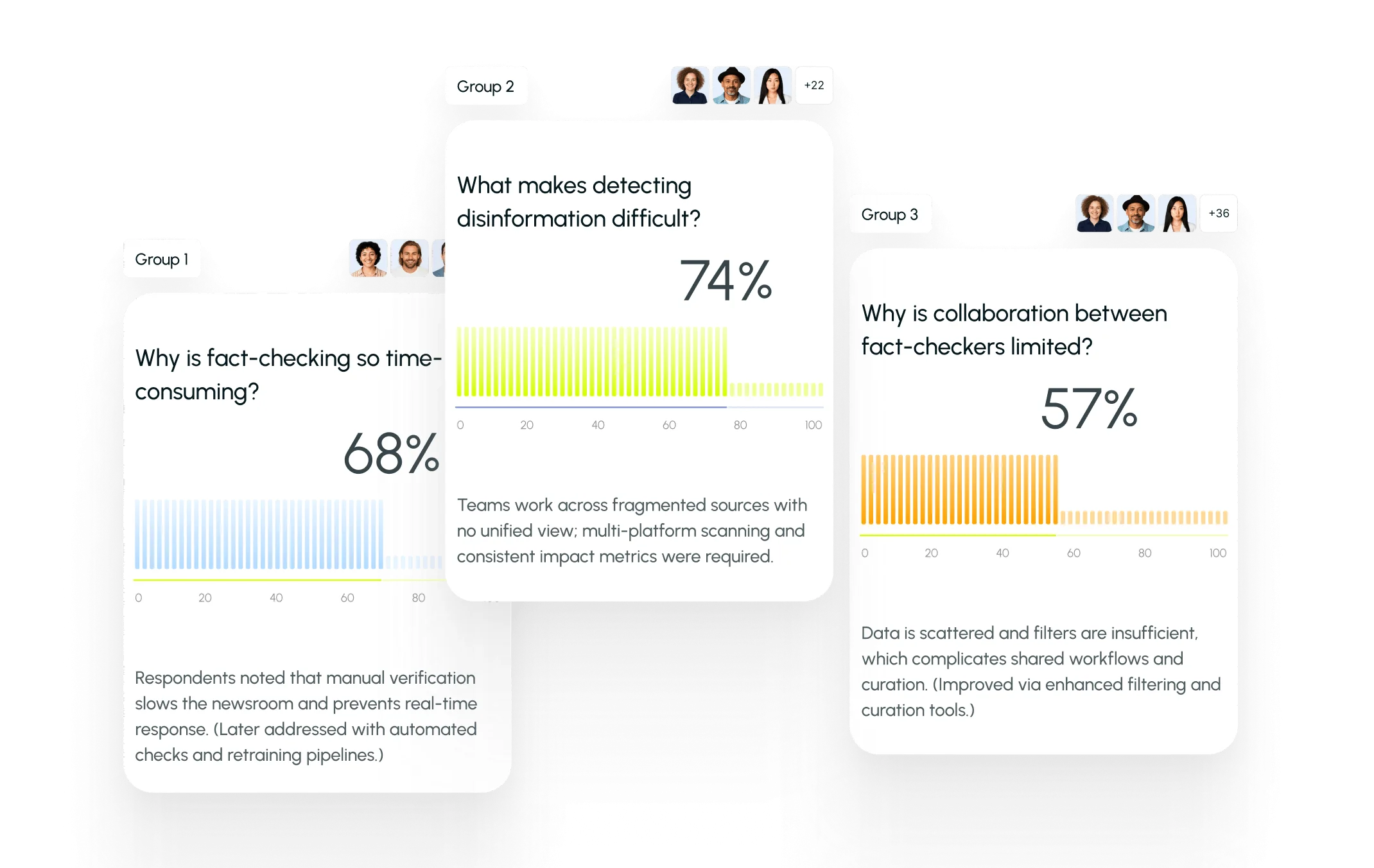
Business Challenge: Manual disinformation monitoring has limited detection and response

  • Limited scanning across social platforms and website
  • Manual content verification and data processing
  • Lack of automated impact measurement across sources
  • No structured narrative tracking or analysis
  • Need for scalable infrastructure and retraining pipelines
Business challenge preview

Technical Challenge: Building a multi-source AI system for disinformation detection

  • Fragmented multi-source data processed manually, slowing ingestion
  • Manual handling of multi-format content (text, images, metadata), increasing processing time and complexity
  • Detection approaches are not automated, limiting analysis efficiency
  • Manual and non-scalable model updates reduce system adaptability
Business challenge preview

Delivery Challenge: Manual workflows slowed operations and scalability

  • Human-driven data collection and processing slowed content ingestion and analysis
  • Manual verification and curation increased workload and reduced efficiency
  • Lack of automation limited scalability across platforms and data sources
  • Continuous updates required significant human effort, reducing adaptability
Business challenge preview

What we did

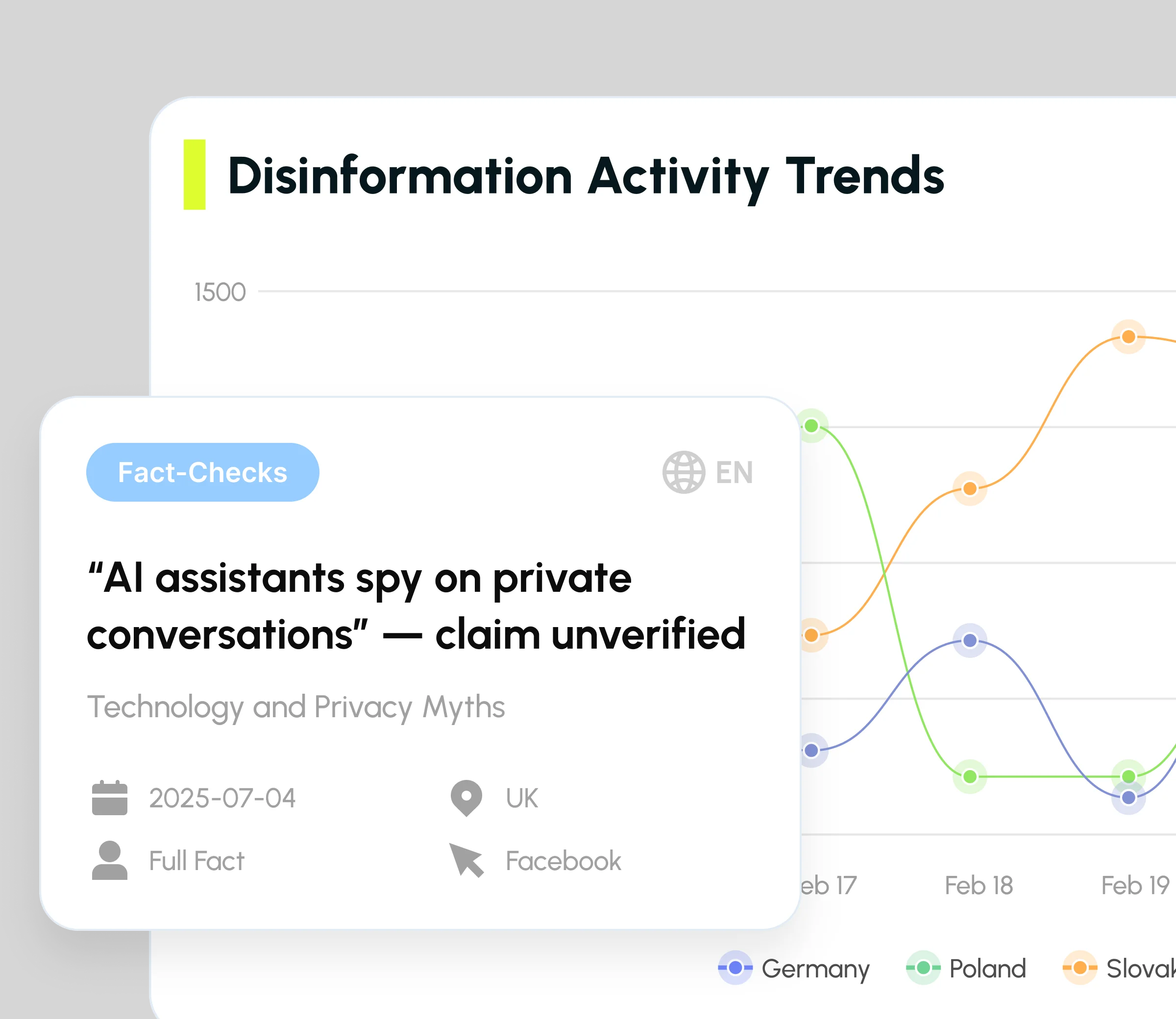
AI-powered disinformation detection and analysis platform. We built an AI-powered platform that enables journalists to track, analyze, and understand disinformation narratives across social media and web sources. The system supports multi-source data collection across platforms, including Facebook, Instagram, Twitter, Telegram, and up to 50 custom websites. AI models for multi-topic extraction allow the detection of a wide range of disinformation themes, reducing manual analysis.

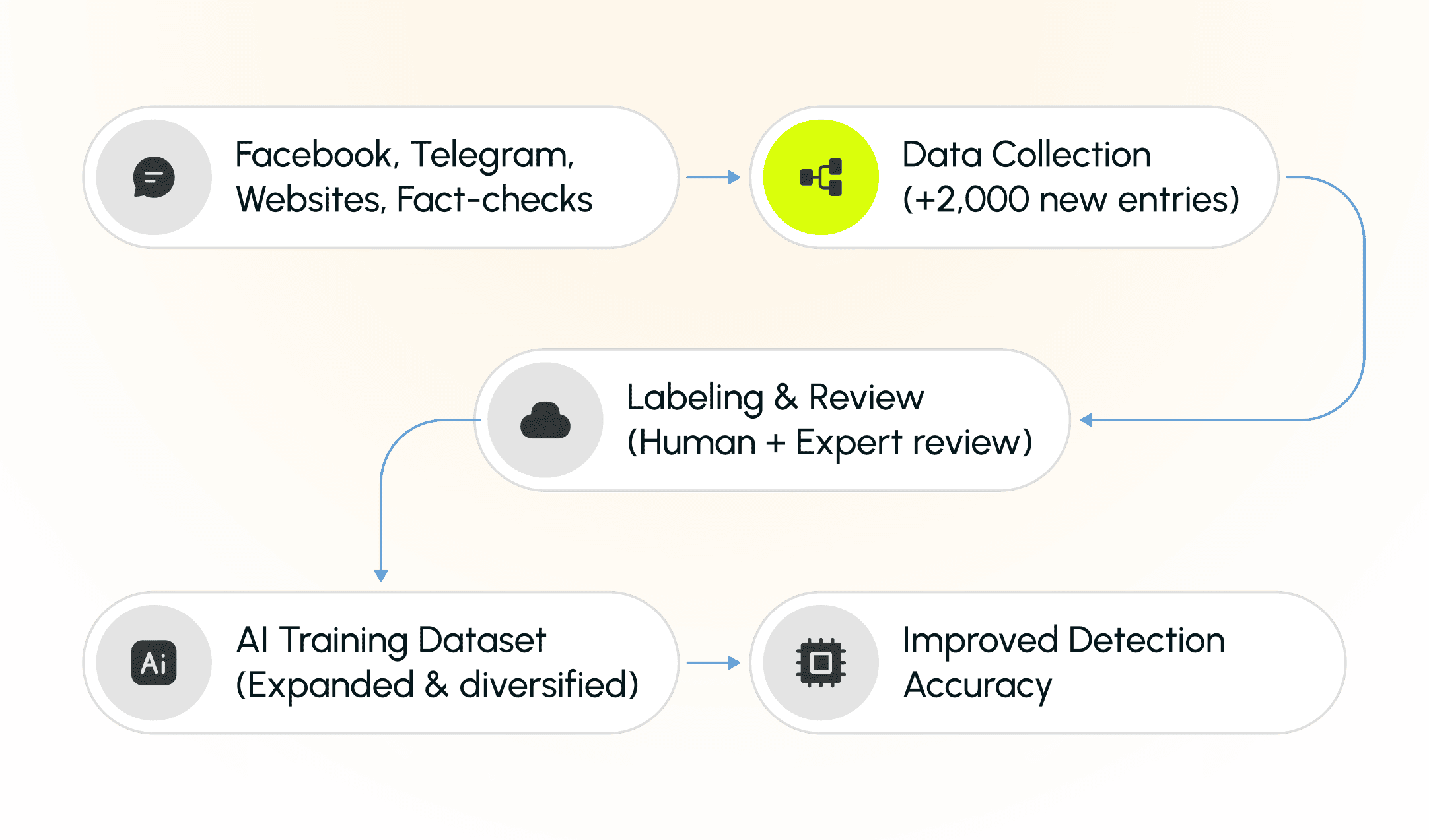
Metadata and style-based approaches improve content verification and detection accuracy. To ensure continuous model relevance, we implemented retraining pipelines and expanded training datasets. An engagement-based system evaluates narrative impact using interaction metrics. The infrastructure was designed for scalability and reliability, with backups and data curation tools improving processing efficiency.

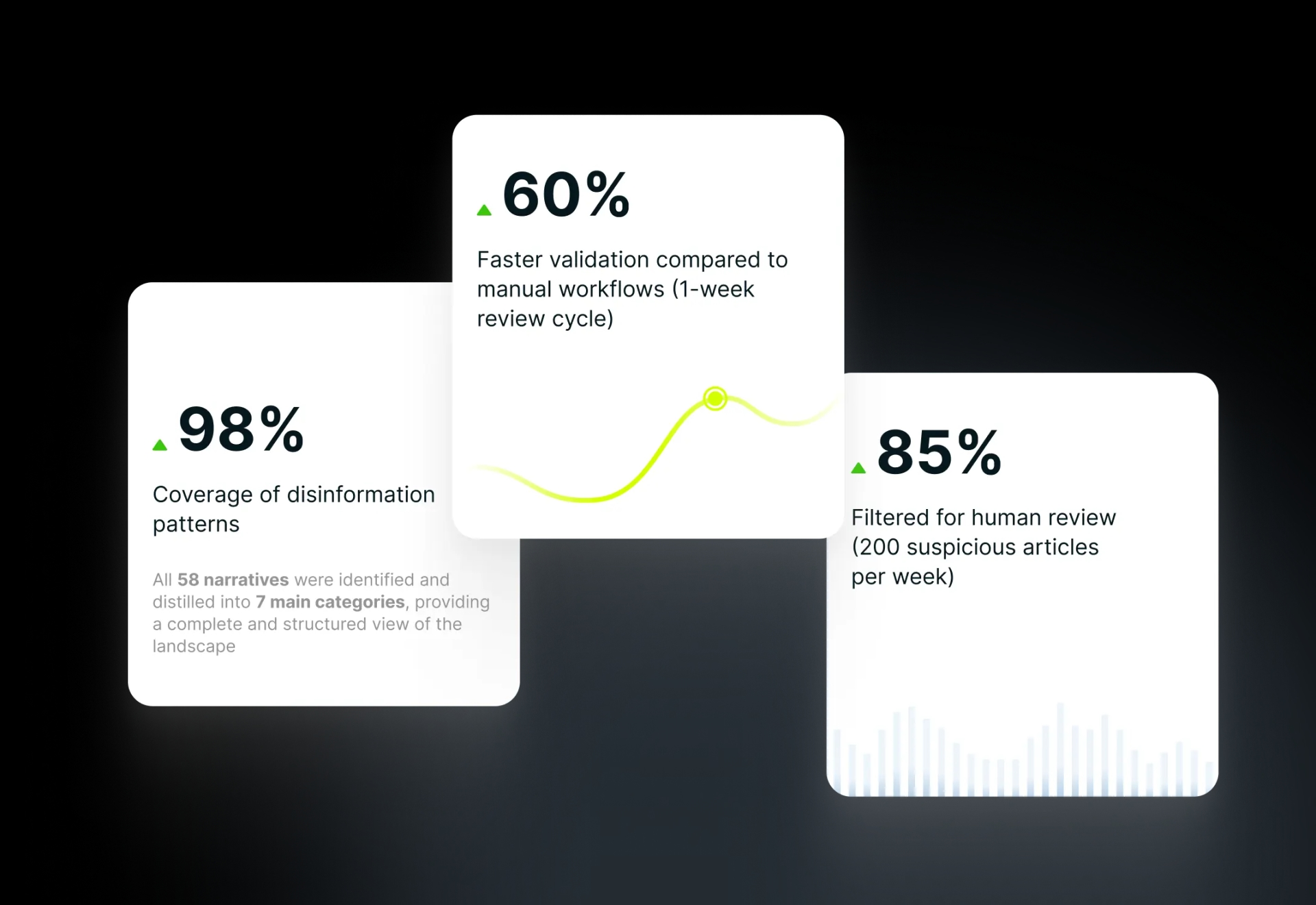
97%

Improved content verification accuracy, enhancing trust in news

60%

Reduced manual review workload, increasing operational efficiency

10M

Daily content verifications supported, ensuring robust performance

50

Websites integrated via custom parsers

Scalable AI Narrative Detection

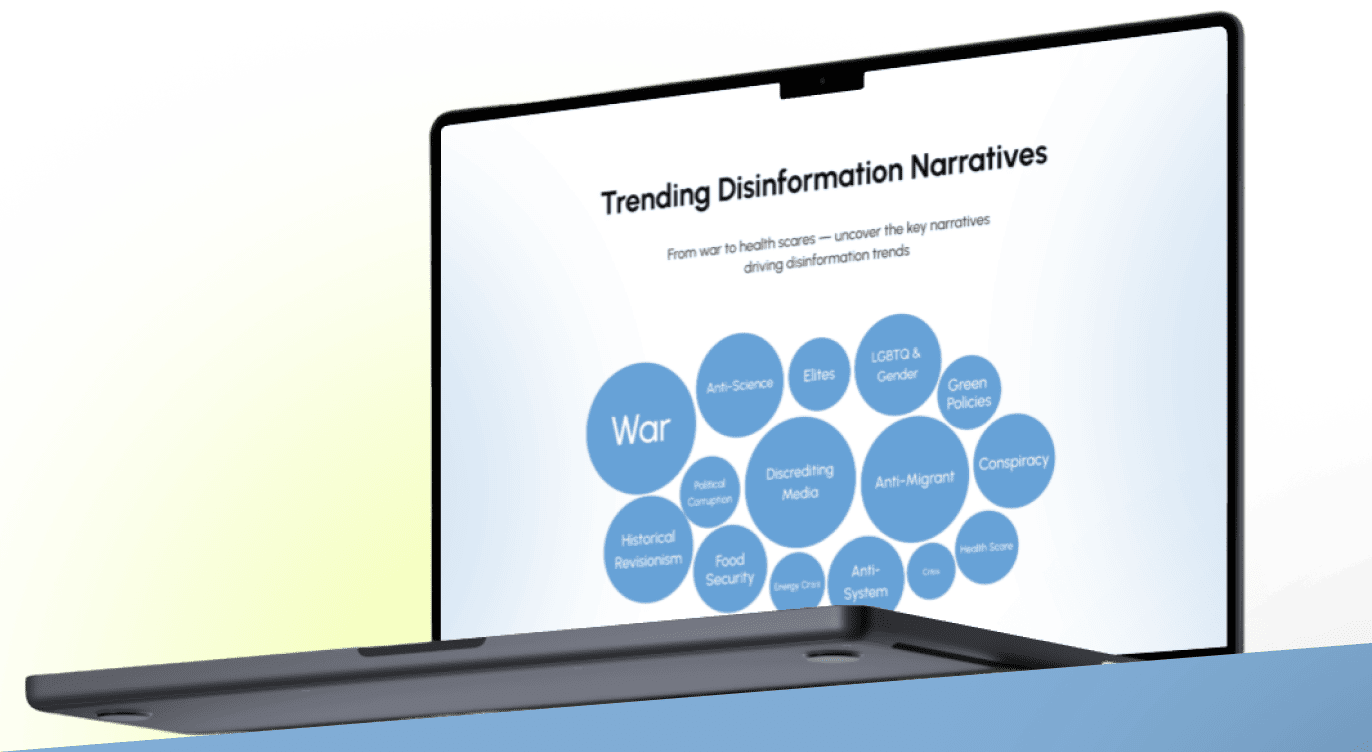
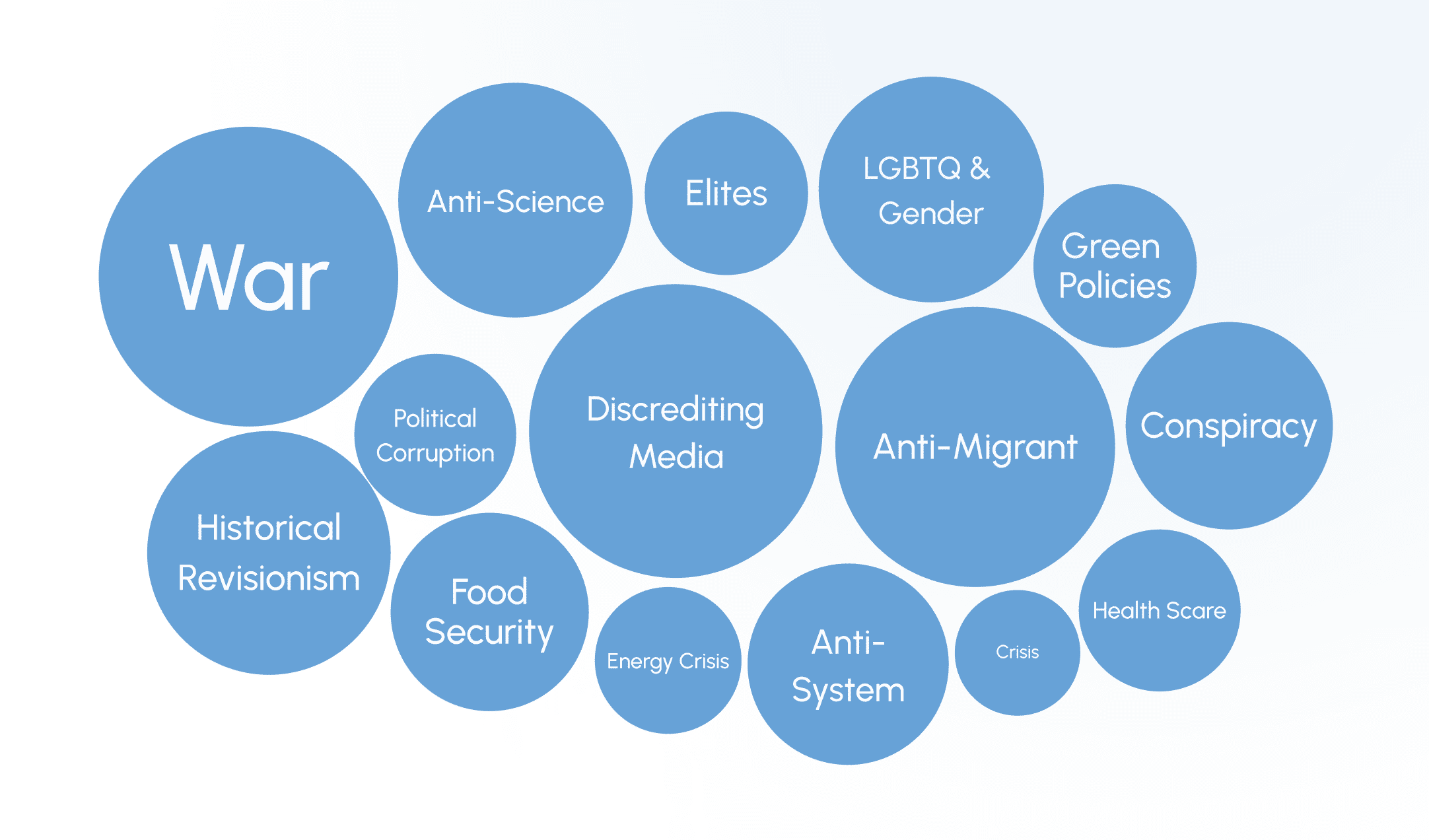
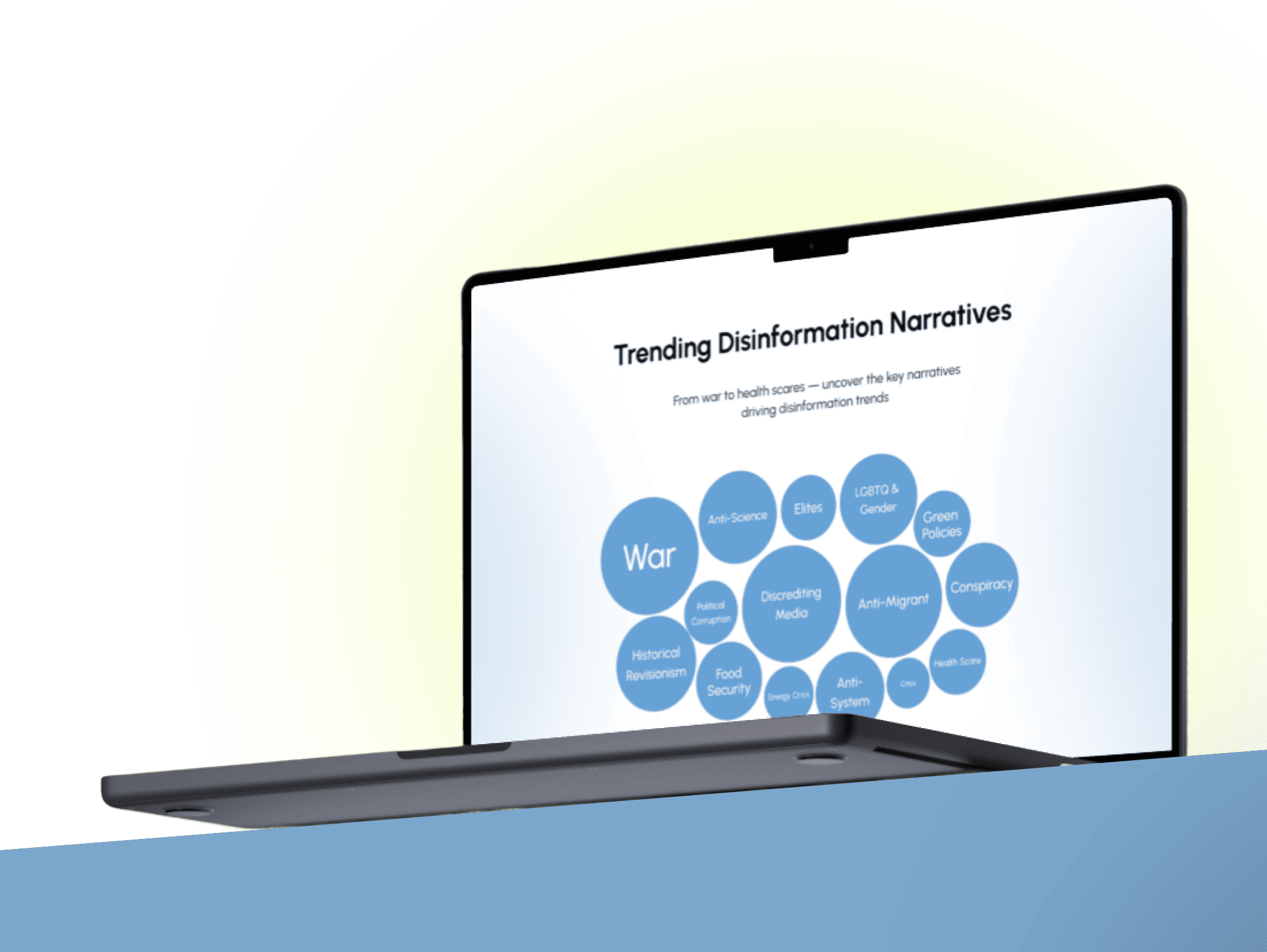
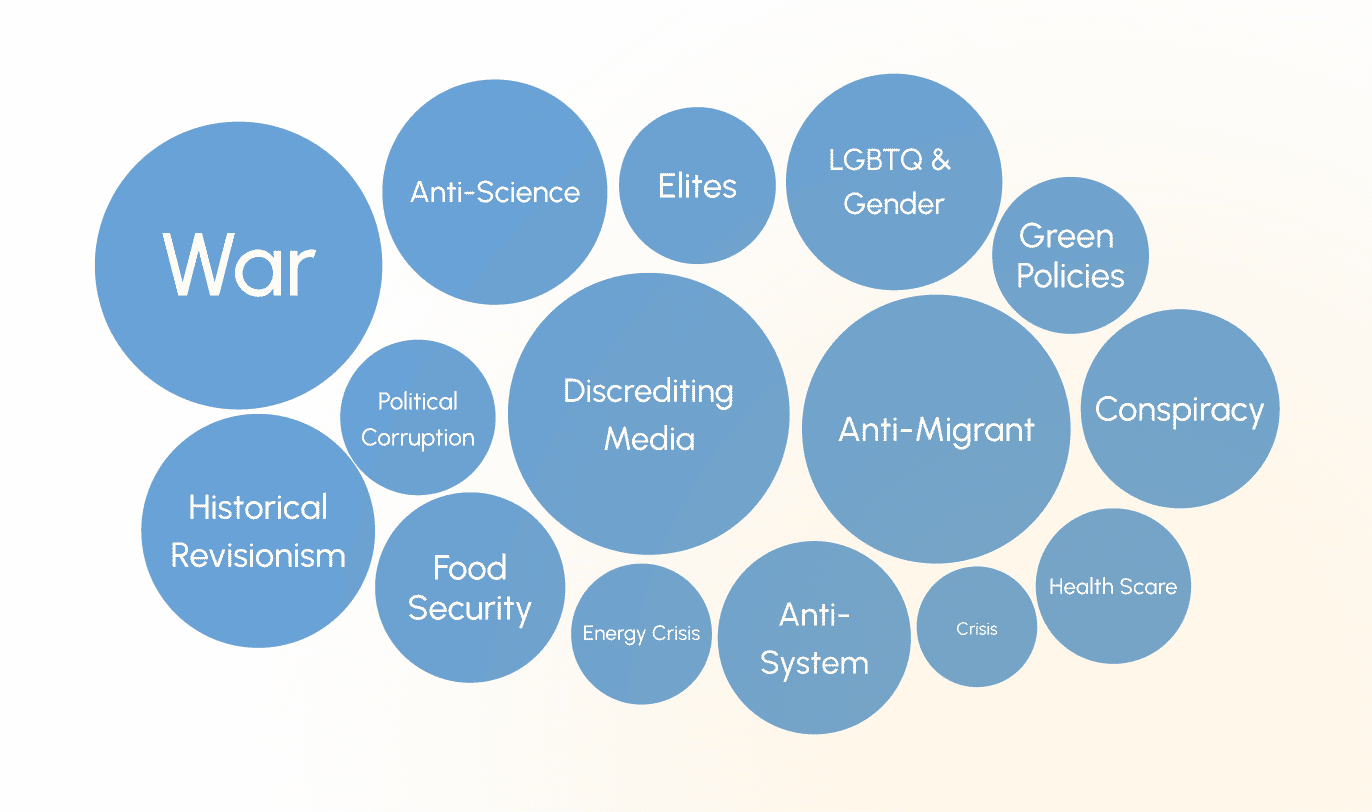
We expanded the Katalin AI Engine to process multiple disinformation meta-narratives, including:

  • Anti-Ukraine
  • Anti-Science
  • Food (In)security
  • Anti-Migration
  • Health Scares
  • Anti-System narratives

This allowed the platform to reduce the need for full retraining.
What we did preview

Multi-Source Data Aggregation Pipeline

We built an automated data ingestion pipeline that continuously collects and normalizes data from:

  • Major social media platforms (Facebook, X, Telegram, Instagram)
  • External websites and custom sources

Using APIs and custom parsers, all data is unified into a centralized analytical workflow, enabling real-time monitoring.
Multi-Platform Scanning preview

Advanced AI-Based Detection Layer

To improve accuracy and reliability, we implemented a hybrid detection approach:

  • Style-based content analysis - detects linguistic patterns typical of disinformation
  • Metadata-based analysis - identifies suspicious sources, engagement anomalies, and propagation signals

This significantly improves classification quality and reduces false positives compared to single-method models.
Multi-Platform Scanning preview

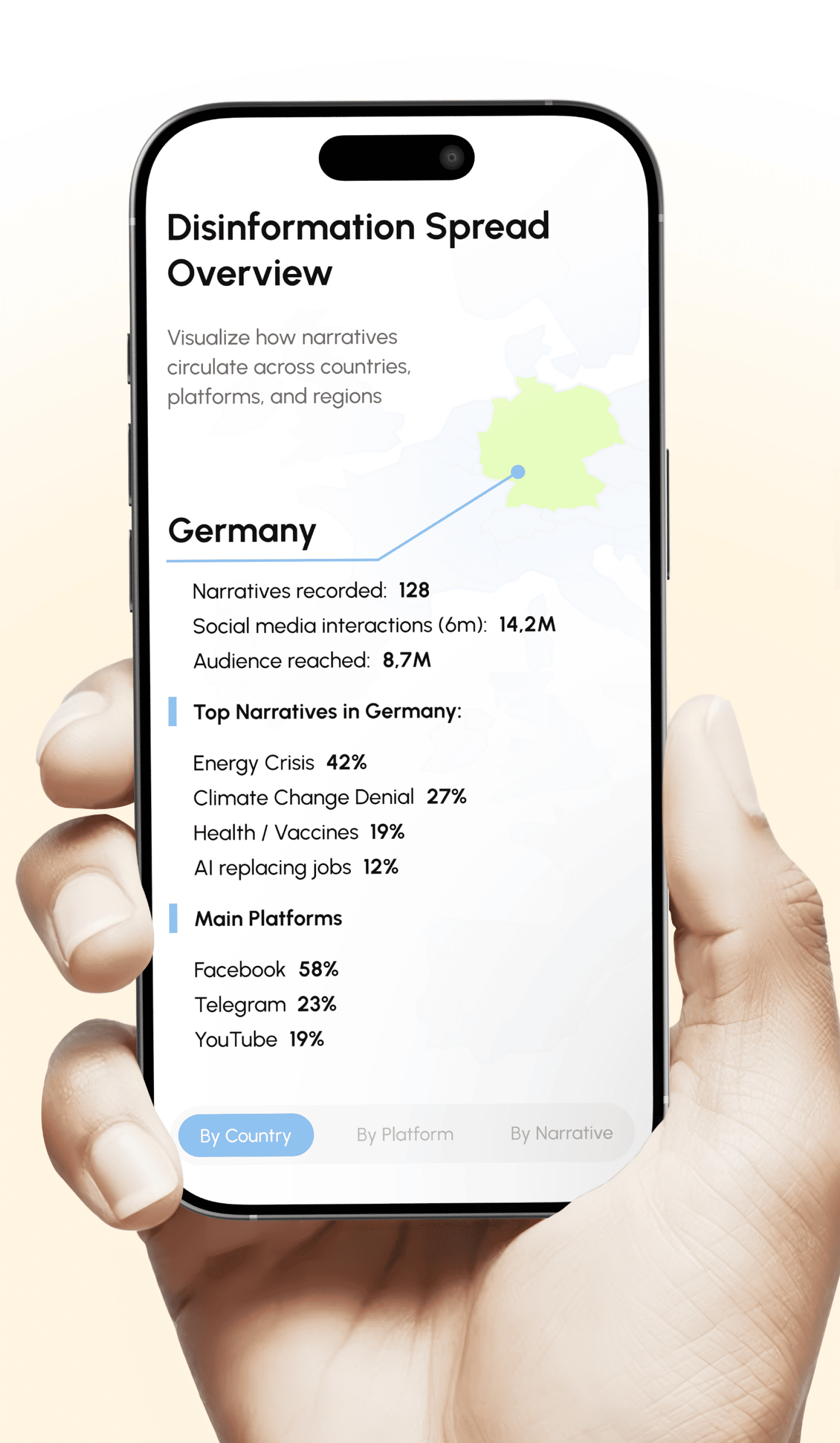
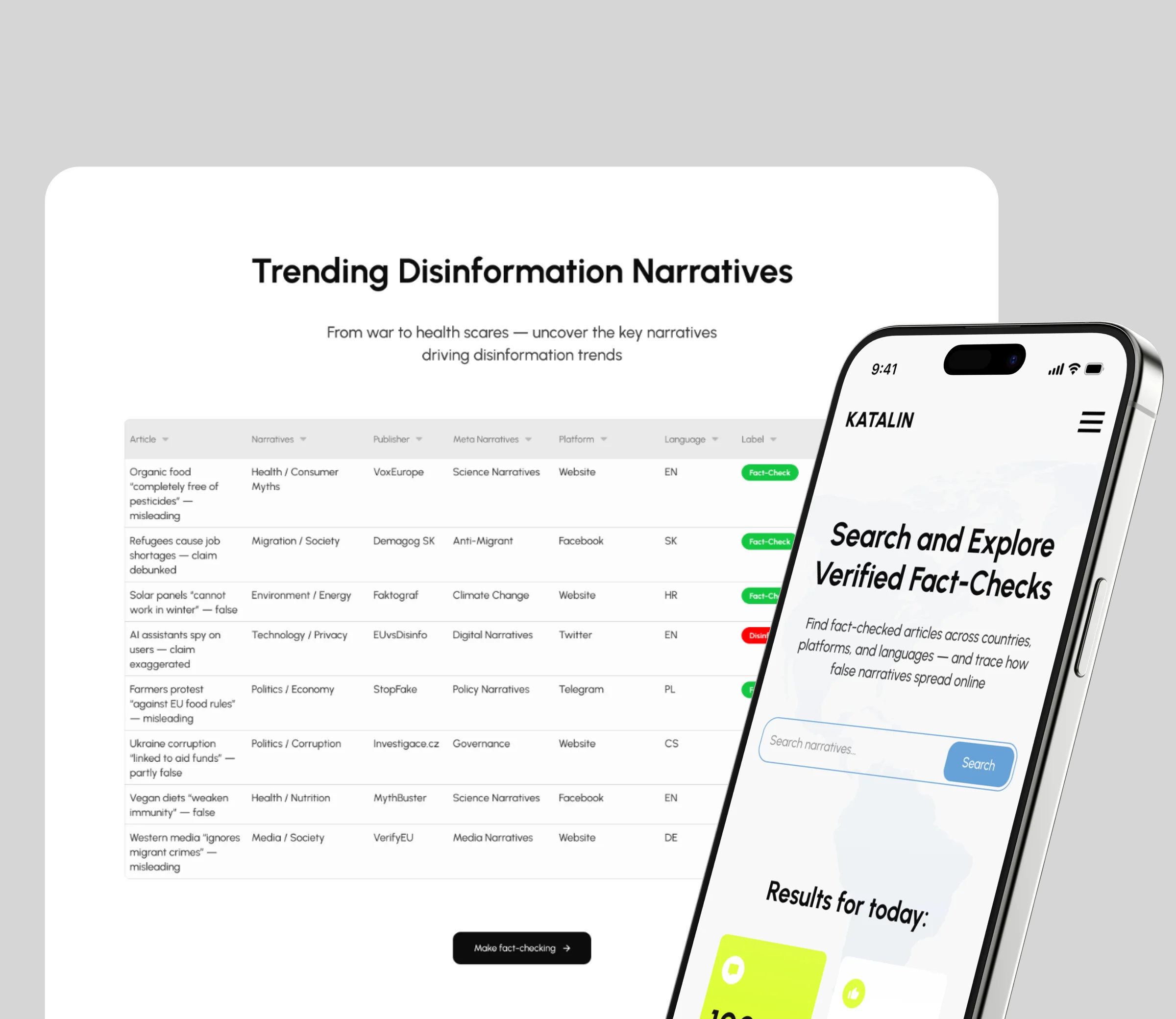
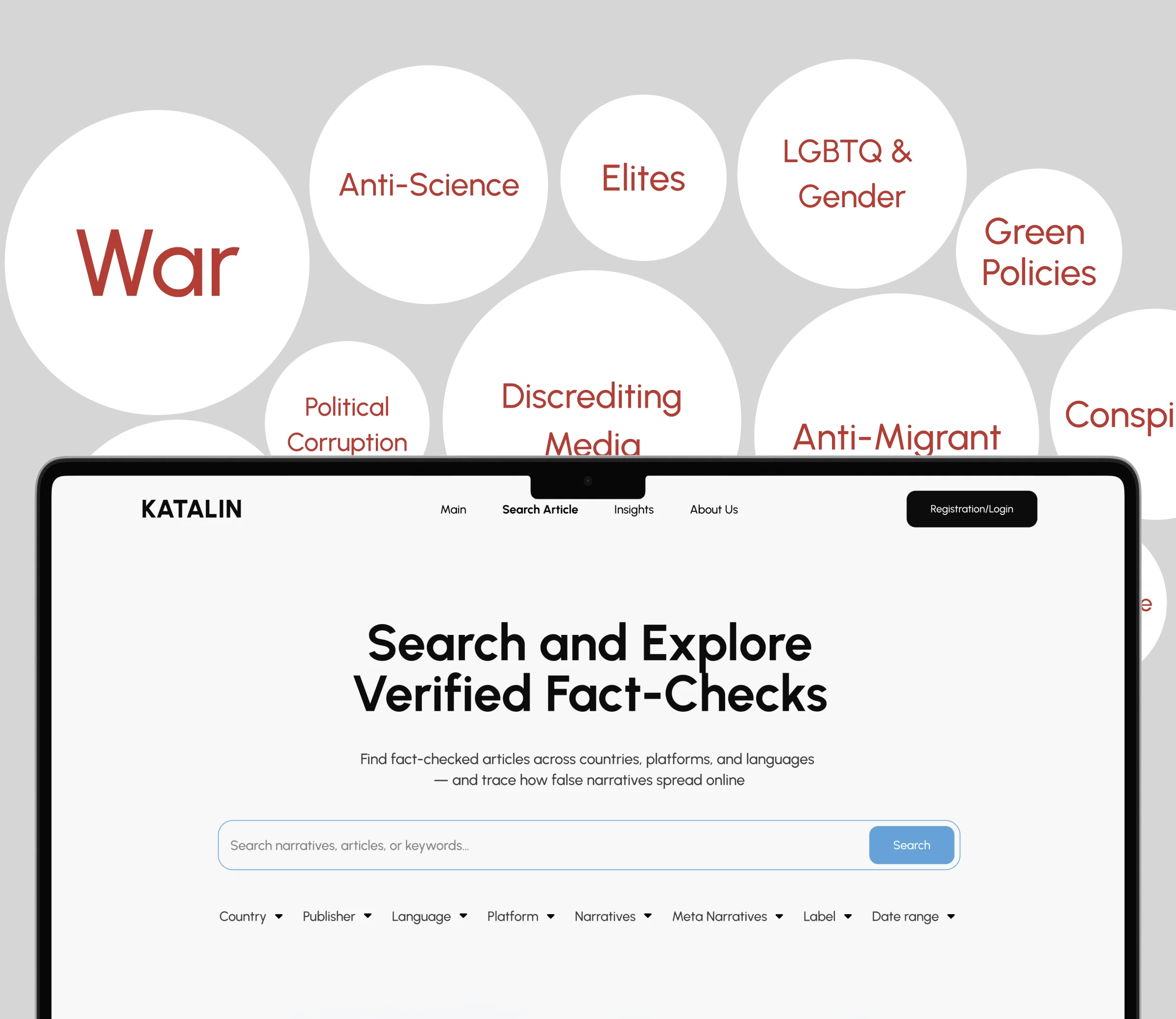
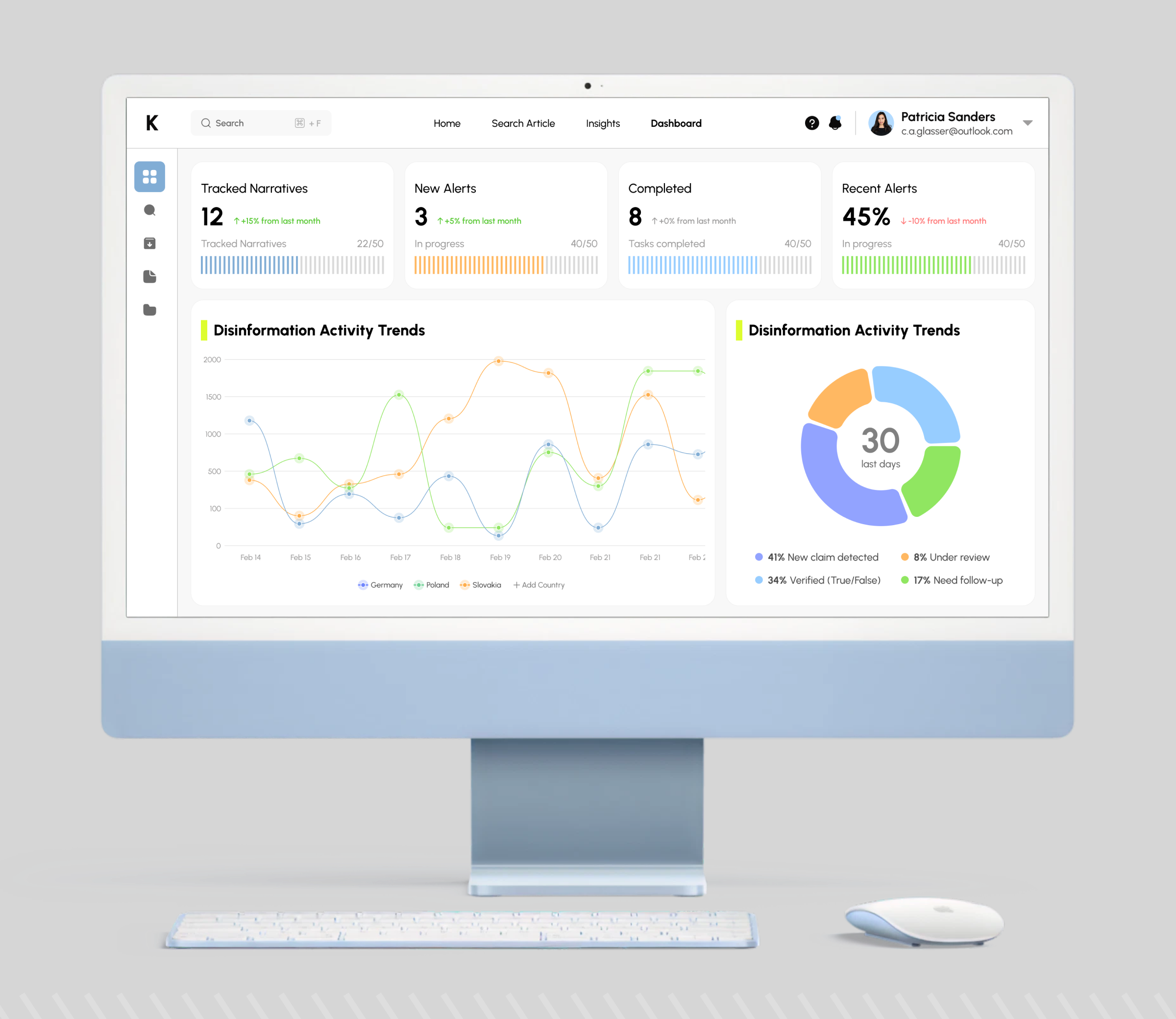
Analytical Interface and Data Exploration

We enhanced the platform with tools for structured analysis and insights:

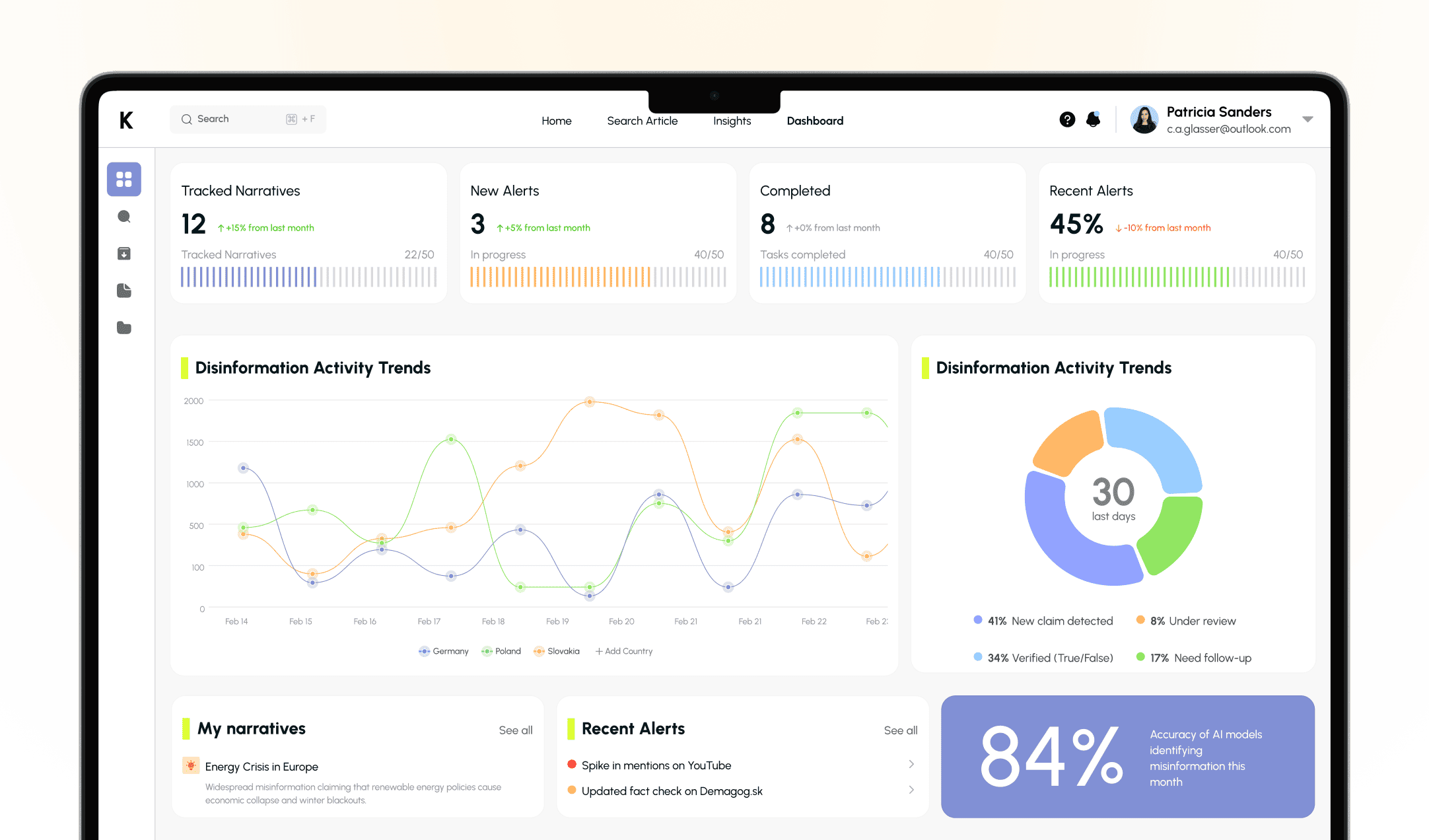
  • Centralized dashboards for narrative tracking
  • Filtering and exploration tools
  • Access to verified fact-check data

This enables journalists and partners to move from raw data to actionable insights more quickly and efficiently.
Multi-Platform Scanning preview

Key results and business value

Expanded AI training dataset

Manual monitoring replaced by automated multi-platform scanning
Increased narrative coverage

Limited data coverage expanded to multi-source narrative tracking
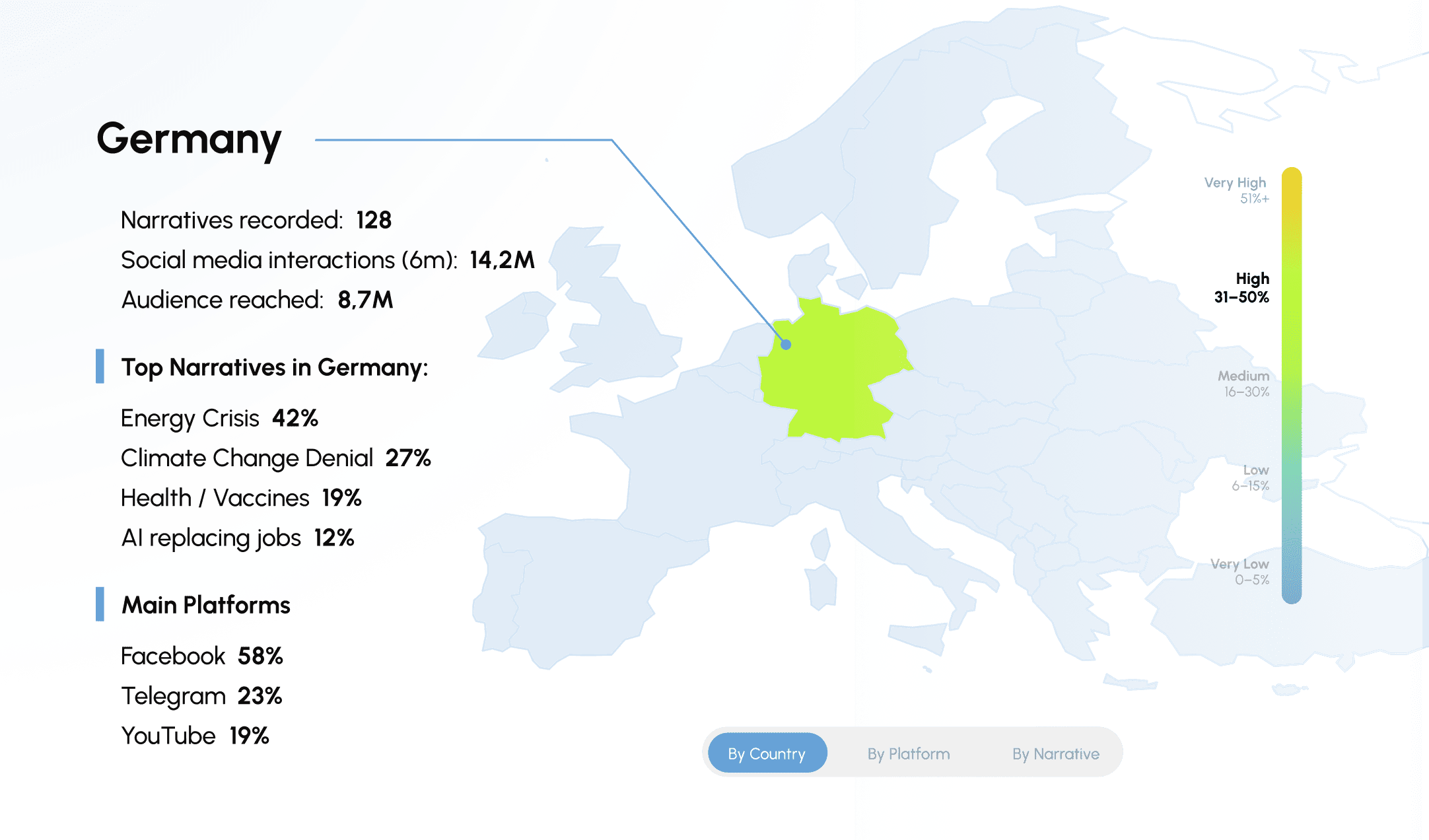
Enabled scanning across 5+ social platforms + custom websites preview

Manual verification enhanced with AI-driven content analysis
Delivered a production-ready Beta Service

Static narrative mapping evolved into continuous narrative detection

Features Delivered

additional useful resources

Key Capabilities of the AI-powered software

  • Multi-source disinformation scanning (4+ platforms, 50+ sites)
  • AI narrative detection (NLP + metadata + style)
  • Automated data pipelines for real-time analysis
  • Retrainable AI models with continuous updates
Amazon Web Services icon

Amazon Web Services

Google Cloud Platform

Google Cloud Platform

Apache Kafka

Apache Kafka

PyTorch

PyTorch

Hugging Face

Hugging Face

Air Flow

Air Flow

Apache

Apache

Github

Gihub

Docker

Docker

additional useful resources

Technical Highlights

Real-Time Data Processing

Built a scalable pipeline using Apache Kafka for live data ingestion and analysis

NLP Fact-Checking Engine

Deployed models such as BERT and GPT to evaluate text for accuracy and context

Cloud Infrastructure

Utilized AWS and GCP to ensure scalability and reliability for high-volume processing

Data Visual Analytics

Designed interactive dashboards using Apache Superset to track misinformation trends

CI/CD Automation

Implemented continuous integration and deployment using Docker and GitLab CI

Multi-Source Data

Scanners and parsers for automated data ingestion across platforms and websites

Efficient Processing

Achieved required accuracy with much smaller compute power without LLMs

Client Feedback

"No European newsroom can face cognitive warfare alone. Katalin brings journalists together around shared AI power and cross-border intelligence. It turns collaboration into a defense system that learns, adapts, and keeps them one step ahead. With Katalin we tried to shape the first barrier in collective resilience of CEE journalism to rising tide of cognitive warfare."

Client feedback author photo

Maksym Eristavi

Product Lead, Free Press for Eastern Europe

Unlock new growth opportunities

Discover how custom software with AI-powered features can help your business move faster, improve workflows, and create new competitive advantages.

Similar solutions we implemented

Related blog posts


How to create a data lake for machine learning
MLAIData lake

How to create a data lake for machine learning

Building a data lake might sound like a task for large tech corporations or data scientists in lab coats. However, in reality, it’s a practical and strategic move for any business seeking to harness the full potential of machine learning. If you're gathering data and considering how to utilize it for informed decisions, automation, or AI-powered services, you need a data lake. At YTC, we help businesses transform their scattered data into structured, accessible, and scalable systems. In this article, we’ll walk you through what a data lake is, why it's essential for machine learning, and how to build one the right way.

Ethical implications of AI consulting for business growth
AI

Ethical implications of AI consulting for business growth

AI is not experimental anymore — it’s shaping how companies innovate, optimize, and grow. As businesses bring AI into their daily operations, they often turn to an AI consulting service to guide them through the process. But AI adoption is not only about efficiency and scale; it also raises questions of trust, responsibility, and impact that cannot be ignored. When advisors step in to help organizations, they don’t just deliver technical roadmaps. They influence how technology affects employees, customers, and entire industries. And with the rapid rise of generative AI consulting, the ethical stakes are becoming higher than ever.

Will AI replace software engineers? A look into the future of development
AI

Will AI replace software engineers? A look into the future of development

The rapid evolution of artificial intelligence (AI) has led to growing concerns among software engineers about their job security. Will AI replace human developers? Or will it serve as a powerful tool to enhance productivity? The truth lies somewhere in between - kind of like a badly written function that still somehow works. AI is already making significant strides in software development. Tools like GitHub Copilot, ChatGPT for coding assistance, and various AI-driven testing frameworks help automate repetitive tasks, reduce human errors, and improve efficiency. According to a report by McKinsey, AI-powered development tools can boost productivity by up to 40%. That’s right - AI is here to do the grunt work, so you can focus on the important things, like debugging that same function for the 15th time. However, software engineering is much more than writing lines of code. It involves problem-solving, architecture design, creative thinking, and an understanding of human needs - areas where AI still stares blankly, like a junior dev on their first day.