YTC LogoYTC Logo
Home
Case Studies
Blog
Menu illustration
ServicesCase StudiesHow we workAbout usCareerContactsBlogHelp Center
sales@ytc.company
sales@ytc.company
Home
Cases
Document Analysis Solution for Private Equity

Document Analysis Solution for Private Equity

Document Analysis  Solution for Private EquityDocument Analysis  Solution for Private Equity
AzureAIDevOpsGenAI

Document Analysis Solution for Private Equity

AzureAIDevOpsGenAI

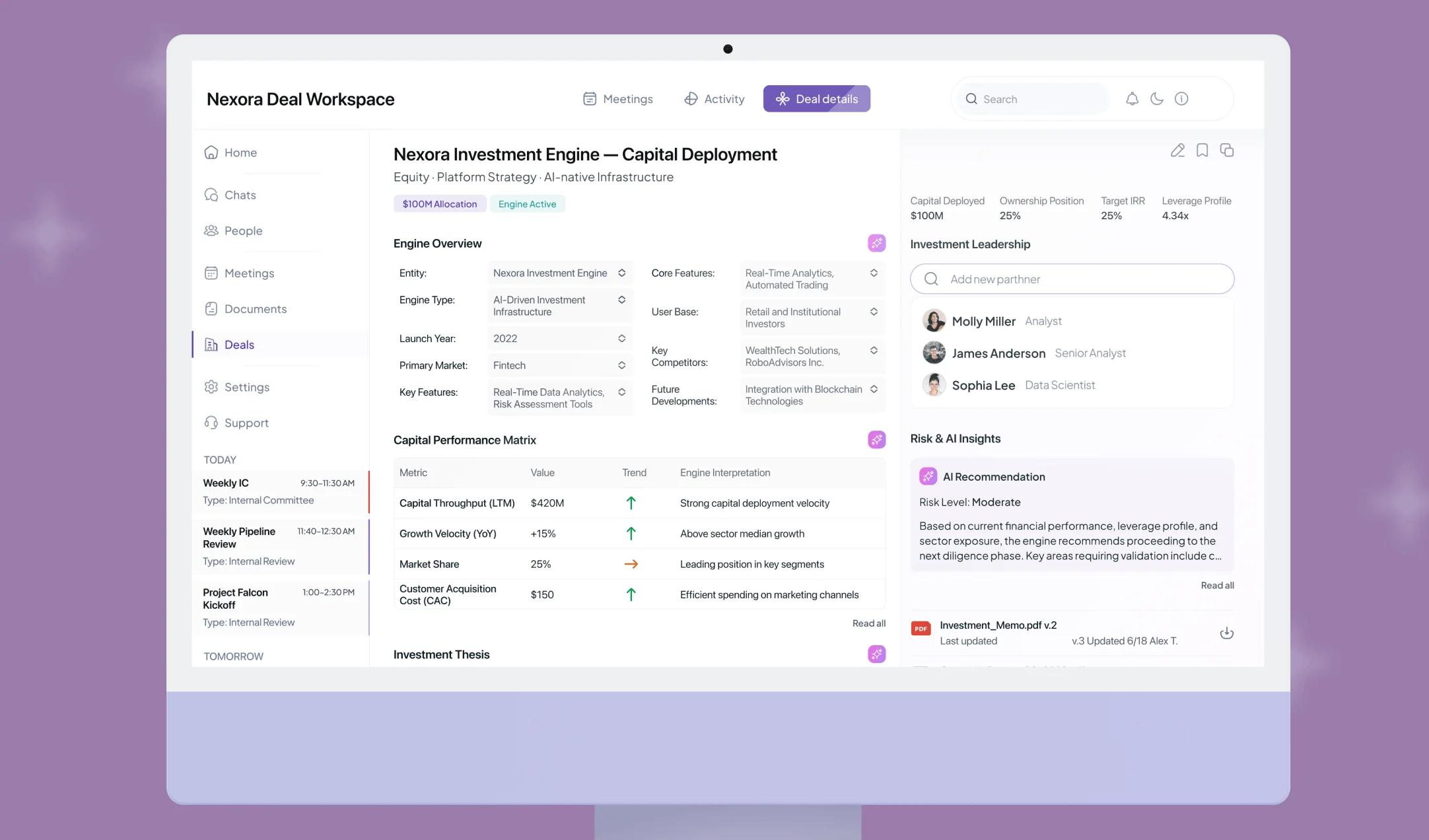
A private equity firm operating in the US market relied on manual processing of large financial documents, which made them difficult to manage, slowed down analysis, and limited the speed of investment decision-making. To accelerate document processing, we developed an AI module integrated into CRM that extracts financial metrics and structures data for faster and more consistent deal evaluation.

Industry

FinTech

Client

Under NDA

Region

USA

Main challenges

Business Challenge: Manual document processing slowed investment analysis workflows

The client team worked with large volumes of financial documents, which made analysis slower and created inefficiencies in CRM data handling.
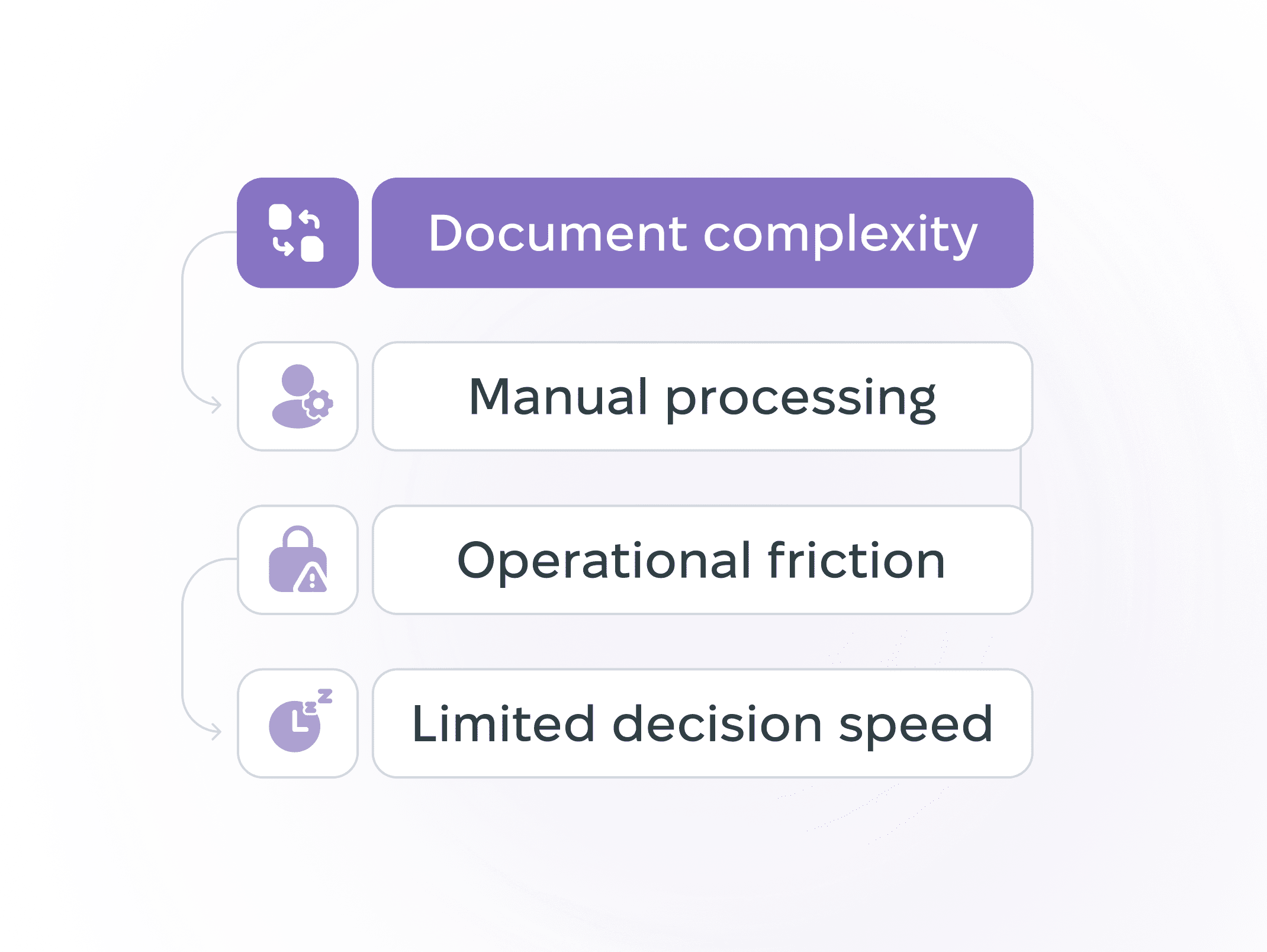
  • Large documents (50+ pages) required significant time to review
  • Key financial metrics were extracted through time-consuming processes
  • CRM data entry depended on repetitive analyst input
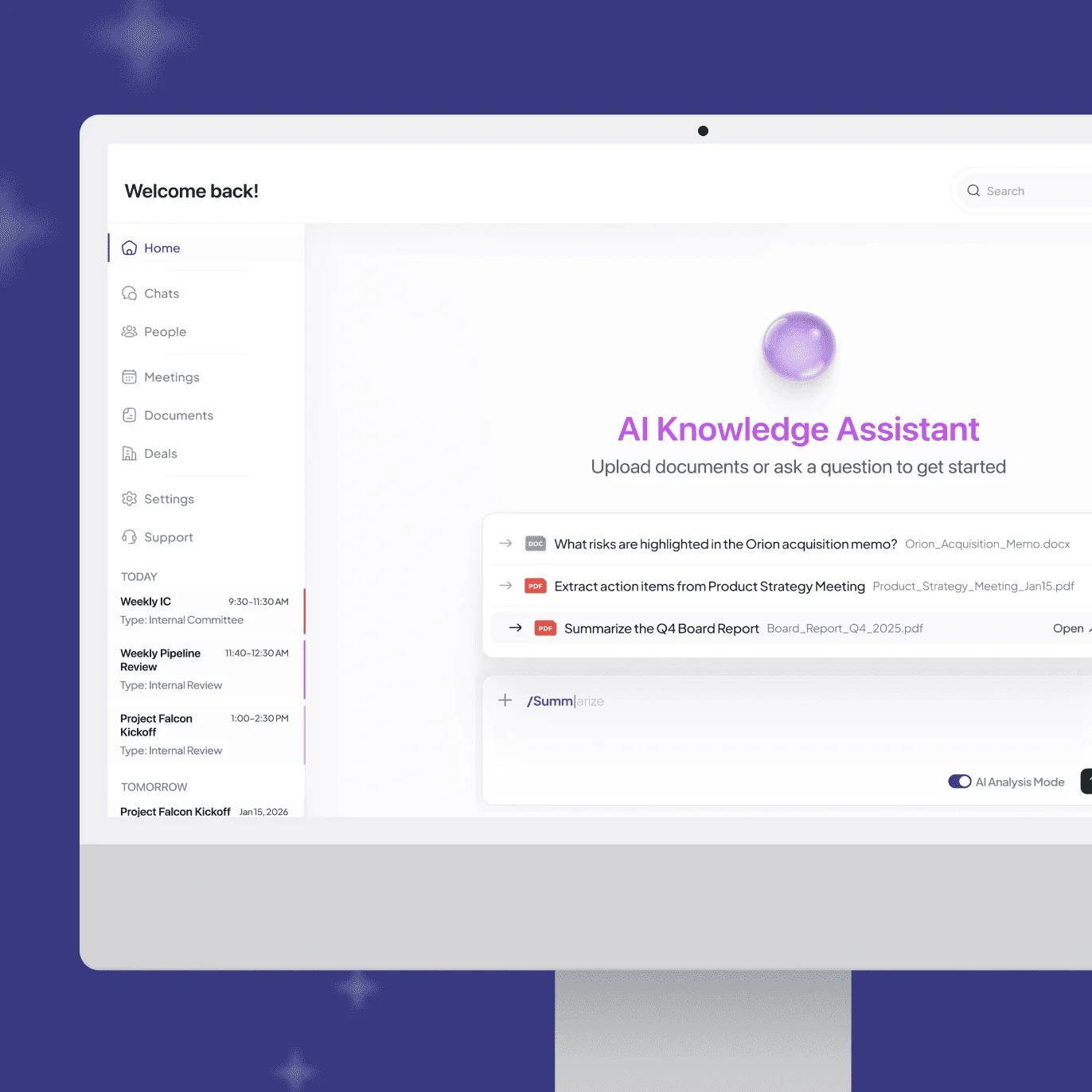
Manual processing and document complexity diagram

Technical Challenge: Extracting structured financial data from complex documents

Financial data was distributed across multiple document formats and needed accurate extraction and interpretation.
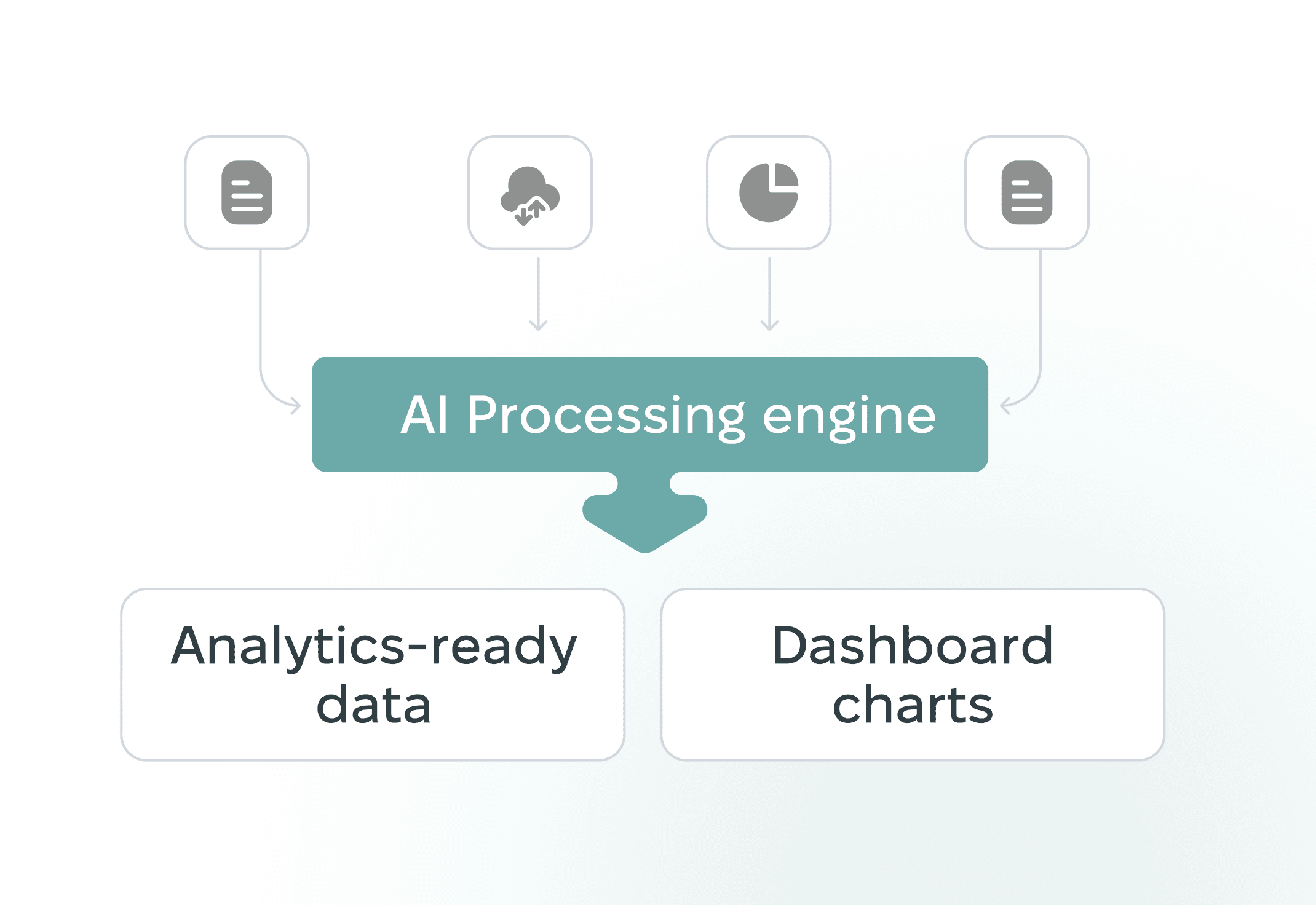
  • Documents in PDF, PPTX, DOCX, and Excel required different parsing approaches
  • Financial metrics embedded in text needed contextual understanding
  • Support for custom metrics demanded flexible extraction logic
AI processing engine for financial data extraction

Delivery Challenge: Building and validating AI workflows with limited data

The solution required fast development and validation of AI models using a limited dataset and multiple technologies.
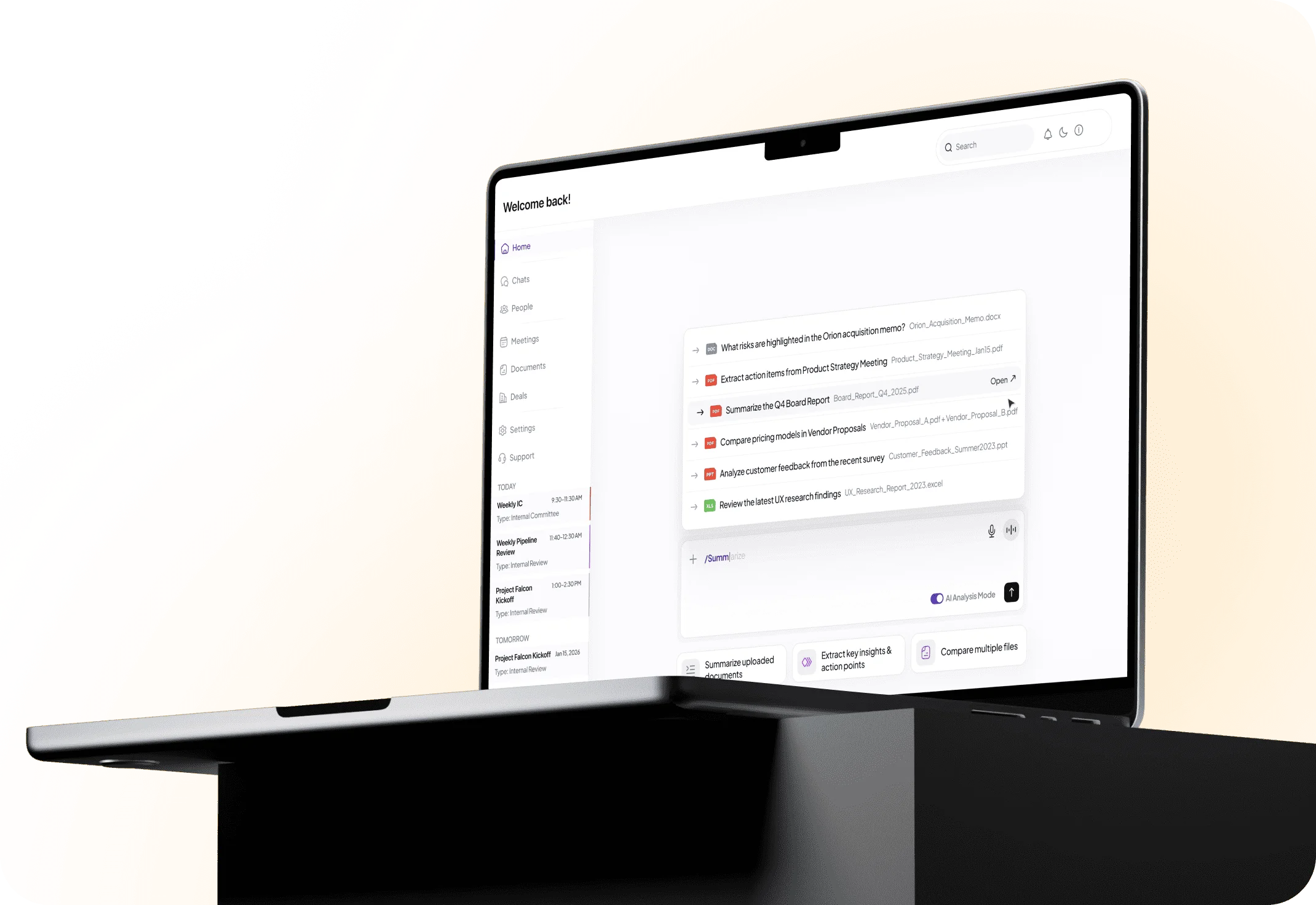
  • Limited dataset (~100 documents) required manual labeling and preparation
  • Multiple OCR and AI approaches had to be evaluated in parallel
  • CRM integration required combining all components into one pipeline
AI workflows and document analysis workspace

What we did

We built an AI module integrated into CRM that enables private equity teams to process large volumes of investment documents and extract structured financial data. The system reads documents in multiple formats, including PDF, PPTX, DOCX, and Excel, and identifies key financial metrics such as revenue, EBITDA, and IRR.

To achieve this, we collected and labeled client documents, creating a dataset of around 100 samples with annotated metrics and document types. We evaluated multiple OCR solutions and selected the most accurate for financial data extraction. An LLM-based approach was used for text analysis, supported by a pipeline for entity extraction. All components were combined into a unified pipeline and integrated into CRM.

~100

Labeled documents used to train and validate extraction accuracy

80%

Reduction in time spent on document processing compared to traditional manual methods

50+

Documents processed per file, reducing time spent on large document analysis

15H/W

Reclaimed by analysts who previously performed manual data extraction or reporting

AI Module for Document Processing

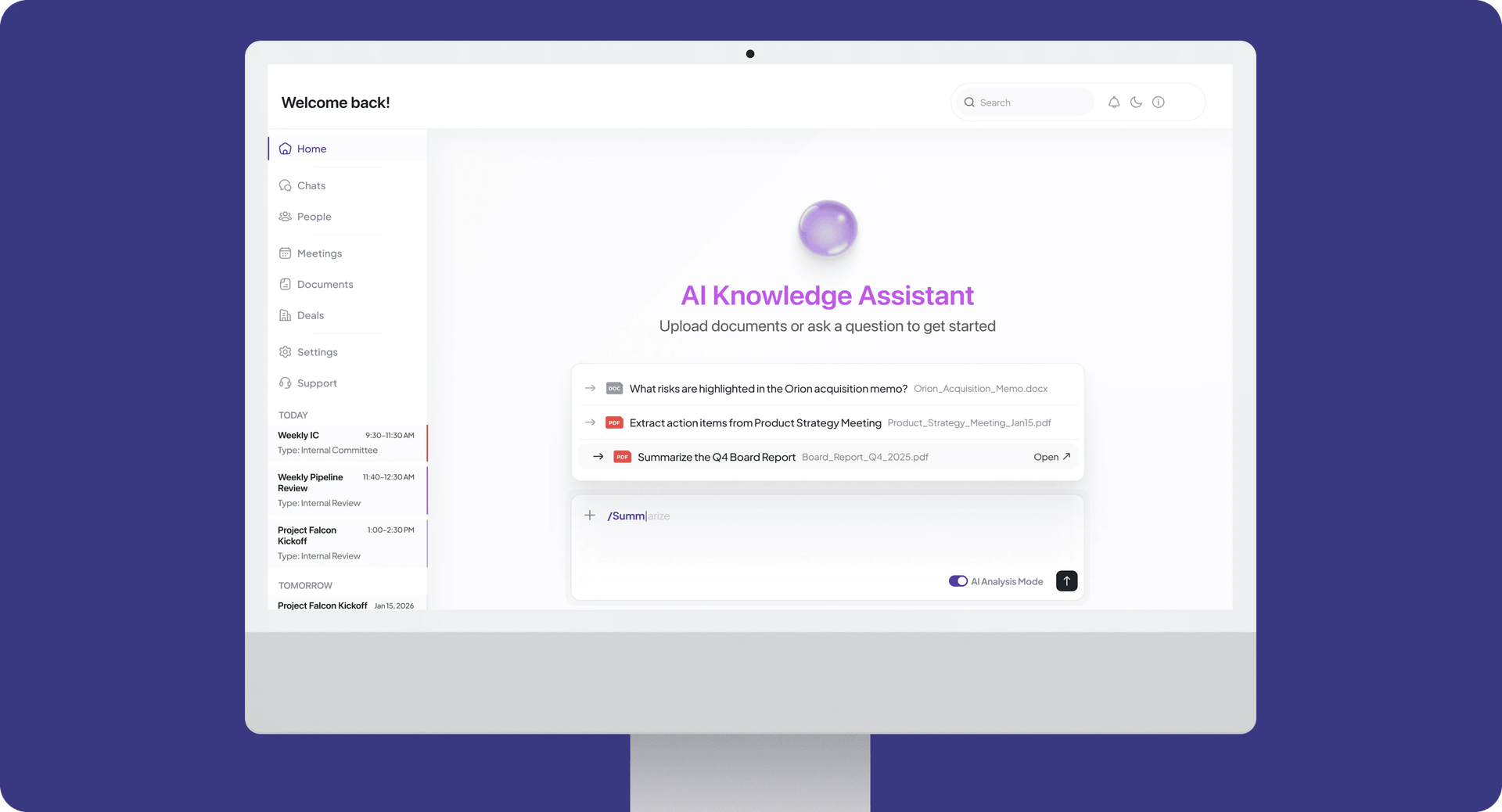
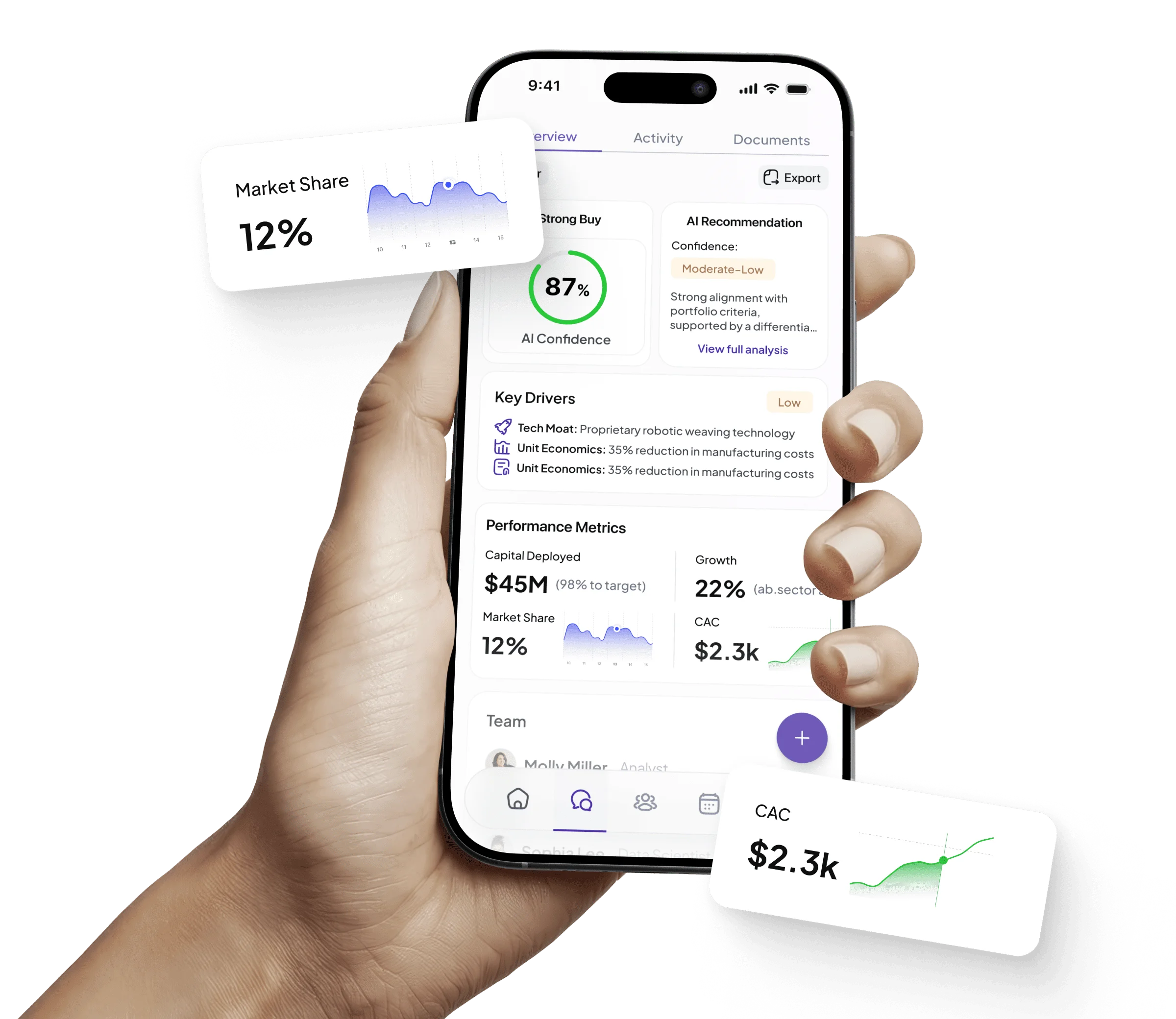
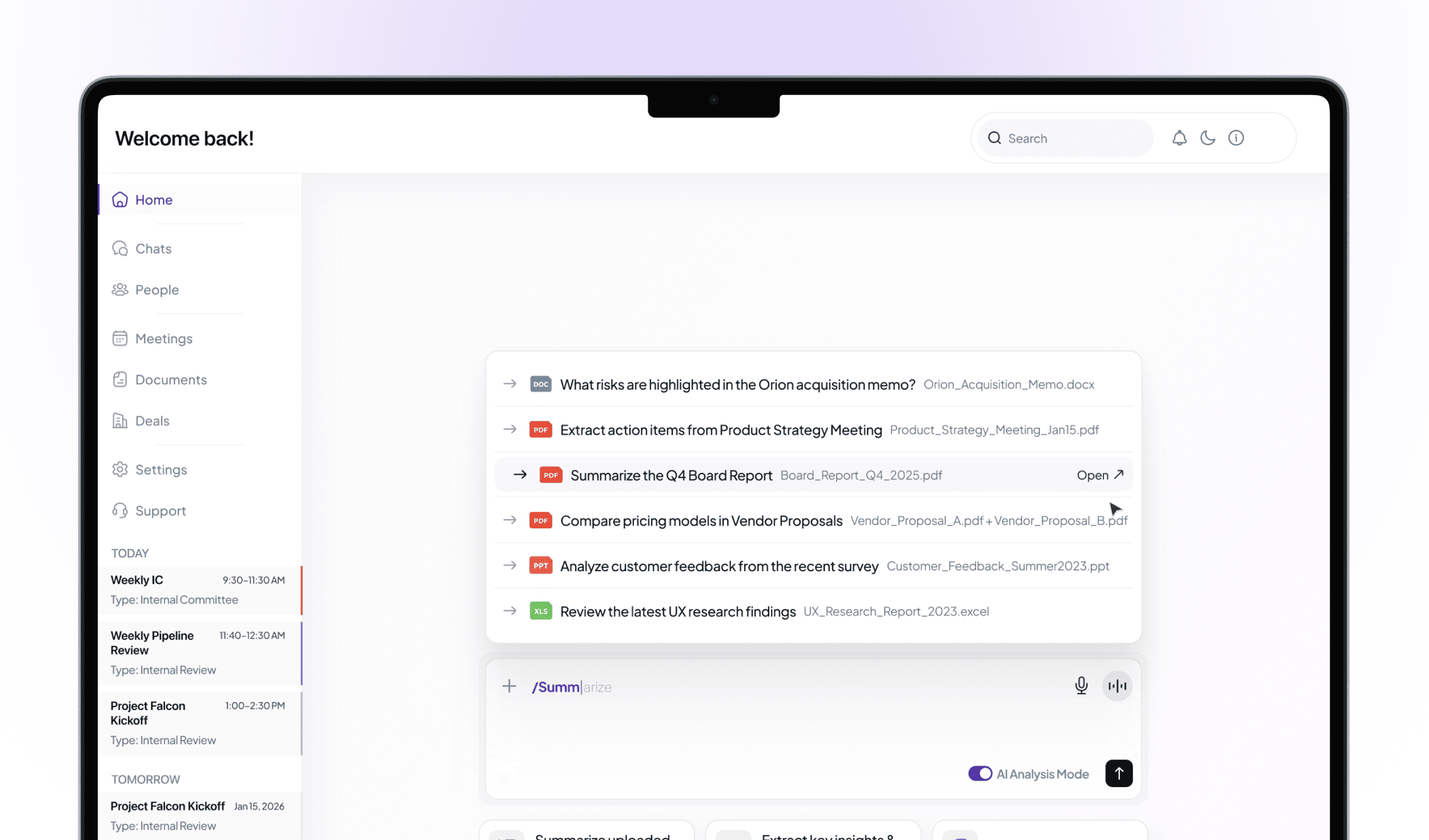
An AI module within CRM was developed to process large investment documents and extract financial data, enabling faster analysis and reducing manual workload.
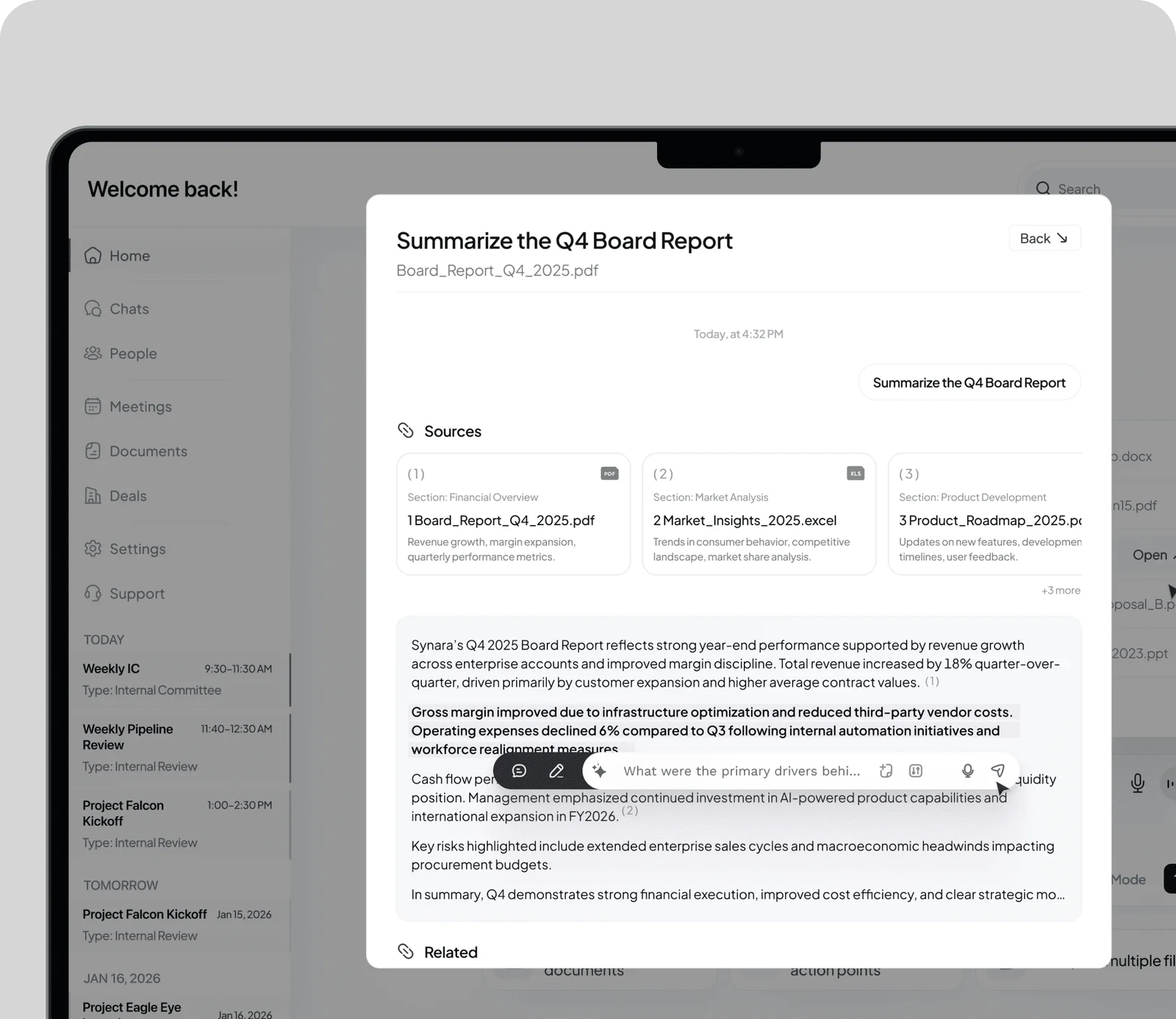
  • Processes 50+ page documents across multiple formats
  • Extracts key financial metrics automatically
  • Structures data for direct CRM usage
AI document processing module in CRM

OCR Evaluation and Selection

Multiple OCR solutions were tested, and the most accurate one was selected, ensuring reliable text extraction from financial documents.
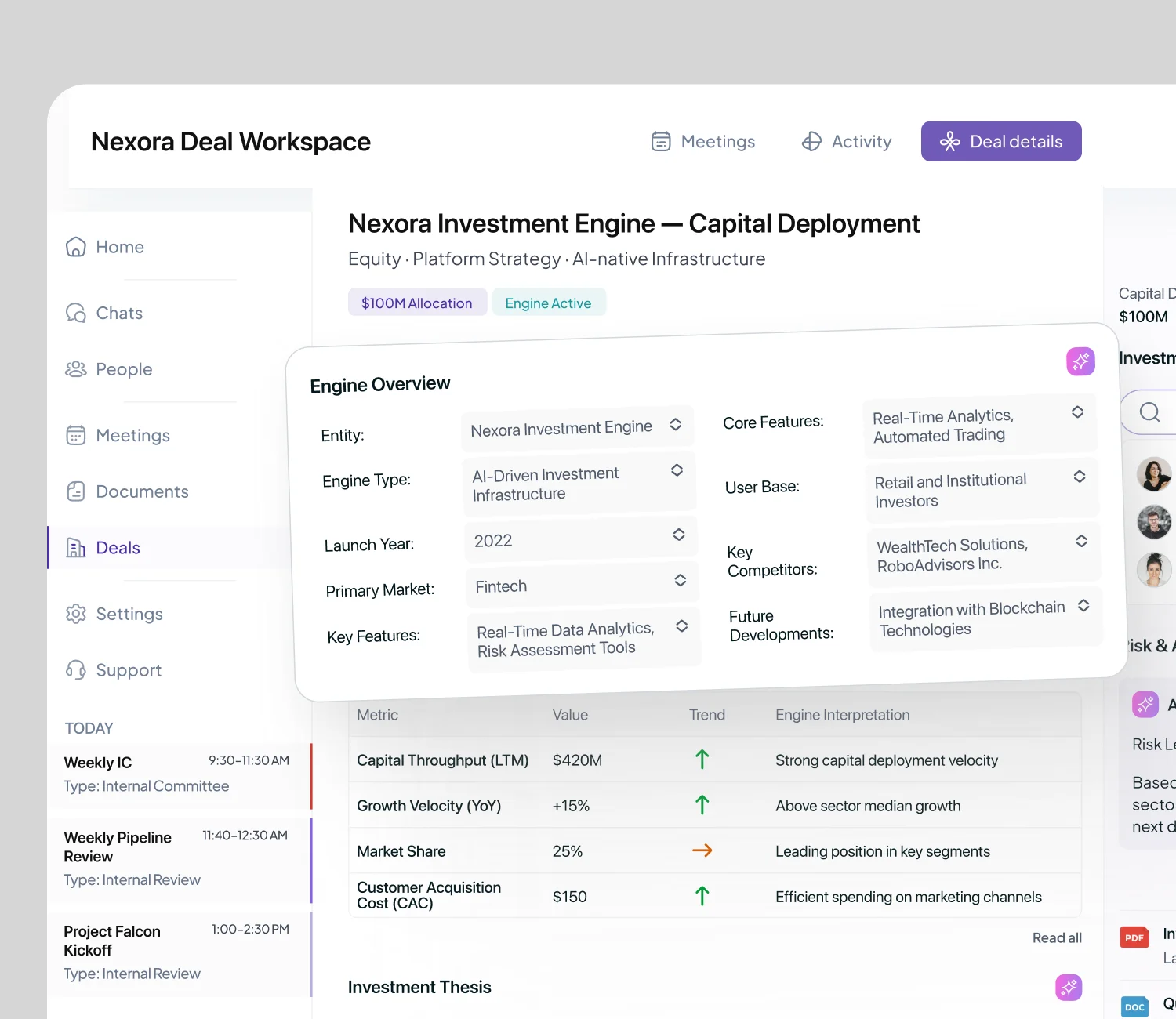
  • Improved accuracy of data extraction from documents
  • Enabled consistent processing across document formats
OCR evaluation and decision support interface

LLM-Based Financial Data Analysis

An LLM-based approach was implemented for text analysis, improving understanding of financial context and increasing extraction accuracy.
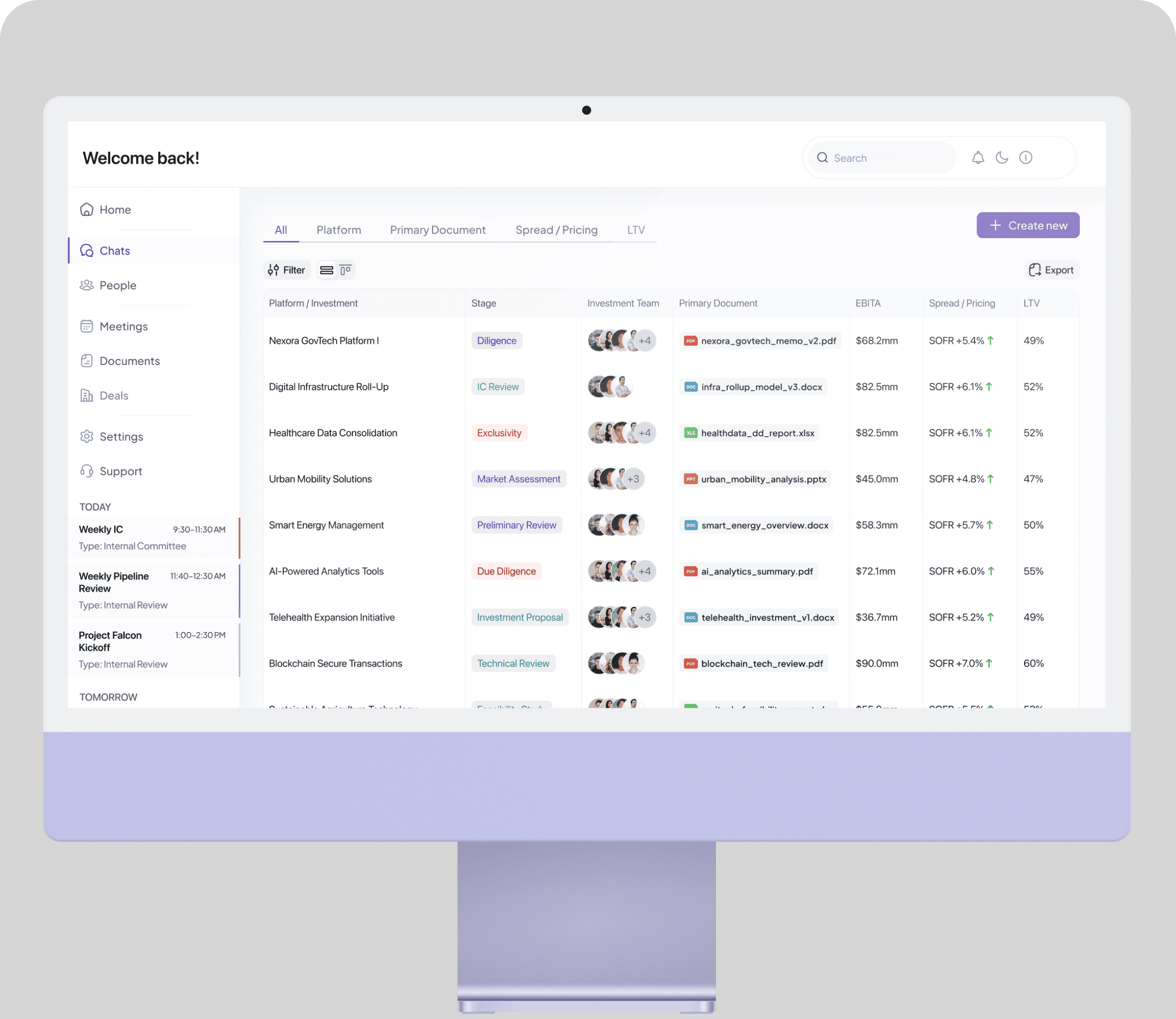
  • Extracts financial metrics from complex text
  • Improves analysis quality and accuracy
  • Ensures consistent data extraction
LLM-based financial data analysis interface

Custom Metric Extraction Capability

Support for custom metric definition was introduced, allowing users to tailor data extraction to their investment workflows.
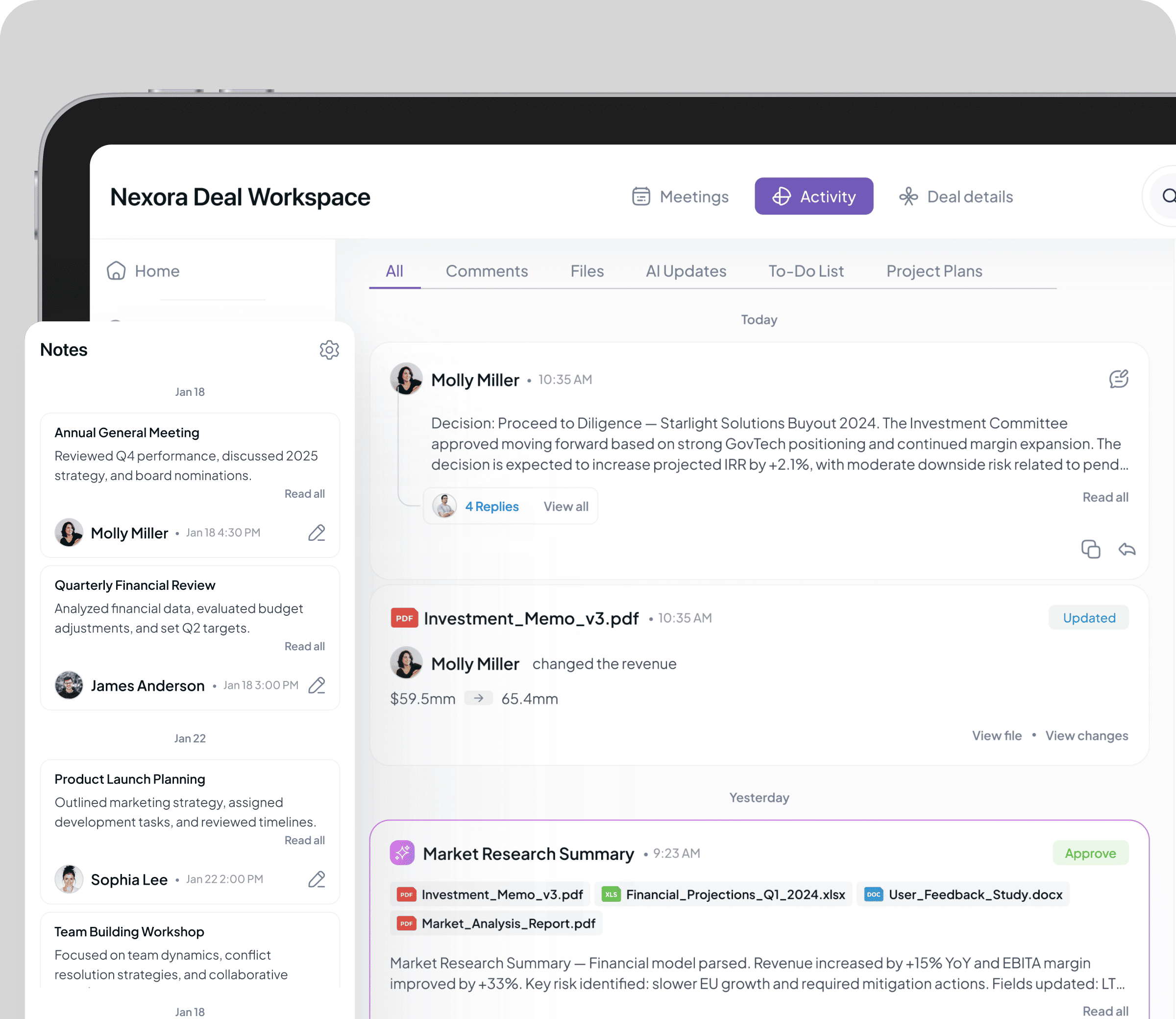
  • Supports user-defined financial metrics
  • Adapts to different investment evaluation needs
  • Expands the use cases of the CRM system
Custom metric extraction and data analysis workflow

Unified AI Processing Pipeline

Support for custom metric definition was introduced, allowing users to tailor data extraction to their investment workflows.
  • Automates end-to-end document processing workflow
  • Integrates directly into CRM data structure
  • Enables automatic population of CRM fields
Unified AI processing pipeline

Key results and business value

Unified processing workflows

Fragmented workflows consolidated into a unified processing pipeline
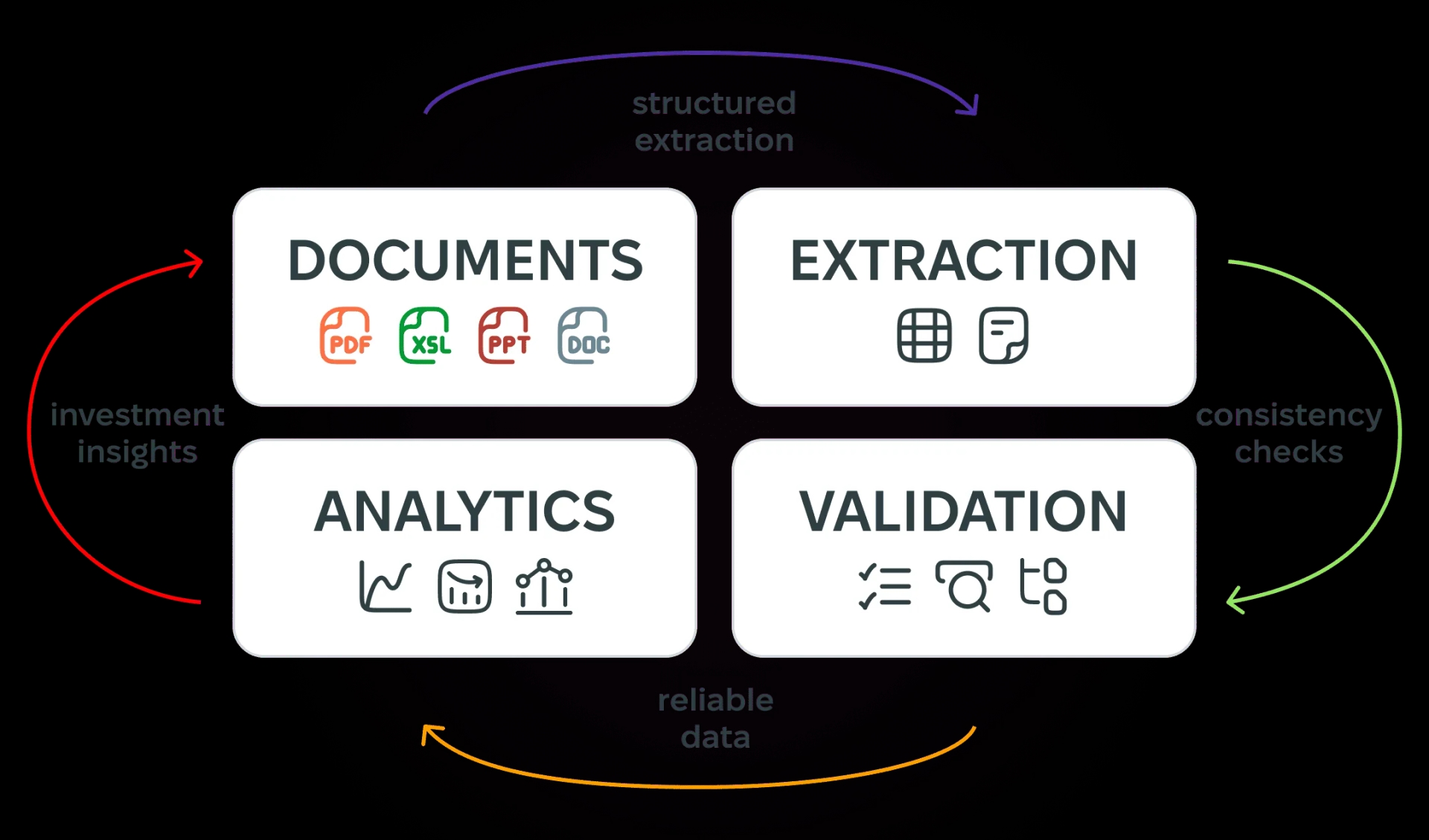
Automated document analysis flow

Document-heavy workflows replaced by automated analysis
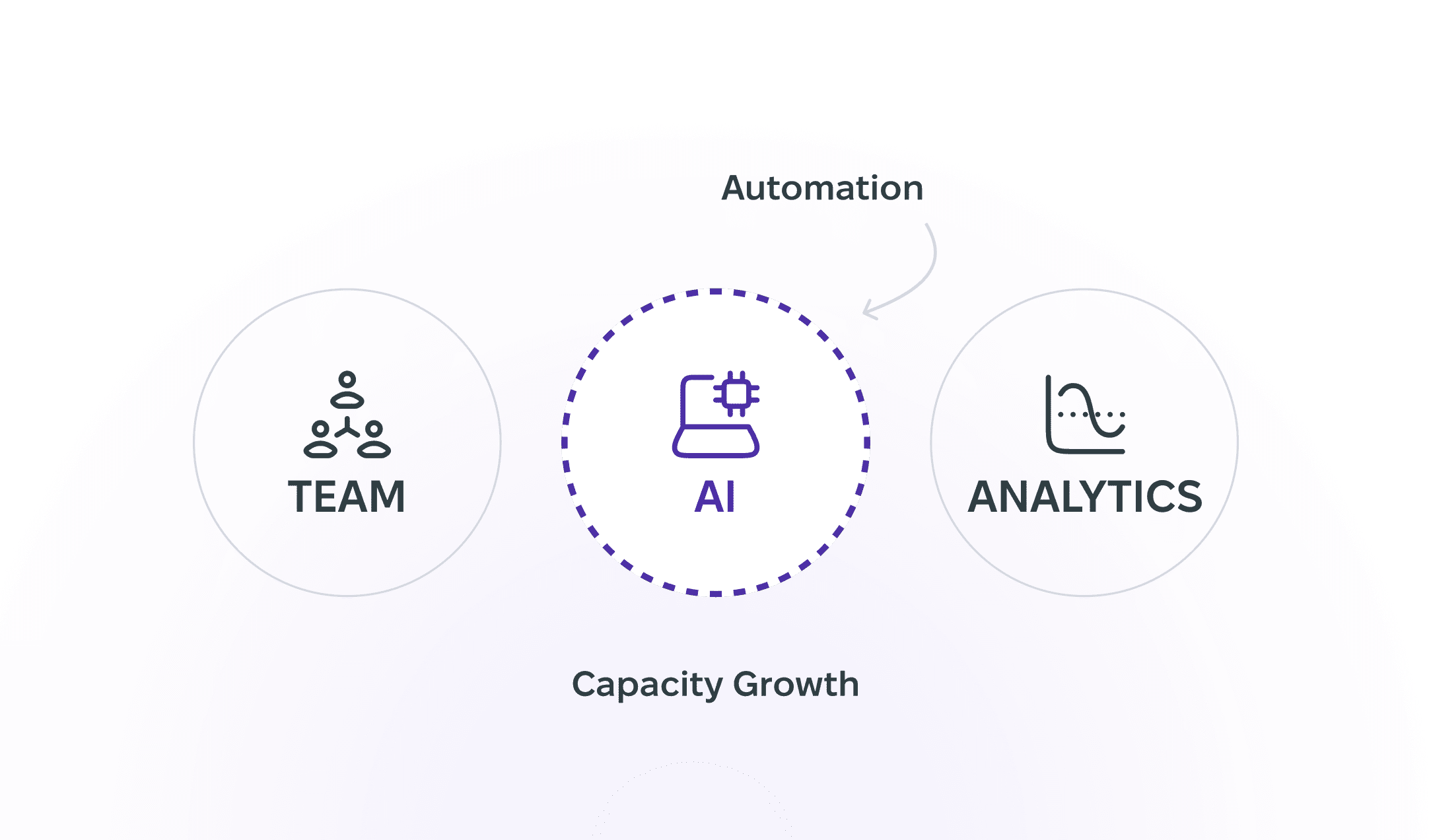
Faster deal analysis workflow

Slow document review transformed into faster deal analysis
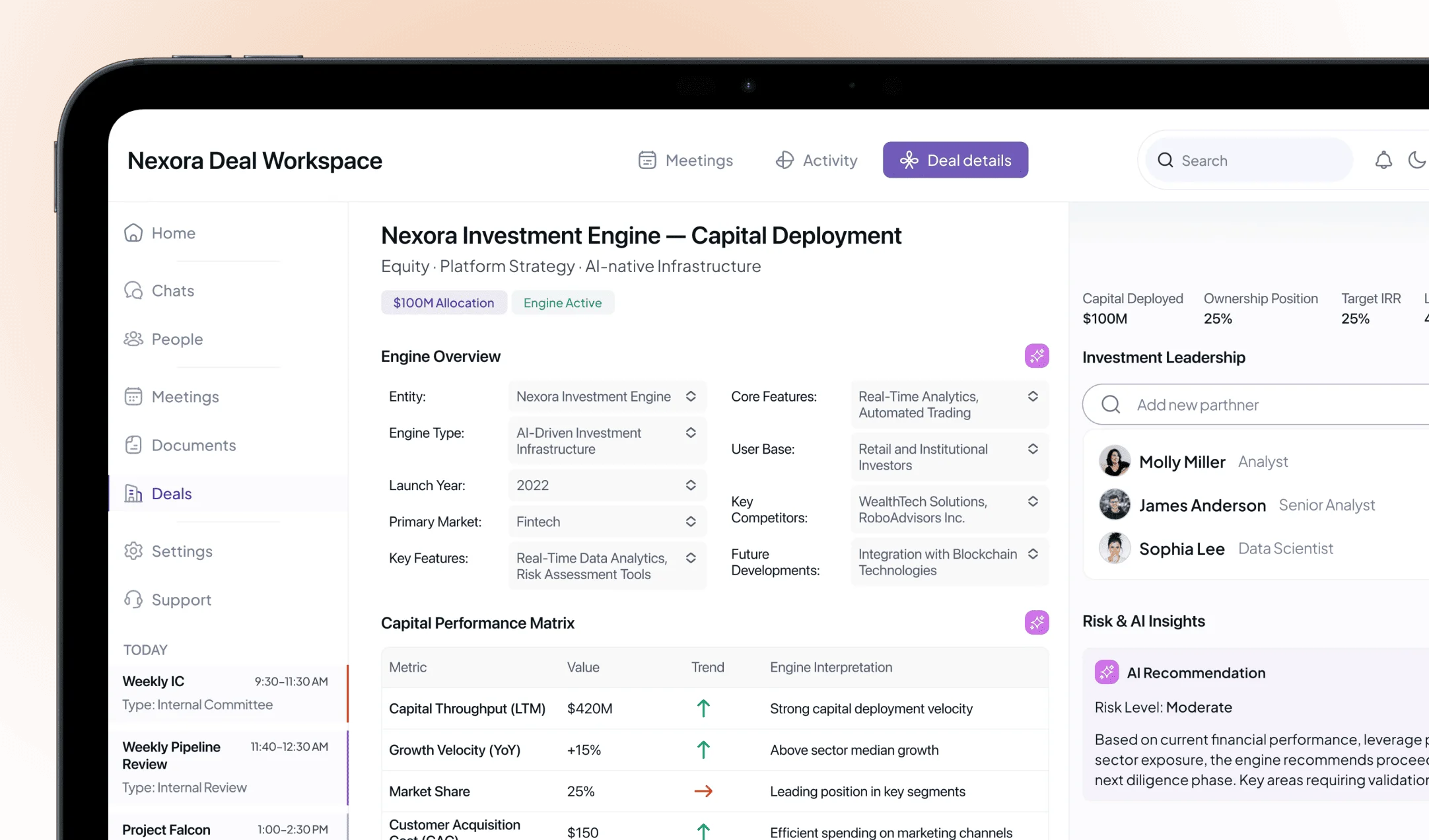
CRM automation and data entry workflow

Manual CRM data entry was eliminated through automation
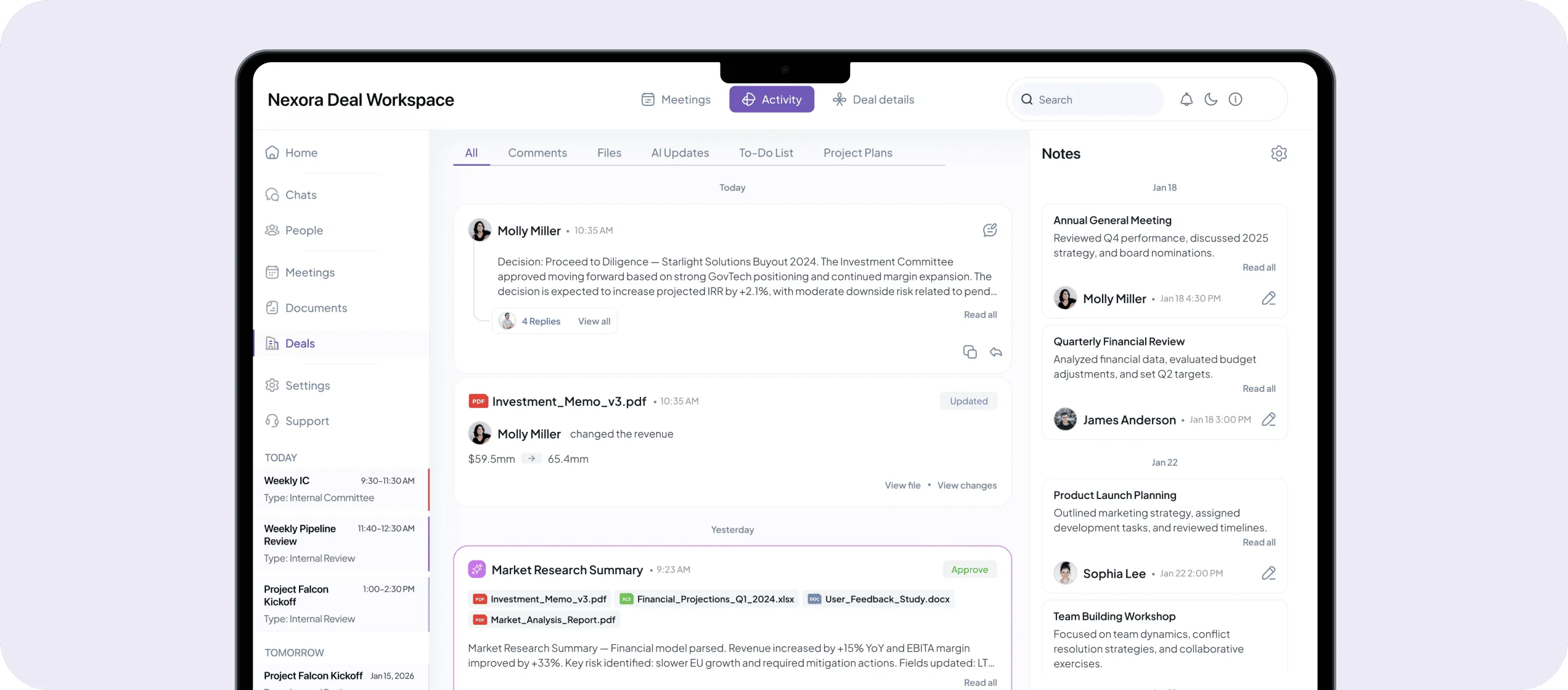
Features Delivered

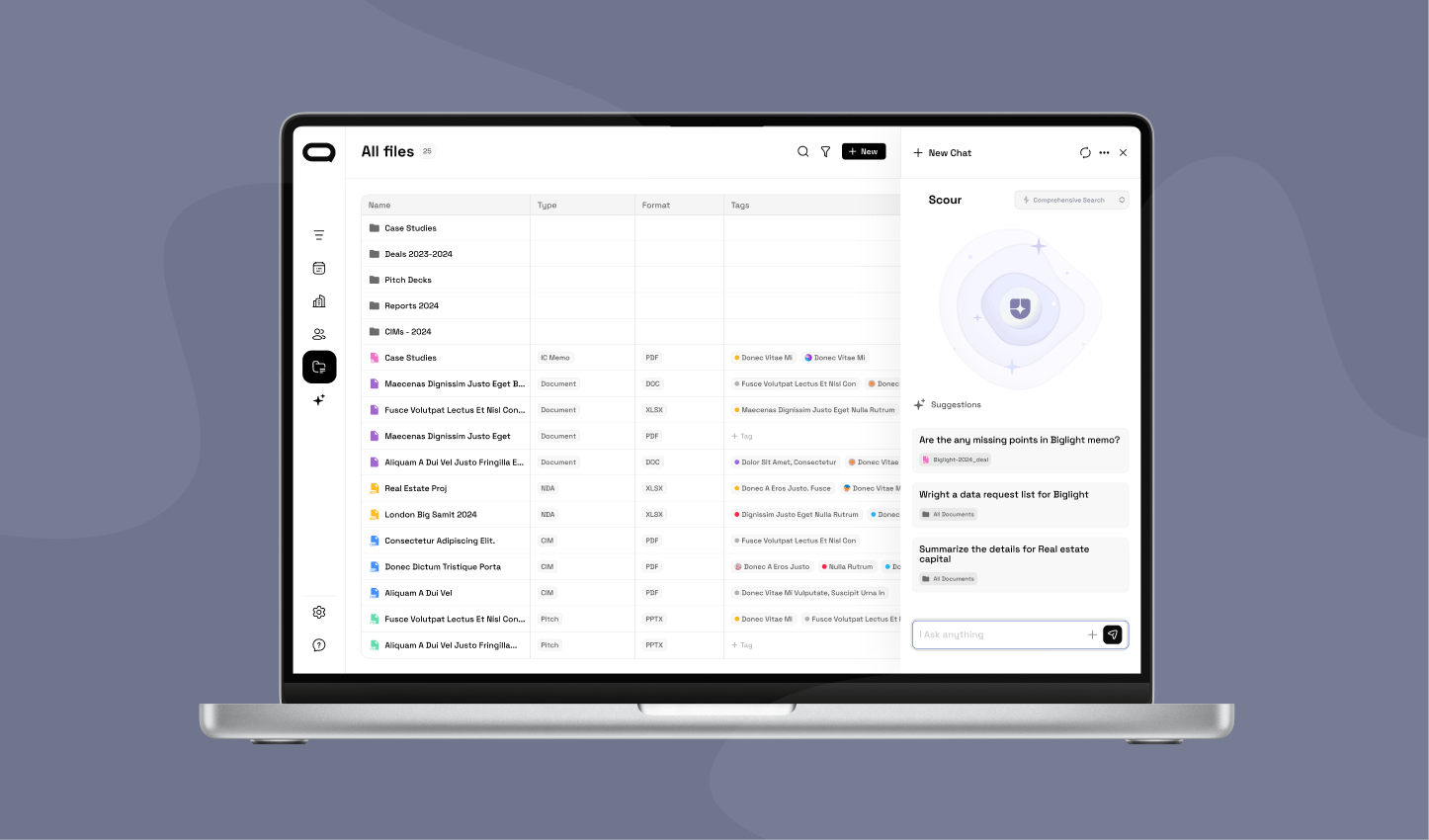
AI-powered module activity view

Key Capabilities of the AI-powered module:

  • Processes documents in PDF, PPTX, DOCX, and Excel formats
  • Extracts financial metrics, including revenue, EBITDA, and IRR
  • Supports custom financial metric definition and extraction
  • Classifies documents by type (teaser, CIM, memo)
  • Generates summaries for documents and entire deals
  • Identifies people and matches them with CRM data
Azure icon

Azure

React icon

React

Python icon

Python

Docker icon

Docker

GitHub icon

GitHub

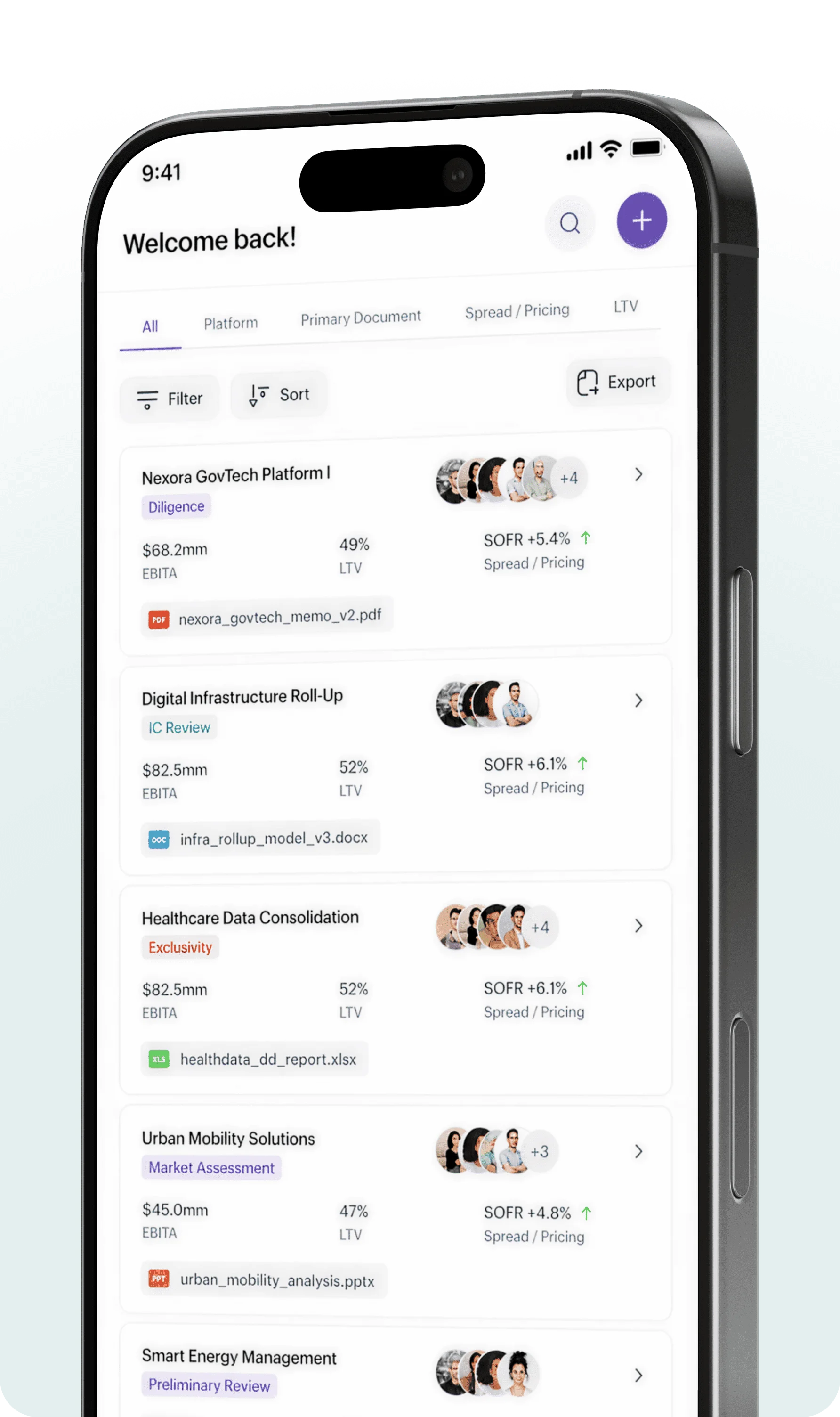
Admin mobile interface

Technical Highlights

LLM-based understanding

Used LLMs to interpret financial documents and extract structured insights with high contextual accuracy

Optimized OCR pipeline

Evaluated multiple OCR tools and selected the most accurate for varying financial document formats

Metric Extraction

Built a system to define and extract custom financial metrics with consistent precision

Custom dataset preparation

Around 100 documents are collected and manually labeled with metrics and document types for training

Unified AI pipeline

Integrated OCR and LLM into one workflow for automated analysis and CRM population

Azure-based architecture

Deployed containerized services on Azure for scalable, reliable processing

LLM-based understanding

Used LLMs to interpret financial documents and extract structured insights with high contextual accuracy

Optimized OCR pipeline

Evaluated multiple OCR tools and selected the most accurate for varying financial document formats

Metric Extraction

Built a system to define and extract custom financial metrics with consistent precision

Custom dataset preparation

Around 100 documents are collected and manually labeled with metrics and document types for training

Unified AI pipeline

Integrated OCR and LLM into one workflow for automated analysis and CRM population

Azure-based architecture

Deployed containerized services on Azure for scalable, reliable processing

Client Feedback

"This honestly changed how we work with documents. What used to take a lot of time is now just handled automatically, and everything lands in the CRM already structured. It lets us focus on actual deal analysis instead of spending hours on manual processing"

Chief Technology Officer

Client

Unlock new growth opportunities

Discover how custom software with AI-powered features can help your business move faster, improve workflows, and create new competitive advantages.

Similar solutions we implemented

AI-powered CRM for private equity investors
  • AI
  • CRM
  • Data
  • Azure
  • GenAI
  • RAG
  • Agents

AI-powered CRM for private equity investors

Documents Management System
  • DevOps
  • AWS

Documents Management System

See all case studies

Related blog posts

‌
People & processes before models & algorithms: The 70–20–10 rule for effective AI transformation
Industry newsAI

People & processes before models & algorithms: The 70–20–10 rule for effective AI transformation

Artificial intelligence has become a boardroom fixture: investments are soaring, pilots are proliferating, and the promise of transformation is everywhere. Yet as the BCG research shows, the vast majority of organisations are not realising value. Only about 26 % of companies have developed the capabilities needed to move beyond proof-of-concept and extract measurable value, and just 4 % are at the frontier of AI-driven transformation. What this tells us is that the technology itself is not the barrier. The obstacle lies in people, processes, integration, governance, and culture. Why people and processes matter more than algorithms Among the most striking findings of the report is the so-called “10-20-70” distribution of focus for successful AI transformations: approximately 10 % of effort is directed at algorithms, 20 % at technology and data, and a full 70 % on people and processes. This may seem counterintuitive in an era of hype around models like LLMs and generative AI — yet the empirical evidence speaks clearly. Companies that invest heavily in people, workflows, change management, process redesign, and the human embedding of AI outperform those that focus primarily on hard tech. Even building a team using AI is more efficient now.
‌
How to build a dream team using AI and empathy
InterviewTeam

How to build a dream team using AI and empathy

Where to search for the professionals and how to manage the team: interview with YTC COO Oleksandr Maryniuk
‌
Best Practices for Integrating AI into Existing Business Processes
BusinessAI

Best Practices for Integrating AI into Existing Business Processes

Integrating AI into existing business operations is one of the most powerful levers a company can pull — but it’s also one of the riskiest. Many organizations struggle not because AI is flawed, but because their approach to integration fails to respect how their business truly operates. The promise of efficiency, insight, and automation often clashes with legacy systems, culture, and technical debt. Over years of project work and observing successes and failures across industries, several patterns of strong AI integration have emerged. In this article, I outline five best practices — not superficial rules, but deep lessons that require discipline, humility, and ongoing care. These are the guardrails that help AI become a partner, not a disruption. 1. Align AI strategy with business purpose and processes
Read all posts

Related blog posts

Read all
‌
People & processes before models & algorithms: The 70–20–10 rule for effective AI transformation
Industry newsAI

People & processes before models & algorithms: The 70–20–10 rule for effective AI transformation

Artificial intelligence has become a boardroom fixture: investments are soaring, pilots are proliferating, and the promise of transformation is everywhere. Yet as the BCG research shows, the vast majority of organisations are not realising value. Only about 26 % of companies have developed the capabilities needed to move beyond proof-of-concept and extract measurable value, and just 4 % are at the frontier of AI-driven transformation. What this tells us is that the technology itself is not the barrier. The obstacle lies in people, processes, integration, governance, and culture. Why people and processes matter more than algorithms Among the most striking findings of the report is the so-called “10-20-70” distribution of focus for successful AI transformations: approximately 10 % of effort is directed at algorithms, 20 % at technology and data, and a full 70 % on people and processes. This may seem counterintuitive in an era of hype around models like LLMs and generative AI — yet the empirical evidence speaks clearly. Companies that invest heavily in people, workflows, change management, process redesign, and the human embedding of AI outperform those that focus primarily on hard tech. Even building a team using AI is more efficient now.
‌
How to build a dream team using AI and empathy
InterviewTeam

How to build a dream team using AI and empathy

Where to search for the professionals and how to manage the team: interview with YTC COO Oleksandr Maryniuk
‌
Best Practices for Integrating AI into Existing Business Processes
BusinessAI

Best Practices for Integrating AI into Existing Business Processes

Integrating AI into existing business operations is one of the most powerful levers a company can pull — but it’s also one of the riskiest. Many organizations struggle not because AI is flawed, but because their approach to integration fails to respect how their business truly operates. The promise of efficiency, insight, and automation often clashes with legacy systems, culture, and technical debt. Over years of project work and observing successes and failures across industries, several patterns of strong AI integration have emerged. In this article, I outline five best practices — not superficial rules, but deep lessons that require discipline, humility, and ongoing care. These are the guardrails that help AI become a partner, not a disruption. 1. Align AI strategy with business purpose and processes

Related blog posts

‌
People & processes before models & algorithms: The 70–20–10 rule for effective AI transformation
Industry newsAI

People & processes before models & algorithms: The 70–20–10 rule for effective AI transformation

Artificial intelligence has become a boardroom fixture: investments are soaring, pilots are proliferating, and the promise of transformation is everywhere. Yet as the BCG research shows, the vast majority of organisations are not realising value. Only about 26 % of companies have developed the capabilities needed to move beyond proof-of-concept and extract measurable value, and just 4 % are at the frontier of AI-driven transformation. What this tells us is that the technology itself is not the barrier. The obstacle lies in people, processes, integration, governance, and culture. Why people and processes matter more than algorithms Among the most striking findings of the report is the so-called “10-20-70” distribution of focus for successful AI transformations: approximately 10 % of effort is directed at algorithms, 20 % at technology and data, and a full 70 % on people and processes. This may seem counterintuitive in an era of hype around models like LLMs and generative AI — yet the empirical evidence speaks clearly. Companies that invest heavily in people, workflows, change management, process redesign, and the human embedding of AI outperform those that focus primarily on hard tech. Even building a team using AI is more efficient now.
‌
How to build a dream team using AI and empathy
InterviewTeam

How to build a dream team using AI and empathy

Where to search for the professionals and how to manage the team: interview with YTC COO Oleksandr Maryniuk
‌
Best Practices for Integrating AI into Existing Business Processes
BusinessAI

Best Practices for Integrating AI into Existing Business Processes

Integrating AI into existing business operations is one of the most powerful levers a company can pull — but it’s also one of the riskiest. Many organizations struggle not because AI is flawed, but because their approach to integration fails to respect how their business truly operates. The promise of efficiency, insight, and automation often clashes with legacy systems, culture, and technical debt. Over years of project work and observing successes and failures across industries, several patterns of strong AI integration have emerged. In this article, I outline five best practices — not superficial rules, but deep lessons that require discipline, humility, and ongoing care. These are the guardrails that help AI become a partner, not a disruption. 1. Align AI strategy with business purpose and processes
Read all posts
Logo YTC

Your Technical Companion

Your Technical Companion. All rights reserved. 2026

Contact Us

sales@ytc.company

Industries

AdvertisingMedia & newsRetail & logisticsEducationAutomations

Services

AI DevelopmentSoftware DevelopmentProduct DevelopmentData EngineeringDesignAI Consulting

Company

Case StudiesAbout usHelp centerCareer

Contact Us

sales@ytc.company

© 2026, YTC - Your Technical Companion All Rights Reserved