YTC LogoYTC Logo
Home
Case Studies
Blog
Menu illustration
ServicesCase StudiesHow we workAbout usCareerContactsBlogHelp Center
sales@ytc.company
sales@ytc.company
Home
Cases
Client activity prediction for B2B Forex

Client activity prediction for B2B Forex

Client activity prediction for B2B Forex
AIMLAzureDevOpsWeb app

Client activity prediction for B2B Forex

AIMLAzureDevOpsWeb app

A financial services company providing foreign exchange services to B2B clients needed to transform years of historical trading data into accurate client activity forecasts for proactive account management and revenue planning. We developed an AI-powered forecasting platform that predicts trading volume, transaction frequency, and profitability, helping account managers identify declining activity early, retain trading relationships, and improve planning.

Industry

FinTech

Client

Under NDA

Region

United Kingdom

Main challenges

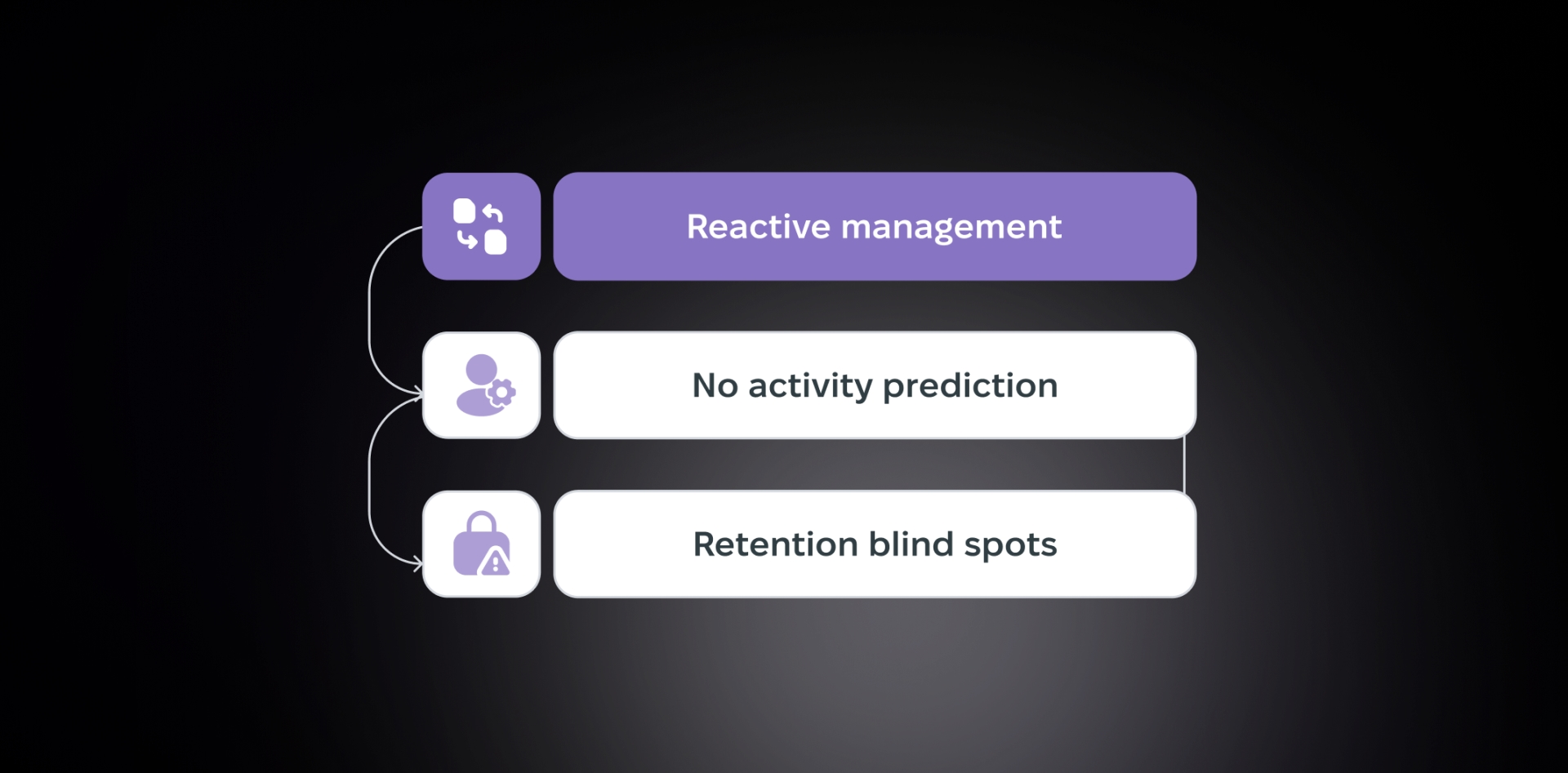
Business Challenge: Reactive client management limited revenue retention

The company had years of trading data but no systematic way to predict which clients were likely to reduce activity.
  • Client slowdowns became visible only after they happened
  • Managers could not prioritize retention outreach effectively
Reactive client management with no activity prediction and retention blind spots

Technical Challenge: Scaling individual forecasts across disparate trading data

The system had to scale forecasting across multiple metrics, currencies, operation types, and timeframes while automatically selecting the optimal model for every prediction.
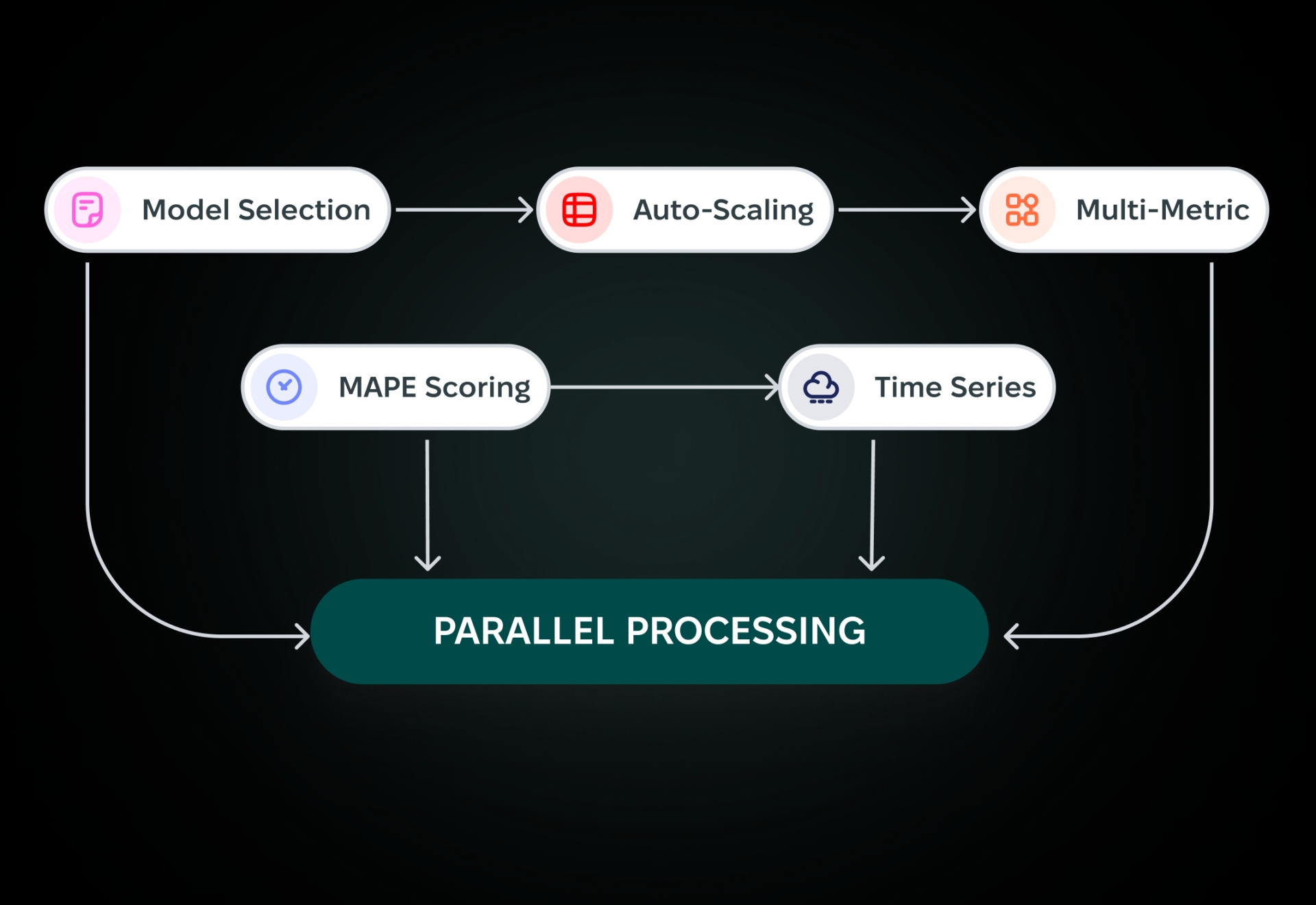
  • Thousands of forecasting jobs demanded parallel processing
  • Different client patterns called for specific forecasting models
  • Every prediction required automatic model selection
Parallel forecasting across multiple trading metrics, currencies, markets, and time series

Delivery Challenge: Deploying reliable ML without production system risk

The team had to deliver complex ML functionality quickly while isolating forecasting workloads from the client's live infrastructure.
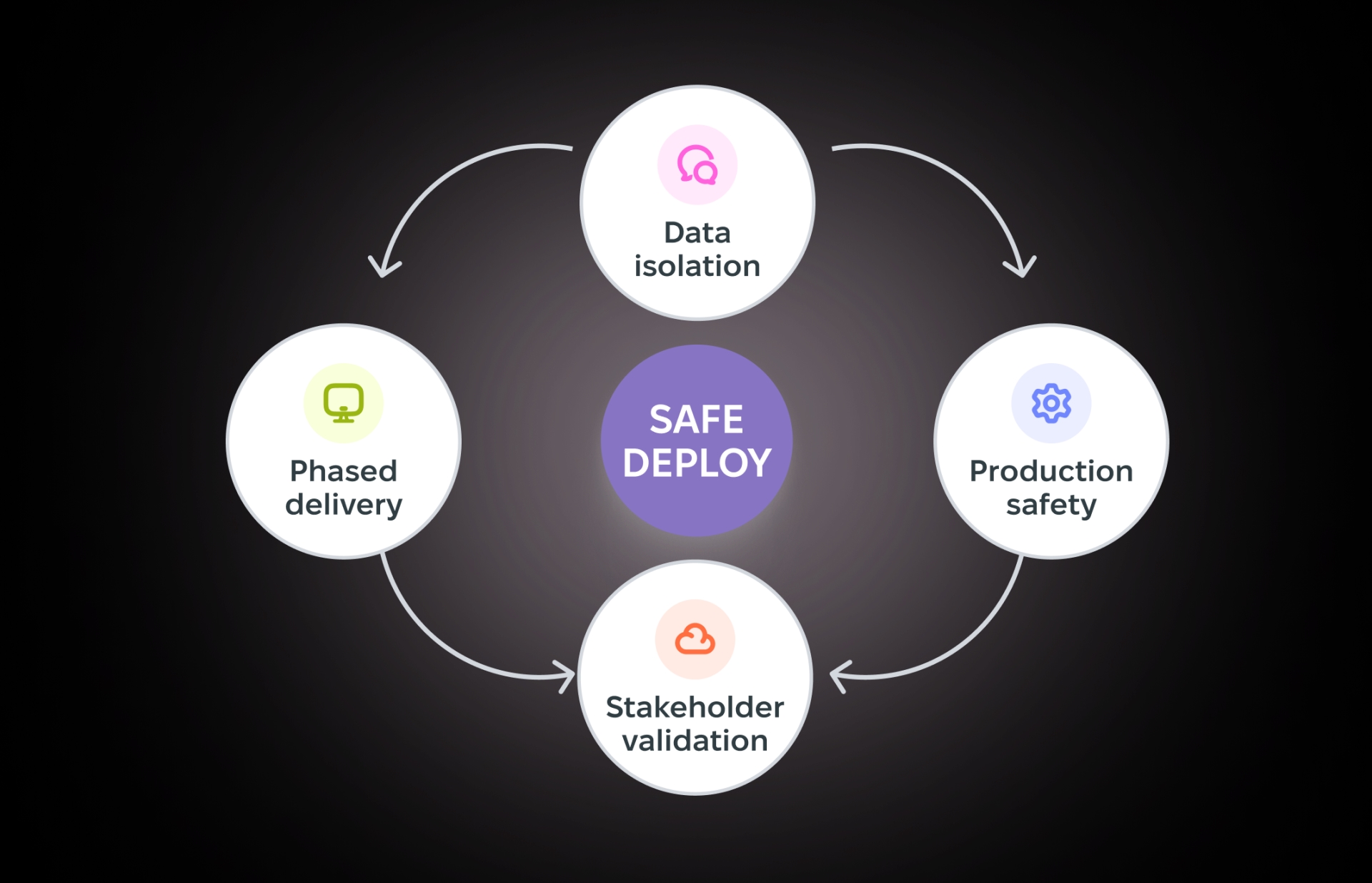
  • Aggressive delivery timelines demanded phased implementation
  • Production safety required fully isolated data access
  • Business adoption depended on stakeholder validation
Safe phased deployment isolating data, production systems, and forecasting workloads

What we did

We built an AI-powered forecasting platform that transforms years of historical trading data into future activity predictions for B2B clients. The solution forecasts trading volume, transaction frequency, and profitability by combining CRM records, transaction history, market data, and currency exchange rates within a unified forecasting pipeline accessible through an intuitive management interface.

Instead of relying on a single forecasting approach, the platform automatically selects the best-performing model for every client, business metric, and prediction horizon. This adaptive strategy enables reliable forecasting across a diverse client portfolio while giving account managers consistent insights they can use to support proactive engagement and long-term client retention.

~3,500

B2B clients covered with individual activity forecasts

~10

Node Auto-scaling cluster supporting large-scale parallel forecasting

4

Forecasting models evaluated automatically for every prediction

4

Integrated data sources powering a unified forecasting pipeline

Per-client behavior forecasting

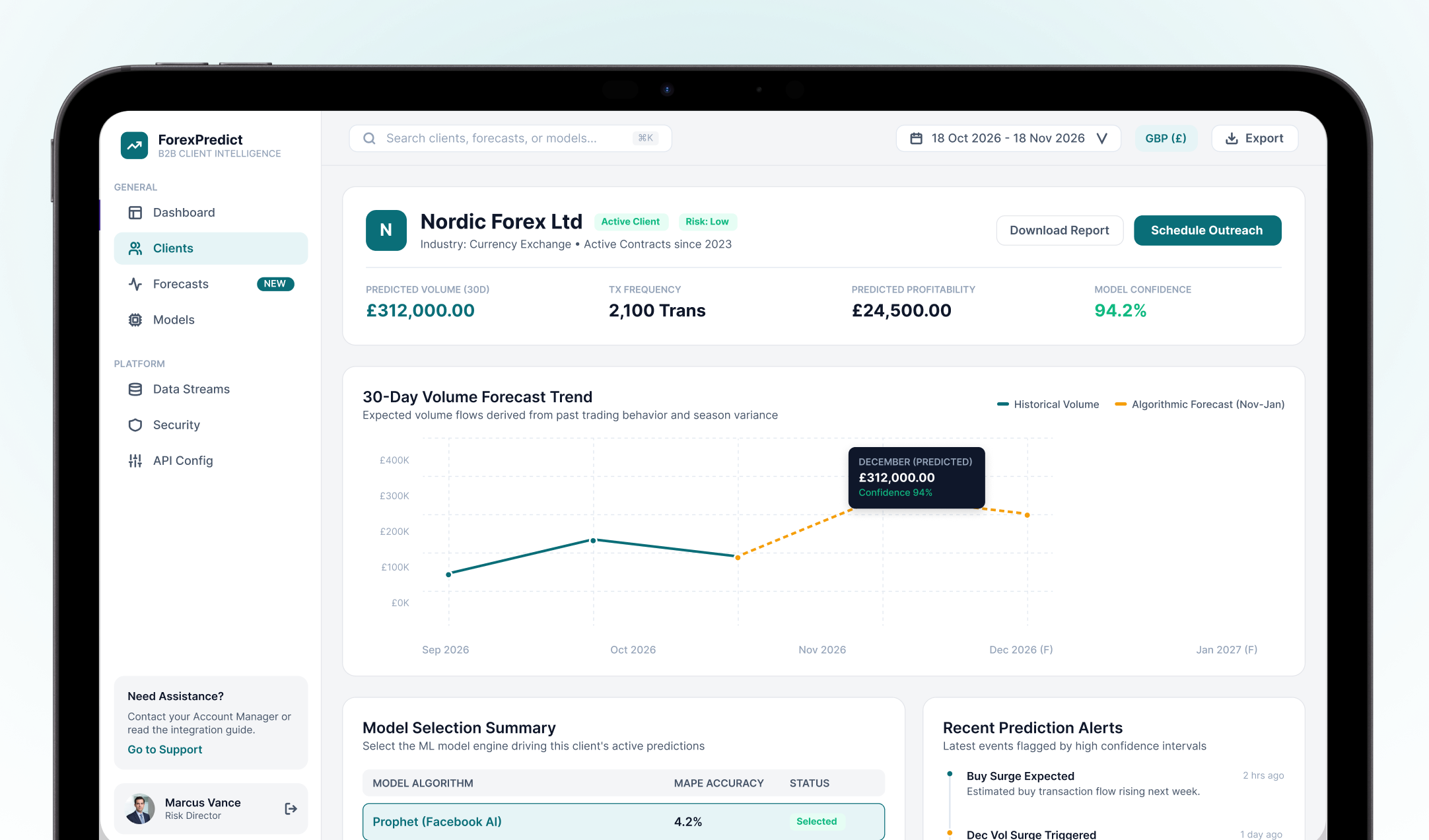
Individual forecasts show account managers how each client’s trading behavior is expected to change.
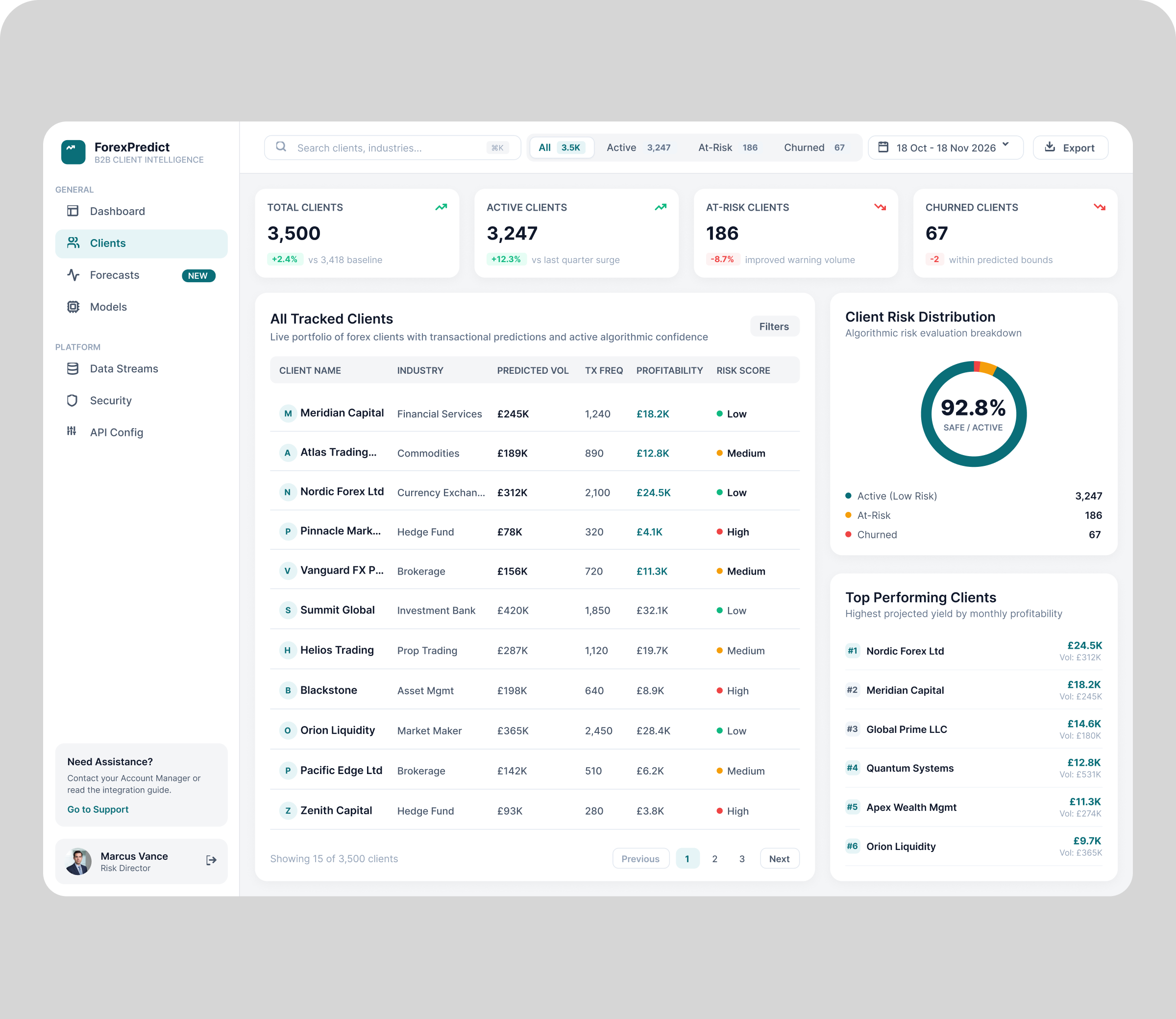
  • Predicts future trading volume for individual clients and forecasts transaction frequency across selected time periods.
  • Estimates expected profitability from historical trading patterns.
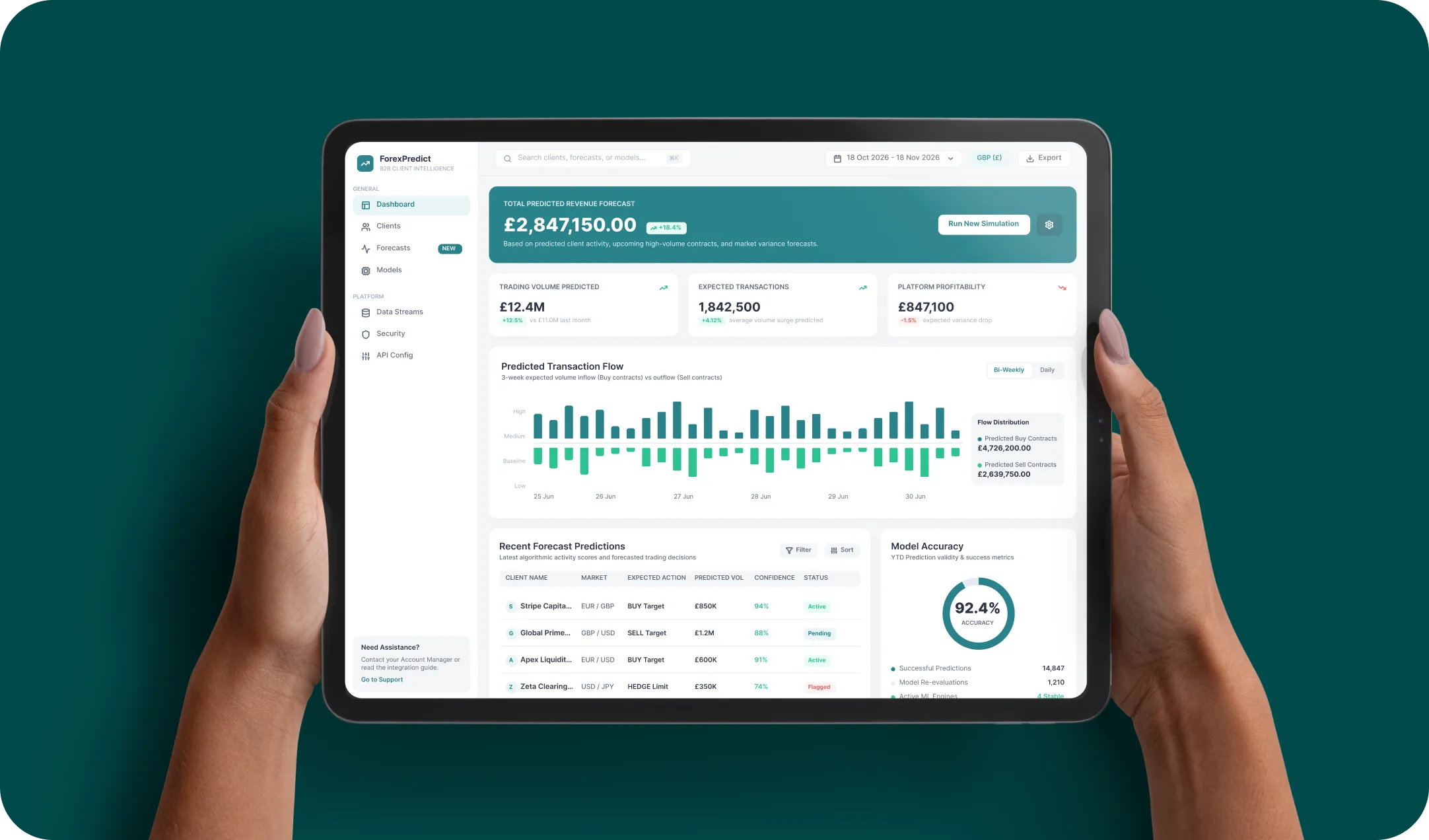
Per-client trading behavior forecast dashboard

Automated best-model selection

The platform selects the most accurate forecasting approach for each specific prediction task.
  • Evaluates Prophet, ARIMA, XGBoost, and LSTM models.
  • Evaluates models using MAPE accuracy scores.
  • Selects models per client, metric, and time horizon.
Automated forecasting model selection interface

Self-service forecast configuration

The admin panel gives business users full control over forecasting without relying on engineering teams.
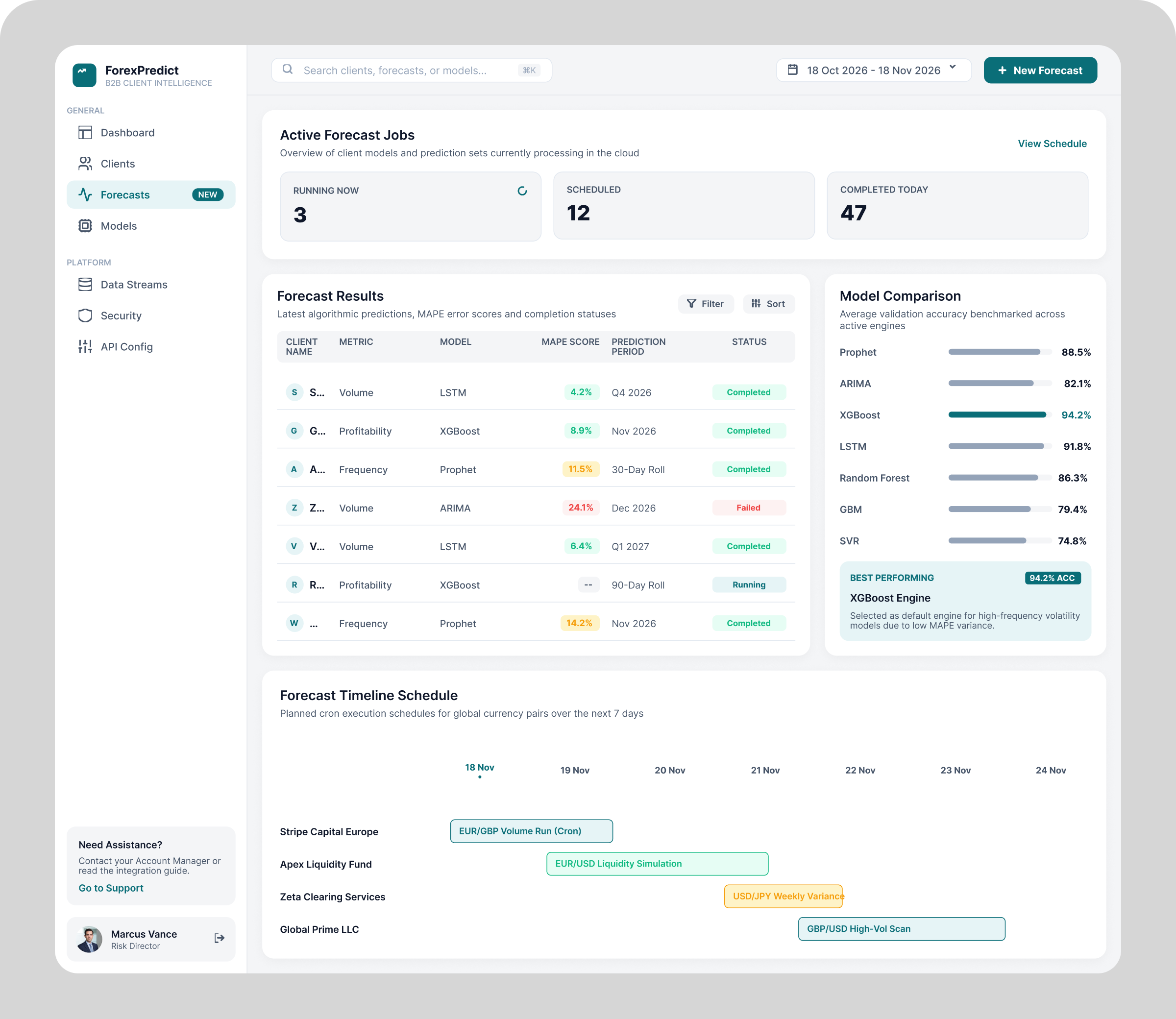
  • Selects clients or client groups for forecasting.
  • Configures target metrics and forecast periods.
  • Schedules recurring or on-demand forecast runs.
  • Generates forecasts automatically without engineering involvement.
  • Delivers forecasting results through the platform interface.
Self-service forecast configuration dashboard

Proactive outreach dashboards

Account managers use forward-looking insights to prioritize outreach before trading activity declines.
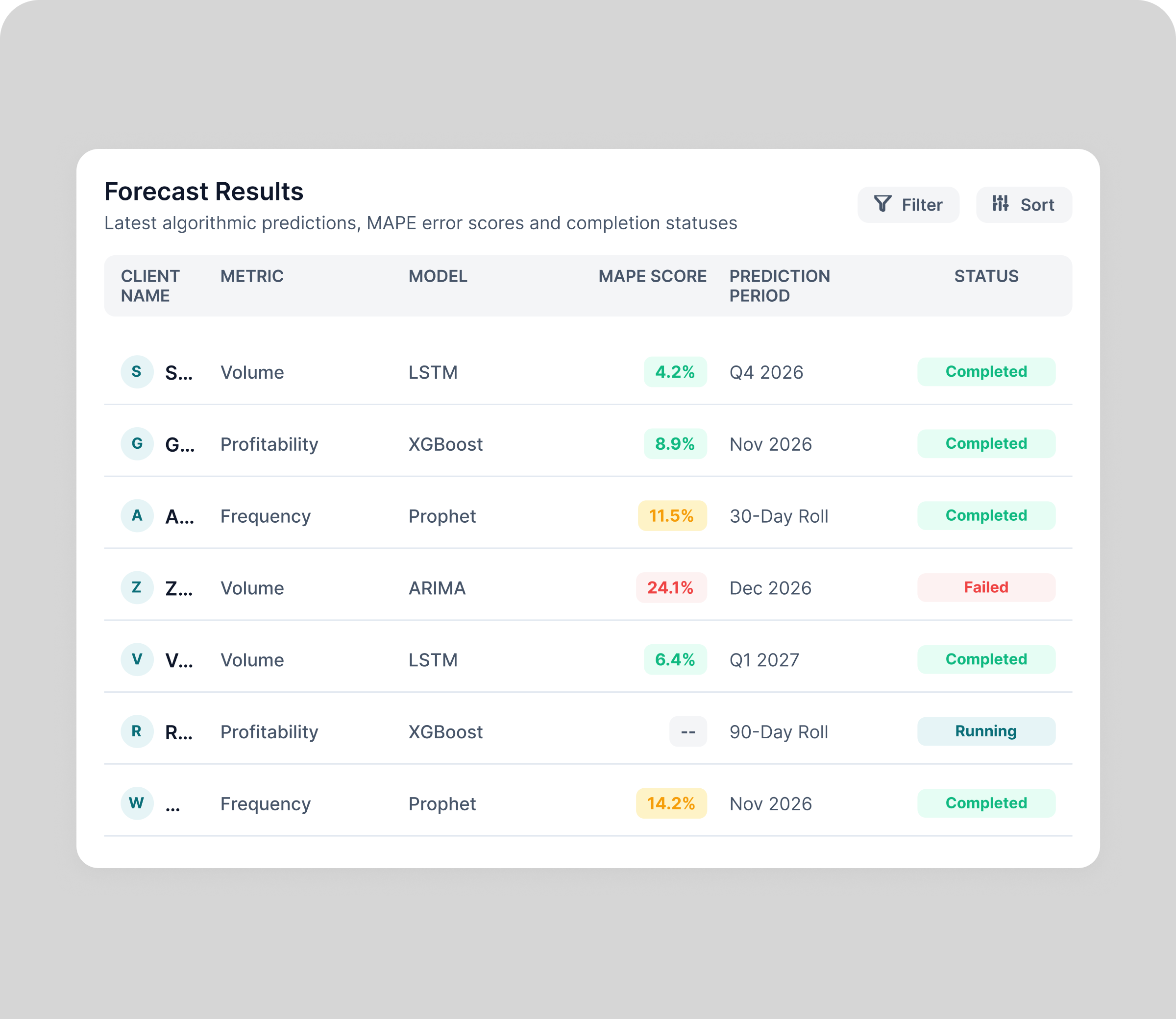
  • Searches and opens forecasts for individual clients.
  • Highlights clients expected to reduce trading activity.
  • Supports earlier retention and account-management actions.
  • Replaces after-the-fact monitoring with predictive signals.
  • Provides expected client value across metrics.
Proactive client outreach dashboard with forecast indicators

Forecast reconciliation reporting

Closed-period reporting compares predictions with actual outcomes and tracks performance over time.
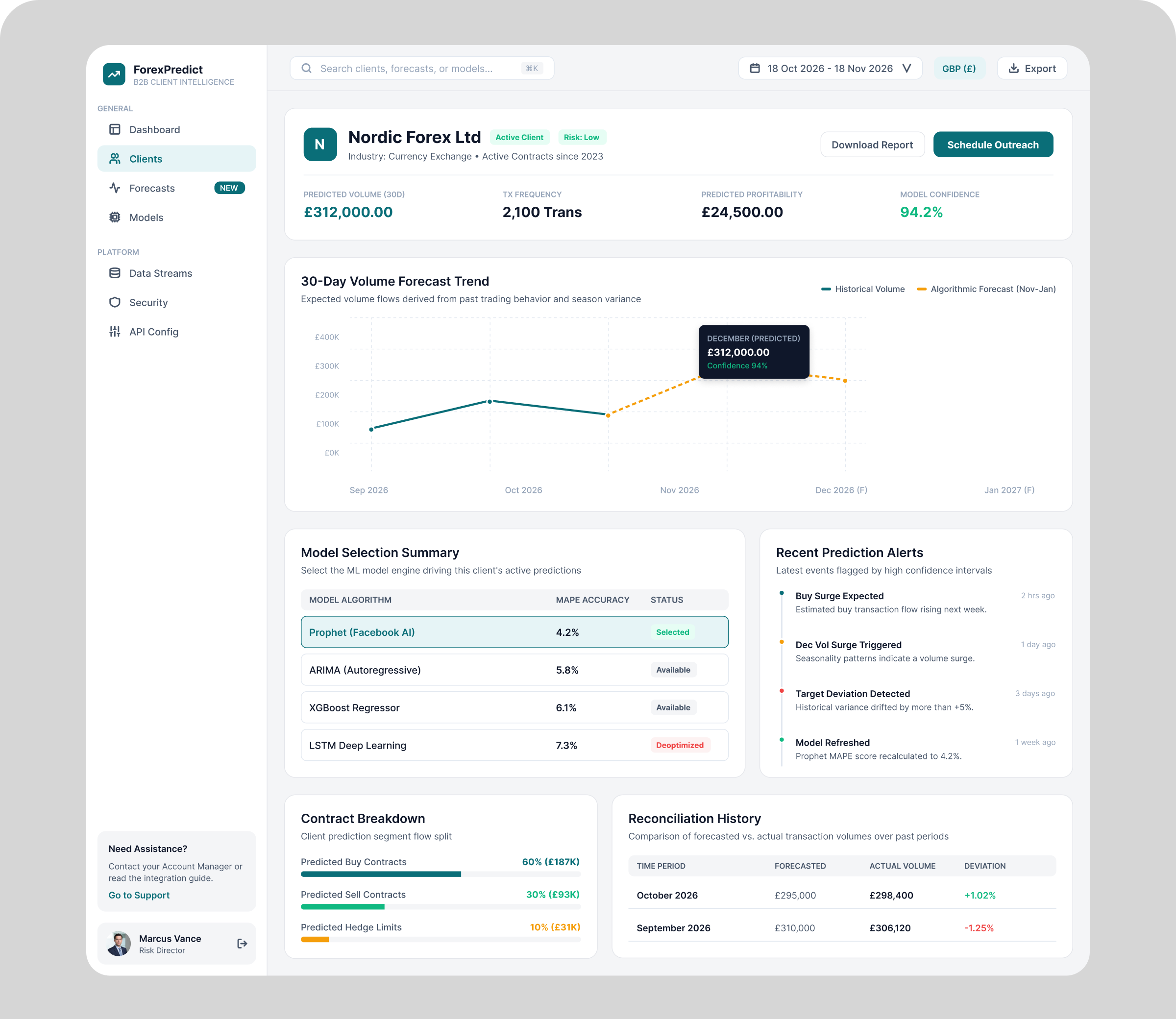
  • Measures forecasts against completed trading activity.
  • Quantifies real-time prediction accuracy after each period.
  • Builds account-manager confidence in platform outputs.
  • Supports retraining as additional data becomes available.
  • Expands reliably forecast client segments over time.
Forecast reconciliation report comparing predicted and actual client activity

Key results and business value

Predictive engagement dashboard replacing reactive client monitoring

Reactive monitoring replaced by predictive engagement
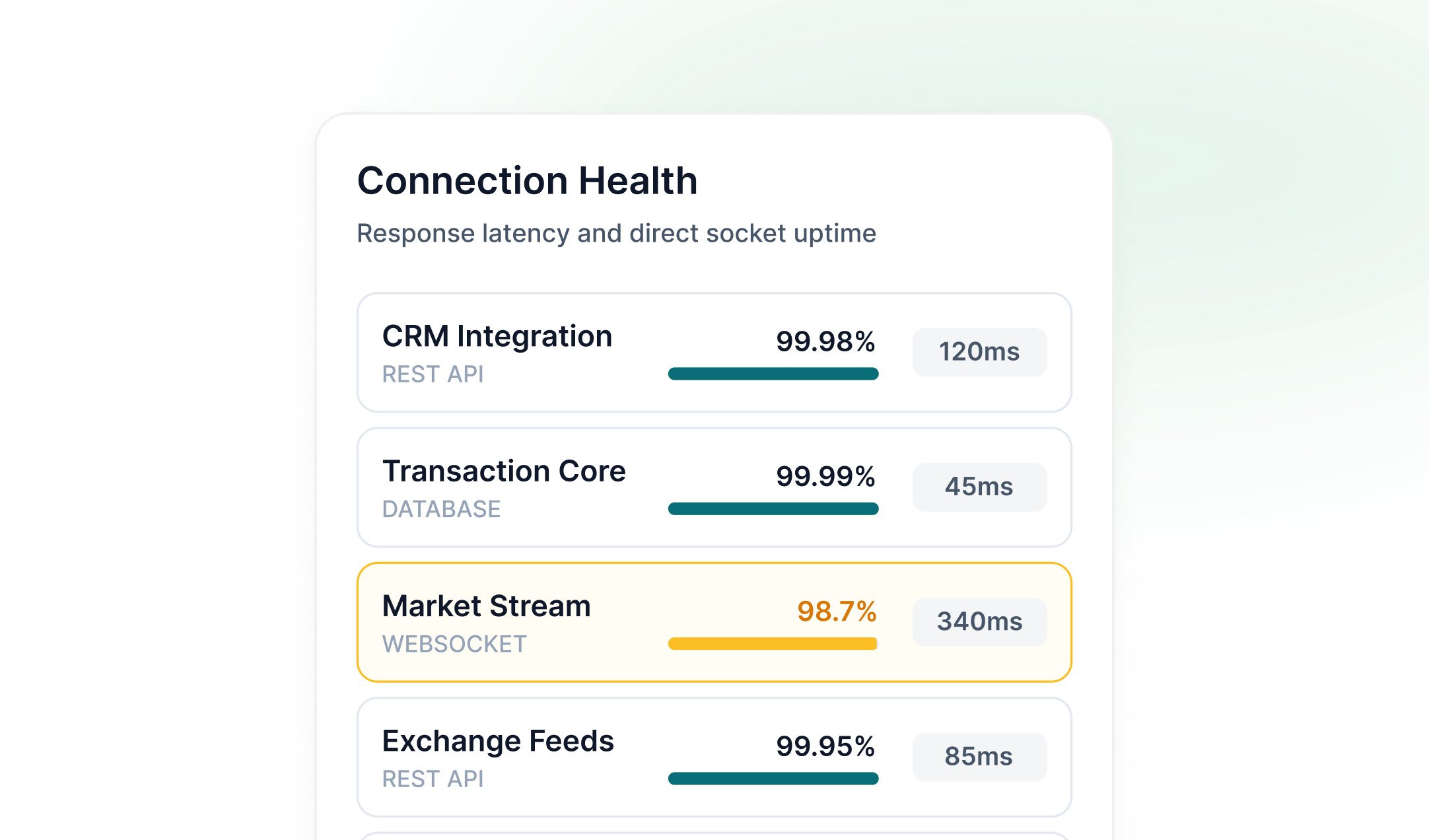
Unified forecasting pipeline consolidating fragmented trading data

Fragmented data consolidated into a unified forecasting pipeline
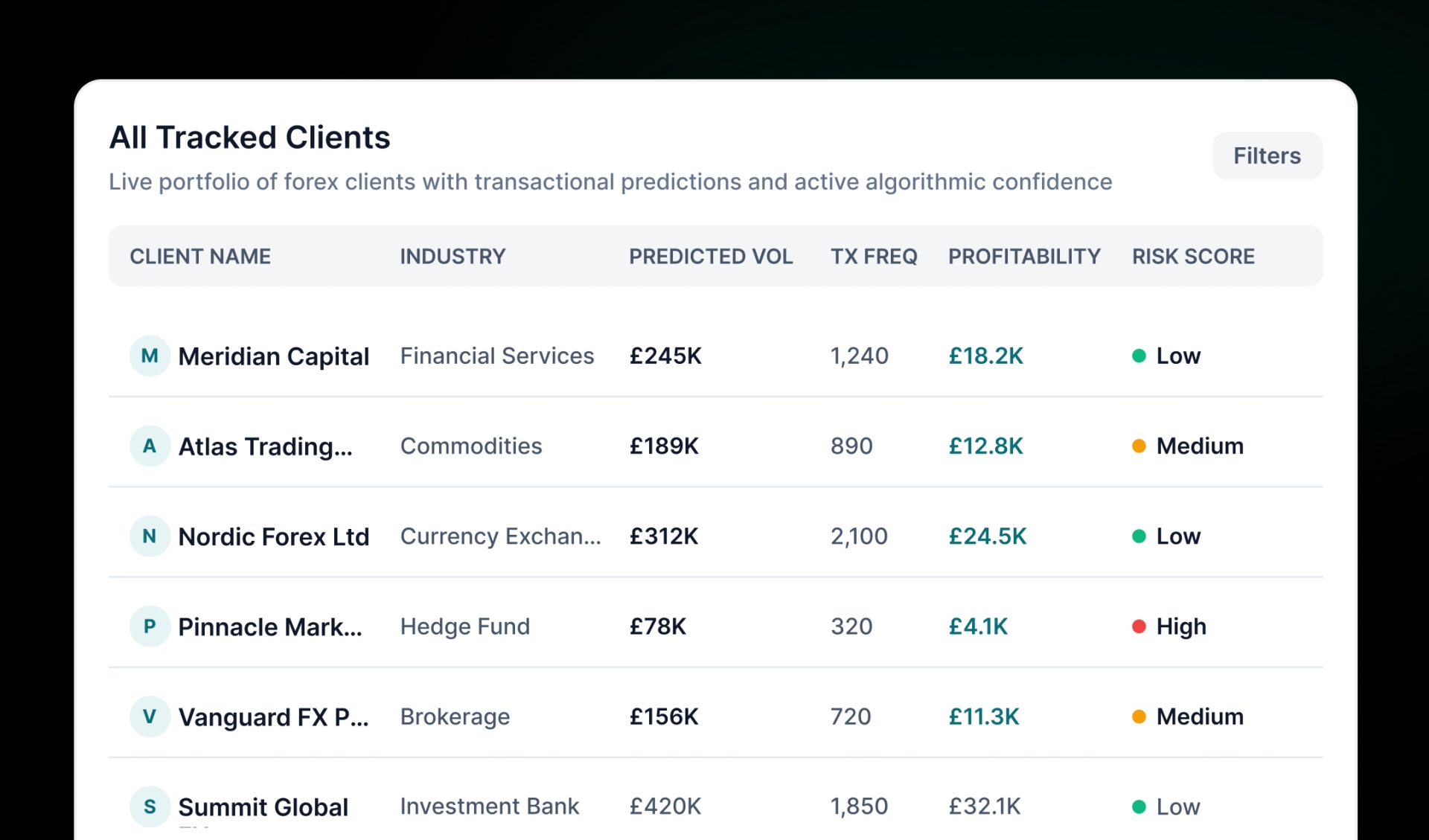
Automated client activity predictions replacing manual tracking

Manual client tracking transformed into automated predictions
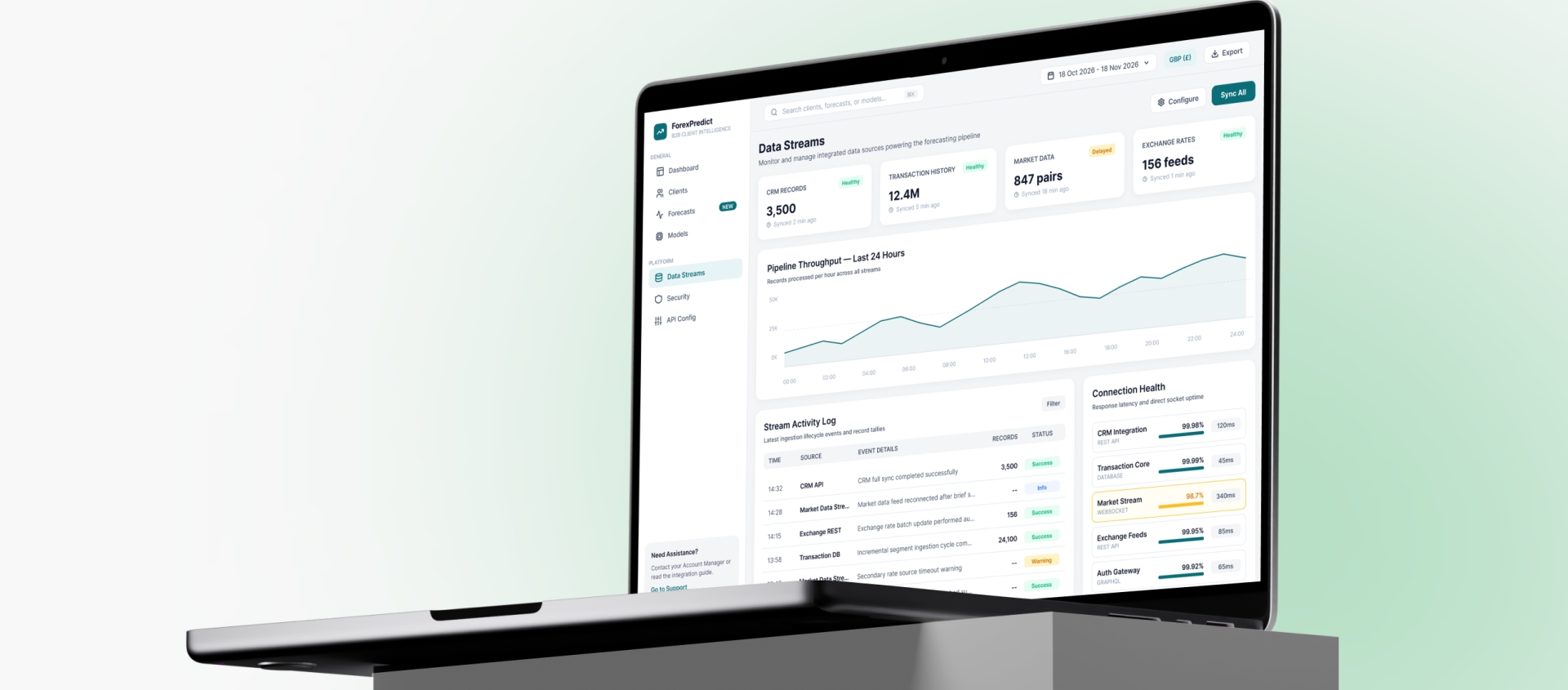
AI-driven forecasting dashboard enhancing siloed workflows

Siloed workflows enhanced with AI-driven forecasting
Features Delivered

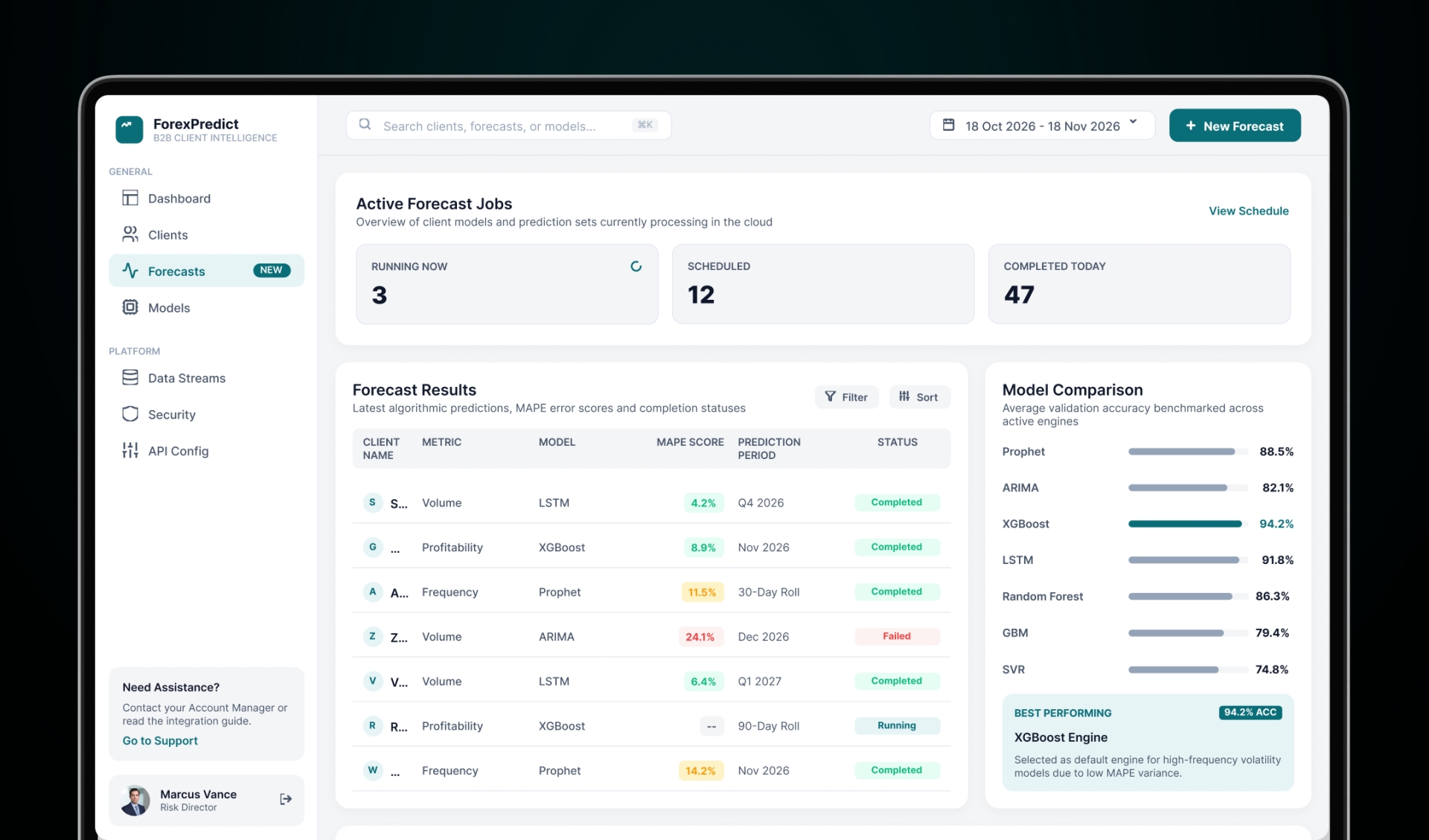
Client activity forecasting dashboard on a desktop display

Key capabilities of the AI-powered forecasting platform:

  • Client activity forecasting across key performance metrics
  • Self-service forecast setup for non-technical users
  • Automated model selection for each forecast
  • Nightly, weekly, and on-demand forecast scheduling
  • Interactive dashboards for client-level forecasts
  • Forecast reconciliation for accuracy tracking
Microsoft Azure logo

Azure

React logo

React

Python logo

Python

PostgreSQL logo

PostgreSQL

Docker logo

Docker

GitHub logo

GitHub

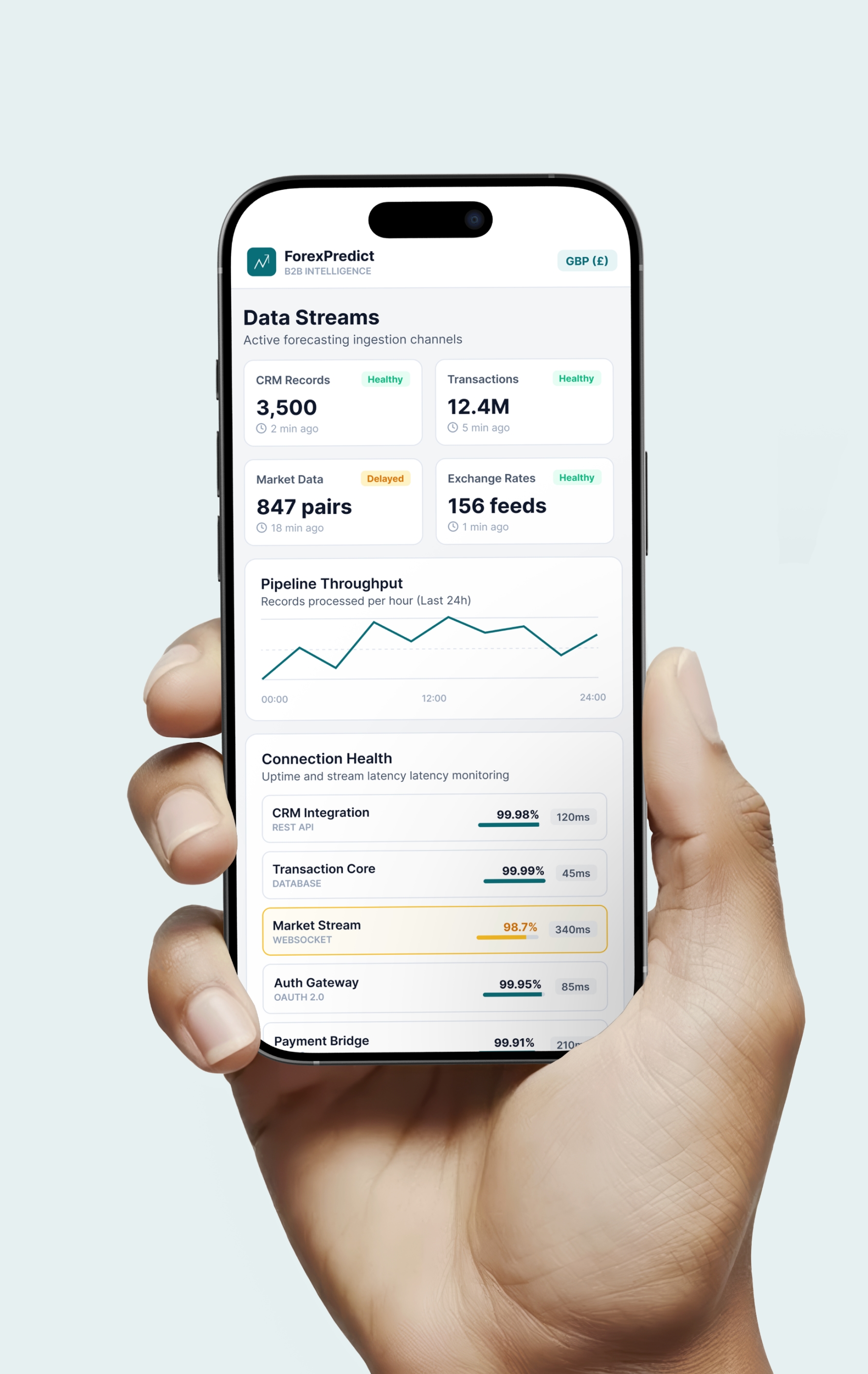
Mobile client activity forecasting dashboard

Technical Highlights

Forecasting at scale icon

Forecasting at scale

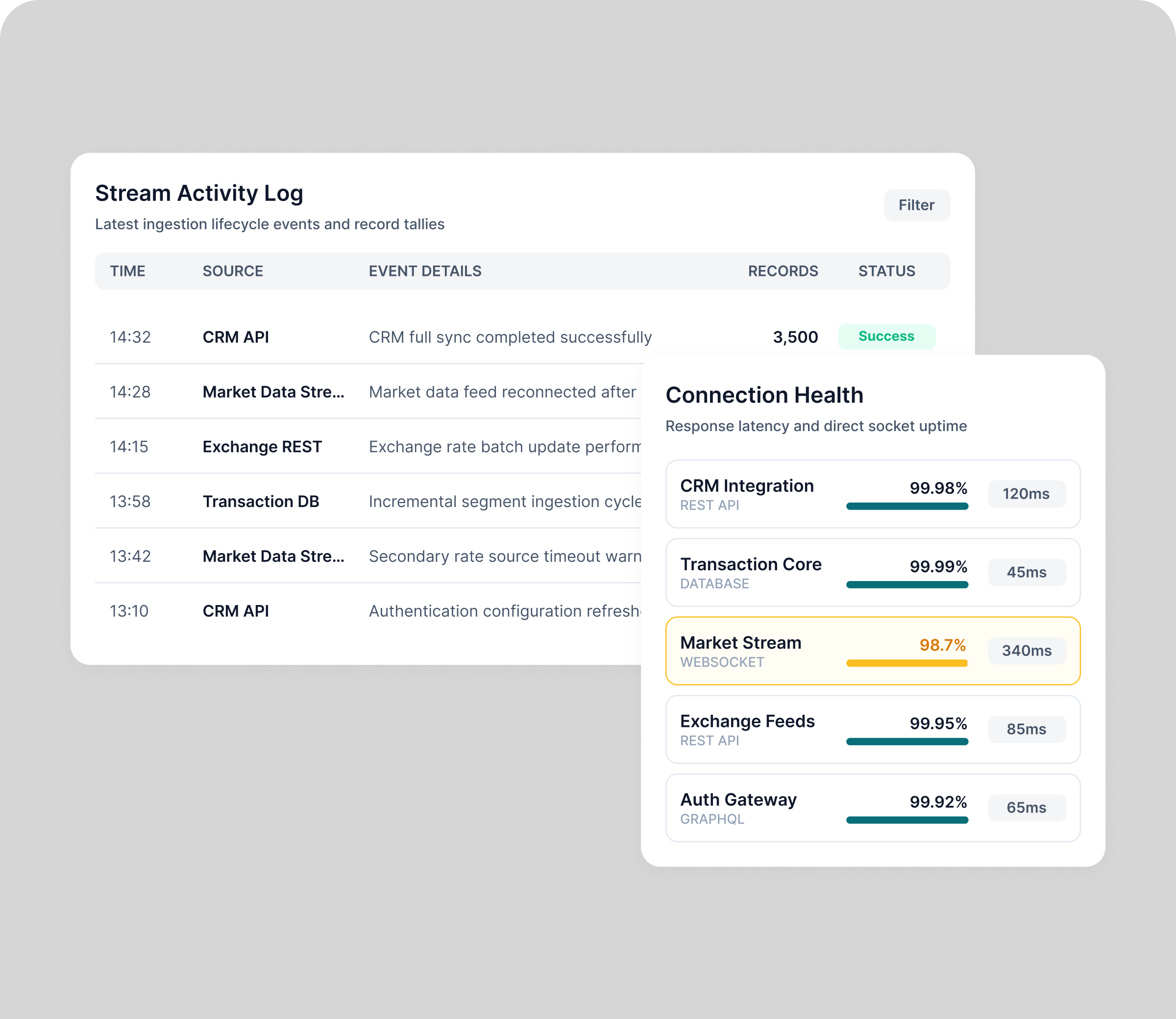
Auto-scaling cluster runs forecasts across ~3,500 clients in a few hours, monitoring thousands of parallel jobs

Flexible forecasting icon

Flexible forecasting

Enables business users to configure forecasting with automated report delivery through the admin panel

Model selection icon

Model selection

Candidate models are evaluated during training, while production applies the best model for each client

Multi-model engine icon

Multi-model engine

Prophet, ARIMA, XGBoost and LSTM work as a unified pool with automated selection based on MAPE scores

Data reconciliation icon

Data reconciliation

Results are continuously compared, providing accuracy validation and supporting model improvement

Data isolation icon

Data isolation

Forecasting workloads access data via a dedicated database, keeping the production environment untouched

CI/CD delivery icon

CI/CD delivery

Container-based deployments ensure reliable, consistent, and repeatable software releases

Client Feedback

"One of our account managers came back after the first forecasting cycle and said, 'We would have missed these clients completely before.' That was the moment we realized the platform wasn't just producing predictions — it was helping us keep valuable trading relationships active and protect revenue"

Head of Sales

Client

Ready to integrate AI into your financial operation?

Let's design, build, and scale AI software tailored to your products, workflows, and requirements.

Similar solutions we implemented

Document Analysis  Solution for Private Equity
  • Azure
  • AI
  • DevOps
  • GenAI

Document Analysis Solution for Private Equity

Ad Analytics Platform for High-Volume Campaign Management
  • AI
  • AWS
  • CRM
  • Data
  • BI

Ad Analytics Platform for High-Volume Campaign Management

See all Case Studies

Related blog posts

‌
How AI Bubble Charts Help Businesses Choose the Right AI Projects
BusinessAI

How AI Bubble Charts Help Businesses Choose the Right AI Projects

In the fast-evolving world of artificial intelligence, knowing what to build first often matters more than knowing how to build it. Many companies rush into AI adoption with excitement — exploring use cases, generating ideas, and visualizing automation opportunities — only to face a hard question soon after: which project deserves priority? Should they start with a chatbot, an analytics dashboard, or a predictive model? Each idea promises value, but not all of them are equally feasible, actionable, or impactful. At YTC, we believe that successful AI adoption doesn’t begin with coding — it begins with clarity. That’s why one of the most effective tools we use in our consulting practice is the AI Bubble Chart: a structured, visual method for prioritizing AI initiatives based on business value, feasibility, and actionability. It’s more than a chart — it’s a framework for making data-driven strategic choices that balance ambition with practicality. Let’s explore how AI Bubble Charts work, why they make sense for business leaders, and how they turn abstract AI ideas into a clear roadmap for growth.
‌
Why 95% of GenAI Projects Fail — and How the Right Approach Changes Everything
GenAI

Why 95% of GenAI Projects Fail — and How the Right Approach Changes Everything

A recent MIT report, The GenAI Divide: State of AI in Business 2025, reveals that nearly 95% of generative AI pilots never achieve meaningful production impact. The issue isn’t with the technology itself — it’s in how companies approach it. At YTC, we’ve analyzed these failure points closely and built our process to overcome them. 1. Misalignment with core workflows and business context One of the biggest reasons AI projects fail is poor alignment with actual business operations. Too often, solutions are designed in isolation — impressive from a technical standpoint, but disconnected from how teams truly work. When an AI system doesn’t fit within existing workflows or address real objectives, it becomes a burden instead of an advantage.
‌
Will AI replace software engineers? A look into the future of development
AI

Will AI replace software engineers? A look into the future of development

The rapid evolution of artificial intelligence (AI) has led to growing concerns among software engineers about their job security. Will AI replace human developers? Or will it serve as a powerful tool to enhance productivity? The truth lies somewhere in between - kind of like a badly written function that still somehow works. AI is already making significant strides in software development. Tools like GitHub Copilot, ChatGPT for coding assistance, and various AI-driven testing frameworks help automate repetitive tasks, reduce human errors, and improve efficiency. According to a report by McKinsey, AI-powered development tools can boost productivity by up to 40%. That’s right - AI is here to do the grunt work, so you can focus on the important things, like debugging that same function for the 15th time. However, software engineering is much more than writing lines of code. It involves problem-solving, architecture design, creative thinking, and an understanding of human needs - areas where AI still stares blankly, like a junior dev on their first day.
Read all posts

Related blog posts

Read all
‌
How AI Bubble Charts Help Businesses Choose the Right AI Projects
BusinessAI

How AI Bubble Charts Help Businesses Choose the Right AI Projects

In the fast-evolving world of artificial intelligence, knowing what to build first often matters more than knowing how to build it. Many companies rush into AI adoption with excitement — exploring use cases, generating ideas, and visualizing automation opportunities — only to face a hard question soon after: which project deserves priority? Should they start with a chatbot, an analytics dashboard, or a predictive model? Each idea promises value, but not all of them are equally feasible, actionable, or impactful. At YTC, we believe that successful AI adoption doesn’t begin with coding — it begins with clarity. That’s why one of the most effective tools we use in our consulting practice is the AI Bubble Chart: a structured, visual method for prioritizing AI initiatives based on business value, feasibility, and actionability. It’s more than a chart — it’s a framework for making data-driven strategic choices that balance ambition with practicality. Let’s explore how AI Bubble Charts work, why they make sense for business leaders, and how they turn abstract AI ideas into a clear roadmap for growth.
‌
Why 95% of GenAI Projects Fail — and How the Right Approach Changes Everything
GenAI

Why 95% of GenAI Projects Fail — and How the Right Approach Changes Everything

A recent MIT report, The GenAI Divide: State of AI in Business 2025, reveals that nearly 95% of generative AI pilots never achieve meaningful production impact. The issue isn’t with the technology itself — it’s in how companies approach it. At YTC, we’ve analyzed these failure points closely and built our process to overcome them. 1. Misalignment with core workflows and business context One of the biggest reasons AI projects fail is poor alignment with actual business operations. Too often, solutions are designed in isolation — impressive from a technical standpoint, but disconnected from how teams truly work. When an AI system doesn’t fit within existing workflows or address real objectives, it becomes a burden instead of an advantage.
‌
Will AI replace software engineers? A look into the future of development
AI

Will AI replace software engineers? A look into the future of development

The rapid evolution of artificial intelligence (AI) has led to growing concerns among software engineers about their job security. Will AI replace human developers? Or will it serve as a powerful tool to enhance productivity? The truth lies somewhere in between - kind of like a badly written function that still somehow works. AI is already making significant strides in software development. Tools like GitHub Copilot, ChatGPT for coding assistance, and various AI-driven testing frameworks help automate repetitive tasks, reduce human errors, and improve efficiency. According to a report by McKinsey, AI-powered development tools can boost productivity by up to 40%. That’s right - AI is here to do the grunt work, so you can focus on the important things, like debugging that same function for the 15th time. However, software engineering is much more than writing lines of code. It involves problem-solving, architecture design, creative thinking, and an understanding of human needs - areas where AI still stares blankly, like a junior dev on their first day.

Related blog posts

‌
How AI Bubble Charts Help Businesses Choose the Right AI Projects
BusinessAI

How AI Bubble Charts Help Businesses Choose the Right AI Projects

In the fast-evolving world of artificial intelligence, knowing what to build first often matters more than knowing how to build it. Many companies rush into AI adoption with excitement — exploring use cases, generating ideas, and visualizing automation opportunities — only to face a hard question soon after: which project deserves priority? Should they start with a chatbot, an analytics dashboard, or a predictive model? Each idea promises value, but not all of them are equally feasible, actionable, or impactful. At YTC, we believe that successful AI adoption doesn’t begin with coding — it begins with clarity. That’s why one of the most effective tools we use in our consulting practice is the AI Bubble Chart: a structured, visual method for prioritizing AI initiatives based on business value, feasibility, and actionability. It’s more than a chart — it’s a framework for making data-driven strategic choices that balance ambition with practicality. Let’s explore how AI Bubble Charts work, why they make sense for business leaders, and how they turn abstract AI ideas into a clear roadmap for growth.
‌
Why 95% of GenAI Projects Fail — and How the Right Approach Changes Everything
GenAI

Why 95% of GenAI Projects Fail — and How the Right Approach Changes Everything

A recent MIT report, The GenAI Divide: State of AI in Business 2025, reveals that nearly 95% of generative AI pilots never achieve meaningful production impact. The issue isn’t with the technology itself — it’s in how companies approach it. At YTC, we’ve analyzed these failure points closely and built our process to overcome them. 1. Misalignment with core workflows and business context One of the biggest reasons AI projects fail is poor alignment with actual business operations. Too often, solutions are designed in isolation — impressive from a technical standpoint, but disconnected from how teams truly work. When an AI system doesn’t fit within existing workflows or address real objectives, it becomes a burden instead of an advantage.
‌
Will AI replace software engineers? A look into the future of development
AI

Will AI replace software engineers? A look into the future of development

The rapid evolution of artificial intelligence (AI) has led to growing concerns among software engineers about their job security. Will AI replace human developers? Or will it serve as a powerful tool to enhance productivity? The truth lies somewhere in between - kind of like a badly written function that still somehow works. AI is already making significant strides in software development. Tools like GitHub Copilot, ChatGPT for coding assistance, and various AI-driven testing frameworks help automate repetitive tasks, reduce human errors, and improve efficiency. According to a report by McKinsey, AI-powered development tools can boost productivity by up to 40%. That’s right - AI is here to do the grunt work, so you can focus on the important things, like debugging that same function for the 15th time. However, software engineering is much more than writing lines of code. It involves problem-solving, architecture design, creative thinking, and an understanding of human needs - areas where AI still stares blankly, like a junior dev on their first day.
Read all posts
Logo YTC

We design and build AI-powered software. Strategy first. Same team end-to-end.

Your Technical Companion. All rights reserved. 2026

Contact Us

Email: sales@ytc.company

Location: Kyiv/Ukraine

Industries

FinTechInsurTechEdTechAdTechMarTechMediaTech

Services

AI Product StrategyData EngineeringAI AuditAI Cost OptimisationAI Team AugmentationAI Due DiligenceAI Software Implementation

Company

AboutCase StudiesHelp CenterContact
Privacy PolicyTerms of Service

Contact Us

Email: sales@ytc.company

Location: Kyiv/Ukraine

Privacy PolicyTerms of Service

© 2026, YTC - Your Technical Companion All Rights Reserved