YTC LogoYTC Logo
Home
Case Studies
Blog
Menu illustration
ServicesCase StudiesHow we workAbout usCareerContactsBlogHelp Center
sales@ytc.company
sales@ytc.company
Home
Cases
Data Lake platform for media analytics newsrooms

Data Lake platform for media analytics newsrooms

Data Lake platform for media analytics newsroomsData Lake platform for media analytics newsrooms
DATAAWSBIDevOps

Data Lake platform for media analytics newsrooms

DATAAWSBIDevOps

A European media organization relied on Excel and Google Sheets to manage growing analytical datasets, making reporting unreliable and limiting business scalability. We built a centralized Data Lake with automated ETL pipelines and custom BI dashboards, enabling real-time reporting, reliable data, and faster business decision-making.

Industry

Media

Client

Science+

Region

Europe

Main challenges

Business Challenge: Spreadsheet tools could no longer support reporting

The client relied on Excel and Google Sheets as the primary data source. As data volumes increased, reporting became inaccurate, slow, and difficult to trust for business decisions.
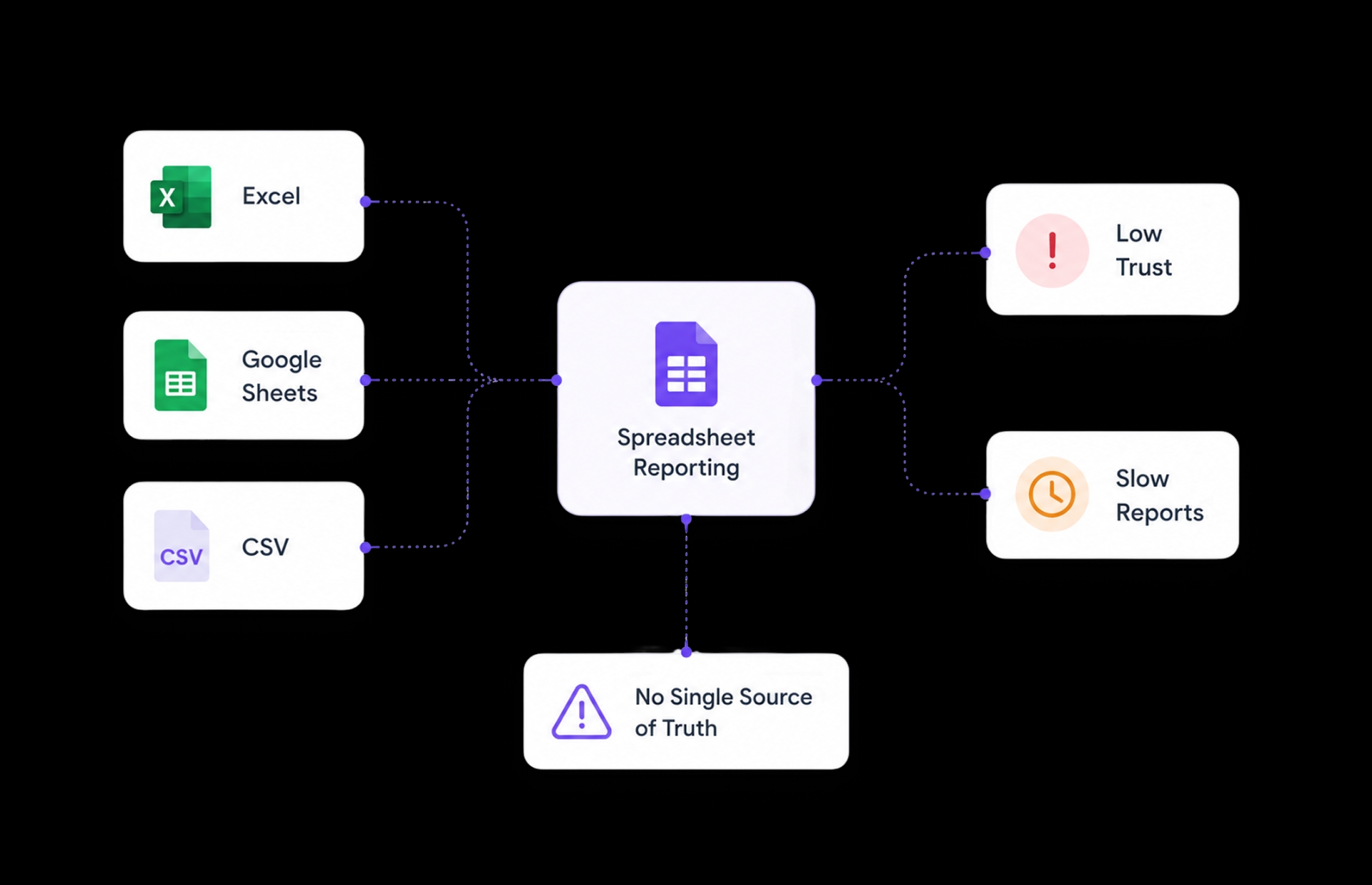
  • Inconsistent data reduced confidence in business reporting
  • Manual report preparation delayed analytical decision-making
  • Spreadsheet workflows limited reporting efficiency
Spreadsheet reporting workflow connecting Excel and Google Sheets to manually prepared reports

Technical Challenge: Legacy spreadsheet workflows prevented automated processing

The existing environment relied on manual spreadsheets without centralized validation, making reliable reporting and automated processing impossible.
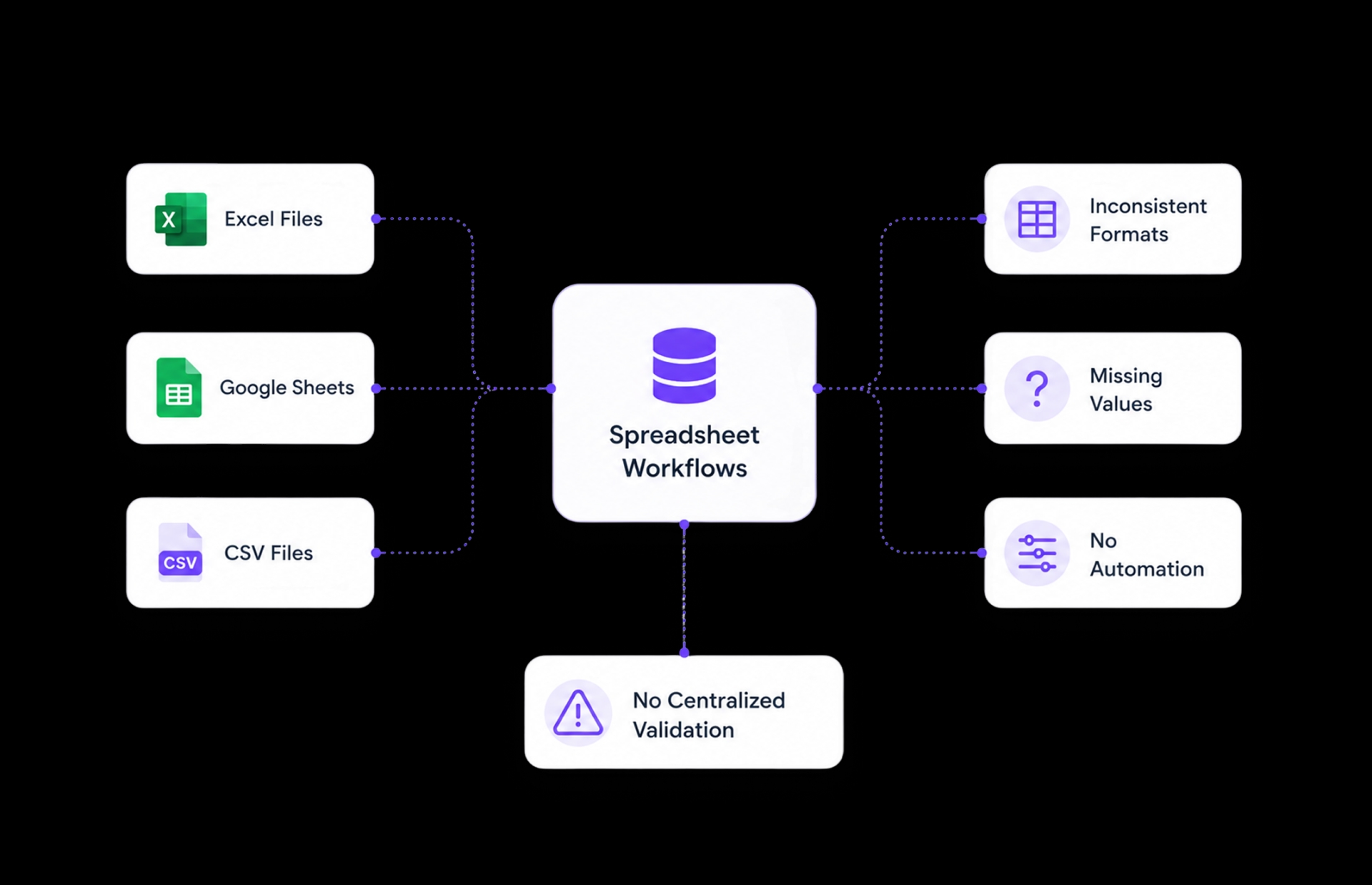
  • Spreadsheet data contained inconsistent formats and missing values
  • Multiple sources required automated ETL pipelines
  • Centralized storage was needed for real-time reporting
Legacy spreadsheet sources transformed through automated ETL workflows and centralized validation

Delivery Challenge: Unifying fragmented data without disrupting reporting

The new platform had to replace spreadsheet workflows while keeping information available and maintaining continuous reporting throughout implementation.
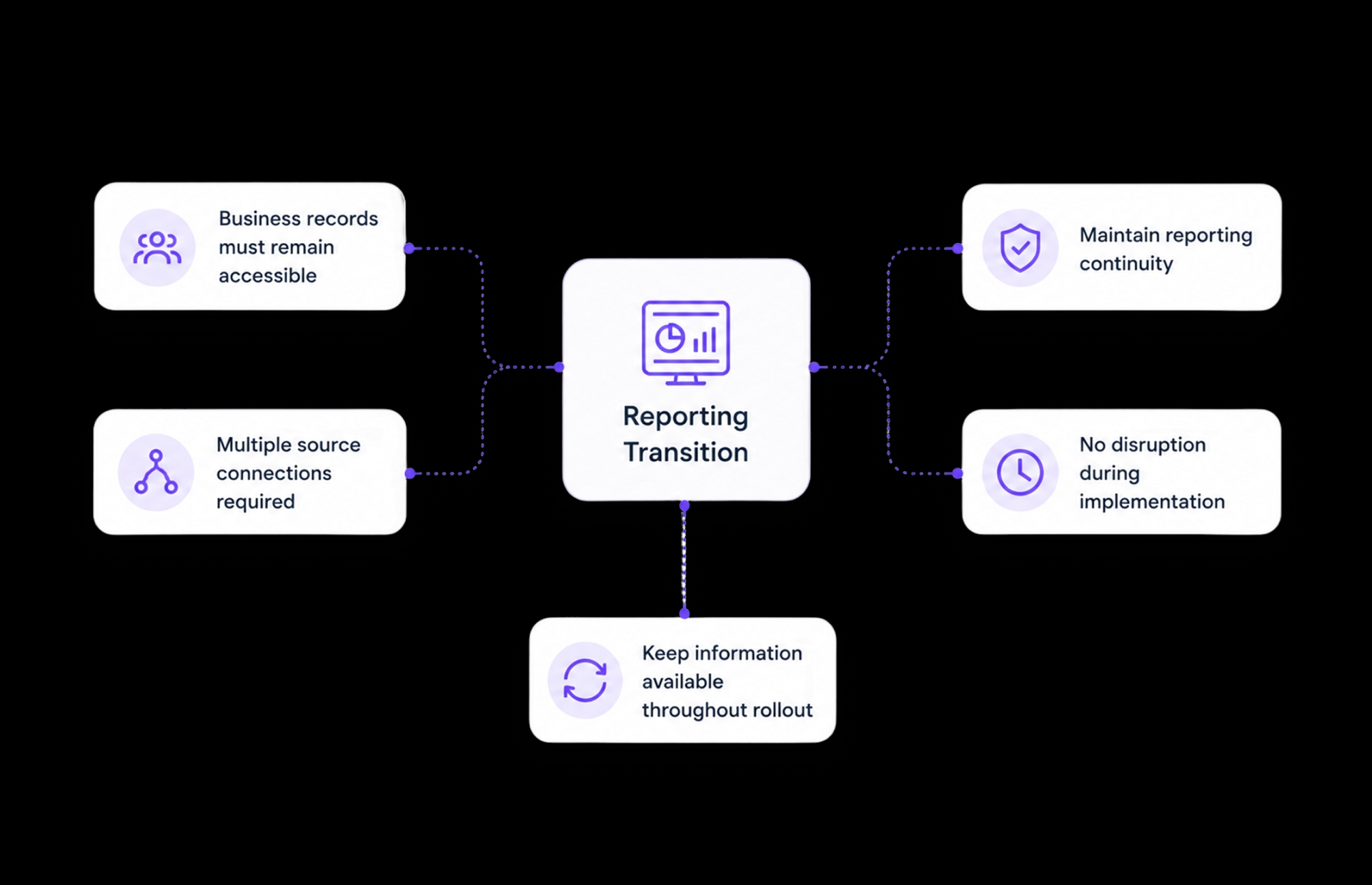
  • Business records had to remain fully accessible
  • Multiple source connections required coordinated implementation
  • Reporting continuity had to be maintained throughout deployment
Transition from fragmented business records and source systems to a unified reporting platform

What we did

We built a centralized Data Lake that replaced spreadsheet-based reporting with a scalable platform for analytical workflows. The system replaced Excel and Google Sheets as the primary data foundation and automatically consolidated information from multiple client sources into a single storage. Business records were preserved while data was standardized for consistent analytical processing.

To ensure the solution's reliability, we developed Airflow ETL pipelines with a transformation layer for data cleaning, format standardization, and missing-value handling. Validated data was loaded into the Data Lake and served through custom BI dashboards with real-time updates. Analysts gained direct access to reporting without manual preparation and spreadsheet-based data checks.

95%

Reduction in data entry errors through an automated data validation system

×10

Faster report generation through automated pipelines replacing spreadsheets

40%

Reduction in time to business insights through centralized analytics

×50

Acceleration of new data source onboarding with scalable ETL architecture

Centralized Data Lake platform

A centralized storage layer designed to consolidate business data and support reliable analytics.
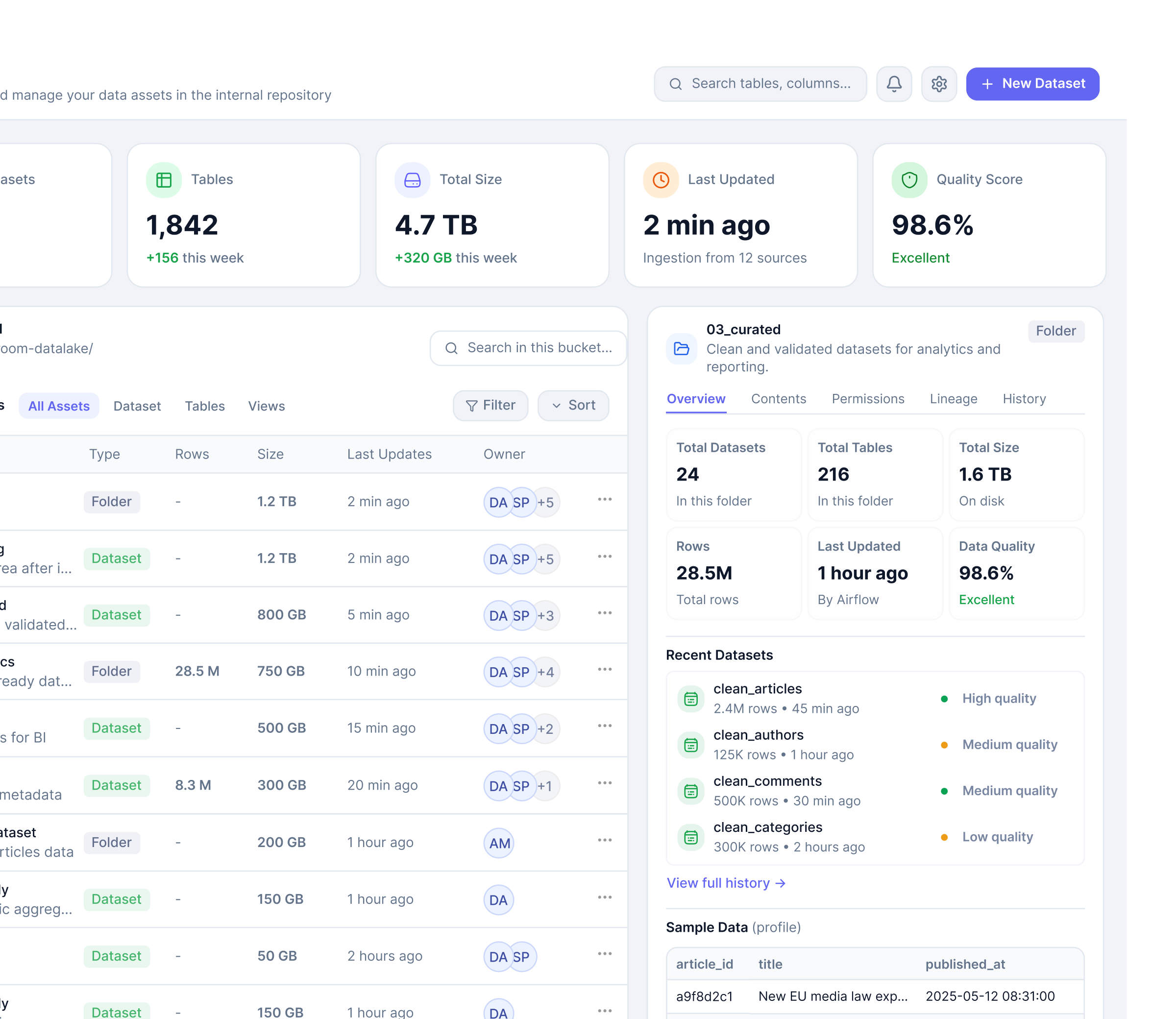
  • Stores business data from all connected sources
  • Replaces fragmented spreadsheet-based storage
  • Supports continuously growing analytical datasets
  • Serves as the foundation for BI reporting
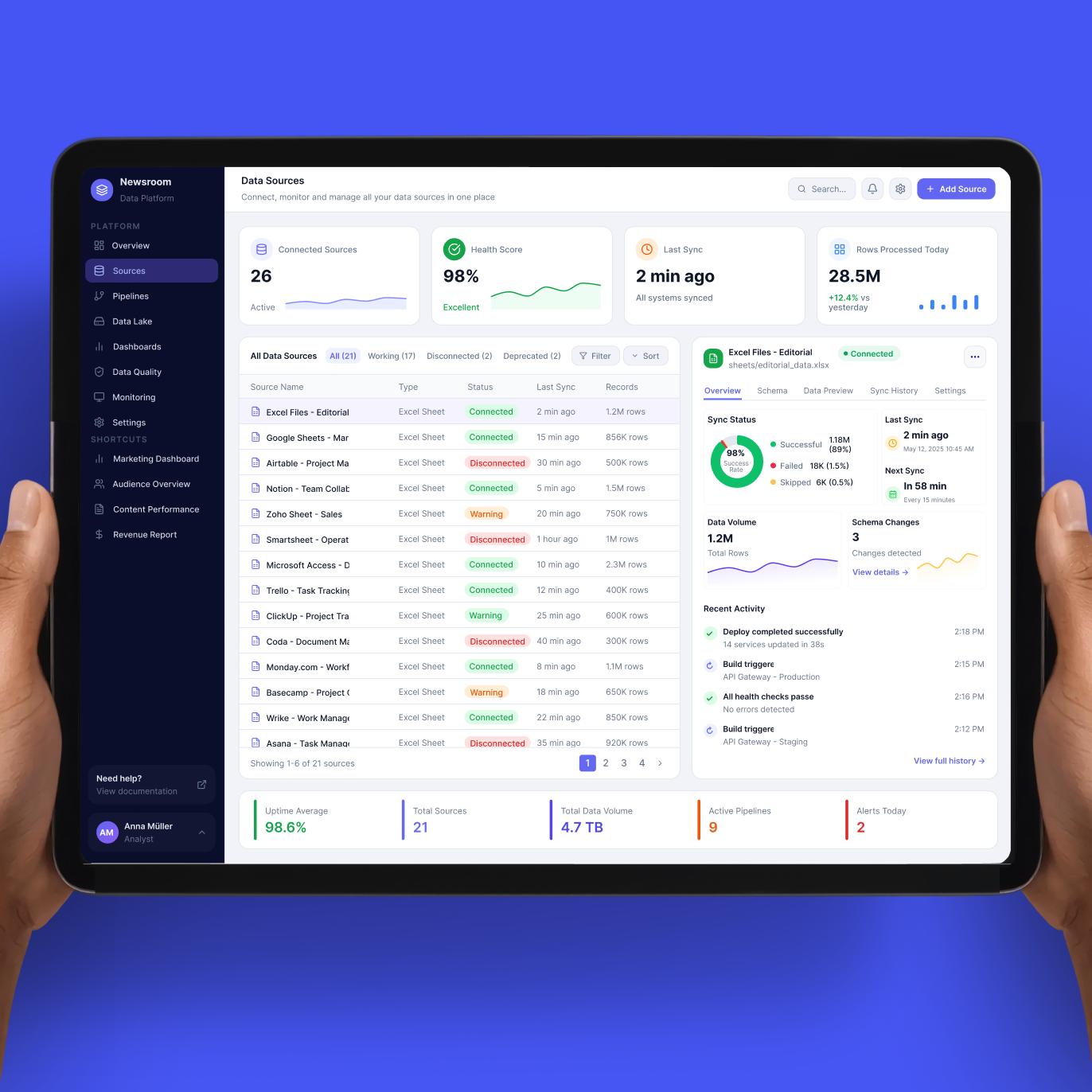
Centralized Data Lake platform dashboard with reporting metrics and business records

Automated ETL pipeline framework

Scalable Airflow pipelines automate data collection, transformation, and loading across connected sources.
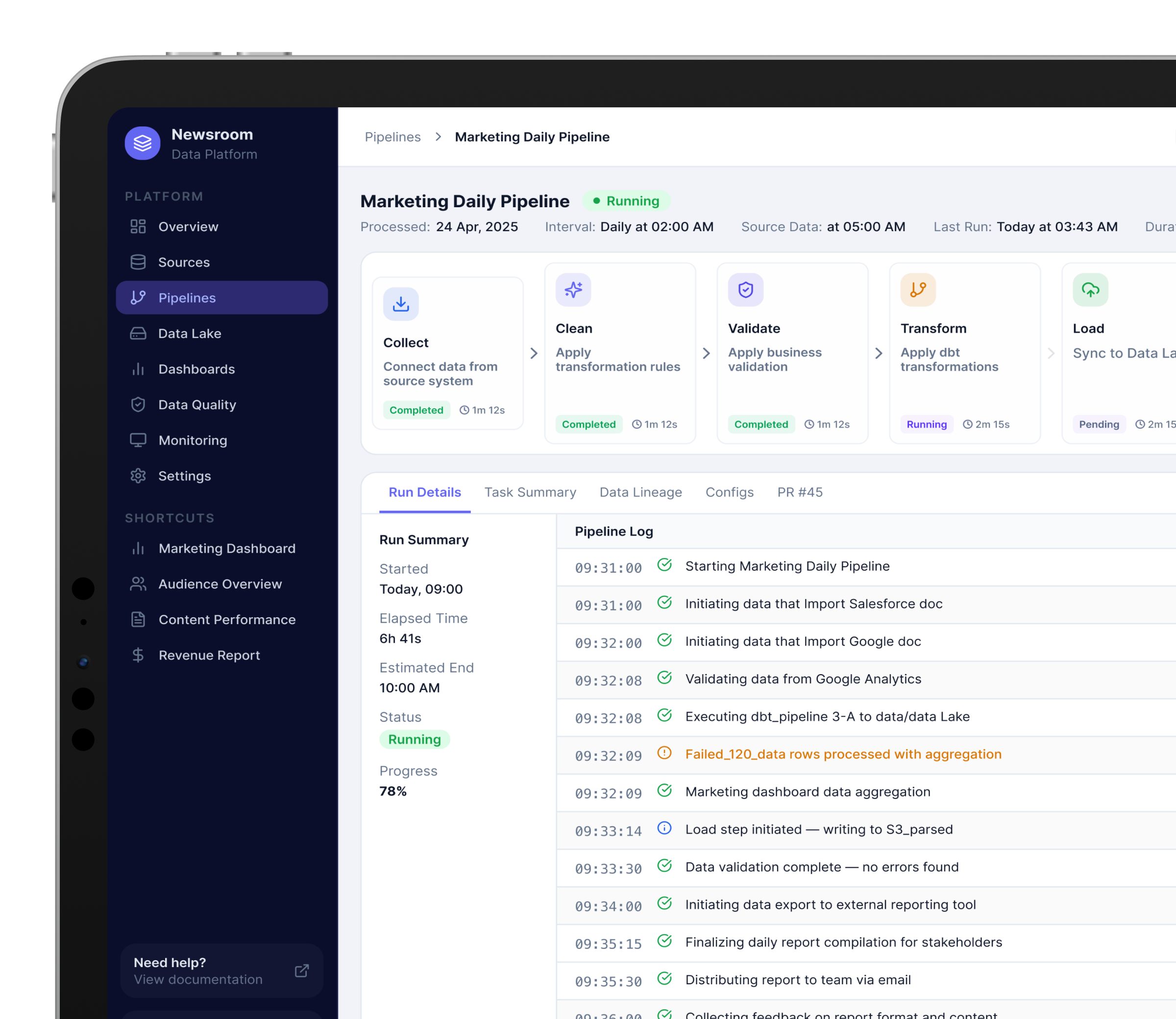
  • Collects data from multiple business sources automatically
  • Standardizes formats before loading into the Data Lake
  • Validates records through transformation logic
  • Supports integration of additional data sources
Automated Airflow ETL pipeline framework for collecting and processing business data

Custom business intelligence dashboards

Custom dashboards provide direct access to operational and analytical business data.
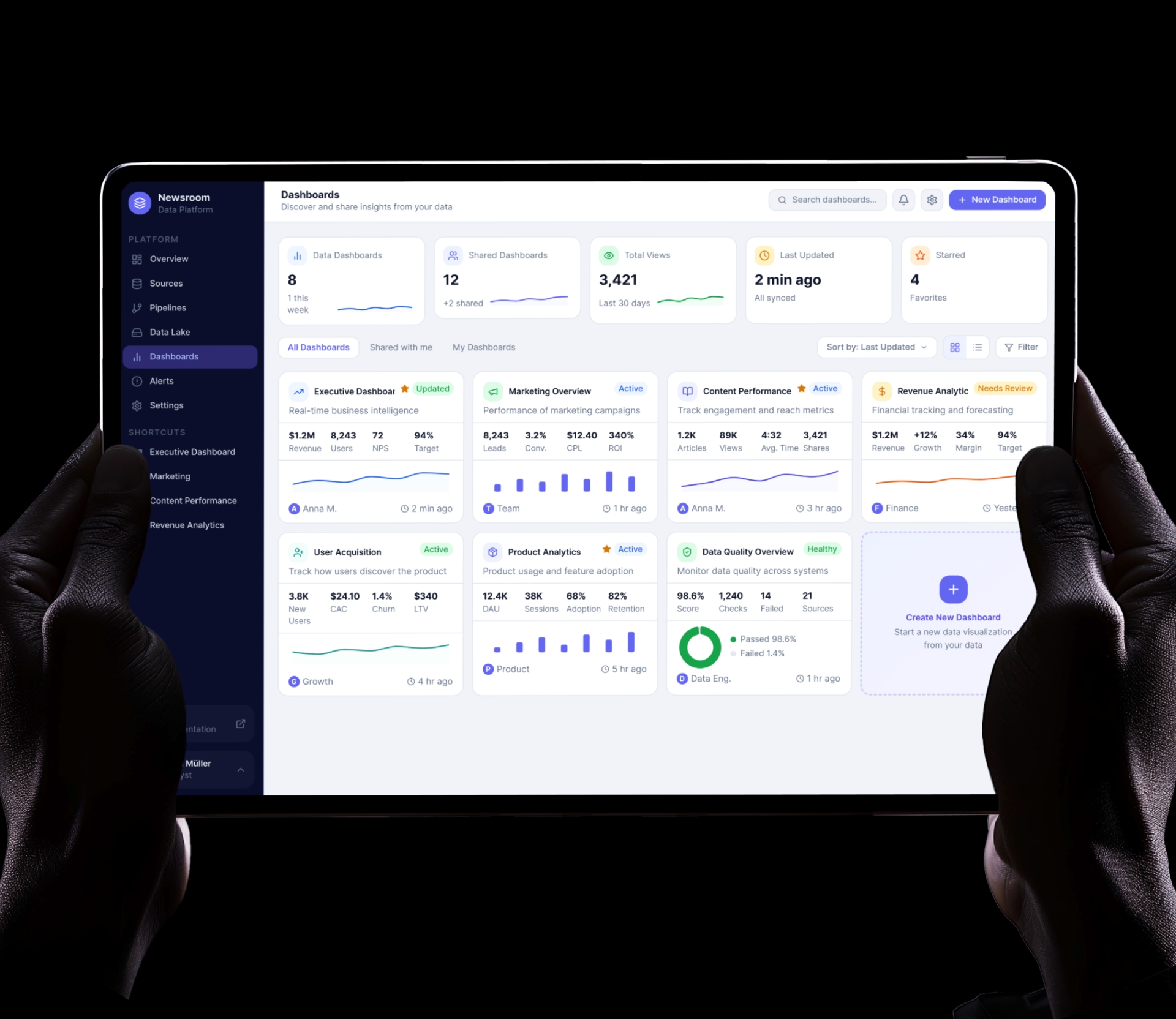
  • Displays near-real-time business reporting
  • Provides direct access to validated datasets
  • Supports reporting without manual preparation
  • Delivers insights across connected business sources
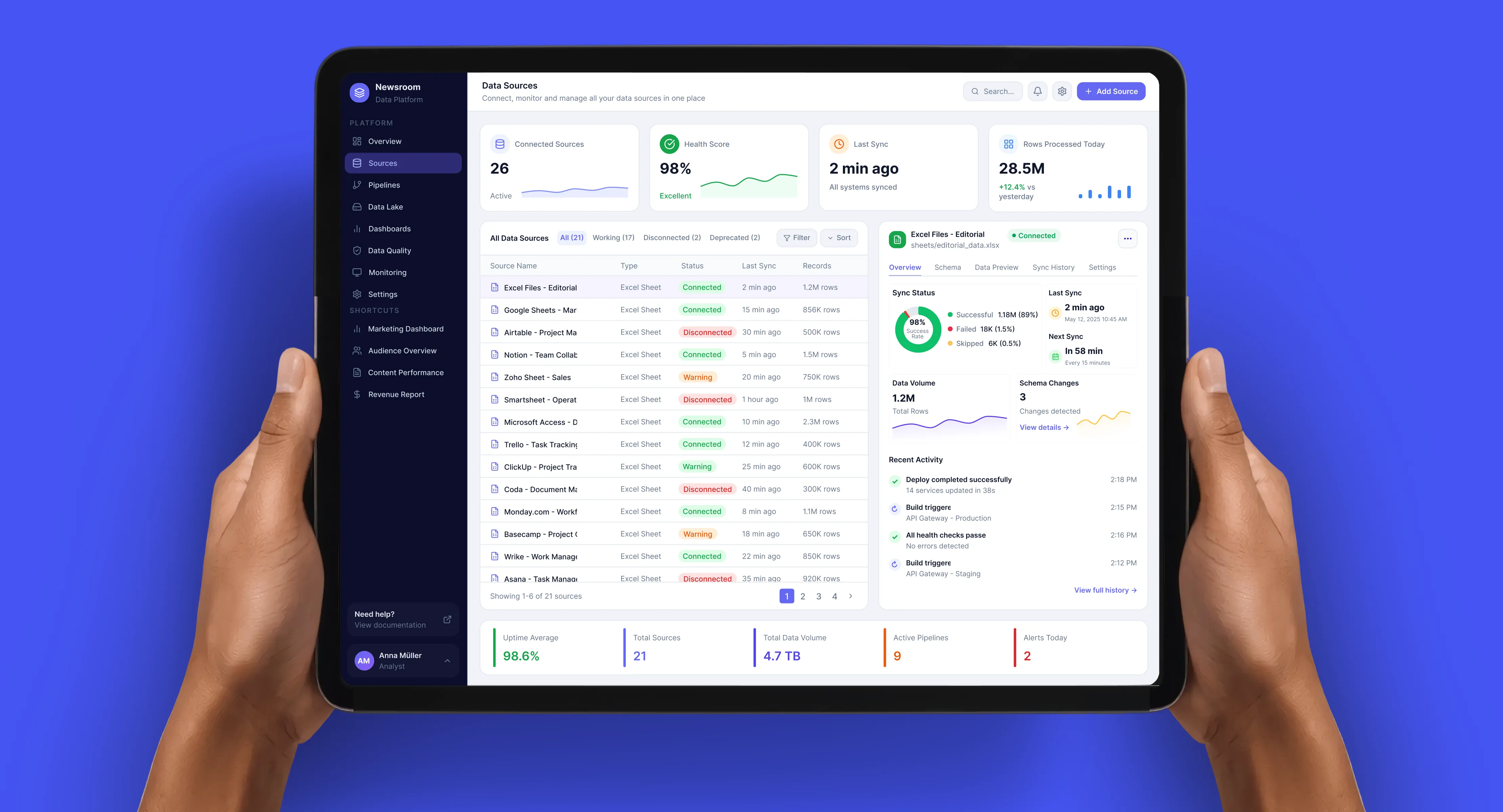
Custom business intelligence dashboard displayed on a tablet

Data quality and validation framework

A transformation layer standardizes business data before analytical processing.
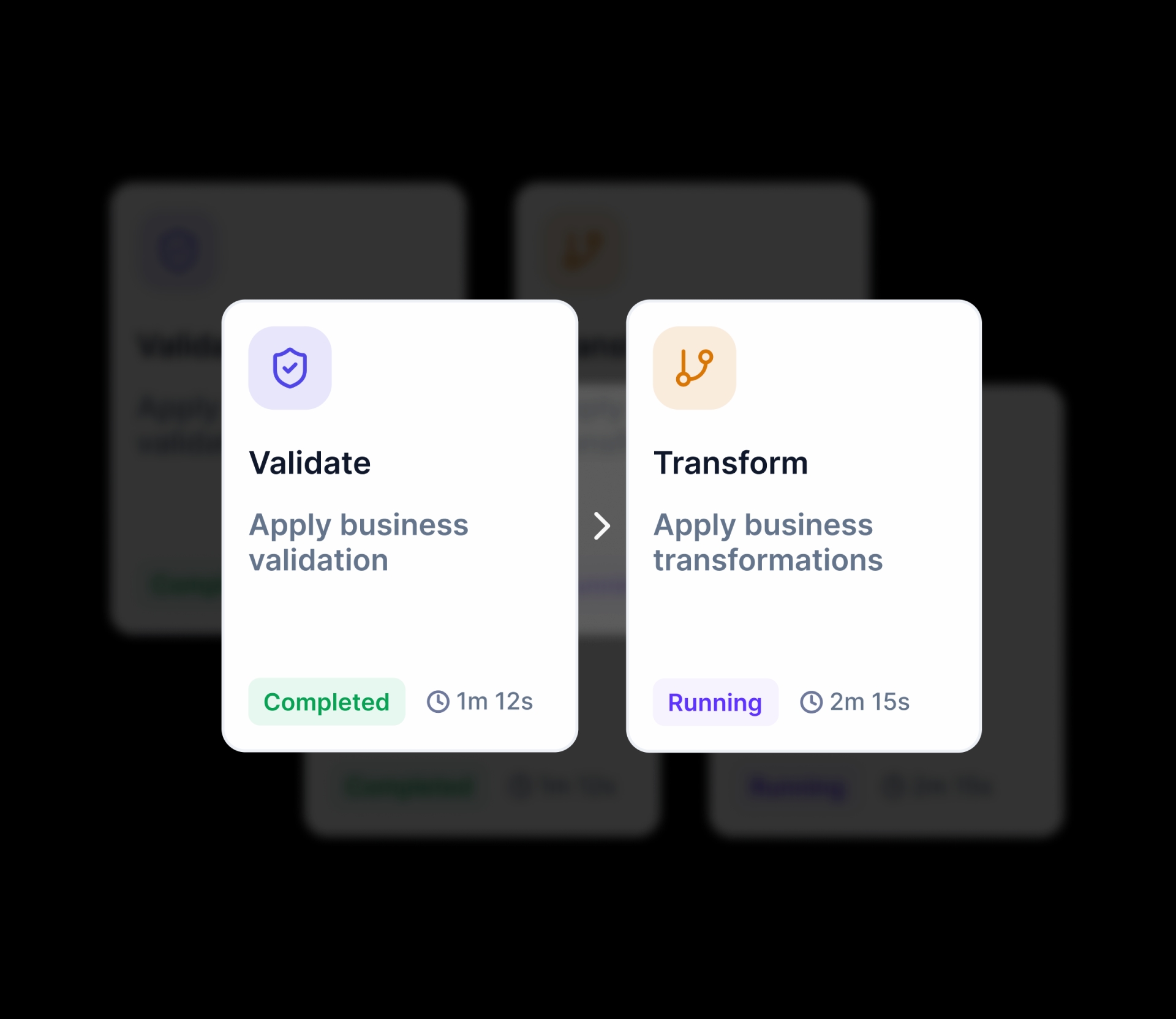
  • Resolves inconsistent formats and missing values
  • Standardizes dates, fields, and business records
  • Preserves business information
  • Improves data consistency before reporting
Data quality workflow validating and transforming business records

Key results and business value

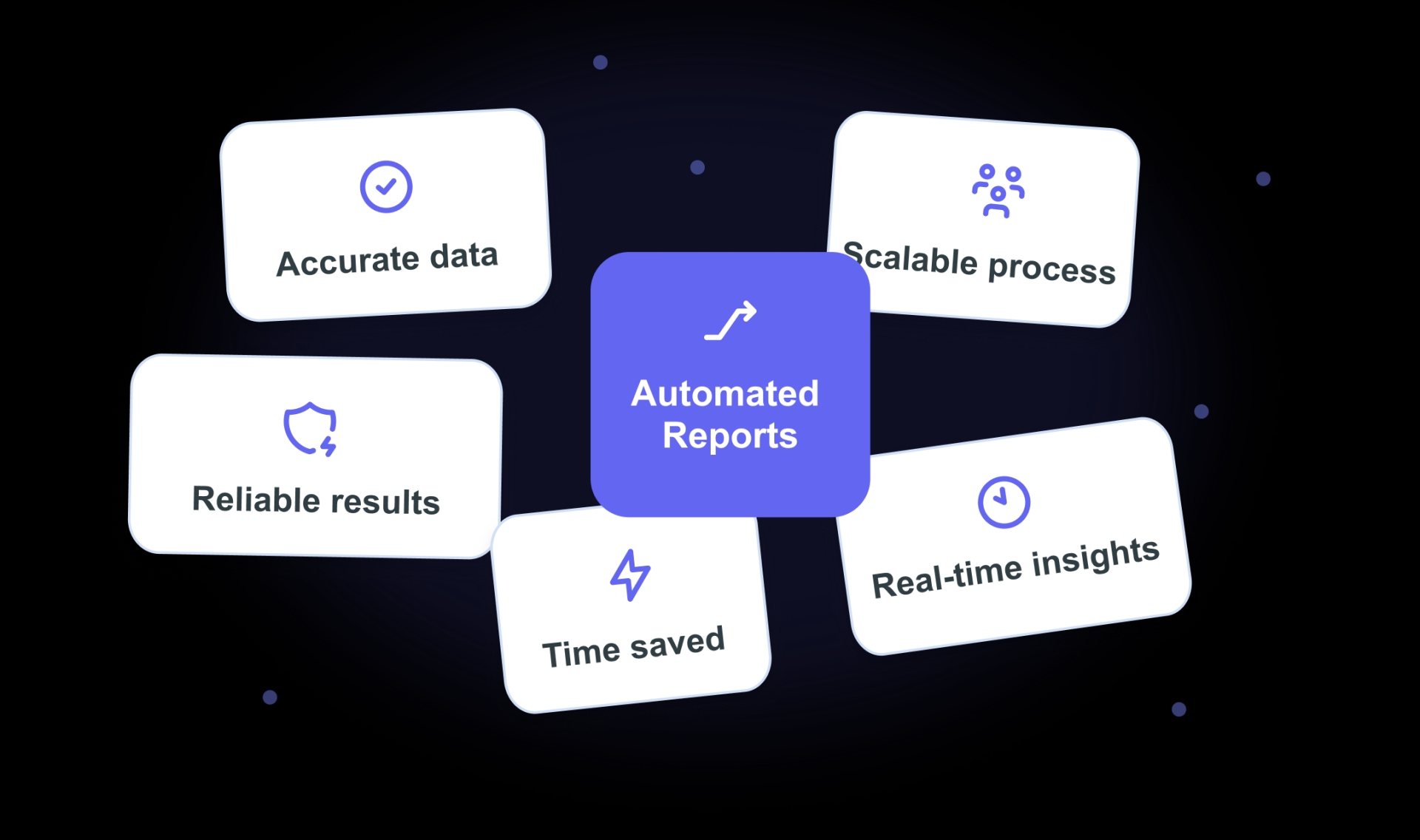
Automated reports connected to accurate data, reliable results, real-time insights, and time savings

Automated reporting workflows replaced spreadsheet-based reporting
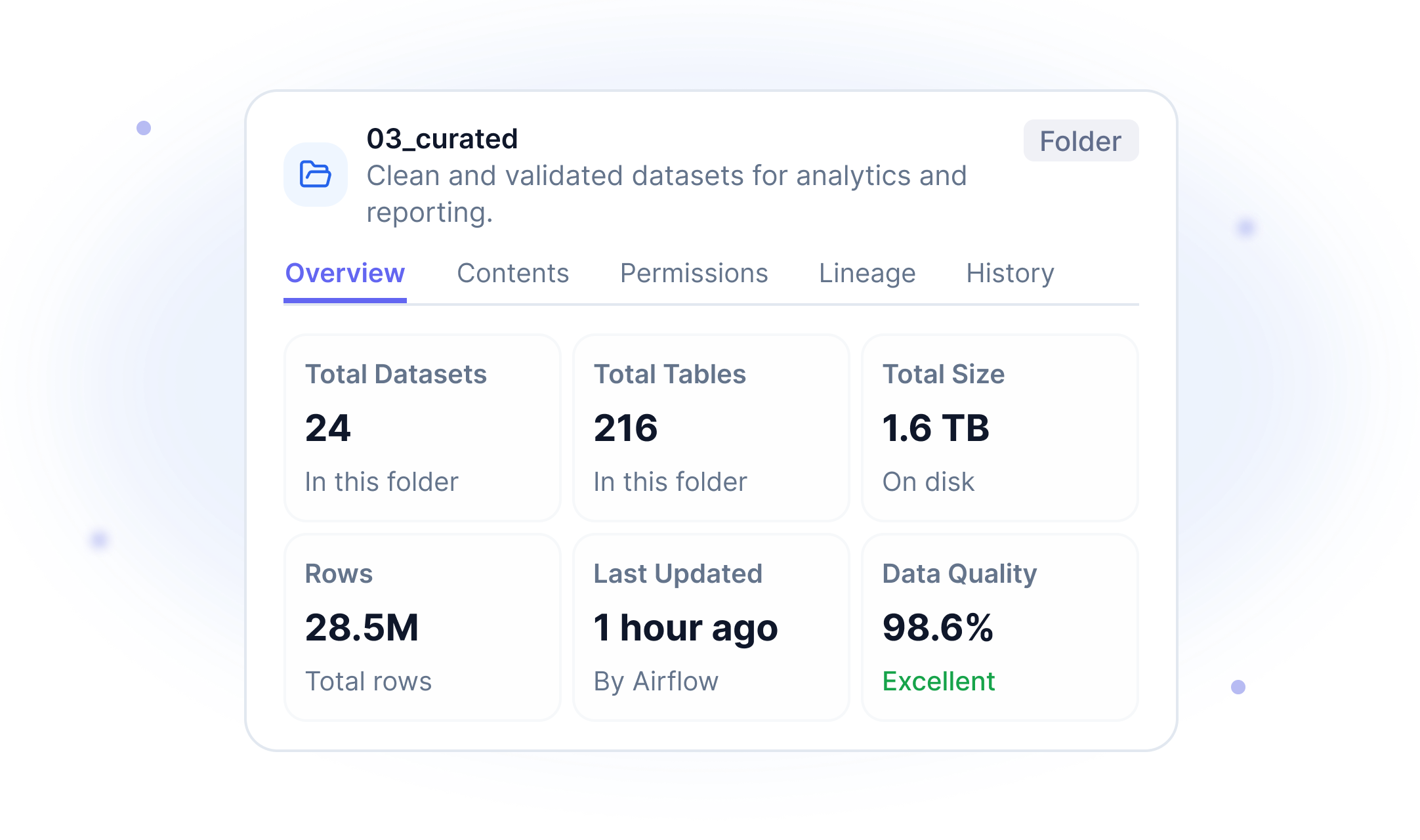
Validated analytical dataset with quality metrics and business records

Unreliable business data transformed into trusted analytical datasets
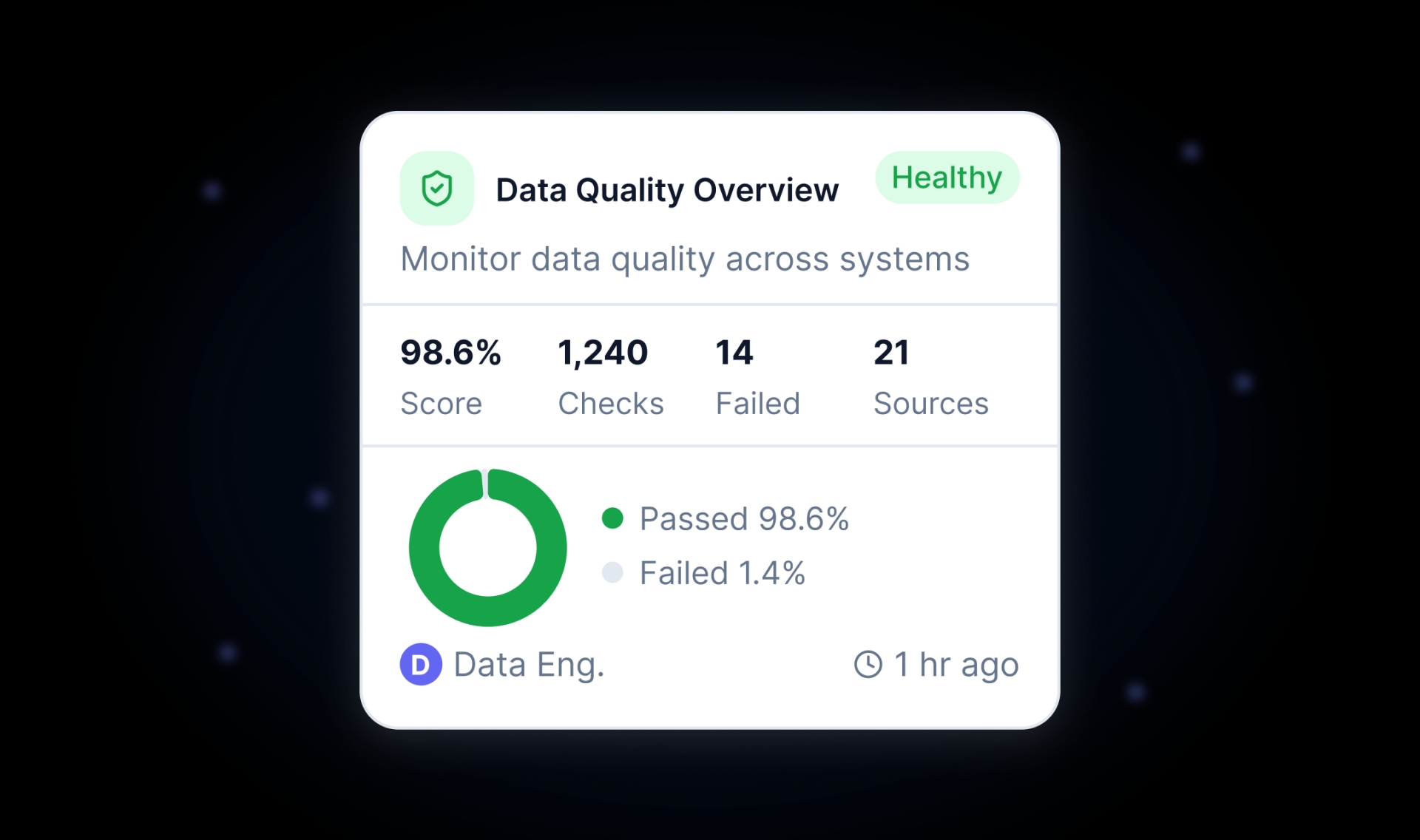
Near-real-time data quality reporting dashboard

Manual report preparation evolved into near-real-time reporting
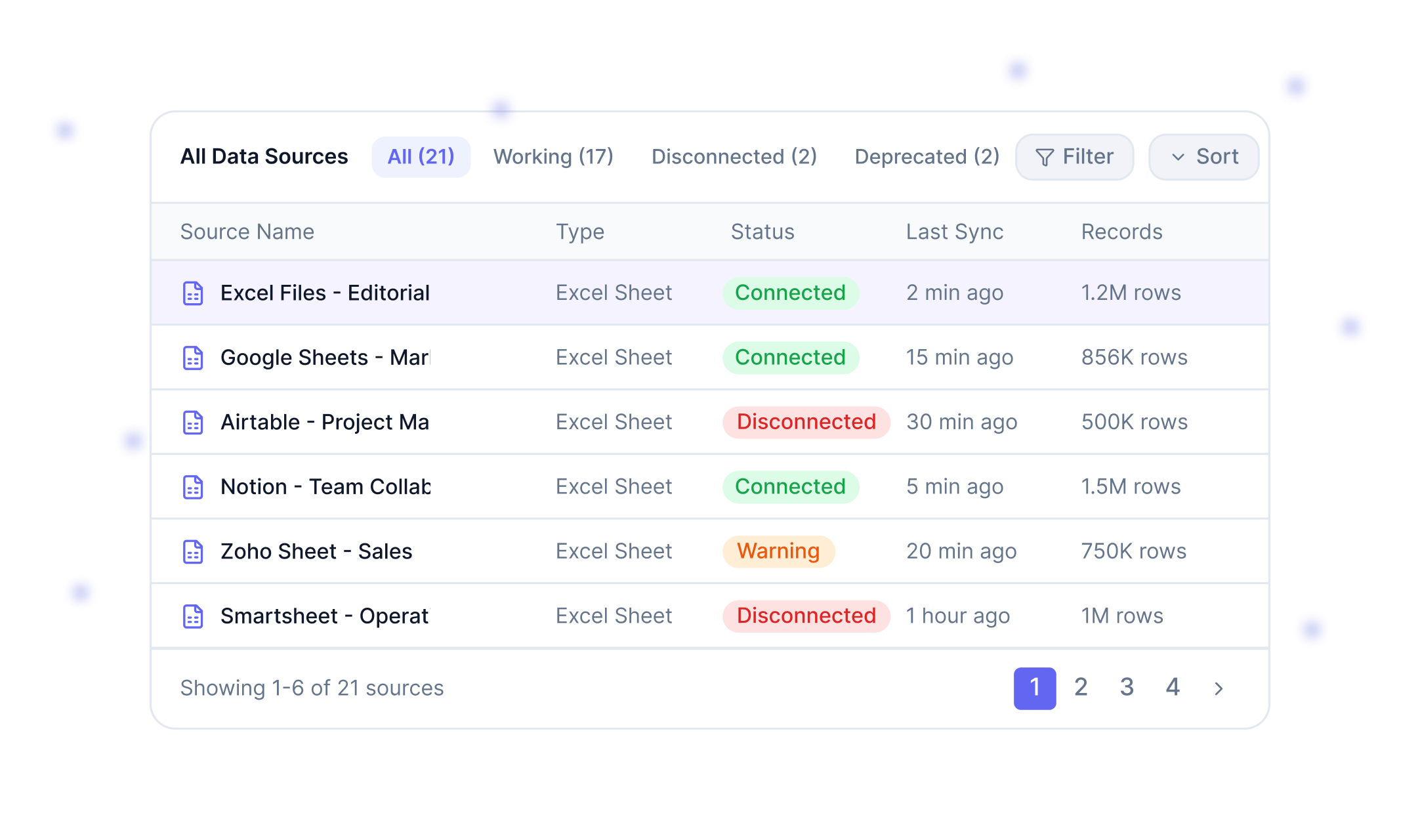
Automated source integration status table for connected business systems

Slow data onboarding reduced to automated source integration
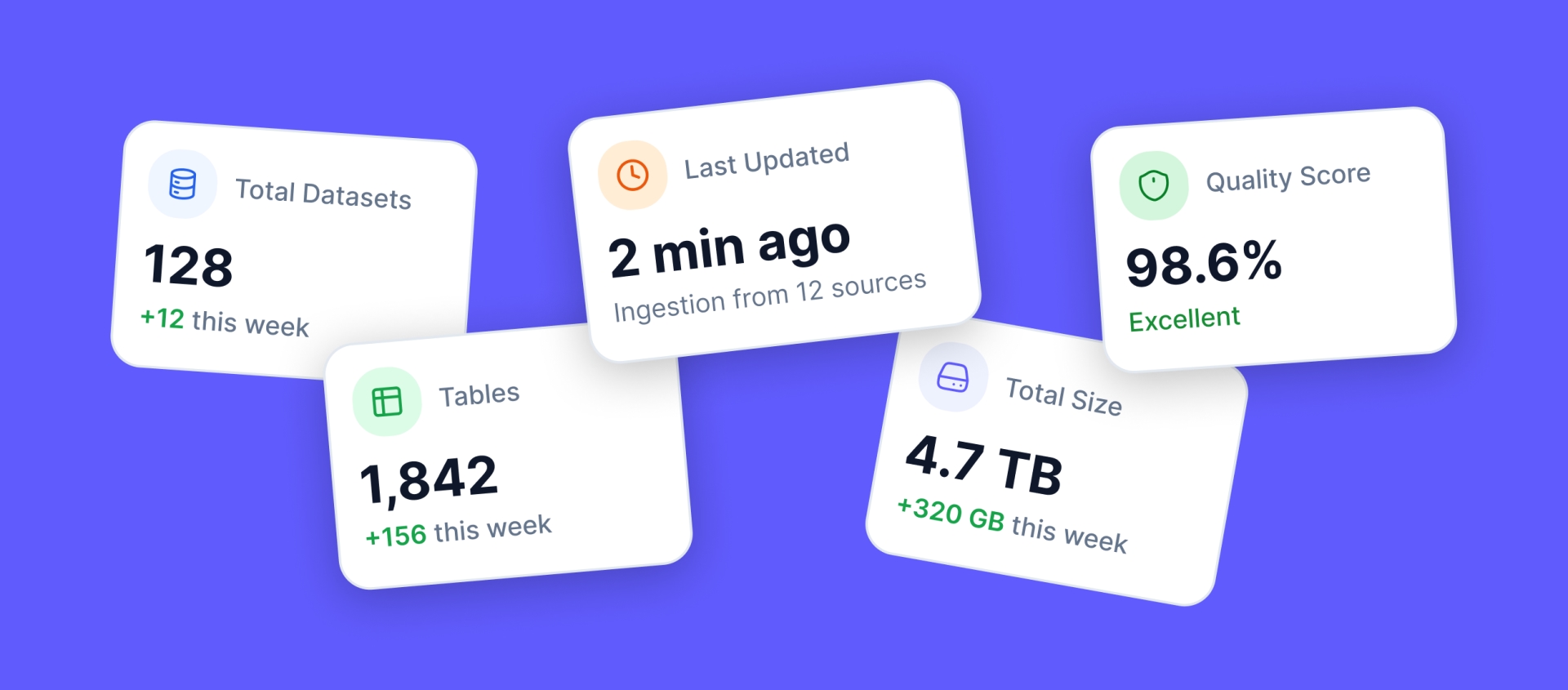
Features Delivered

Data Lake platform metrics for tables, last update, storage, and quality score

Key capabilities of the Data Lake platform:

  • Collects data automatically from multiple sources
  • Validates and standardizes incoming business data
  • Delivers near-real-time dashboards and reporting
  • Supports rapid onboarding of additional data sources
  • Centralizes operational business information
AWS logo for cloud infrastructure

AWS

Airflow logo for ETL pipeline orchestration

Airflow

Docker logo for containerized services

Docker

GitHub logo for source control and collaboration

GitHub

Google Cloud logo for data platform services

GCP

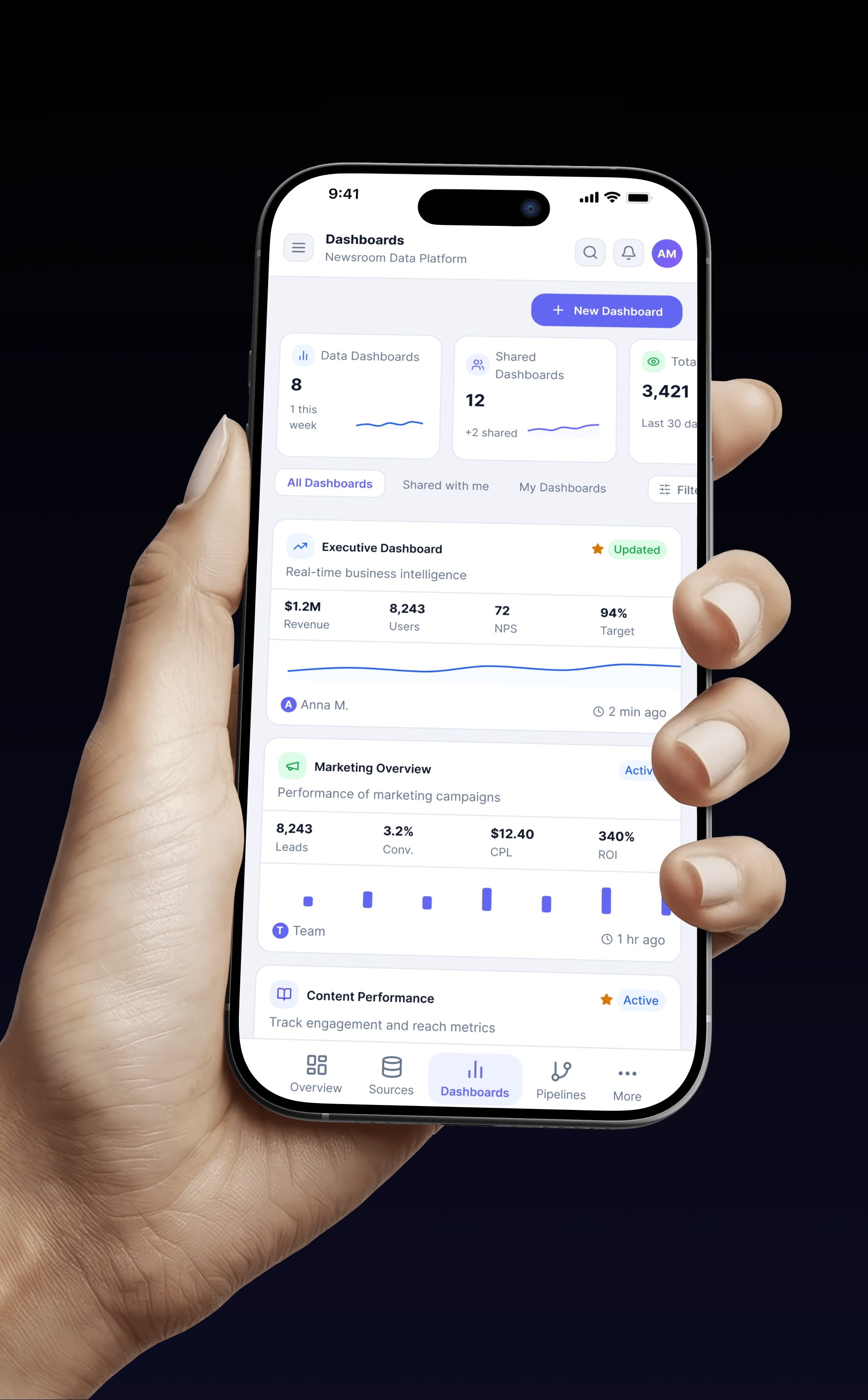
Data Lake analytics platform displayed on a mobile phone

Technical Highlights

Automated Ingestion Pipelines

Collected data from spreadsheets and connected reporting sources through repeatable workflows

Data Quality Validation

Detected missing values and inconsistent formats before data reached analytics workflows

Centralized Data Lake

Consolidated fragmented media data into a shared and scalable source of truth

Continuous Reporting

Kept validated information available while source systems were migrated incrementally

Multiple Source Integration

Coordinated spreadsheet, file, and business-system connections within one data flow

Historical Data Access

Preserved reporting records in a structured format for consistent longitudinal analysis

Automated Ingestion Pipelines

Collected data from spreadsheets and connected reporting sources through repeatable workflows

Data Quality Validation

Detected missing values and inconsistent formats before data reached analytics workflows

Centralized Data Lake

Consolidated fragmented media data into a shared and scalable source of truth

Continuous Reporting

Kept validated information available while source systems were migrated incrementally

Multiple Source Integration

Coordinated spreadsheet, file, and business-system connections within one data flow

Historical Data Access

Preserved reporting records in a structured format for consistent longitudinal analysis

Client Feedback

"Before this project, we were essentially making the same decision for everyone. Now the platform does a much better job of adapting on its own, and that's something you notice over time rather than overnight. Teams spend less time debating what should be shown to users and more time focusing on growth opportunities. It feels like we've added another layer of intelligence to the business without making the product more complicated"

Chief Technology Officer

Client

Unlock new growth opportunities

Discover how custom software with AI-powered features can help your business move faster, improve workflows, and create new competitive advantages.

Similar solutions we implemented

AI-powered Disinformation Monitoring Platform for Central Europe
  • AI
  • CMS
  • AWS
  • BI
  • GCP
  • ML

AI-powered Disinformation Monitoring Platform for Central Europe

Scalable Content Intake Web Application for Media Agencies Content Management
  • Data
  • UI/UX
  • AWS
  • Web app

Scalable Content Intake Web Application for Media Agencies Content Management

See all Case Studies

Related blog posts

‌
Why 95% of GenAI Projects Fail — and How the Right Approach Changes Everything
GenAI

Why 95% of GenAI Projects Fail — and How the Right Approach Changes Everything

A recent MIT report, The GenAI Divide: State of AI in Business 2025, reveals that nearly 95% of generative AI pilots never achieve meaningful production impact. The issue isn’t with the technology itself — it’s in how companies approach it. At YTC, we’ve analyzed these failure points closely and built our process to overcome them. 1. Misalignment with core workflows and business context One of the biggest reasons AI projects fail is poor alignment with actual business operations. Too often, solutions are designed in isolation — impressive from a technical standpoint, but disconnected from how teams truly work. When an AI system doesn’t fit within existing workflows or address real objectives, it becomes a burden instead of an advantage.
‌
How to create a data lake for machine learning
MLAIData lake

How to create a data lake for machine learning

Building a data lake might sound like a task for large tech corporations or data scientists in lab coats. However, in reality, it’s a practical and strategic move for any business seeking to harness the full potential of machine learning. If you're gathering data and considering how to utilize it for informed decisions, automation, or AI-powered services, you need a data lake. At YTC, we help businesses transform their scattered data into structured, accessible, and scalable systems. In this article, we’ll walk you through what a data lake is, why it's essential for machine learning, and how to build one the right way.
‌
People & processes before models & algorithms: The 70–20–10 rule for effective AI transformation
Industry newsAI

People & processes before models & algorithms: The 70–20–10 rule for effective AI transformation

Artificial intelligence has become a boardroom fixture: investments are soaring, pilots are proliferating, and the promise of transformation is everywhere. Yet as the BCG research shows, the vast majority of organisations are not realising value. Only about 26 % of companies have developed the capabilities needed to move beyond proof-of-concept and extract measurable value, and just 4 % are at the frontier of AI-driven transformation. What this tells us is that the technology itself is not the barrier. The obstacle lies in people, processes, integration, governance, and culture. Why people and processes matter more than algorithms Among the most striking findings of the report is the so-called “10-20-70” distribution of focus for successful AI transformations: approximately 10 % of effort is directed at algorithms, 20 % at technology and data, and a full 70 % on people and processes. This may seem counterintuitive in an era of hype around models like LLMs and generative AI — yet the empirical evidence speaks clearly. Companies that invest heavily in people, workflows, change management, process redesign, and the human embedding of AI outperform those that focus primarily on hard tech. Even building a team using AI is more efficient now.
Read all posts

Related blog posts

Read all
‌
Why 95% of GenAI Projects Fail — and How the Right Approach Changes Everything
GenAI

Why 95% of GenAI Projects Fail — and How the Right Approach Changes Everything

A recent MIT report, The GenAI Divide: State of AI in Business 2025, reveals that nearly 95% of generative AI pilots never achieve meaningful production impact. The issue isn’t with the technology itself — it’s in how companies approach it. At YTC, we’ve analyzed these failure points closely and built our process to overcome them. 1. Misalignment with core workflows and business context One of the biggest reasons AI projects fail is poor alignment with actual business operations. Too often, solutions are designed in isolation — impressive from a technical standpoint, but disconnected from how teams truly work. When an AI system doesn’t fit within existing workflows or address real objectives, it becomes a burden instead of an advantage.
‌
How to create a data lake for machine learning
MLAIData lake

How to create a data lake for machine learning

Building a data lake might sound like a task for large tech corporations or data scientists in lab coats. However, in reality, it’s a practical and strategic move for any business seeking to harness the full potential of machine learning. If you're gathering data and considering how to utilize it for informed decisions, automation, or AI-powered services, you need a data lake. At YTC, we help businesses transform their scattered data into structured, accessible, and scalable systems. In this article, we’ll walk you through what a data lake is, why it's essential for machine learning, and how to build one the right way.
‌
People & processes before models & algorithms: The 70–20–10 rule for effective AI transformation
Industry newsAI

People & processes before models & algorithms: The 70–20–10 rule for effective AI transformation

Artificial intelligence has become a boardroom fixture: investments are soaring, pilots are proliferating, and the promise of transformation is everywhere. Yet as the BCG research shows, the vast majority of organisations are not realising value. Only about 26 % of companies have developed the capabilities needed to move beyond proof-of-concept and extract measurable value, and just 4 % are at the frontier of AI-driven transformation. What this tells us is that the technology itself is not the barrier. The obstacle lies in people, processes, integration, governance, and culture. Why people and processes matter more than algorithms Among the most striking findings of the report is the so-called “10-20-70” distribution of focus for successful AI transformations: approximately 10 % of effort is directed at algorithms, 20 % at technology and data, and a full 70 % on people and processes. This may seem counterintuitive in an era of hype around models like LLMs and generative AI — yet the empirical evidence speaks clearly. Companies that invest heavily in people, workflows, change management, process redesign, and the human embedding of AI outperform those that focus primarily on hard tech. Even building a team using AI is more efficient now.

Related blog posts

‌
Why 95% of GenAI Projects Fail — and How the Right Approach Changes Everything
GenAI

Why 95% of GenAI Projects Fail — and How the Right Approach Changes Everything

A recent MIT report, The GenAI Divide: State of AI in Business 2025, reveals that nearly 95% of generative AI pilots never achieve meaningful production impact. The issue isn’t with the technology itself — it’s in how companies approach it. At YTC, we’ve analyzed these failure points closely and built our process to overcome them. 1. Misalignment with core workflows and business context One of the biggest reasons AI projects fail is poor alignment with actual business operations. Too often, solutions are designed in isolation — impressive from a technical standpoint, but disconnected from how teams truly work. When an AI system doesn’t fit within existing workflows or address real objectives, it becomes a burden instead of an advantage.
‌
How to create a data lake for machine learning
MLAIData lake

How to create a data lake for machine learning

Building a data lake might sound like a task for large tech corporations or data scientists in lab coats. However, in reality, it’s a practical and strategic move for any business seeking to harness the full potential of machine learning. If you're gathering data and considering how to utilize it for informed decisions, automation, or AI-powered services, you need a data lake. At YTC, we help businesses transform their scattered data into structured, accessible, and scalable systems. In this article, we’ll walk you through what a data lake is, why it's essential for machine learning, and how to build one the right way.
‌
People & processes before models & algorithms: The 70–20–10 rule for effective AI transformation
Industry newsAI

People & processes before models & algorithms: The 70–20–10 rule for effective AI transformation

Artificial intelligence has become a boardroom fixture: investments are soaring, pilots are proliferating, and the promise of transformation is everywhere. Yet as the BCG research shows, the vast majority of organisations are not realising value. Only about 26 % of companies have developed the capabilities needed to move beyond proof-of-concept and extract measurable value, and just 4 % are at the frontier of AI-driven transformation. What this tells us is that the technology itself is not the barrier. The obstacle lies in people, processes, integration, governance, and culture. Why people and processes matter more than algorithms Among the most striking findings of the report is the so-called “10-20-70” distribution of focus for successful AI transformations: approximately 10 % of effort is directed at algorithms, 20 % at technology and data, and a full 70 % on people and processes. This may seem counterintuitive in an era of hype around models like LLMs and generative AI — yet the empirical evidence speaks clearly. Companies that invest heavily in people, workflows, change management, process redesign, and the human embedding of AI outperform those that focus primarily on hard tech. Even building a team using AI is more efficient now.
Read all posts
Logo YTC

We design and build AI-powered software. Strategy first. Same team end-to-end.

Your Technical Companion. All rights reserved. 2026

Contact Us

Email: sales@ytc.company

Location: Kyiv/Ukraine

Industries

FinTechInsurTechEdTechAdTechMarTechMediaTech

Services

AI Product StrategyData EngineeringAI AuditAI Cost OptimisationAI Team AugmentationAI Due DiligenceAI Software Implementation

Company

AboutCase StudiesHelp CenterContact
Privacy PolicyTerms of Service

Contact Us

Email: sales@ytc.company

Location: Kyiv/Ukraine

Privacy PolicyTerms of Service

© 2026, YTC - Your Technical Companion All Rights Reserved