YTC LogoYTC Logo
Cases
AI-powered financial deep research engine

AI-powered financial deep research engine

AI-powered financial deep research engine

Investment teams spent hours verifying research because existing tools produced unsupported claims and unreliable sources forcing analysts to manually verify every output. We built a deep research plugin that verifies and ensures a real source backs every claim. Analysts now complete due diligence 3x faster with greater confidence in the results

Industry

FinTech

Client

Under NDA

Region

USA

Main challenges

Business Challenge: No unified access slowed investment analysis

Investment teams lacked a unified way to review CRM knowledge across deals, companies, and documents.
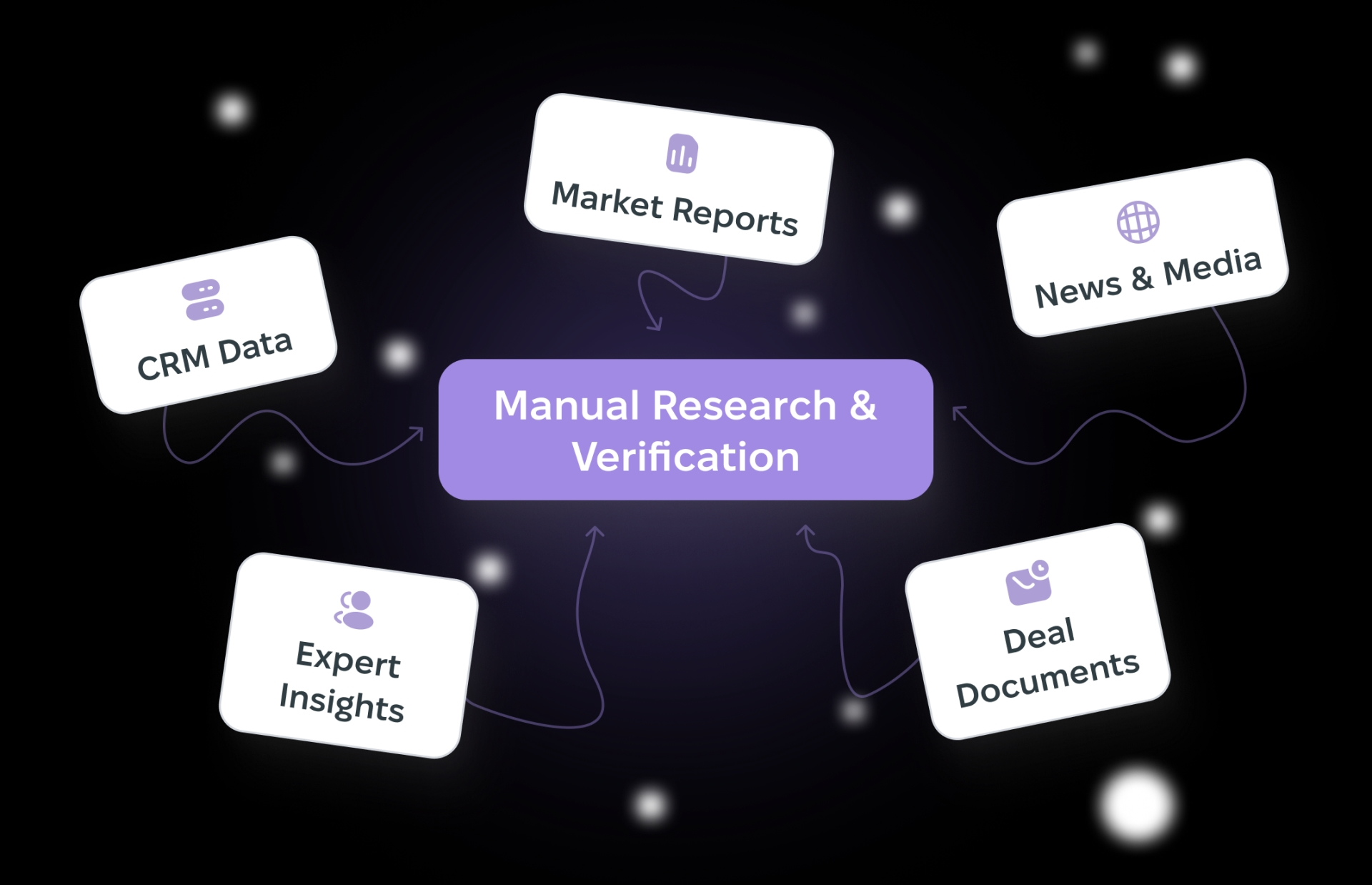
  • Manual lookup slowed the pipeline and deal analysis
  • Analysts spent hours validating research findings
  • Manual verification delayed investment decisions
Manual research and verification workflow connecting CRM data, market reports, news, social media, expert insights, and deal documents

Technical Challenge: Financial data lacked reliable validation mechanisms

Research information came from multiple sources and often contained inconsistencies, making it difficult to verify findings and establish confidence in the analysis.
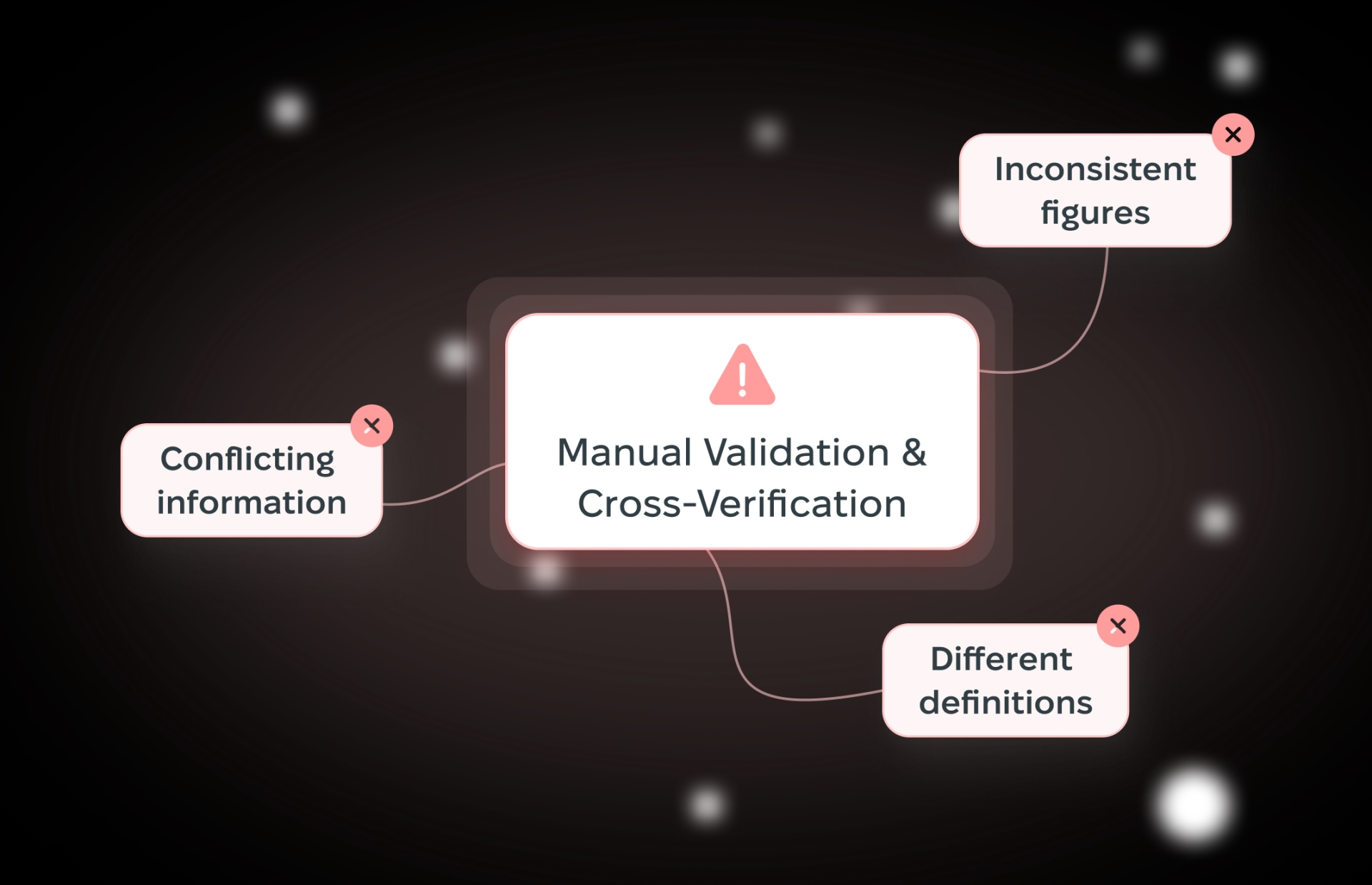
  • Multiple sources required cross-validation of findings
  • Conflicting information was difficult to identify quickly
  • Source traceability was limited across research workflows
Manual validation and cross-verification workflow resolving conflicting information, inconsistent figures, and different definitions

Delivery Challenge: Improving research workflows without disruption

The new research capability had to fit existing analyst workflows and integrate into the current platform without affecting ongoing operations.
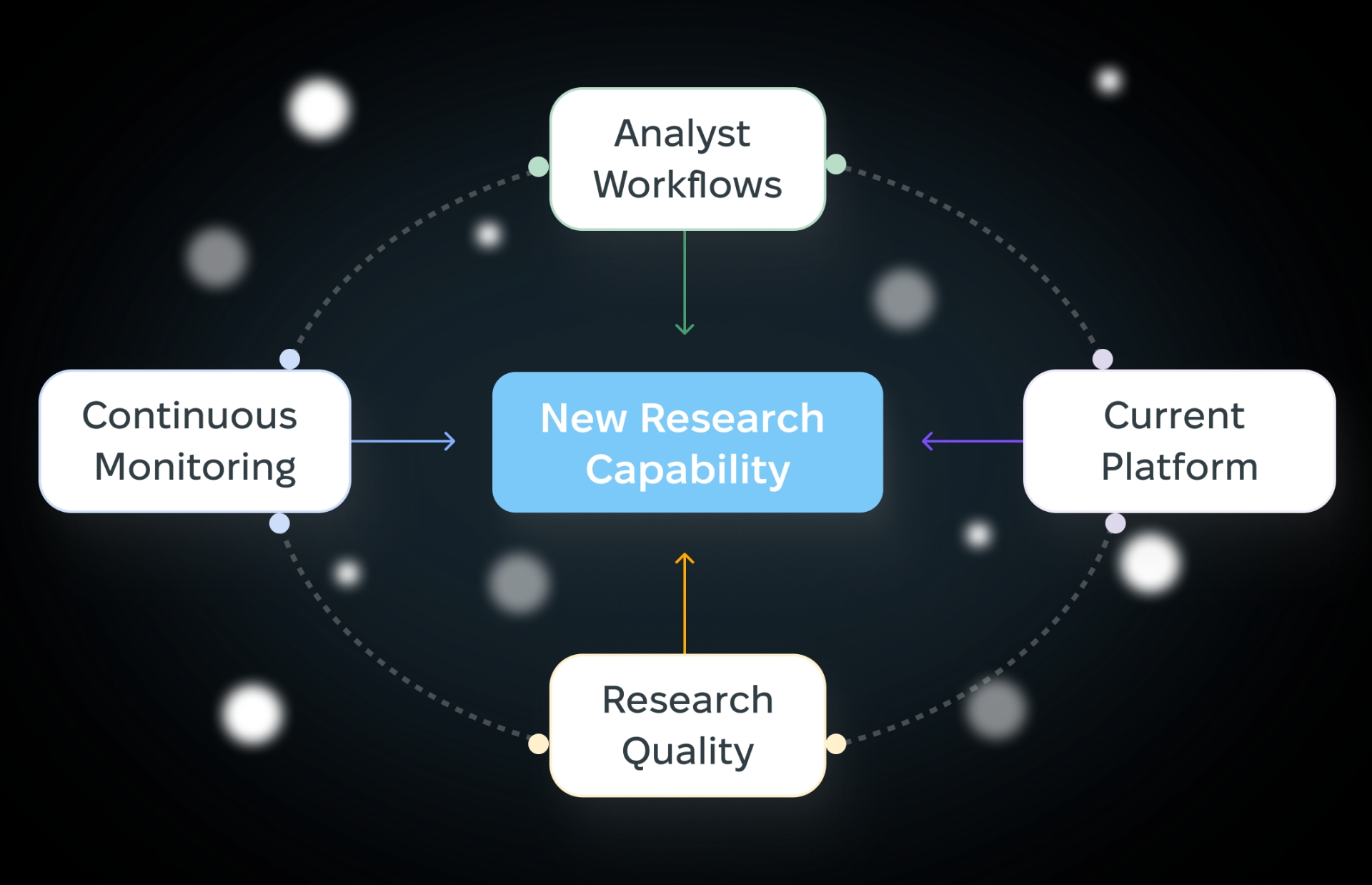
  • Existing workflows required seamless integration
  • Research quality needed measurable validation
  • Continuous monitoring was required from launch
New research capability integrated with analyst workflows, continuous monitoring, research quality, and the current platform

What we did

We built a specialised financial deep research engine for investment analyst teams. The solution works as a plugin inside the client's existing platform and supports due diligence workflows. A research agent retrieves relevant information from provided sources, while each response passes through multiple verification layers before delivery.

We added an LLM Council that uses multiple LLMs to cross-check every answer before it reaches the analyst. Context grounding keeps responses tied to source material only, while conflicting statements detection highlights contradictory data across documents. The result is faster research with verifiable, source-backed output that analysts can trust.

95%

Reduction in hallucinations compared to general-purpose research tools

3X

Faster due-diligence process with greater confidence in the results

2

Saved per deal on source verification and research

0%

Unsupported claims rate with every statement backed by source references

Multi-agent research pipeline

A custom Agentic Search to support financial due diligence inside the client's existing platform.
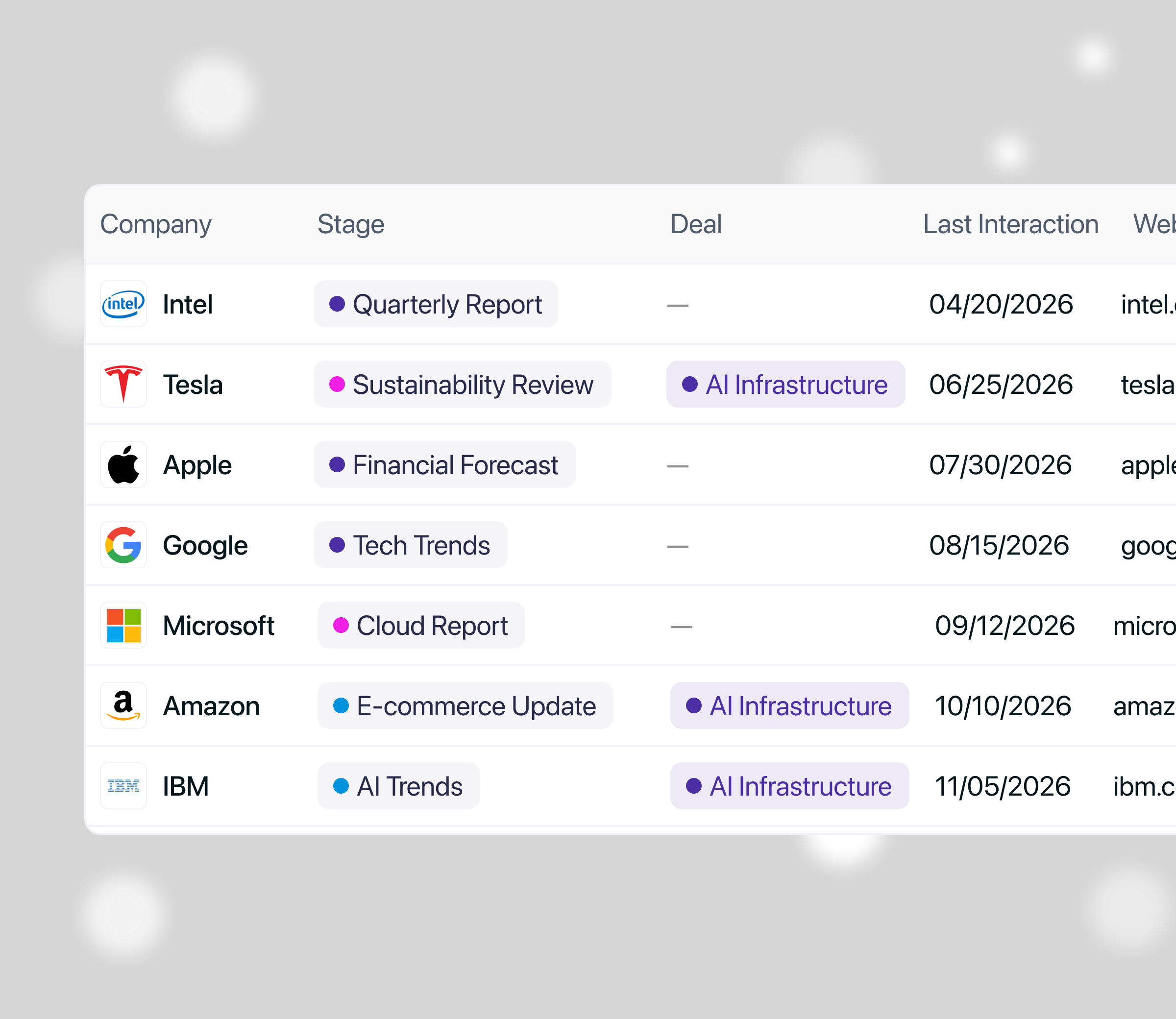
  • Retrieves information from financial research sources
  • Processes structured and unstructured data
  • Supports async tasks for research delivery
  • Works as a plugin in existing workflows
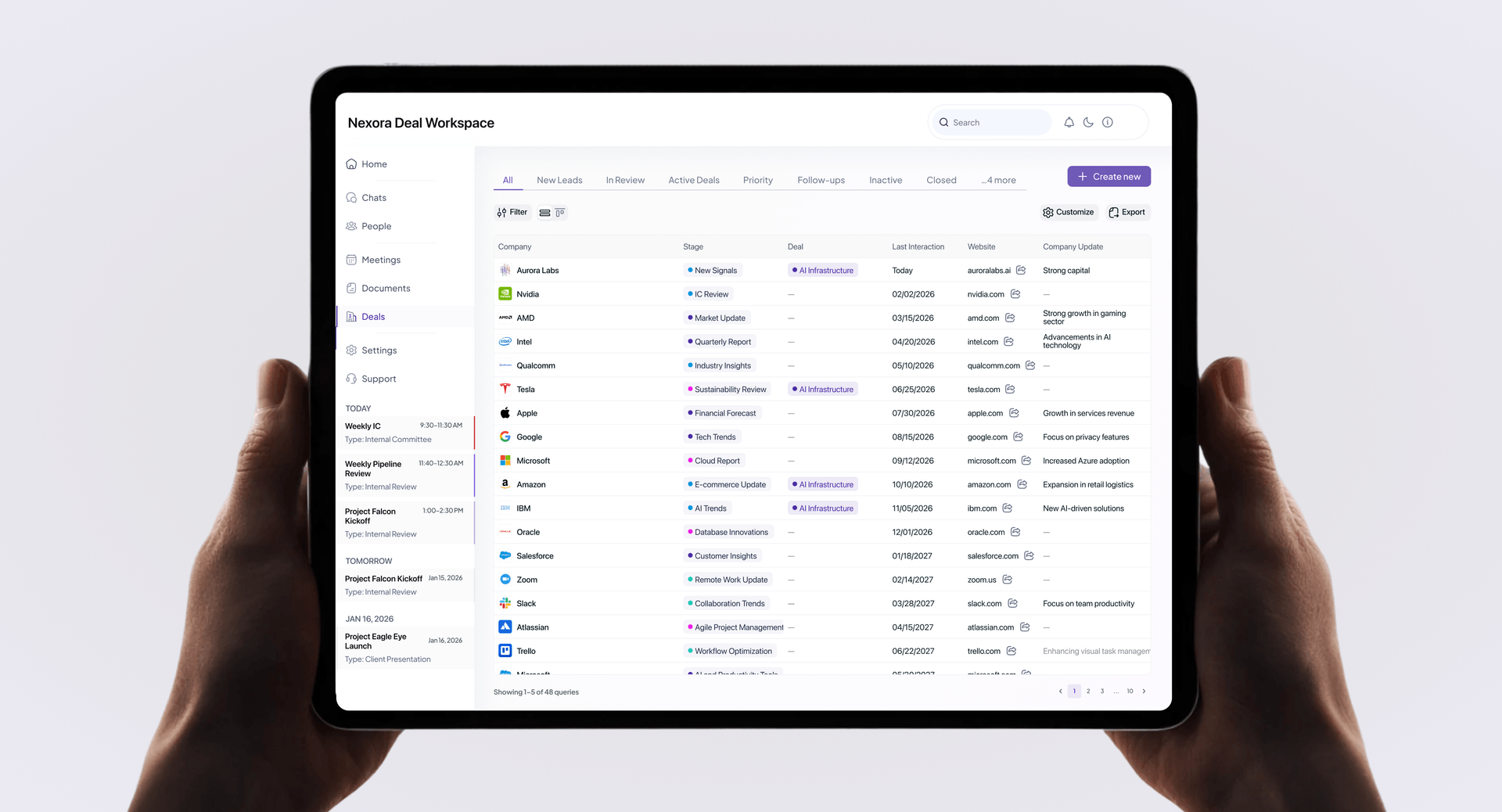
Multi-agent financial research pipeline inside the analyst platform

LLM council verification

A multi-LLM verification layer checks each response from several perspectives before delivery.
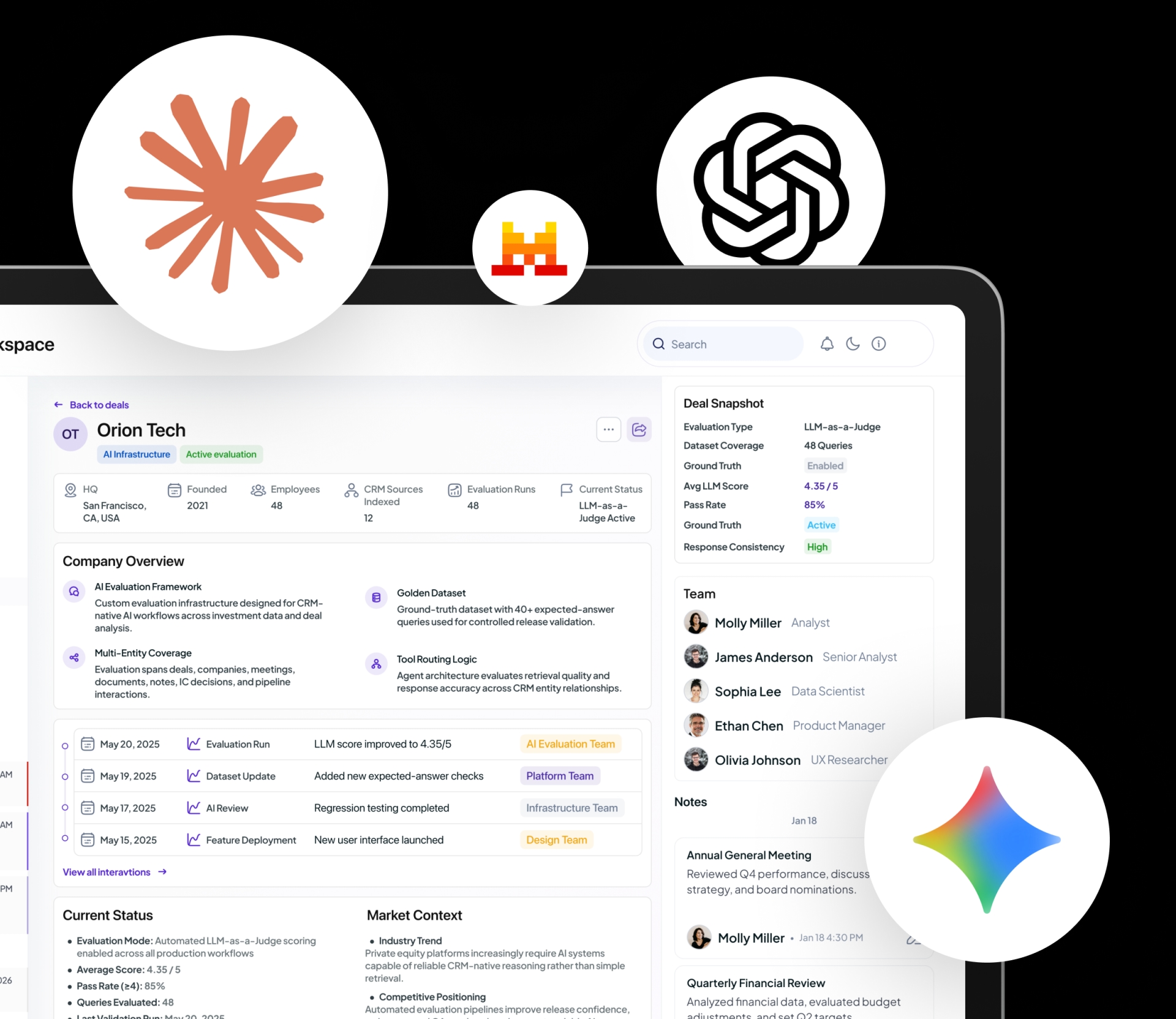
  • Every finding passes through multiple LLM checks
  • Validates factual accuracy against source material
  • Highlights unsupported claims before analyst review
  • Improves confidence in final research output
LLM council verification interface for source-backed financial research

Context grounding layer

A grounding pipeline ensures every answer uses only trusted documents and provided sources.
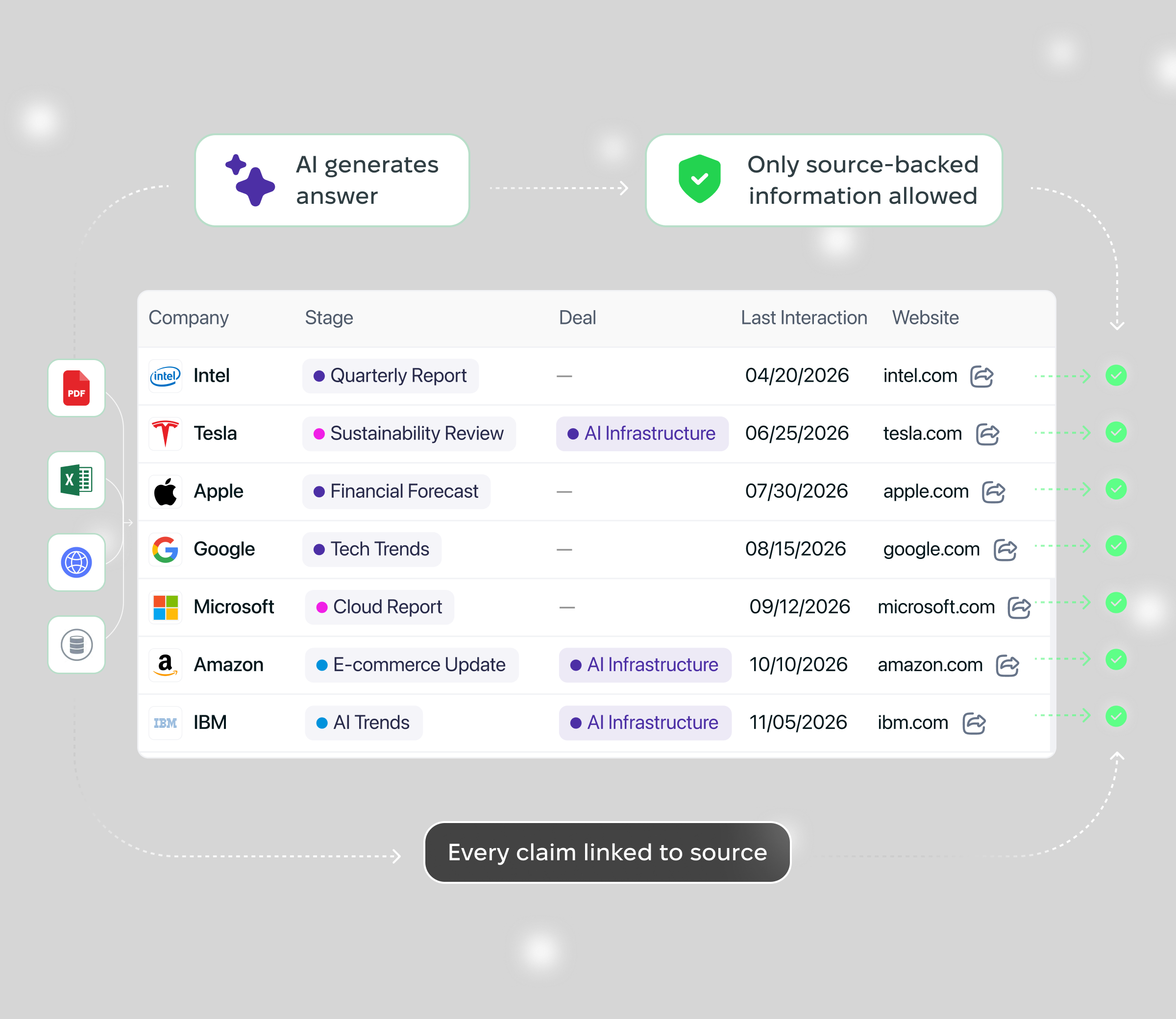
  • Anchors every statement to the source material
  • Detects OCR and extraction errors in source documents
  • Prevents answers from using data outside verified context
  • Ensures all claims are backed by source material
Context grounding layer showing source-backed financial statements

Conflicting statement detection

The system compares data points across documents and marks conflicts automatically.
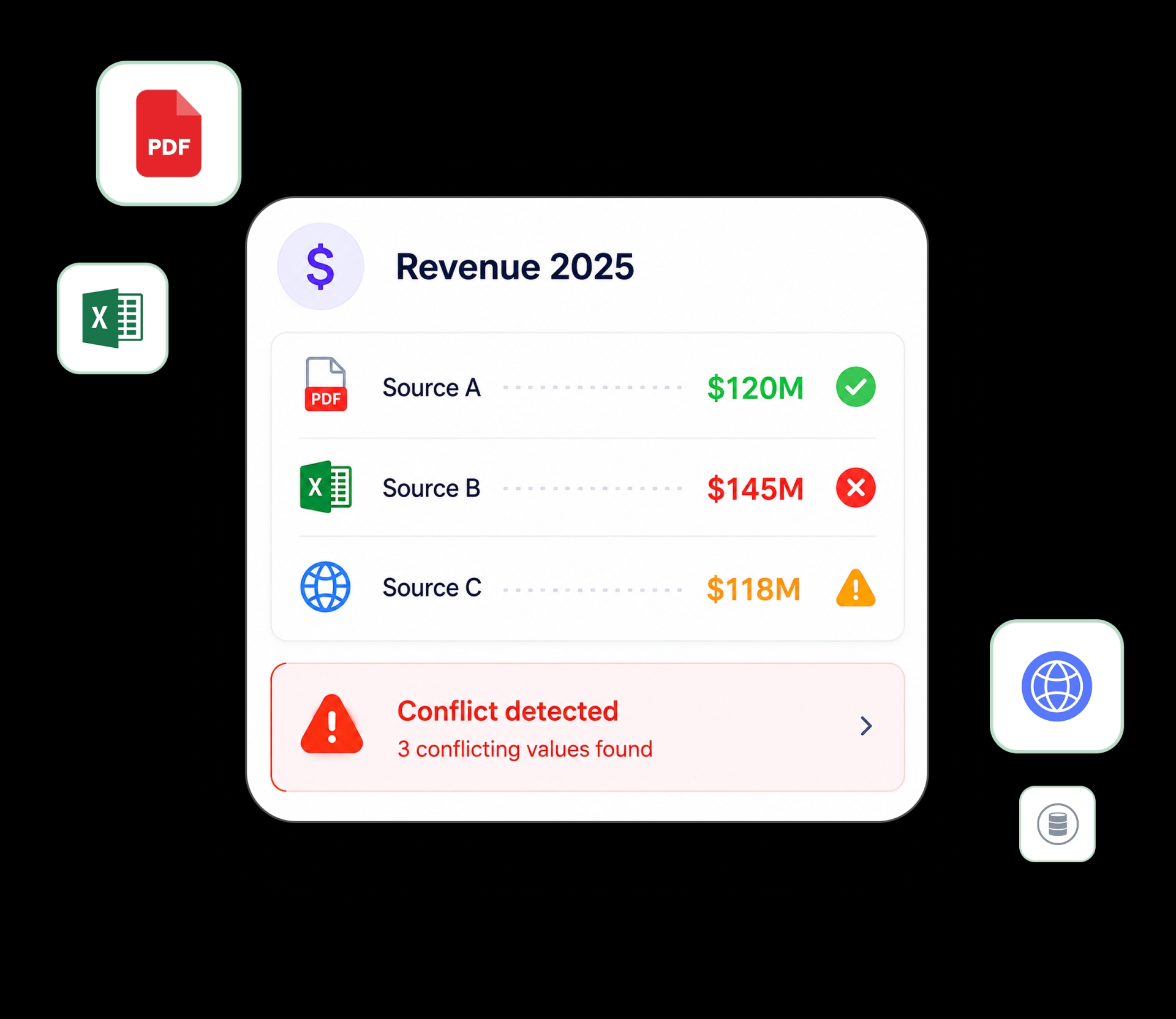
  • Finds conflicting figures across research reports
  • Compares source statements before answer generation
  • Highlights uncertainty or unclear financial metrics
  • Shows conflicting information side by side clearly
Conflicting statement detection for financial research documents

Continuous AI monitoring

Production monitoring was built into the system to maintain AI quality after launch.
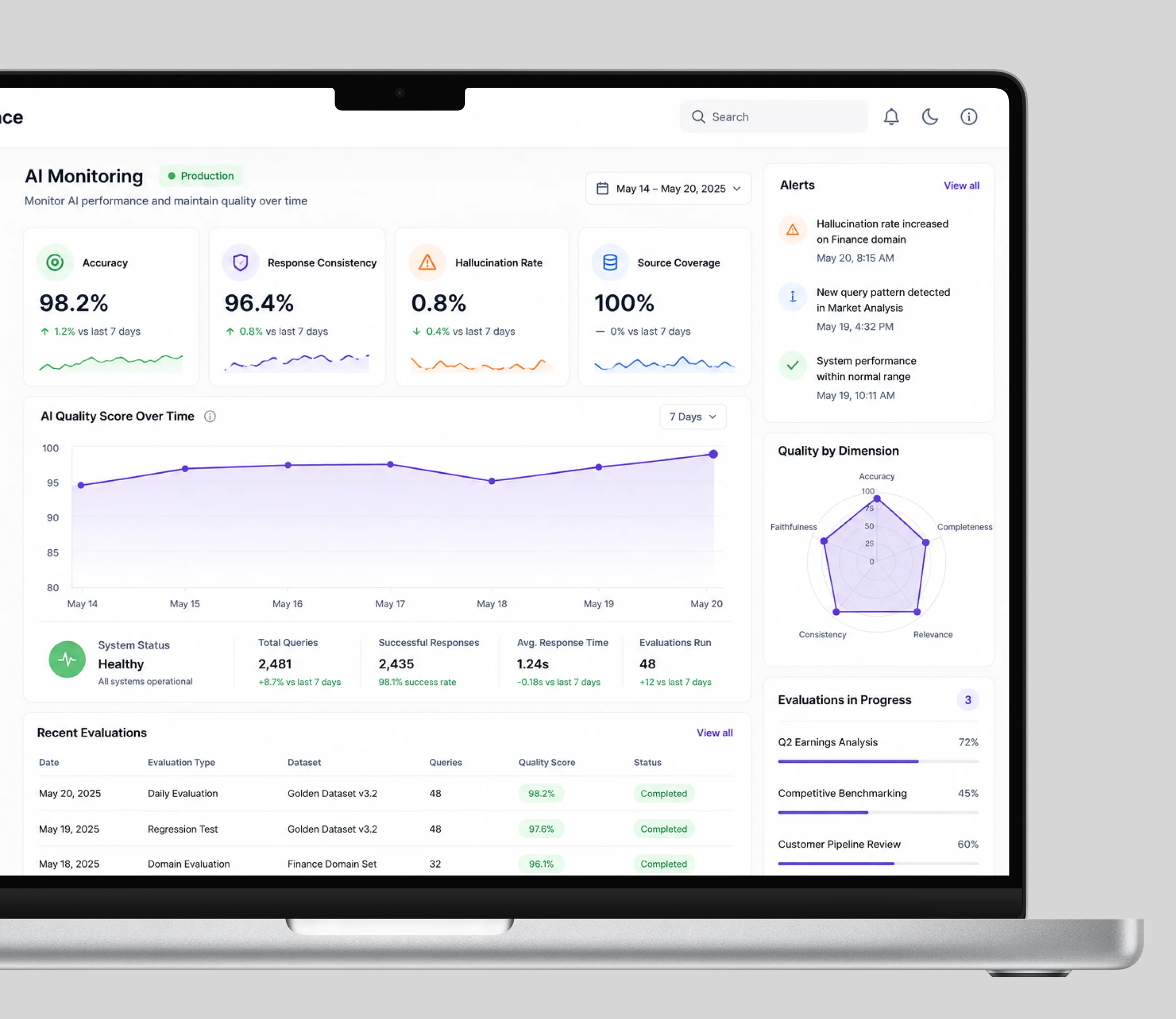
  • Tracks response quality in production workflows
  • Helps prevent AI output degradation over time
  • Supports reliable use in daily analysis
  • Helps detect performance degradation over time
Continuous AI monitoring dashboard for tracking production response quality

Key results and business value

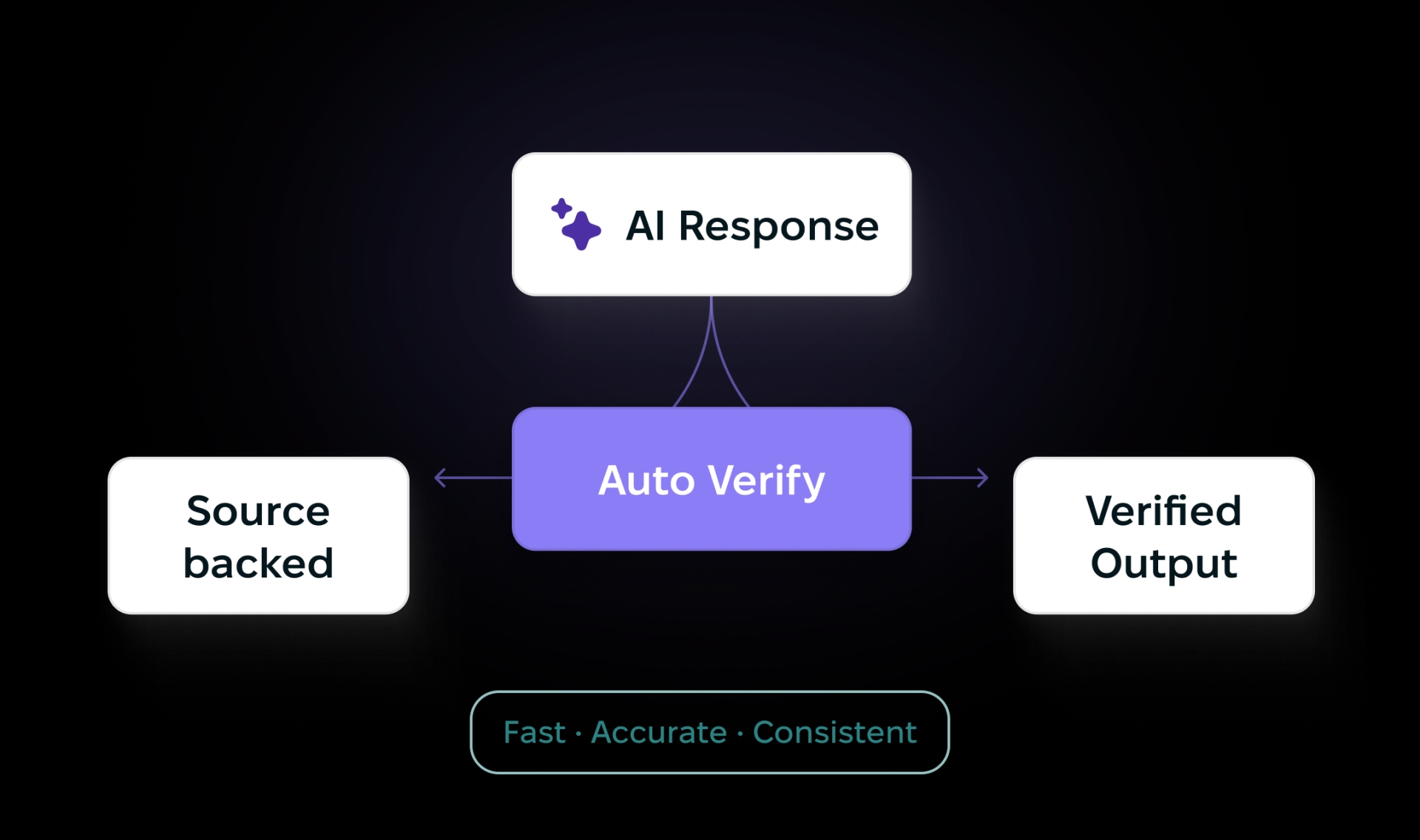
Auto verification flow from AI response to source-backed verified output

Manual verification of claims was replaced by automated verification within each response
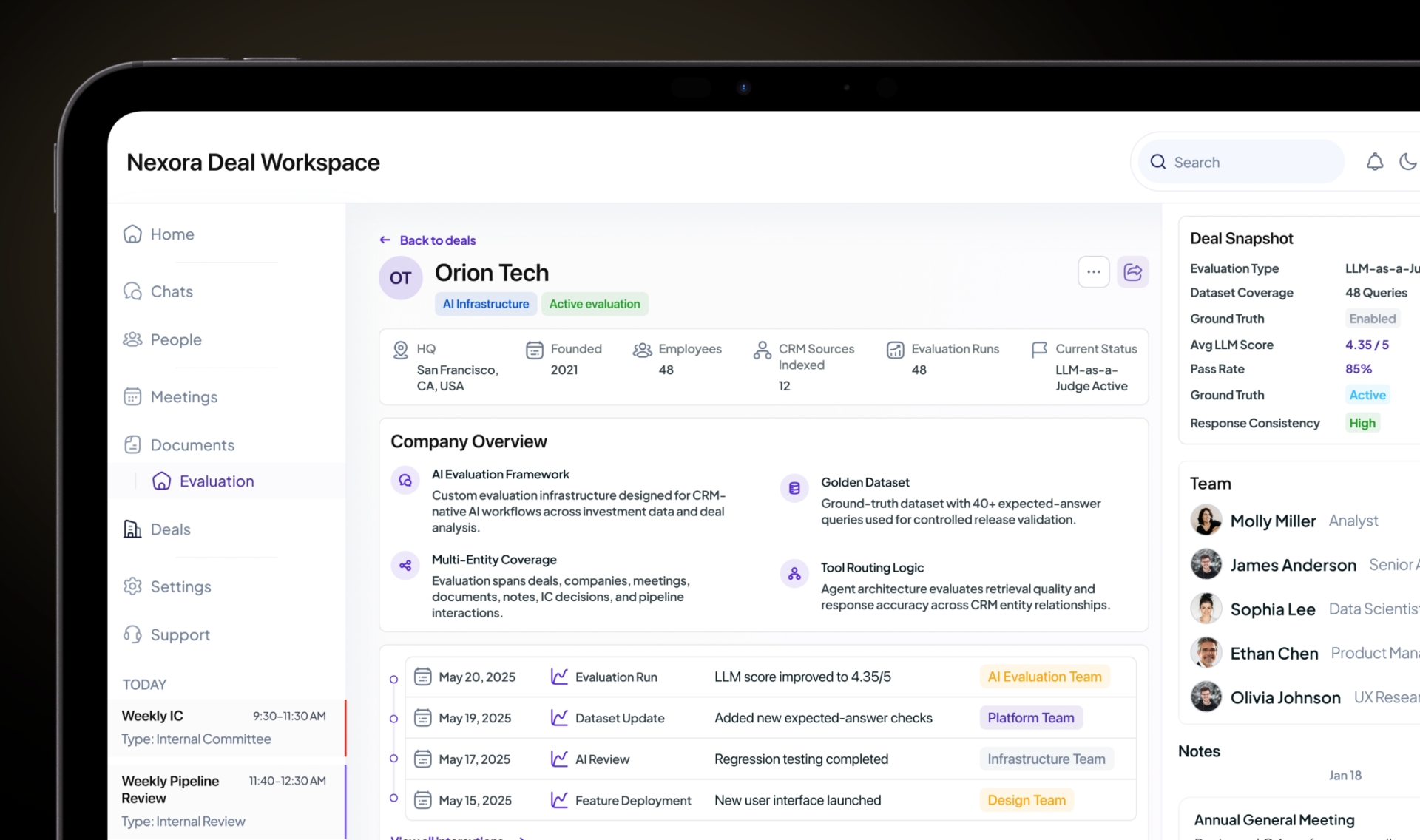
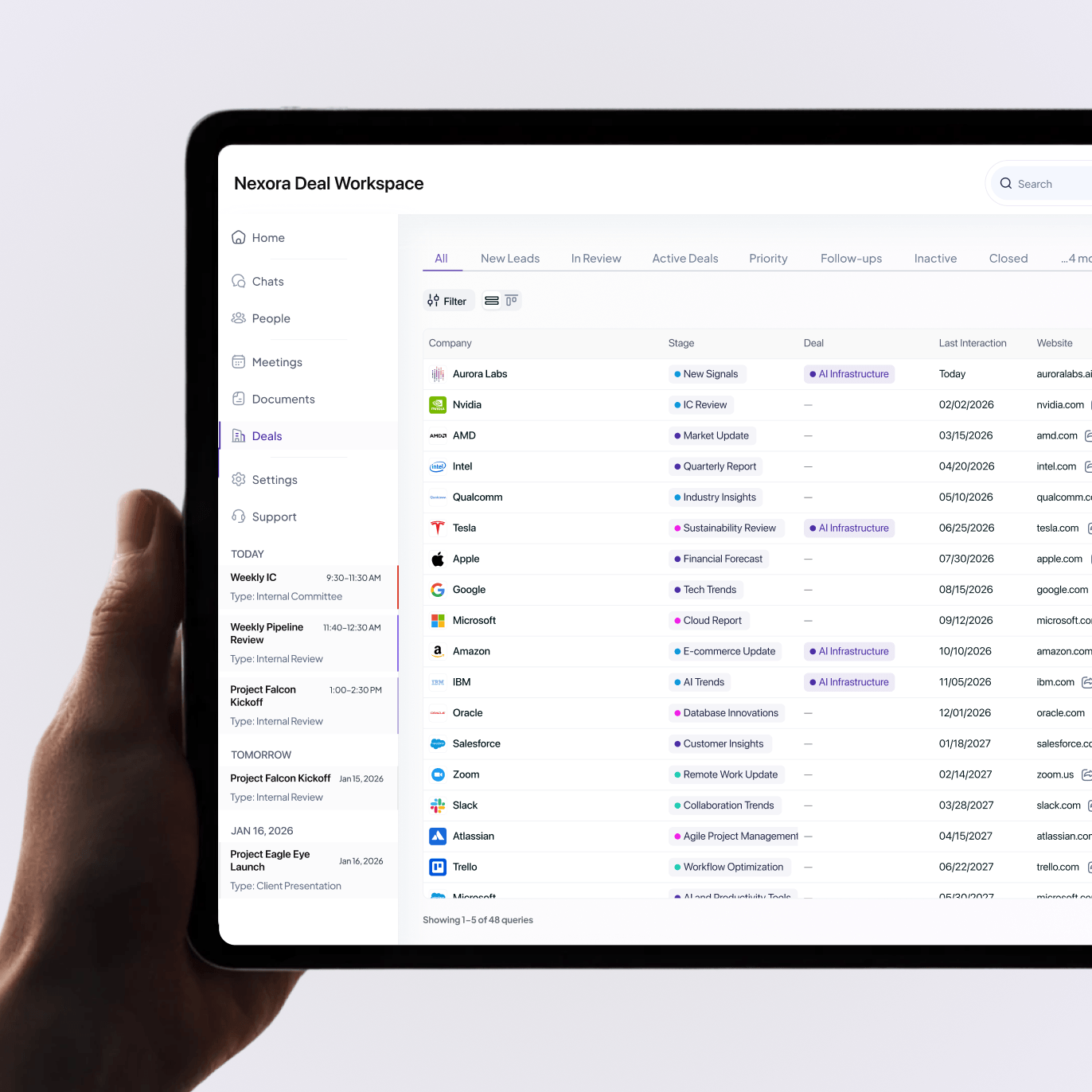
Research engine workspace for source-backed financial due diligence

General-purpose tools were replaced by a research engine with 0% unsupported claim rate
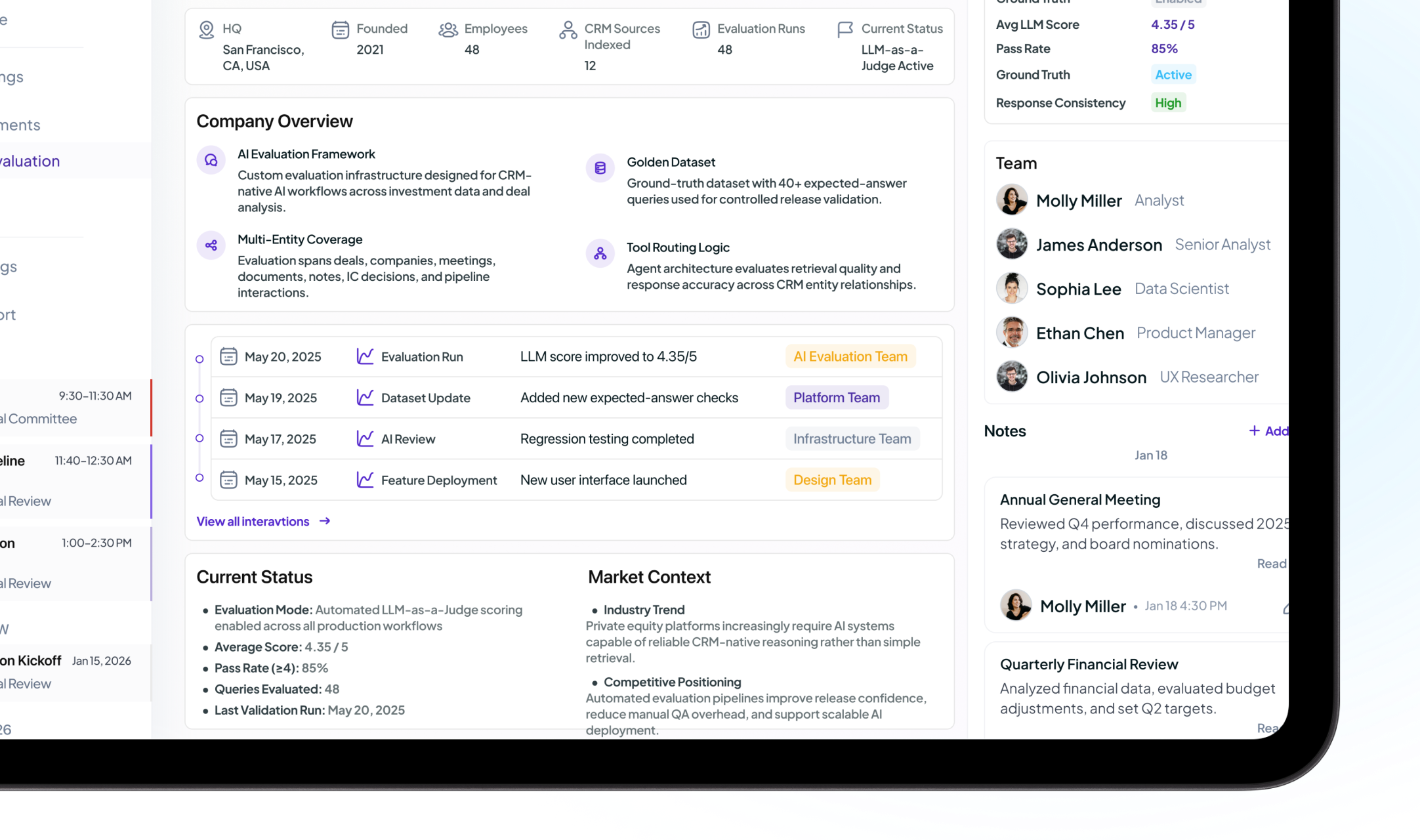
Research workflow dashboard showing due diligence progress and measurable outcomes

Unreliable due diligence became a 3x faster research workflow with measurable outcomes
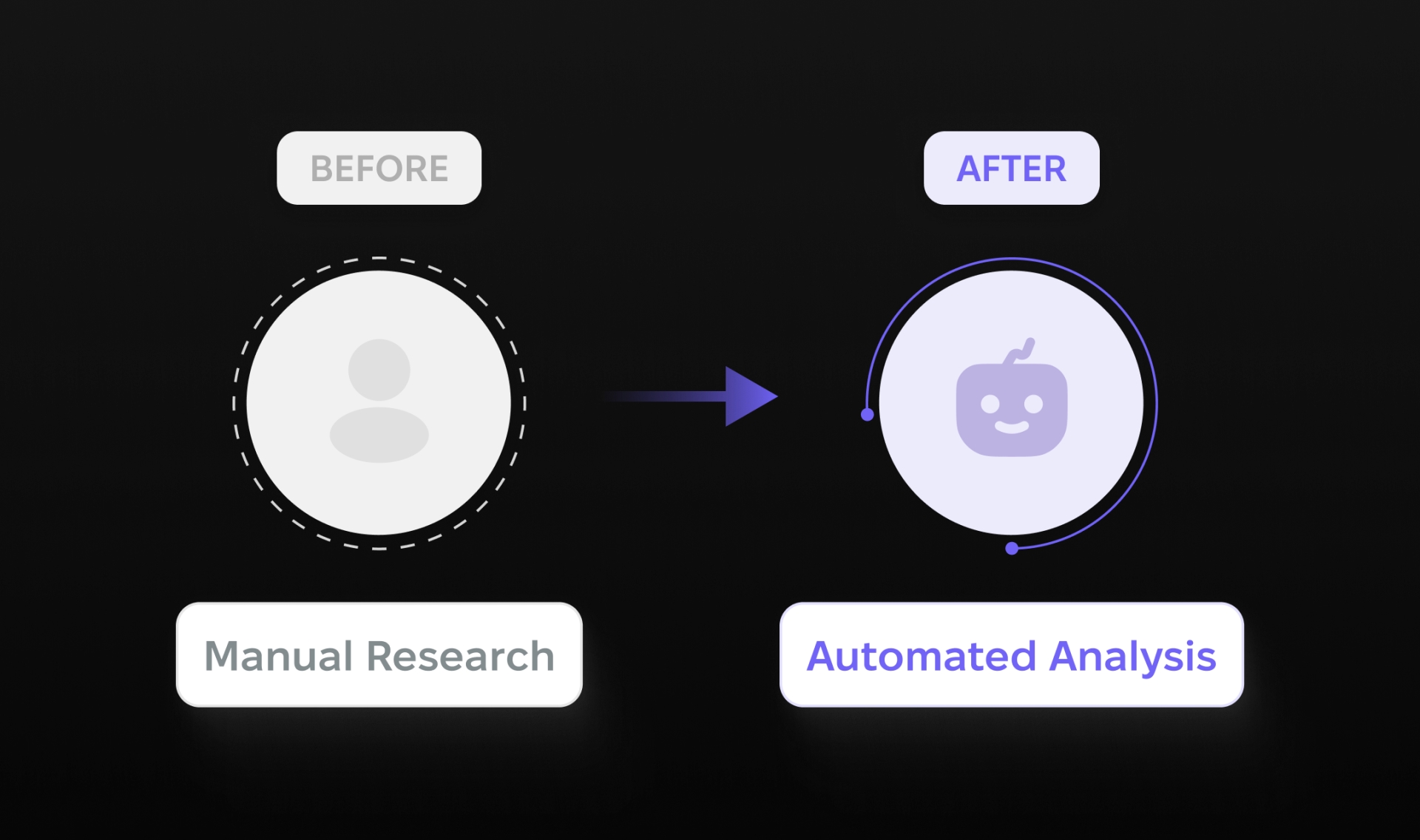
Before and after comparison from manual research to automated analysis

10 hours per deal spent on manual research were eliminated through automated analysis
Features Delivered

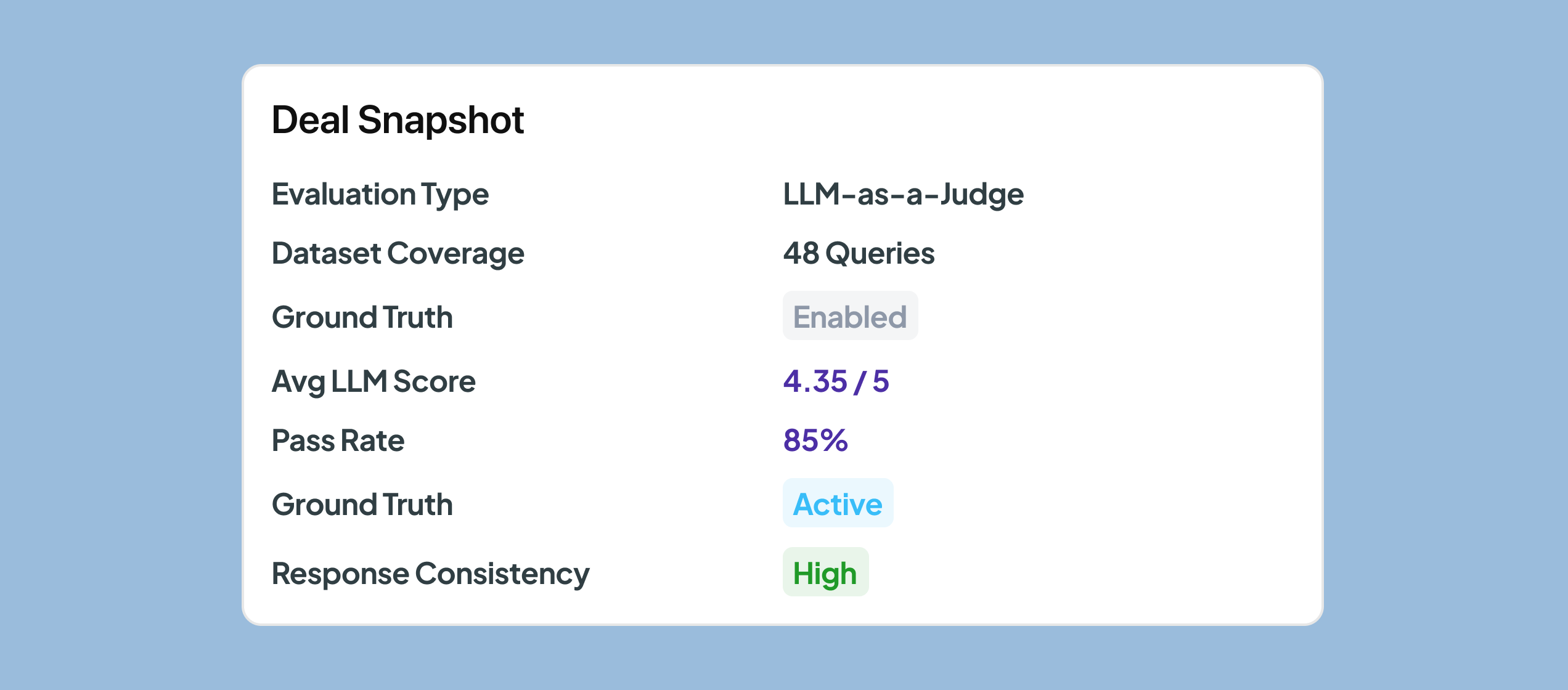
Deal snapshot with source-backed financial research quality metrics

Key capabilities of the financial research engine:

  • Multi-agent financial research pipeline with layered verification
  • LLM Council for multi-model response cross-checking
  • Context grounding with fully source-backed statements
  • Conflicting statement detection across financial documents
Python logo for the financial research engine

Python

Pydantic AI logo for agent validation

Pydantic AI

FastAPI logo for research engine APIs

FastAPI

OpenAI logo for LLM-powered research

OpenAI

Anthropic logo for LLM council verification

Anthropic

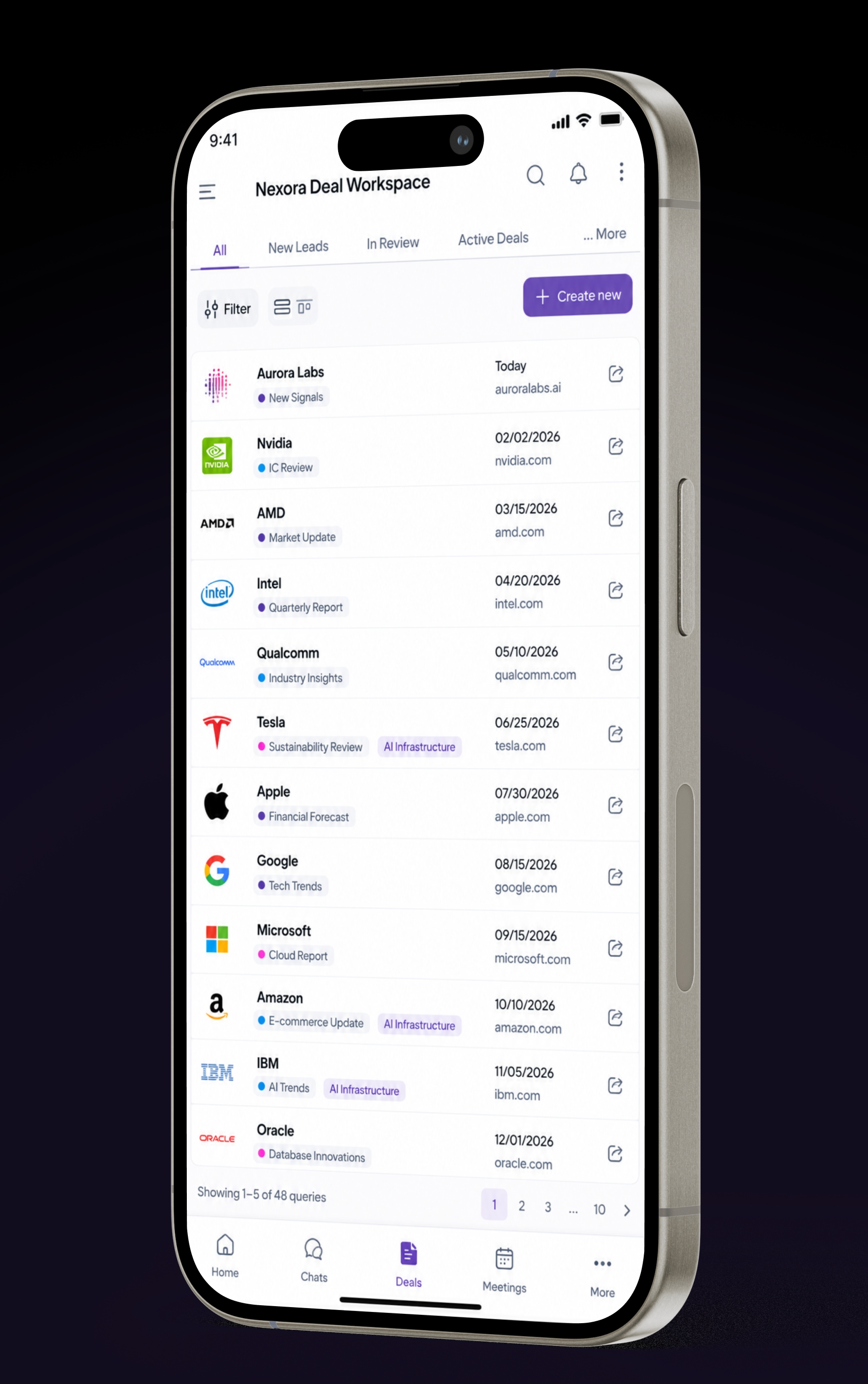
Mobile interface showing the multi-agent financial research engine

Technical Highlights

Multi-agent pipeline

Research retrieval, grounding, conflict detection, and verification run in one sequential AI workflow

LLM council layer

LLMs verification layer checks each response to reduce hallucinations before delivery

Context grounding

Every claim is anchored to the provided source material, eliminating unsupported statements

Conflict detection

Contradictory financial data is automatically identified and surfaced for analyst review

Plugin integration

The engine works inside the existing AI platform without replacing analyst workflows

Client Feedback

"What made the biggest difference for us was trust. Our analysts can now move through large volumes of information much faster without spending hours validating every finding and source manually. The system surfaces conflicting information automatically and gives us confidence that the output is grounded in the underlying data, which makes due diligence significantly more efficient"

Chief Technology Officer

Client

Unlock new growth opportunities

Discover how custom software with AI-powered features can help your business move faster, improve workflows, and create new competitive advantages.

Similar solutions we implemented

Related blog posts


Beyond the Hype: What Anthropic’s Economic Index Tells Us About the Real Future of AI in Business
BusinessAINews

Beyond the Hype: What Anthropic’s Economic Index Tells Us About the Real Future of AI in Business

When a company like Anthropic launches an Economic Index that tracks how people use Claude across U.S. states and occupations, it’s not just an academic exercise — it’s a litmus test for the real pace and shape of AI adoption. As of their September 2025 update, the data reveals several striking trends and potential inflection points. If you’re building or choosing AI systems, understanding what this data signals is essential. Here are the highlights and their implications. Key findings from Anthropic’s index From the headline data, a few points stand out: AI usage remains uneven and concentrated. Not every state or region is involved equally. The early adoption is showing up in pockets, particularly where knowledge work dominates. (anthropic.com) Use cases differ by geography. For example, Colorado leans toward “travel and event planning” uses, while Washington, D.C., shows a heavier preference for document editing and career advice. A notable shift in directive automation: over nine months, Claude’s share of fully automated interactions increased from 27 % to 39 % of all conversations. In enterprise settings, that automation rate is reported to be as high as 77 %. These observations suggest a few deeper truths about where AI currently is — and where it’s heading.

From data to decisions: how T-Shaped Research powers AI analytics
T-Shaped ResearchAIConsulting

From data to decisions: how T-Shaped Research powers AI analytics

Artificial intelligence is dramatically reshaping how companies operate — yet most organizations still struggle with the same challenge: Where do we start? Choosing a random use case and hoping it works is no longer an option. Real value from AI comes only when a business understands the full landscape of opportunities — and then focuses its efforts on the one that can drive the biggest impact. At YTC, we call this approach T-Shaped research. It allows us to look broadly across a company's processes and industry to identify every meaningful AI opportunity — and then dive deeply into developing and scaling the one with the highest strategic potential.

Best Practices for Integrating AI into Existing Business Processes
BusinessAI

Best Practices for Integrating AI into Existing Business Processes

Integrating AI into existing business operations is one of the most powerful levers a company can pull — but it’s also one of the riskiest. Many organizations struggle not because AI is flawed, but because their approach to integration fails to respect how their business truly operates. The promise of efficiency, insight, and automation often clashes with legacy systems, culture, and technical debt. Over years of project work and observing successes and failures across industries, several patterns of strong AI integration have emerged. In this article, I outline five best practices — not superficial rules, but deep lessons that require discipline, humility, and ongoing care. These are the guardrails that help AI become a partner, not a disruption. 1. Align AI strategy with business purpose and processes