YTC LogoYTC Logo
Home
Case Studies
Blog
Menu illustration
ServicesCase StudiesHow we workAbout usCareerContactsBlogHelp Center
sales@ytc.company
sales@ytc.company
Home
Cases
AI-native SDLC transformation for engineering teams

AI-native SDLC transformation for engineering teams

AI-native SDLC transformation for engineering teamsAI-native SDLC transformation for engineering teams
AIAgentsGenAIDevOps

AI-native SDLC transformation for engineering teams

AIAgentsGenAIDevOps

A FinTech company wanted to turn individual AI tools and practices into a structured development approach. We transformed its development lifecycle into an AI-native SDLC, integrating requirements, coding, testing, code review, and engineering knowledge into a single workflow. As a result, the team increased AI adoption and accelerated feature delivery by 2-3× while keeping human control over critical decisions.

Industry

FinTech

Client

Under NDA

Region

USA

Main challenges

Business challenge: AI adoption lacked measurable business impact

AI usage across engineering was inconsistent, making it difficult to determine which practices created real value.

As a result:
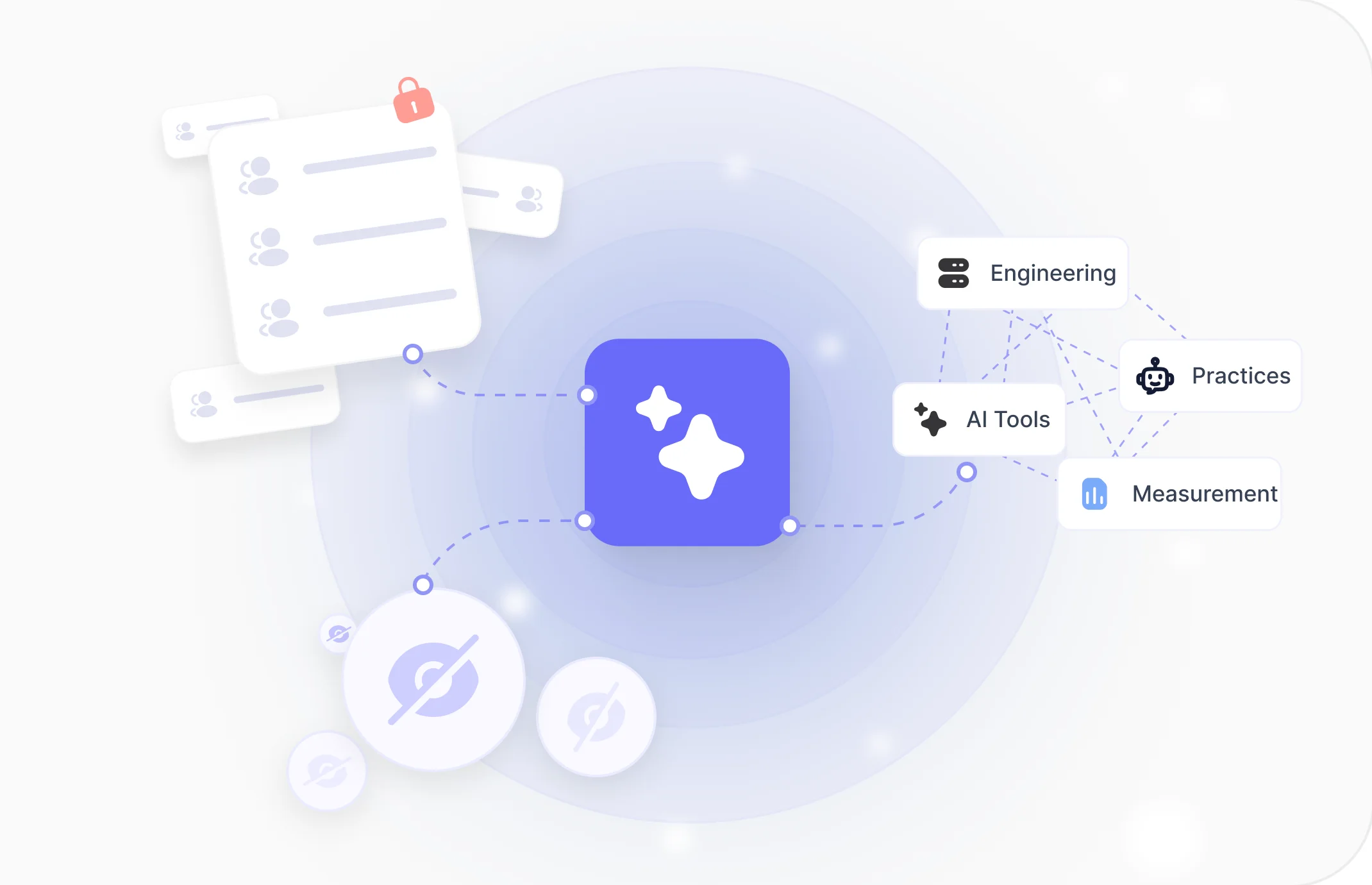
  • AI impact on engineering outcomes remained invisible
  • AI investment value was difficult to validate
  • Best practices stayed siloed across individual engineers
Inconsistent AI adoption without measurable engineering impact

Technical challenge: Fragmented AI tooling limited engineering workflow efficiency

The engineering stack lacked a unified layer for AI-enabled delivery, resulting in inconsistent adoption and difficulty measuring it across teams.

As a result:
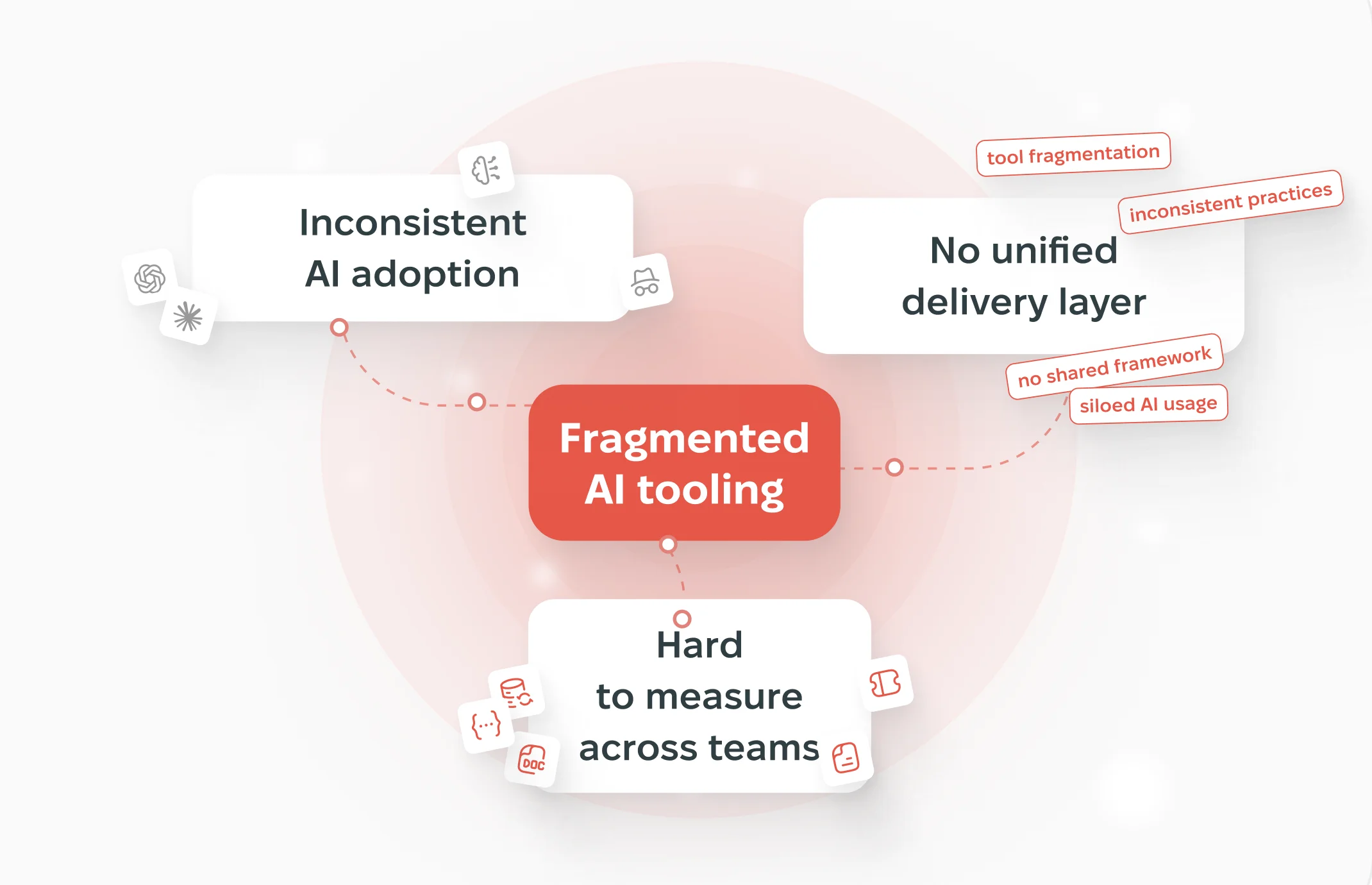
  • No unified operational layer connected engineering tools
  • AI prompting practices varied across engineering teams
  • AI adoption lacked a structured measurement framework
Fragmented AI tooling across engineering workflows

Delivery challenge: Scaling AI adoption without disrupting active development

The team had to introduce AI across live engineering workflows while preserving delivery continuity, human governance, and consistent adoption.

As a result:
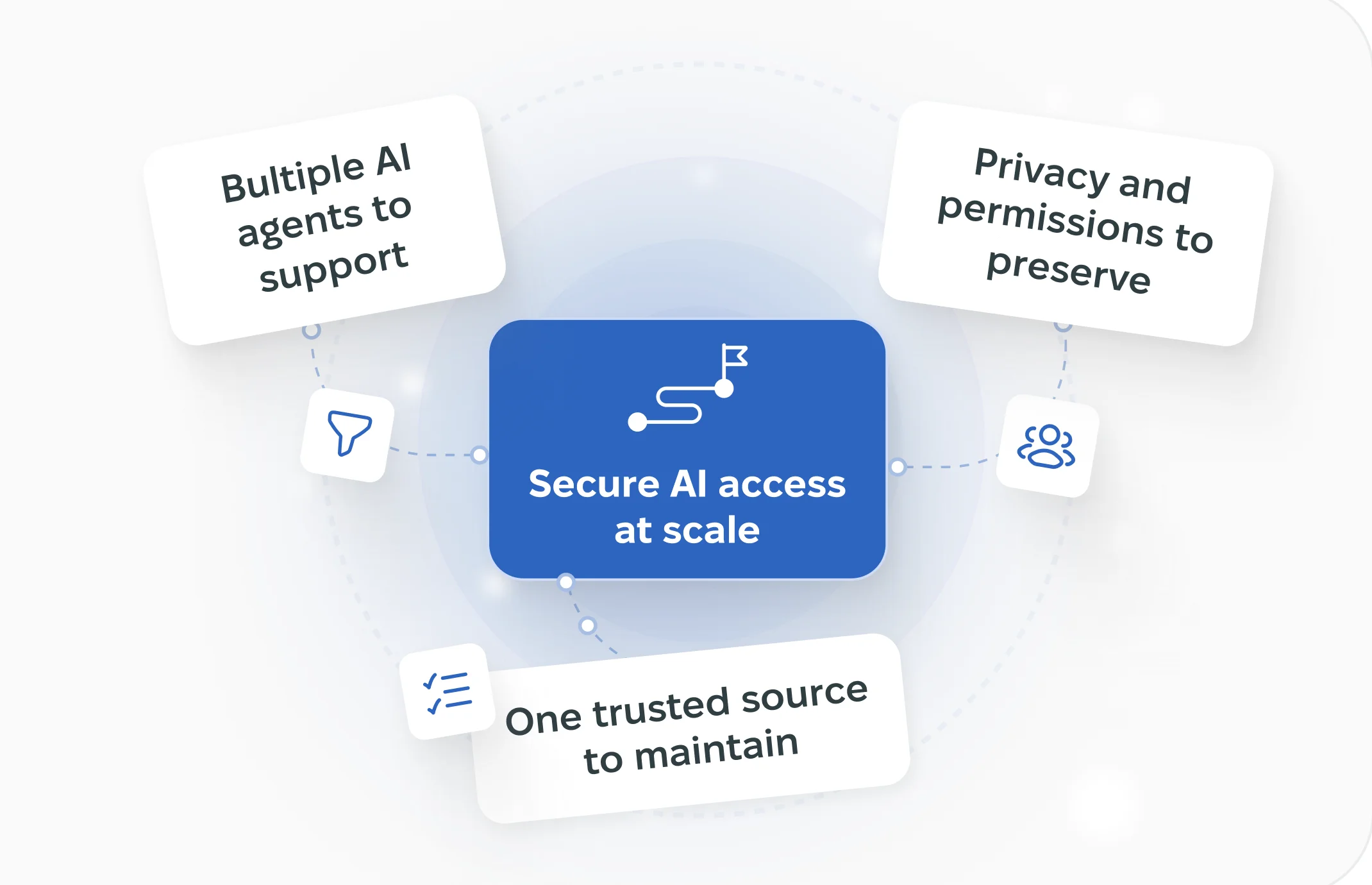
  • AI integration could not disrupt ongoing development
  • Automation had to preserve PM decision-making control
  • AI adoption required active team-wide behavioral change
Scaling AI adoption across active development workflows

What we did

We transformed the client's existing development process into an AI-native SDLC by embedding AI across requirements, coding, testing, code review, and engineering knowledge workflows. Slack requests were converted into Linear tasks, AI drafted user stories and acceptance criteria, and coding assistants supported implementation across development workflows.

Automated unit test generation, test execution, and AI-assisted code review reduced manual delivery bottlenecks. In parallel, we introduced a DORA-based system to track five productivity and three AI adoption metrics. Performance analysis, shared skills, prompting practices, and monthly knowledge sessions helped scale AI usage across the engineering teams.

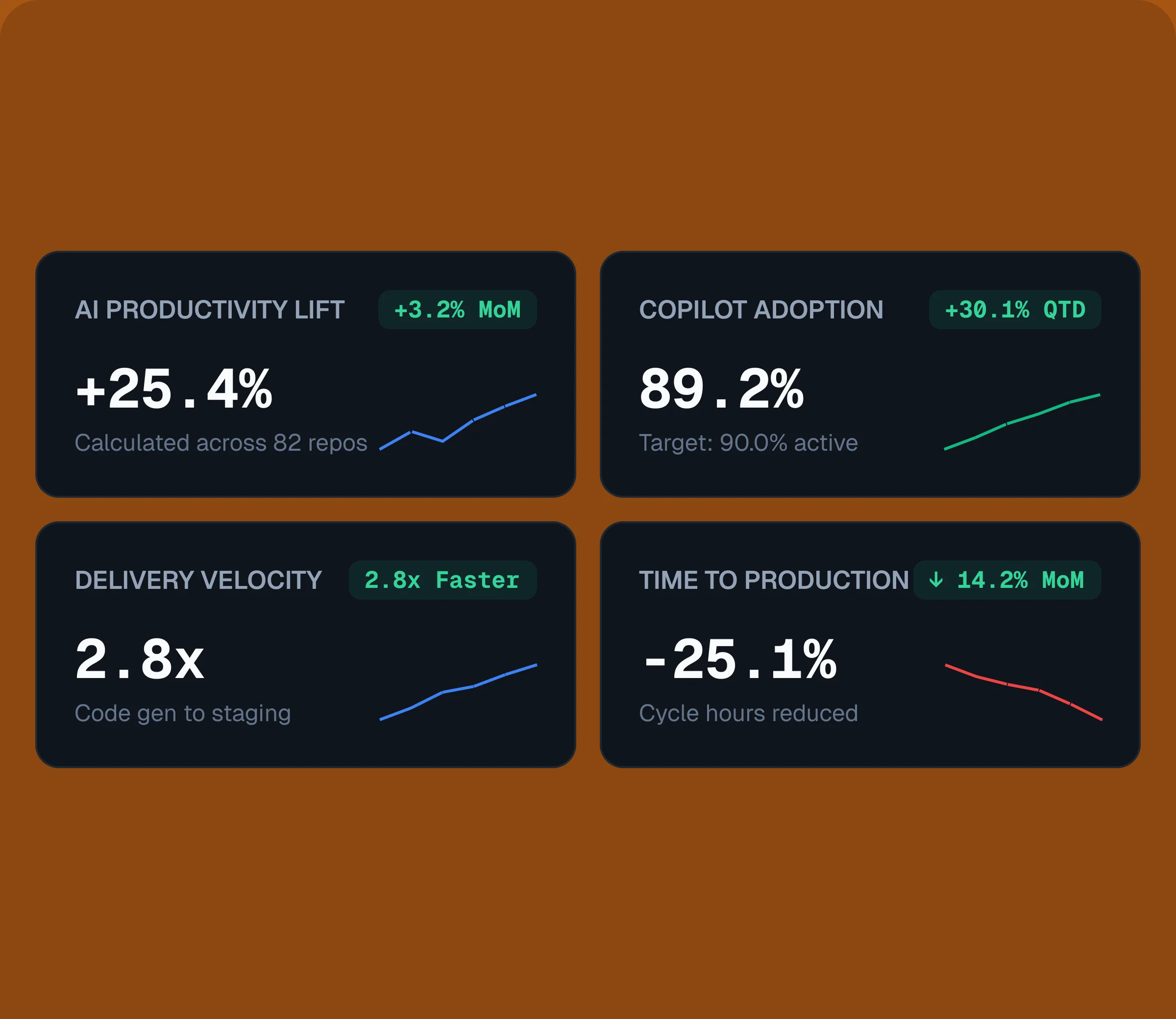
+25%

Engineering productivity growth across the organization

+30%

Average increase in AI adoption across engineering teams

×2-3×

Faster feature delivery depending on implementation complexity

−25%

Shorter time from code completion to production

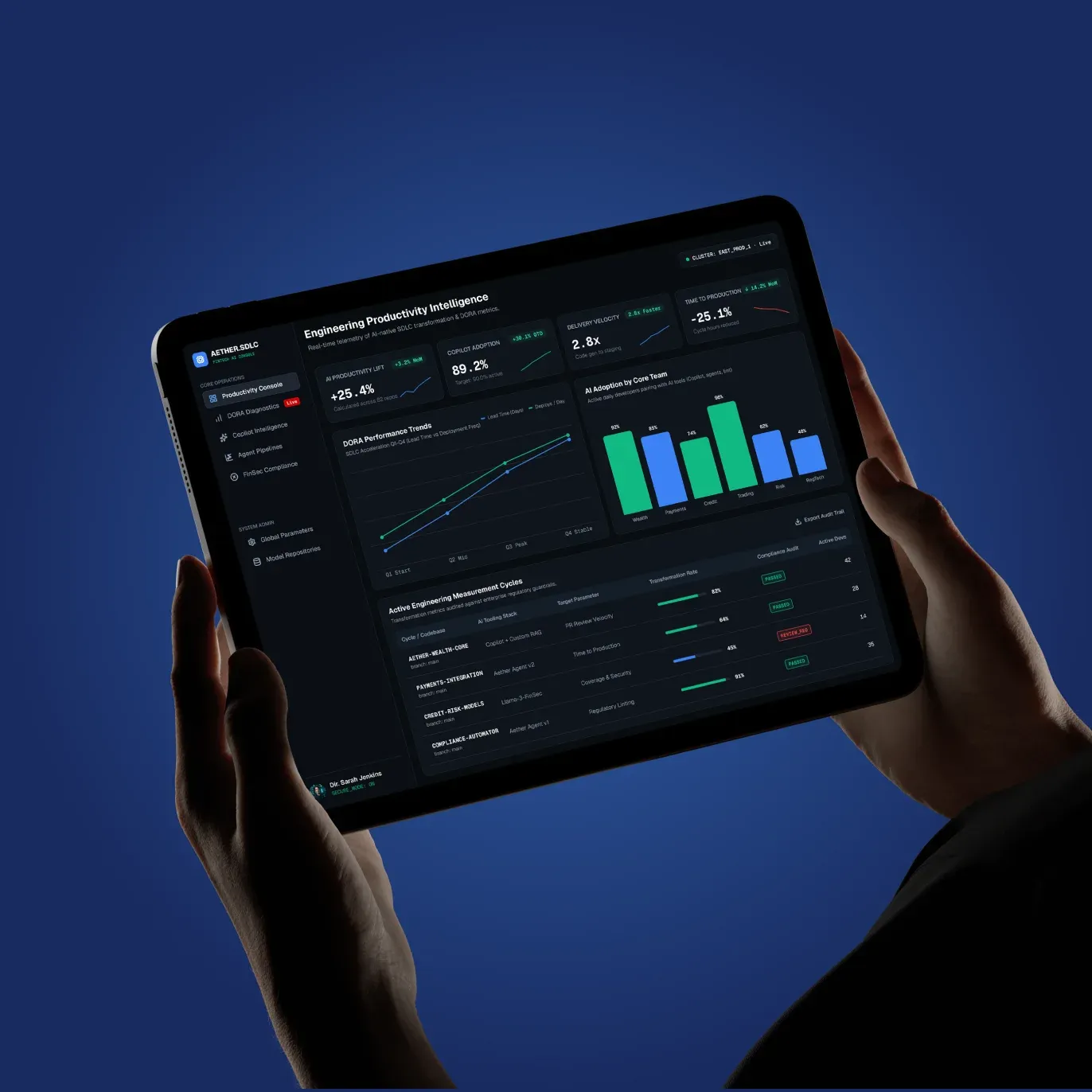
AI-native SDLC workflow

Converts Slack requests into structured Linear work items
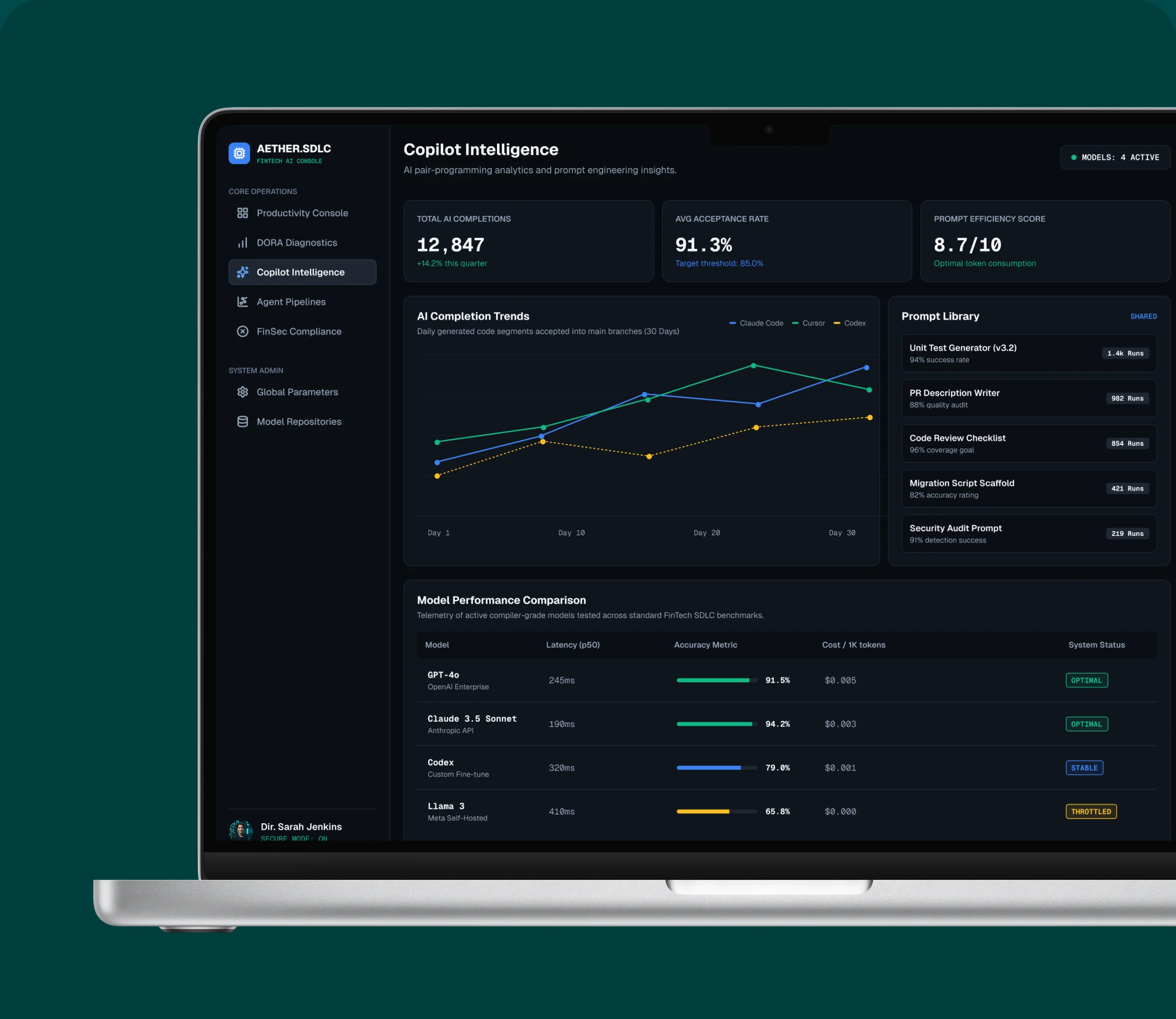
  • Drafts user stories and acceptance criteria automatically
  • Supports coding through shared AI development tools
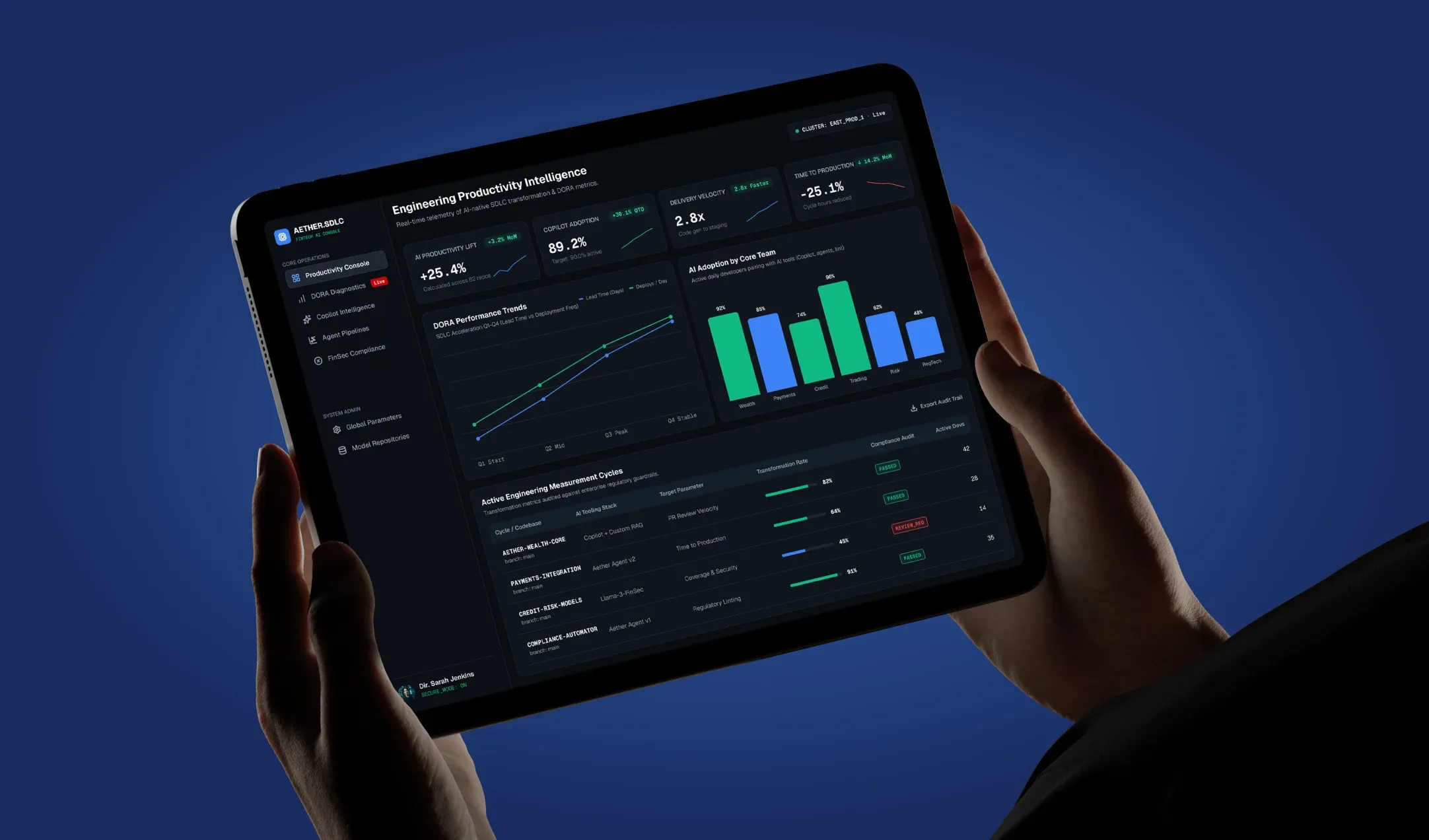
AI-native SDLC workflow dashboard

AI-assisted review and governance

AI-accelerated review stages while keeping critical architecture and business decisions under human control.
  • Performs initial AI-based code review automatically
  • Prepares pull requests for subsequent team review
  • Maintains PM review of AI-generated requirements
AI-assisted code review and governance interface

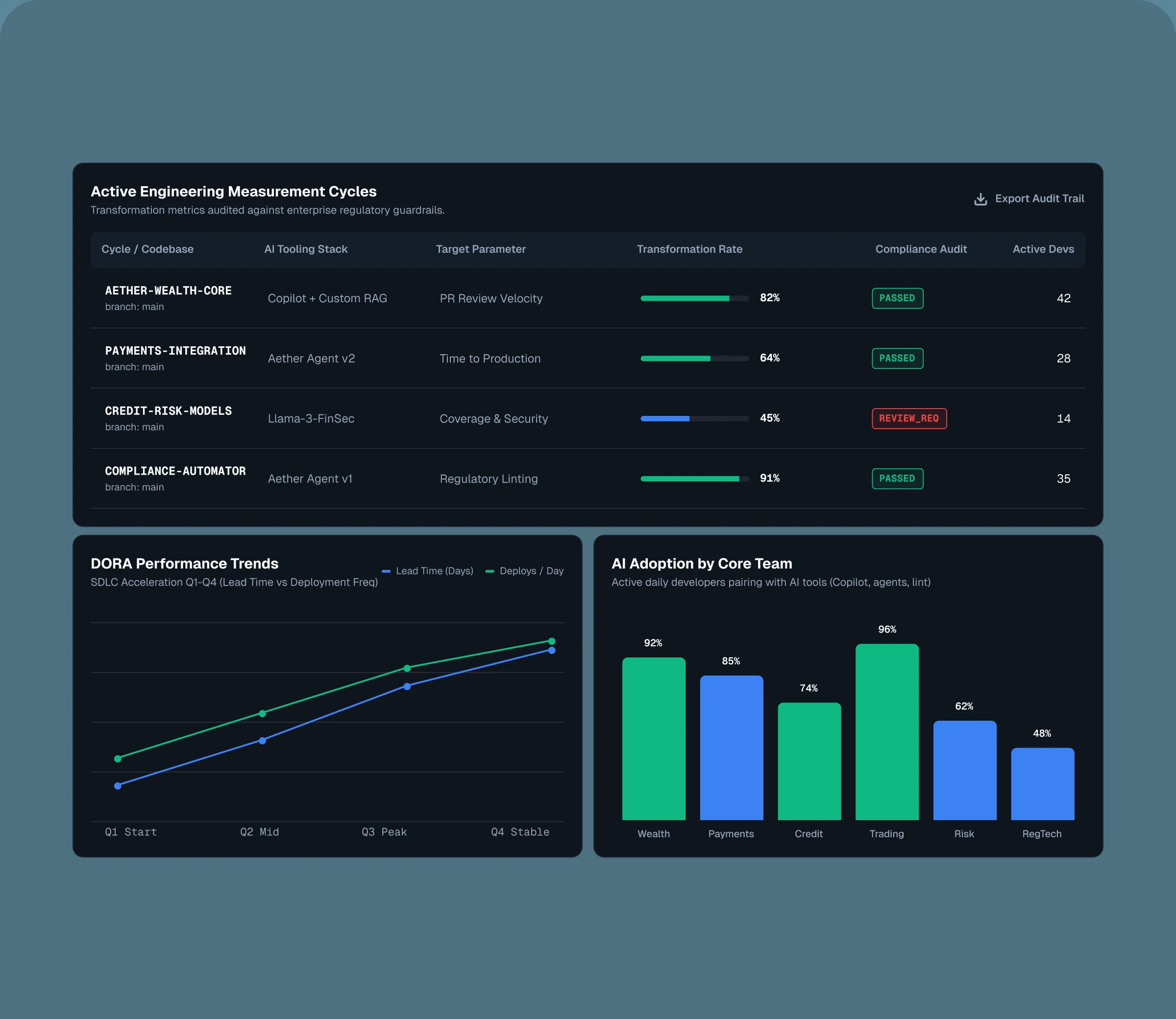
Productivity measurement system

A DORA-based system made engineering performance and actual AI adoption measurable instead of assumed.
  • Tracks five engineering productivity metrics organization-wide
  • Measures three dedicated AI adoption indicators
  • Establishes baseline before introducing workflow improvements
Engineering productivity measurement dashboard

Automated engineering metrics pipeline

An n8n pipeline replaced recurring manual metric collection with structured quarterly measurement.
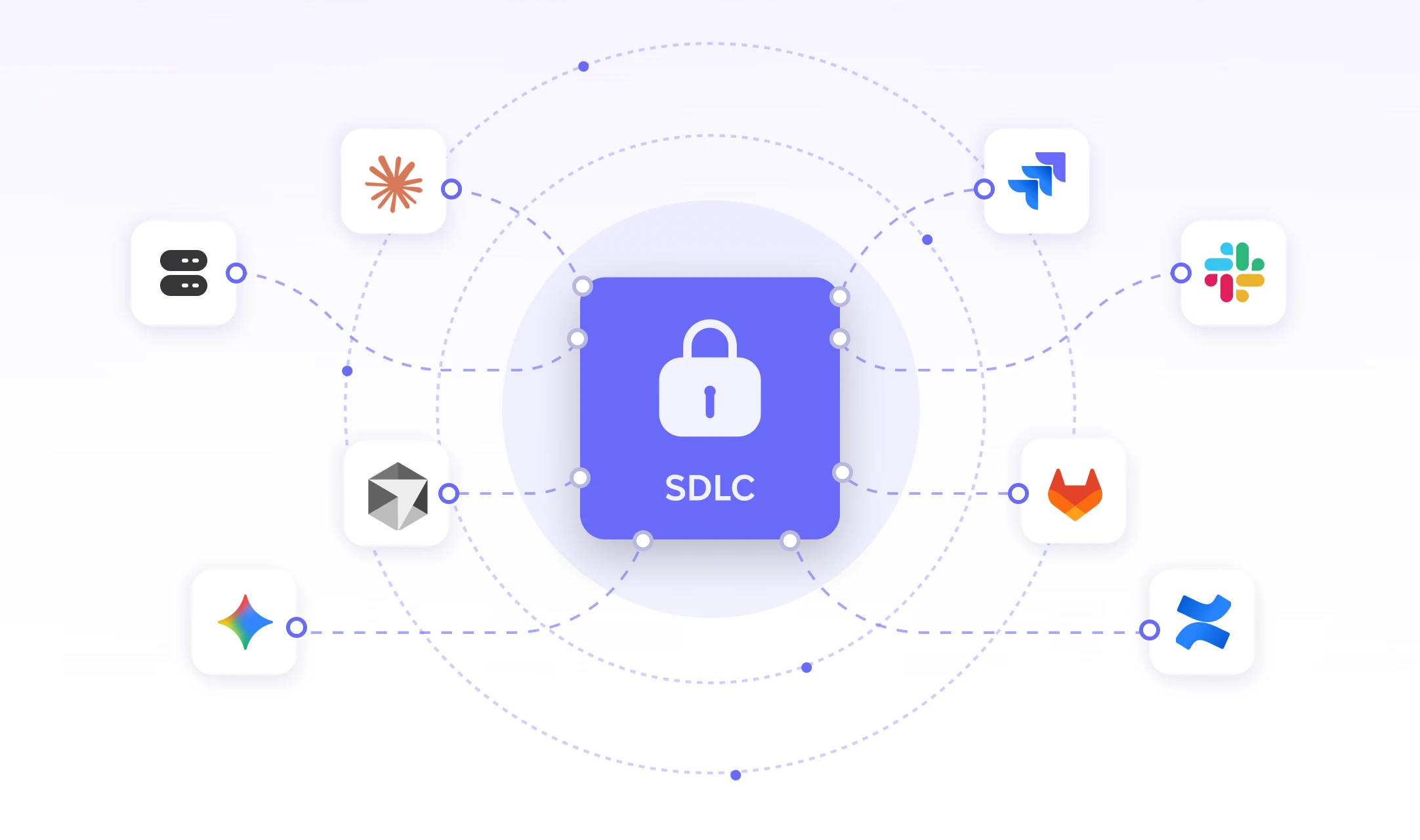
  • Collects pull-request data directly from GitHub
  • Pulls delivery and task information from Linear
  • Calculates defined productivity and adoption metrics
Automated engineering metrics pipeline

Key results and business value

Structured AI adoption across engineering workflows
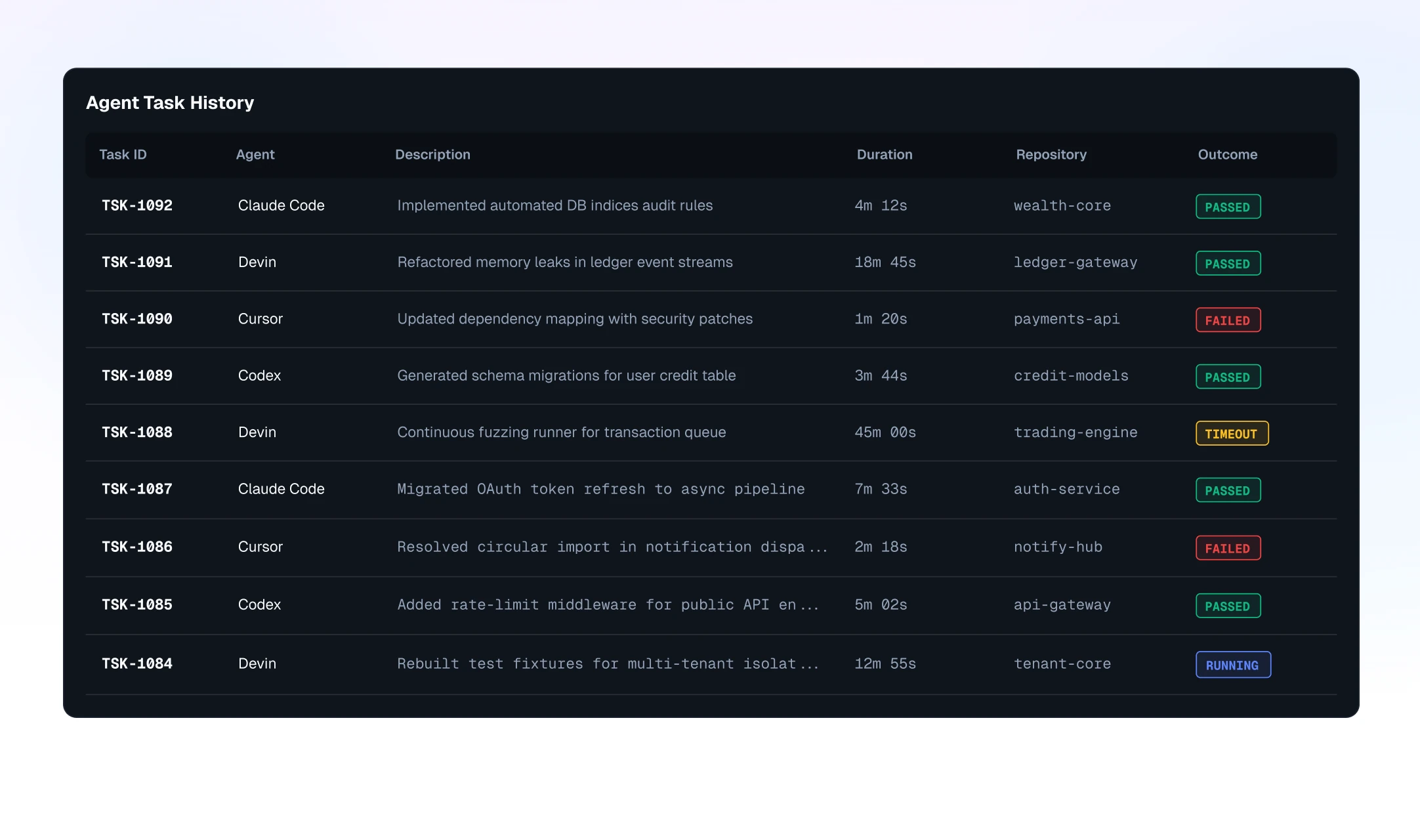
Inconsistent AI usage transformed into structured AI adoption across engineering workflows

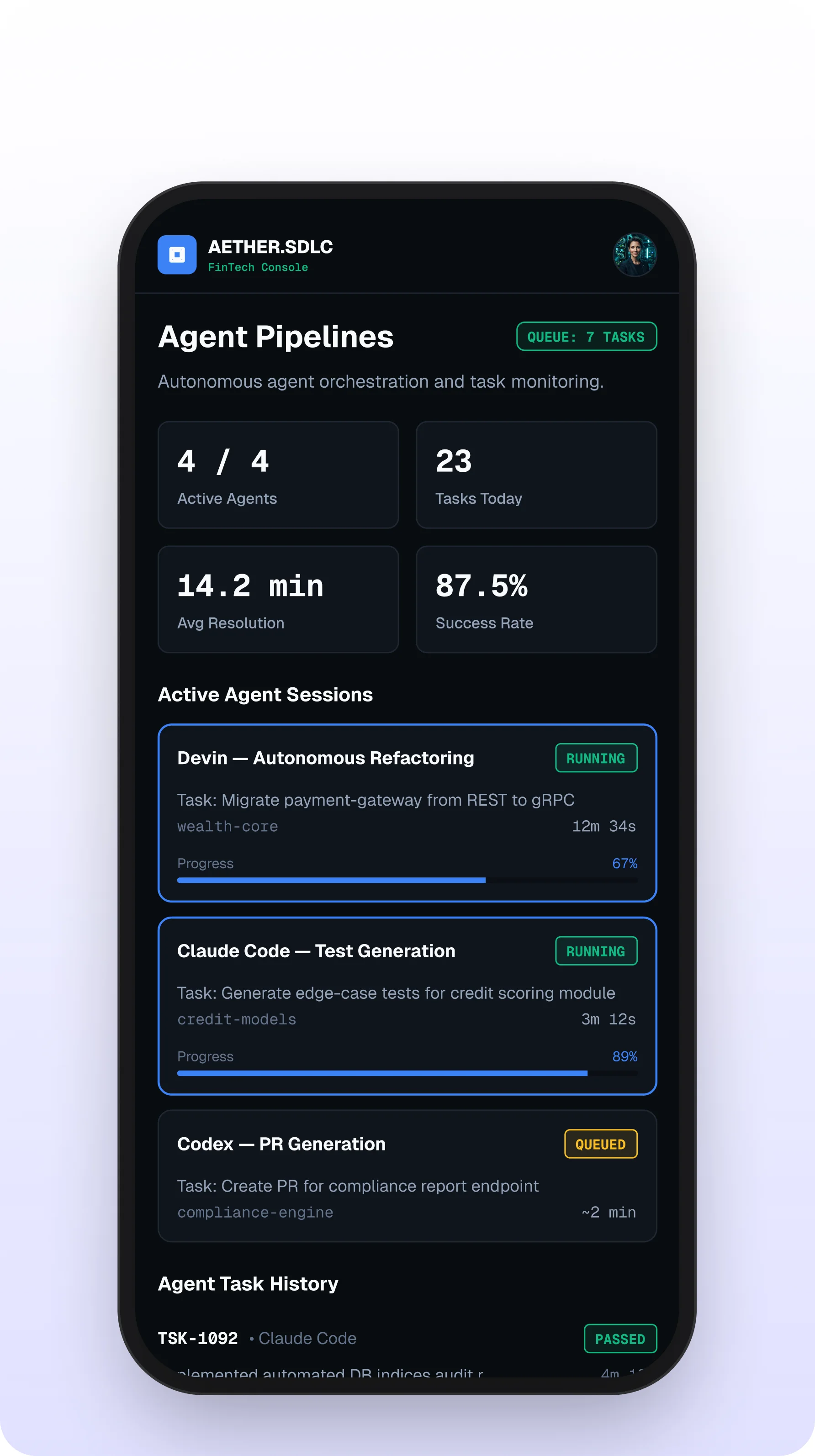
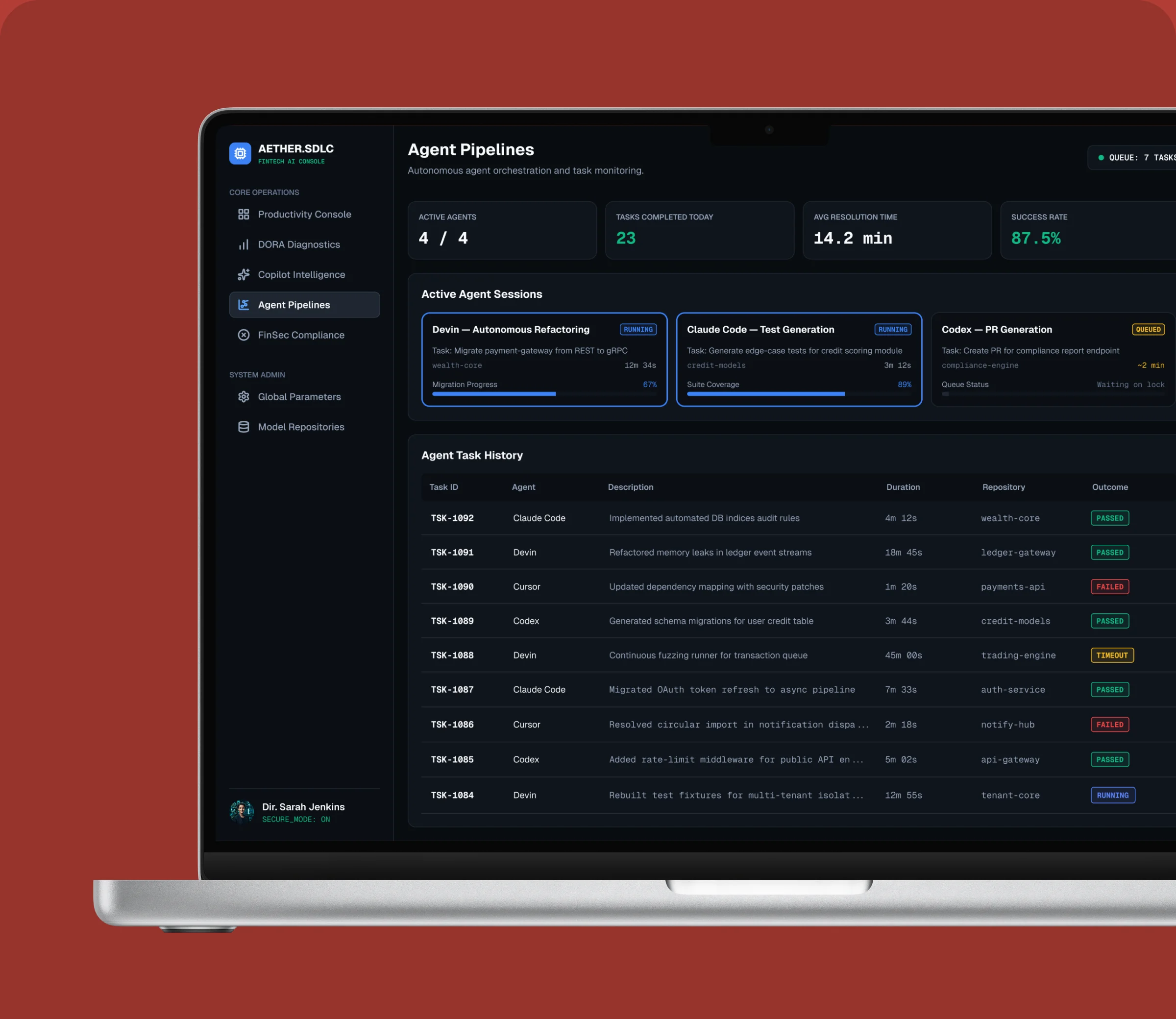
Agent task history with measurable productivity tracking

Unclear business impact replaced by measurable productivity and adoption tracking
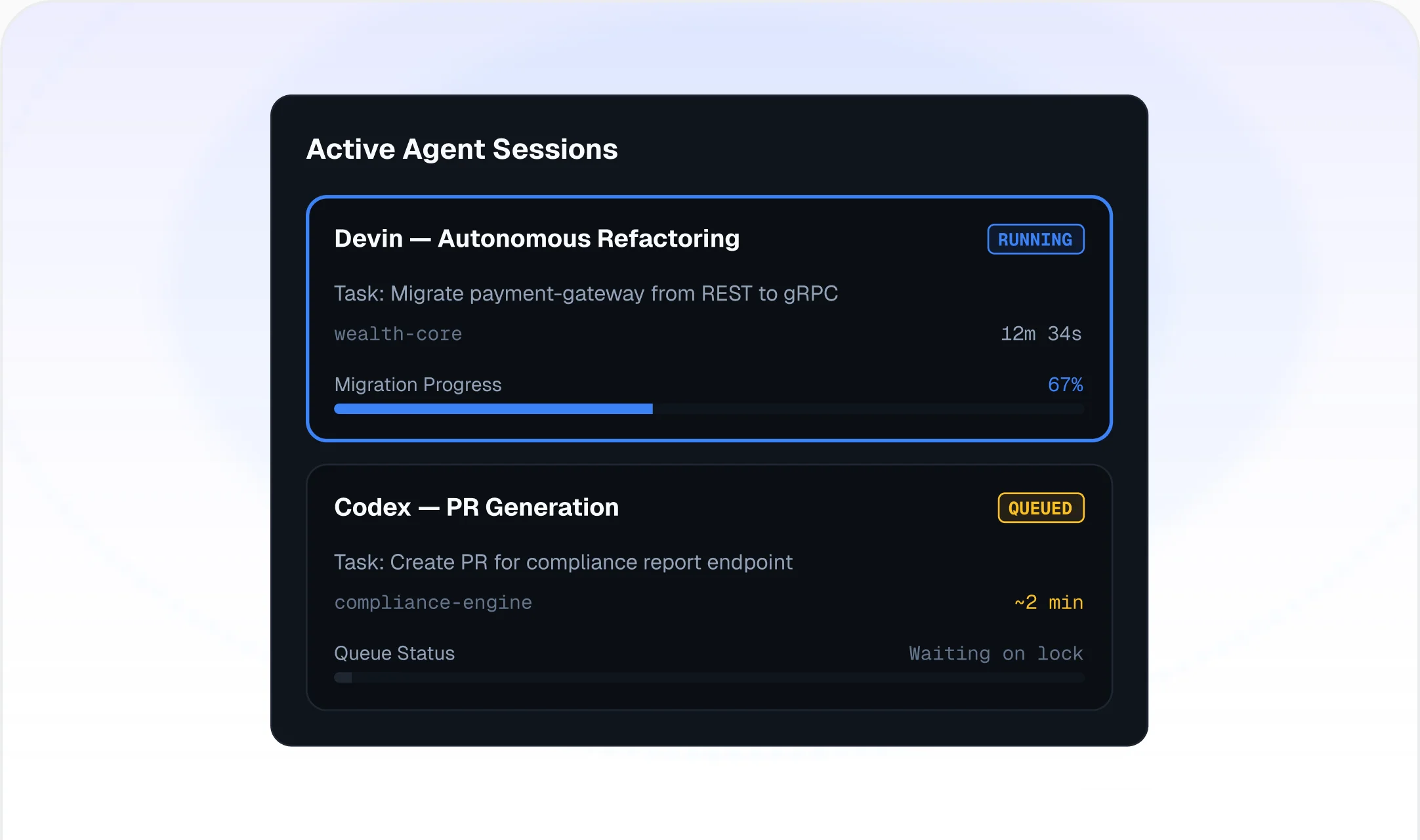
Active AI agent sessions in a unified SDLC

Fragmented engineering practices unified into one AI-enabled SDLC
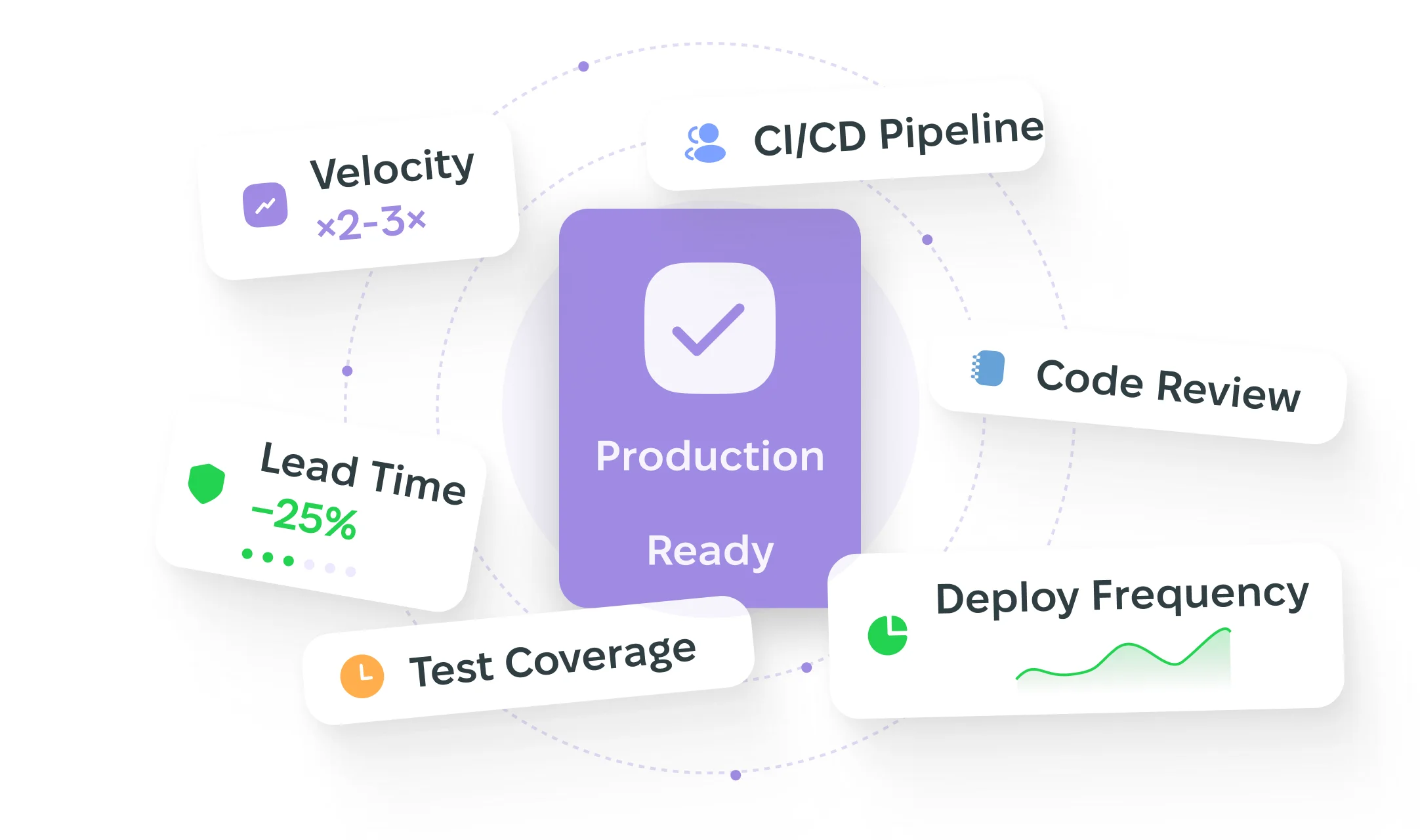
Fast path from development to production
Slow code delivery transformed into a fast path from development to production

Features Delivered

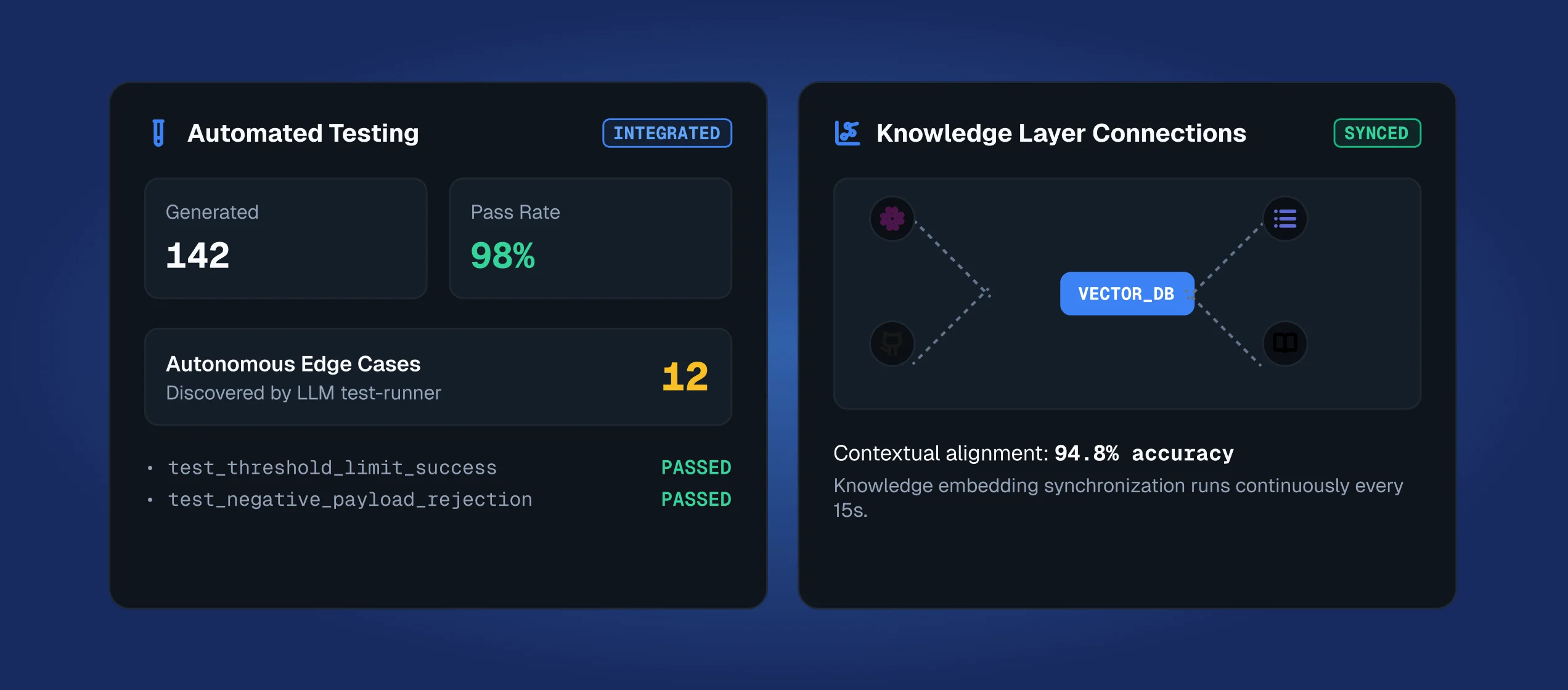
Automated testing and knowledge layer connections dashboards

Key capabilities of the AI-Native SDLC

  • End-to-end AI-enabled software delivery lifecycle
  • Automated requirements and user story preparation
  • AI-assisted coding, testing, and code review
  • Connected workflows across engineering tools and teams
  • Built-in productivity and AI adoption measurement
OpenAI logo

OpenAI Cloud

Claude Code logo

Claude Code

Cursor logo

Cursor

GitHub logo

GitHub

Devin logo

Devin

Codex logo

Codex

n8n logo

n8n

Mobile AI agent pipelines dashboard

Technical Highlights

DORA measurement framework icon

DORA measurement framework

Built productivity and AI adoption metrics to track engineering performance at the organizational level.

Automated metrics pipeline icon

Automated metrics pipeline

Automated collection of data from GitHub and Linear via n8n, eliminating recurring manual engineering data collection.

Human-governed automation icon

Human-governed automation

Kept PM review and engineering lead approval within AI-assisted workflows to preserve control over critical decisions.

AI-enabled SDLC workflow icon

AI-enabled SDLC workflow

Embedded AI across requirements, coding, testing, code review, and test case preparation.

Unified knowledge layer icon

Unified knowledge layer

Connected operational knowledge across Notion, Slack, Linear, and GitHub to improve context accessibility.

AI toolchain integration icon

AI toolchain integration

Unified multiple AI coding and review tools through shared skills and standardized engineering practices.

Client Feedback

“What I like most is that we’re not guessing anymore. Before, everyone was using AI in their own way, and it was hard to tell what was actually helping. Now you can look at how the team works and actually make sense of it — what’s getting faster, where AI is being used, what’s worth keeping. It’s also much easier to see whether the changes we make are really moving things in the right direction”

Chief Operating Officer

Client

Ready to integrate AI into your financial operation?

Let's design, build, and scale AI software tailored to your products, workflows, and requirements.
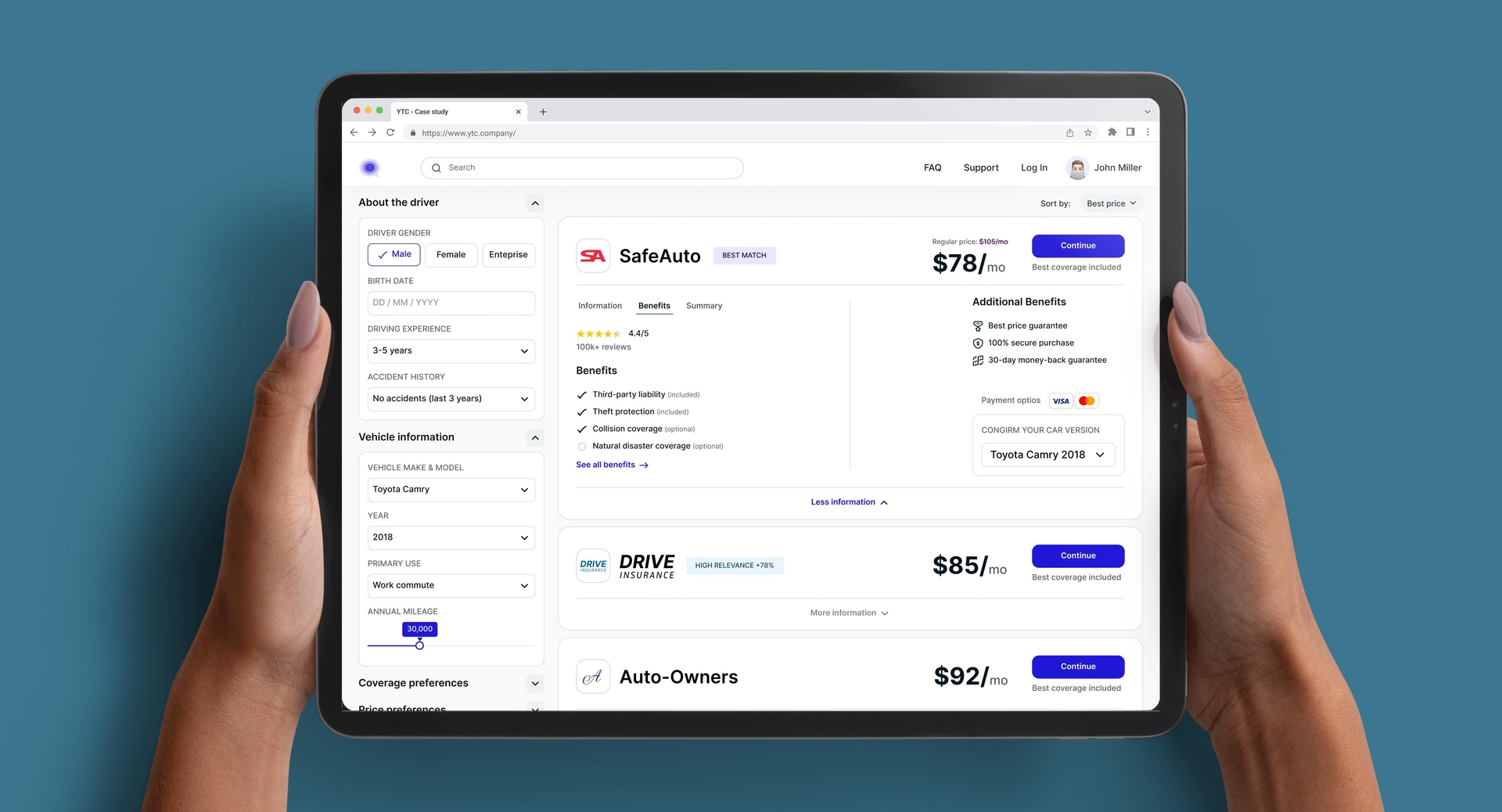

Similar solutions we implemented

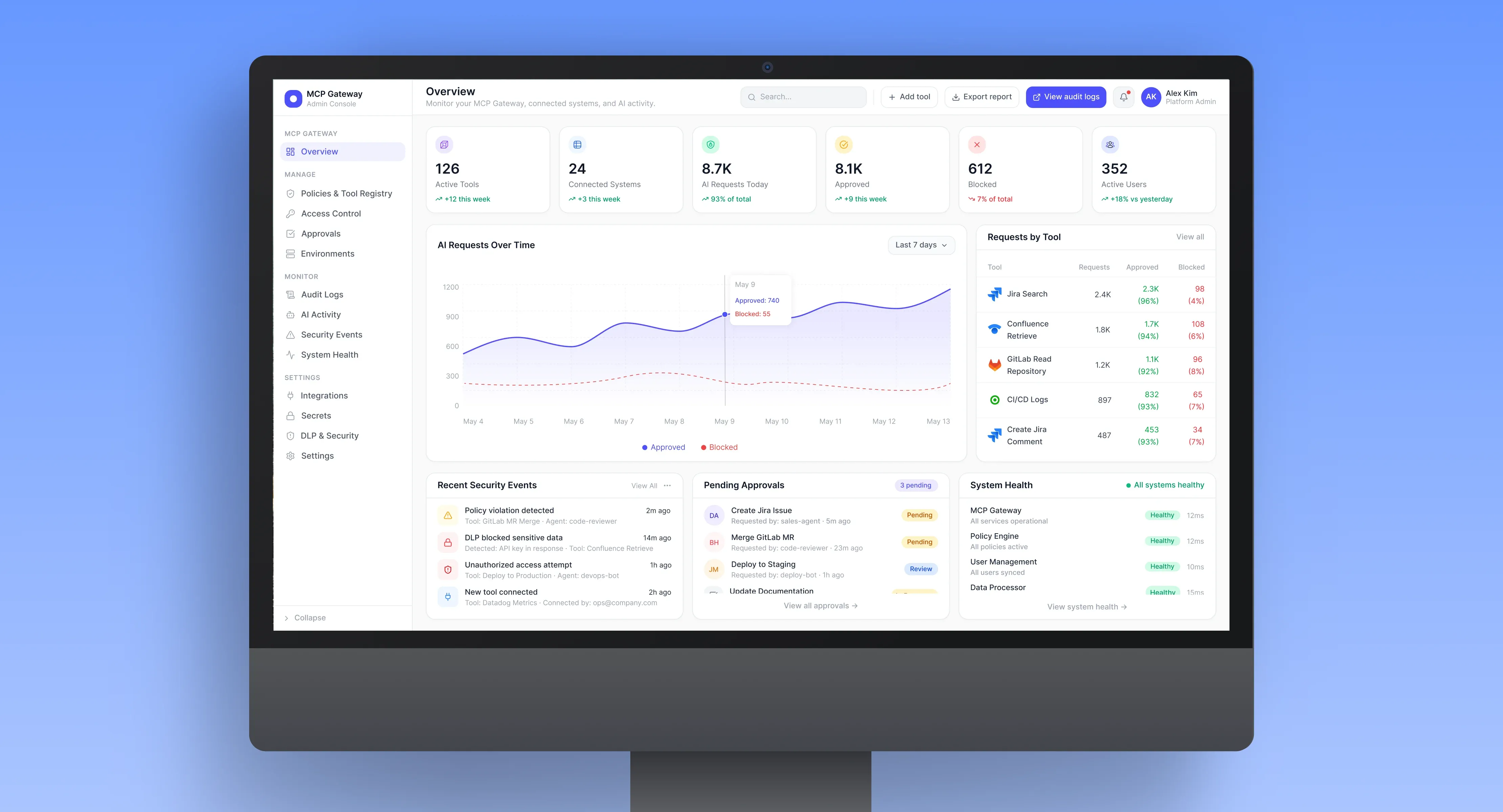
Enterprise MCP Gateway for secure operations
  • AI
  • MCP
  • BI
  • DevOps

Enterprise MCP Gateway for secure operations

Clients behavior analysis for car insurance aggregator
  • AI
  • AWS
  • ML
  • Web App
  • DevOps
  • Data

Clients behavior analysis for car insurance aggregator

See all Case Studies

Related blog posts

‌
Best Practices for Integrating AI into Existing Business Processes
BusinessAI

Best Practices for Integrating AI into Existing Business Processes

Integrating AI into existing business operations is one of the most powerful levers a company can pull — but it’s also one of the riskiest. Many organizations struggle not because AI is flawed, but because their approach to integration fails to respect how their business truly operates. The promise of efficiency, insight, and automation often clashes with legacy systems, culture, and technical debt. Over years of project work and observing successes and failures across industries, several patterns of strong AI integration have emerged. In this article, I outline five best practices — not superficial rules, but deep lessons that require discipline, humility, and ongoing care. These are the guardrails that help AI become a partner, not a disruption. 1. Align AI strategy with business purpose and processes
‌
How AI Bubble Charts Help Businesses Choose the Right AI Projects
BusinessAI

How AI Bubble Charts Help Businesses Choose the Right AI Projects

In the fast-evolving world of artificial intelligence, knowing what to build first often matters more than knowing how to build it. Many companies rush into AI adoption with excitement — exploring use cases, generating ideas, and visualizing automation opportunities — only to face a hard question soon after: which project deserves priority? Should they start with a chatbot, an analytics dashboard, or a predictive model? Each idea promises value, but not all of them are equally feasible, actionable, or impactful. At YTC, we believe that successful AI adoption doesn’t begin with coding — it begins with clarity. That’s why one of the most effective tools we use in our consulting practice is the AI Bubble Chart: a structured, visual method for prioritizing AI initiatives based on business value, feasibility, and actionability. It’s more than a chart — it’s a framework for making data-driven strategic choices that balance ambition with practicality. Let’s explore how AI Bubble Charts work, why they make sense for business leaders, and how they turn abstract AI ideas into a clear roadmap for growth.
‌
How AI helps to create marketing strategies that actually work
BusinessAI

How AI helps to create marketing strategies that actually work

Artificial intelligence is no longer a futuristic advantage reserved for tech giants — it’s a working instrument that reshapes how businesses plan, execute, and measure marketing strategies. From finance and travel to media, coaching, and even the fight against disinformation, AI-driven marketing has become a key to understanding audiences, optimizing budgets, and achieving growth faster and smarter. What once required weeks of brainstorming, research, and testing can now be done in hours — and with better precision. But the power of AI lies not in replacing human creativity, but in enhancing it. When used strategically, AI helps teams make data-backed decisions, find hidden opportunities, and create campaigns that resonate deeply with real people. So, how exactly does AI transform the process of marketing strategy creation? Let’s walk through the main stages — and explore how businesses can use it to build more effective and adaptive strategies.
Read all posts

Related blog posts

Read all
‌
Best Practices for Integrating AI into Existing Business Processes
BusinessAI

Best Practices for Integrating AI into Existing Business Processes

Integrating AI into existing business operations is one of the most powerful levers a company can pull — but it’s also one of the riskiest. Many organizations struggle not because AI is flawed, but because their approach to integration fails to respect how their business truly operates. The promise of efficiency, insight, and automation often clashes with legacy systems, culture, and technical debt. Over years of project work and observing successes and failures across industries, several patterns of strong AI integration have emerged. In this article, I outline five best practices — not superficial rules, but deep lessons that require discipline, humility, and ongoing care. These are the guardrails that help AI become a partner, not a disruption. 1. Align AI strategy with business purpose and processes
‌
How AI Bubble Charts Help Businesses Choose the Right AI Projects
BusinessAI

How AI Bubble Charts Help Businesses Choose the Right AI Projects

In the fast-evolving world of artificial intelligence, knowing what to build first often matters more than knowing how to build it. Many companies rush into AI adoption with excitement — exploring use cases, generating ideas, and visualizing automation opportunities — only to face a hard question soon after: which project deserves priority? Should they start with a chatbot, an analytics dashboard, or a predictive model? Each idea promises value, but not all of them are equally feasible, actionable, or impactful. At YTC, we believe that successful AI adoption doesn’t begin with coding — it begins with clarity. That’s why one of the most effective tools we use in our consulting practice is the AI Bubble Chart: a structured, visual method for prioritizing AI initiatives based on business value, feasibility, and actionability. It’s more than a chart — it’s a framework for making data-driven strategic choices that balance ambition with practicality. Let’s explore how AI Bubble Charts work, why they make sense for business leaders, and how they turn abstract AI ideas into a clear roadmap for growth.
‌
How AI helps to create marketing strategies that actually work
BusinessAI

How AI helps to create marketing strategies that actually work

Artificial intelligence is no longer a futuristic advantage reserved for tech giants — it’s a working instrument that reshapes how businesses plan, execute, and measure marketing strategies. From finance and travel to media, coaching, and even the fight against disinformation, AI-driven marketing has become a key to understanding audiences, optimizing budgets, and achieving growth faster and smarter. What once required weeks of brainstorming, research, and testing can now be done in hours — and with better precision. But the power of AI lies not in replacing human creativity, but in enhancing it. When used strategically, AI helps teams make data-backed decisions, find hidden opportunities, and create campaigns that resonate deeply with real people. So, how exactly does AI transform the process of marketing strategy creation? Let’s walk through the main stages — and explore how businesses can use it to build more effective and adaptive strategies.

Related blog posts

‌
Best Practices for Integrating AI into Existing Business Processes
BusinessAI

Best Practices for Integrating AI into Existing Business Processes

Integrating AI into existing business operations is one of the most powerful levers a company can pull — but it’s also one of the riskiest. Many organizations struggle not because AI is flawed, but because their approach to integration fails to respect how their business truly operates. The promise of efficiency, insight, and automation often clashes with legacy systems, culture, and technical debt. Over years of project work and observing successes and failures across industries, several patterns of strong AI integration have emerged. In this article, I outline five best practices — not superficial rules, but deep lessons that require discipline, humility, and ongoing care. These are the guardrails that help AI become a partner, not a disruption. 1. Align AI strategy with business purpose and processes
‌
How AI Bubble Charts Help Businesses Choose the Right AI Projects
BusinessAI

How AI Bubble Charts Help Businesses Choose the Right AI Projects

In the fast-evolving world of artificial intelligence, knowing what to build first often matters more than knowing how to build it. Many companies rush into AI adoption with excitement — exploring use cases, generating ideas, and visualizing automation opportunities — only to face a hard question soon after: which project deserves priority? Should they start with a chatbot, an analytics dashboard, or a predictive model? Each idea promises value, but not all of them are equally feasible, actionable, or impactful. At YTC, we believe that successful AI adoption doesn’t begin with coding — it begins with clarity. That’s why one of the most effective tools we use in our consulting practice is the AI Bubble Chart: a structured, visual method for prioritizing AI initiatives based on business value, feasibility, and actionability. It’s more than a chart — it’s a framework for making data-driven strategic choices that balance ambition with practicality. Let’s explore how AI Bubble Charts work, why they make sense for business leaders, and how they turn abstract AI ideas into a clear roadmap for growth.
‌
How AI helps to create marketing strategies that actually work
BusinessAI

How AI helps to create marketing strategies that actually work

Artificial intelligence is no longer a futuristic advantage reserved for tech giants — it’s a working instrument that reshapes how businesses plan, execute, and measure marketing strategies. From finance and travel to media, coaching, and even the fight against disinformation, AI-driven marketing has become a key to understanding audiences, optimizing budgets, and achieving growth faster and smarter. What once required weeks of brainstorming, research, and testing can now be done in hours — and with better precision. But the power of AI lies not in replacing human creativity, but in enhancing it. When used strategically, AI helps teams make data-backed decisions, find hidden opportunities, and create campaigns that resonate deeply with real people. So, how exactly does AI transform the process of marketing strategy creation? Let’s walk through the main stages — and explore how businesses can use it to build more effective and adaptive strategies.
Read all posts
Logo YTC

We design and build AI-powered software. Strategy first. Same team end-to-end.

Your Technical Companion. All rights reserved. 2026

Contact Us

Email: sales@ytc.company

Location: Kyiv/Ukraine

Industries

FinTechInsurTechEdTechAdTechMarTechMediaTech

Services

AI Product StrategyData EngineeringAI AuditAI Cost OptimisationAI Team AugmentationAI Due DiligenceAI Software Implementation

Company

AboutCase StudiesHelp CenterContact
Privacy PolicyTerms of Service

Contact Us

Email: sales@ytc.company

Location: Kyiv/Ukraine

Privacy PolicyTerms of Service

© 2026, YTC - Your Technical Companion All Rights Reserved