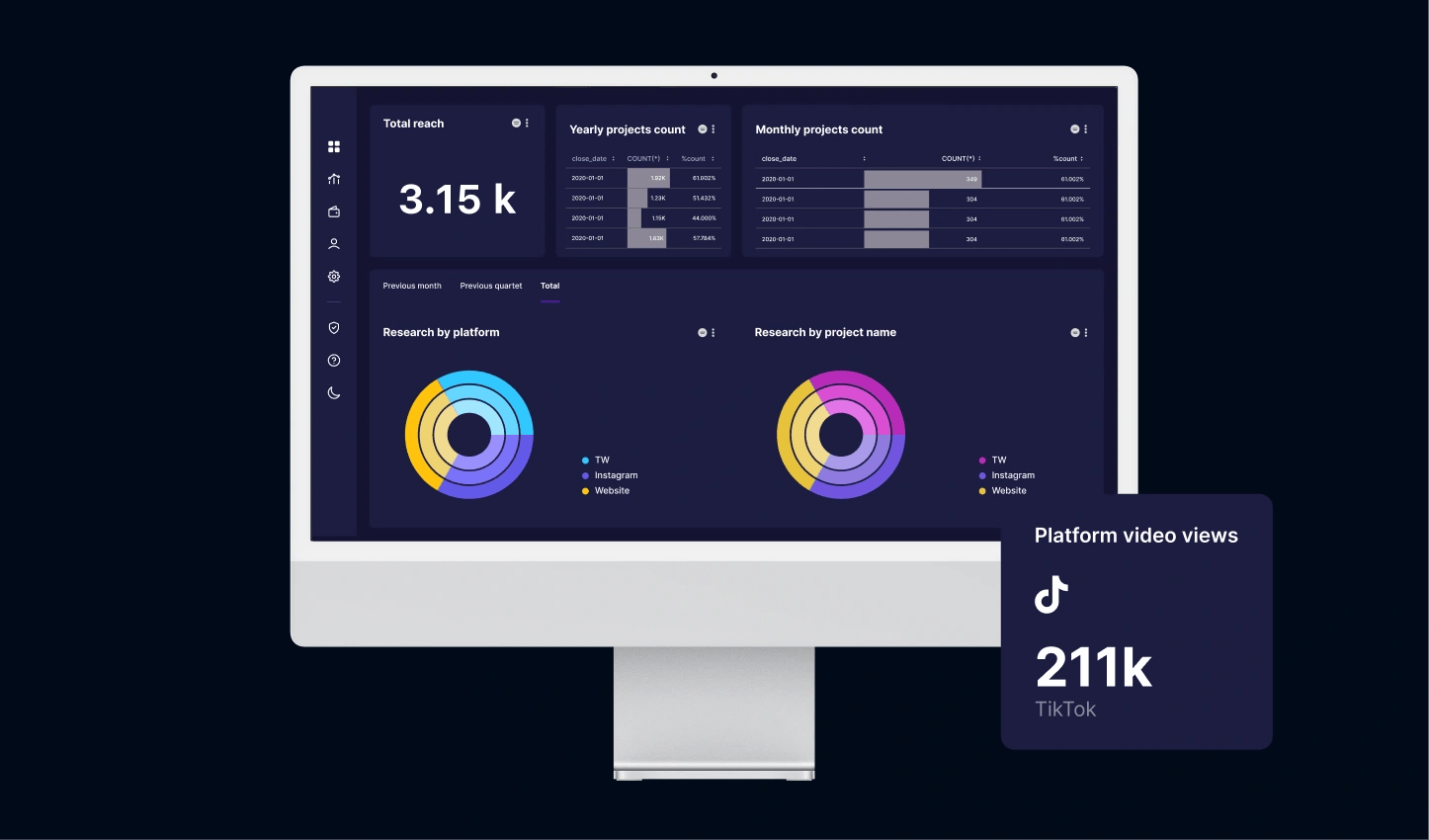
YTC LogoYTC Logo
Home
Case Studies
Blog
Menu illustration
ServicesCase StudiesHow we workAbout usCareerContactsBlogHelp Center
sales@ytc.company
sales@ytc.company
Home
Cases
Enterprise MCP Gateway for secure operations

Enterprise MCP Gateway for secure operations

Enterprise MCP Gateway for secure operationsEnterprise MCP Gateway for secure operations
AIMCPBIDevOps

Enterprise MCP Gateway for secure operations

AIMCPBIDevOps

A large enterprise company needed a secure way to connect AI assistants, agents, and developer tools with internal systems while maintaining full control over data access, governance, and compliance requirements. We designed an MCP-based integration architecture that enables controlled AI access to SDLC workflows, enterprise knowledge, and operational systems through a centralized security layer.

Industry

FinTech

Client

Under NDA

Region

USA

Main challenges

Business Challenge: AI adoption lacked centralized governance and control

The company wanted to expand AI usage across development and operational workflows without introducing security, compliance, or data management risks.
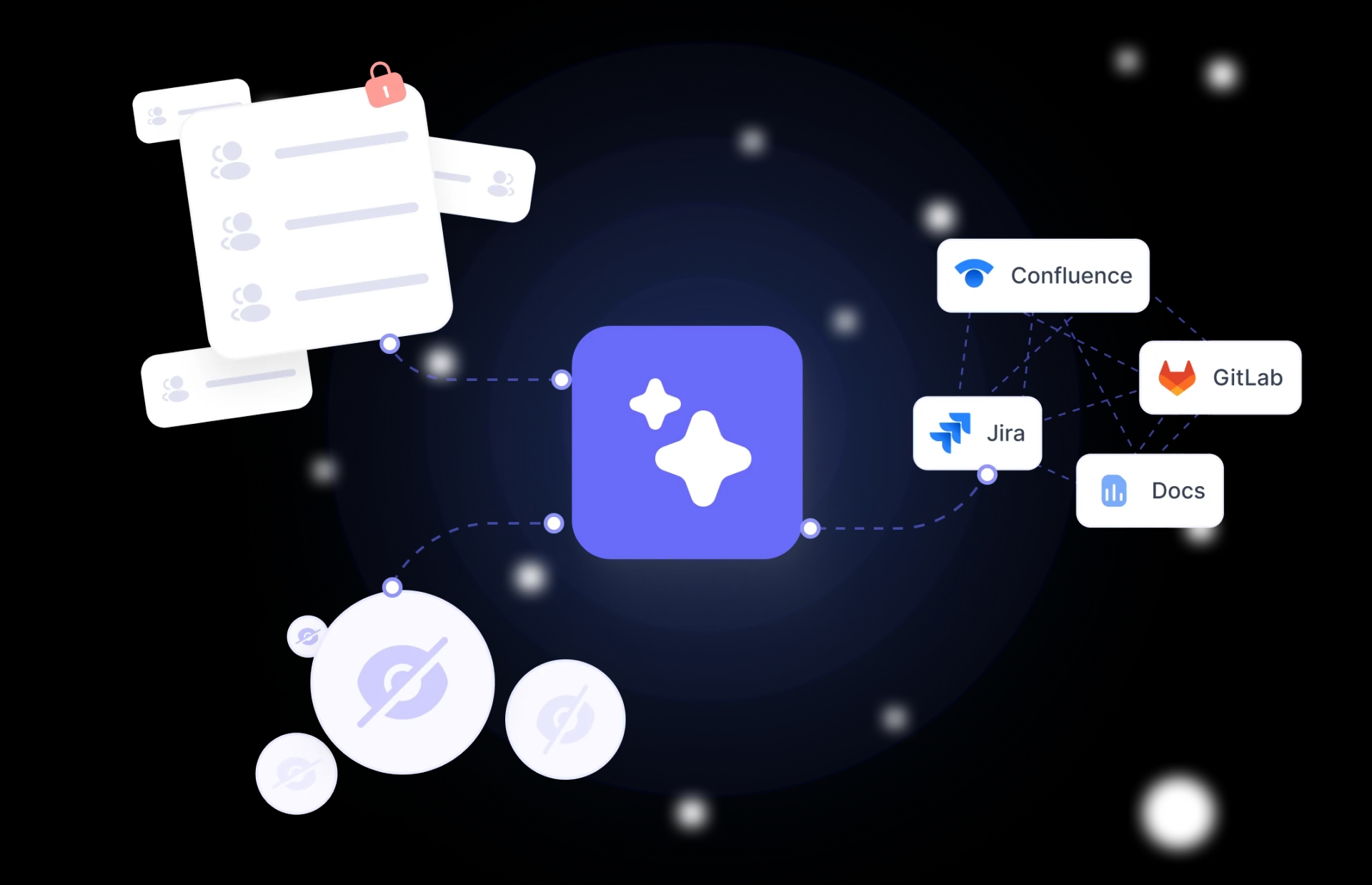
  • AI access policies were difficult to enforce
  • Internal knowledge remained fragmented across systems
  • Teams lacked visibility into AI-driven activities
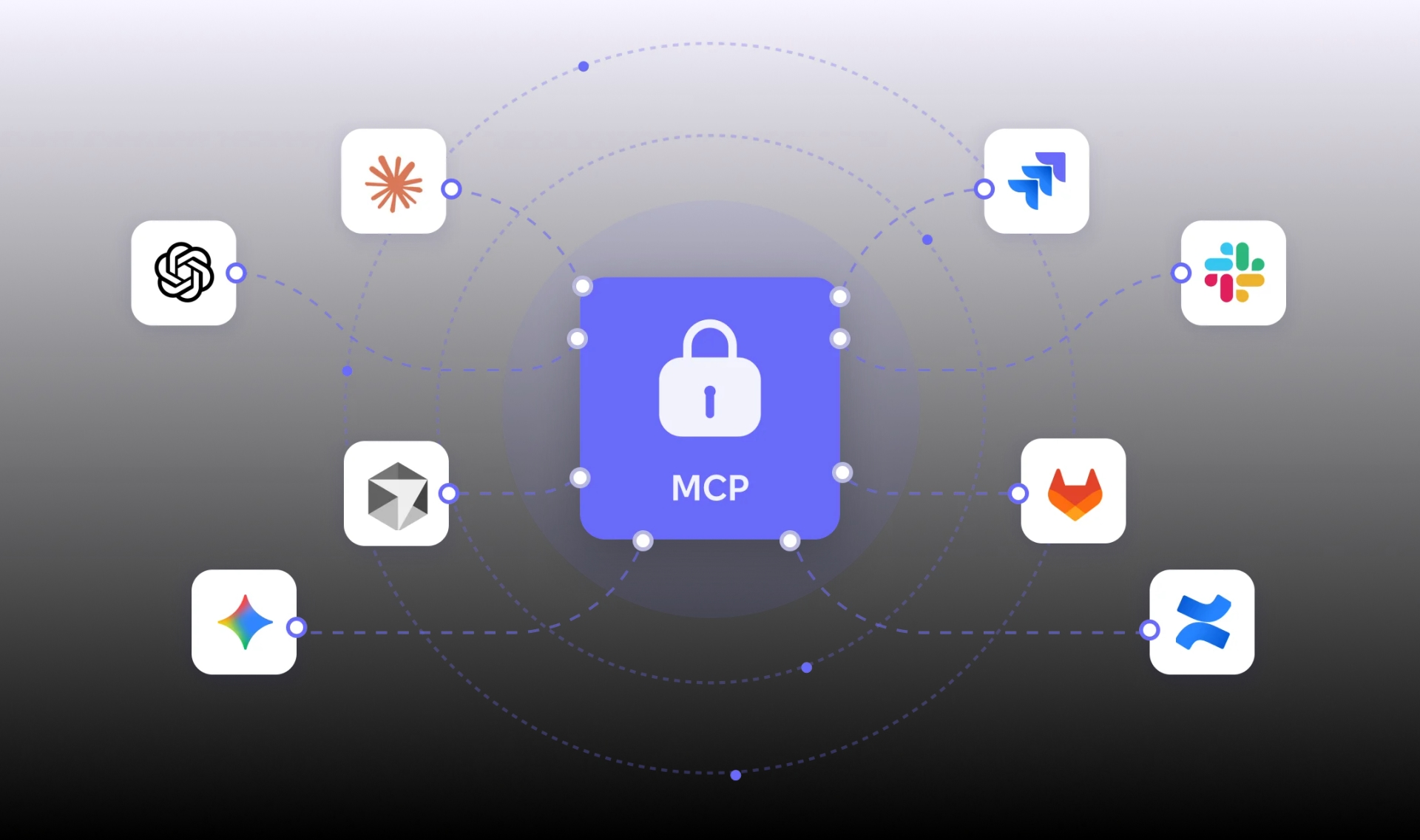
Centralized AI governance connecting enterprise systems including Confluence, Jira, Slack, and documentation

Technical Challenge: Internal systems were not AI-ready by design

Enterprise tools contained valuable context but lacked a standardized mechanism for secure AI access, authorization, and orchestration.
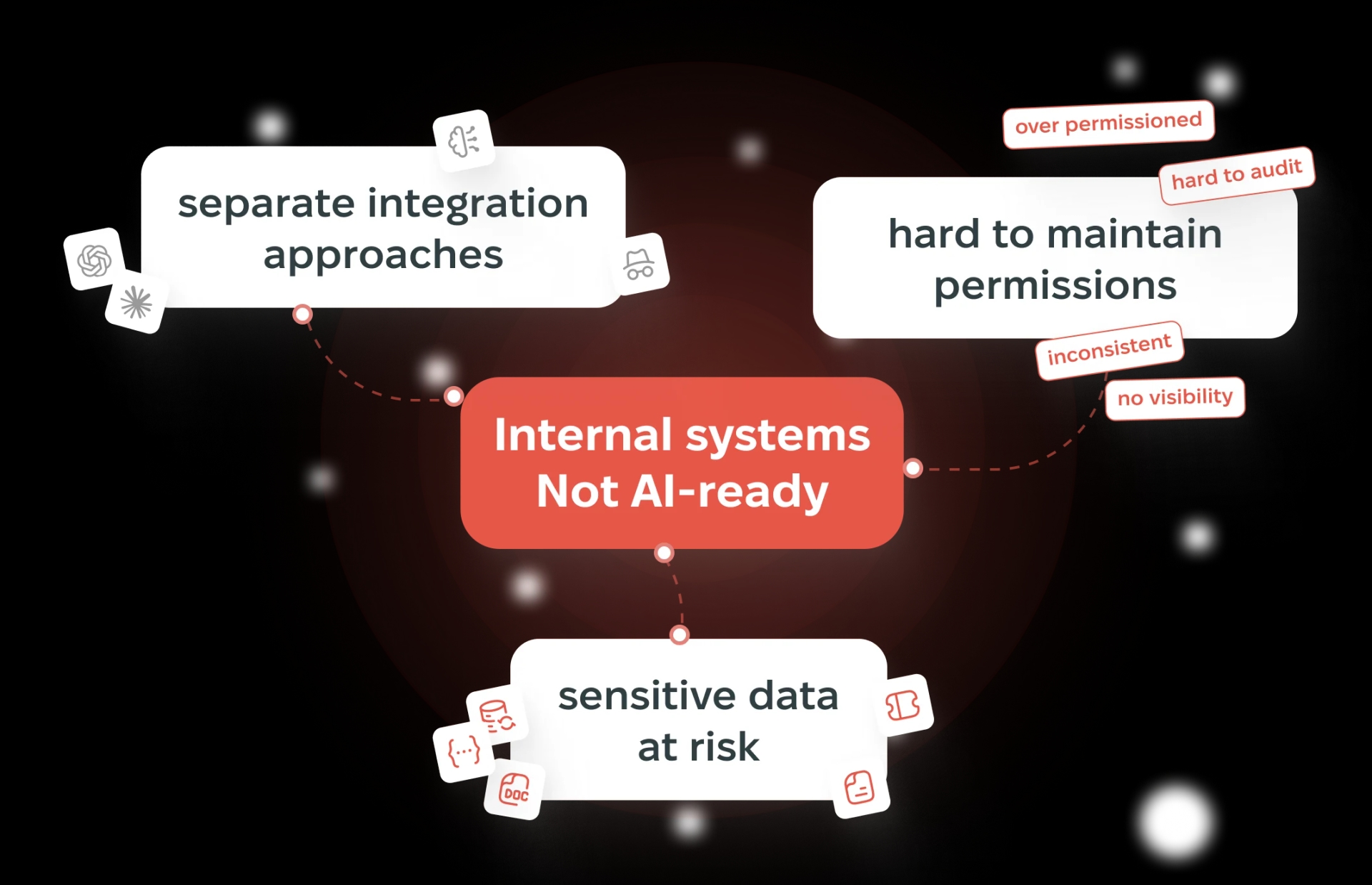
  • AI tools required separate integration approaches
  • Permissions and access control were difficult to maintain
  • Sensitive data required advanced filtering and protection
Internal systems not ready for AI due to separate integrations, complex permissions, and sensitive data risks

Delivery Challenge: Rollout required sequencing to avoid operational risk

New AI capabilities had to be introduced across active teams gradually, without disrupting ongoing development workflows.
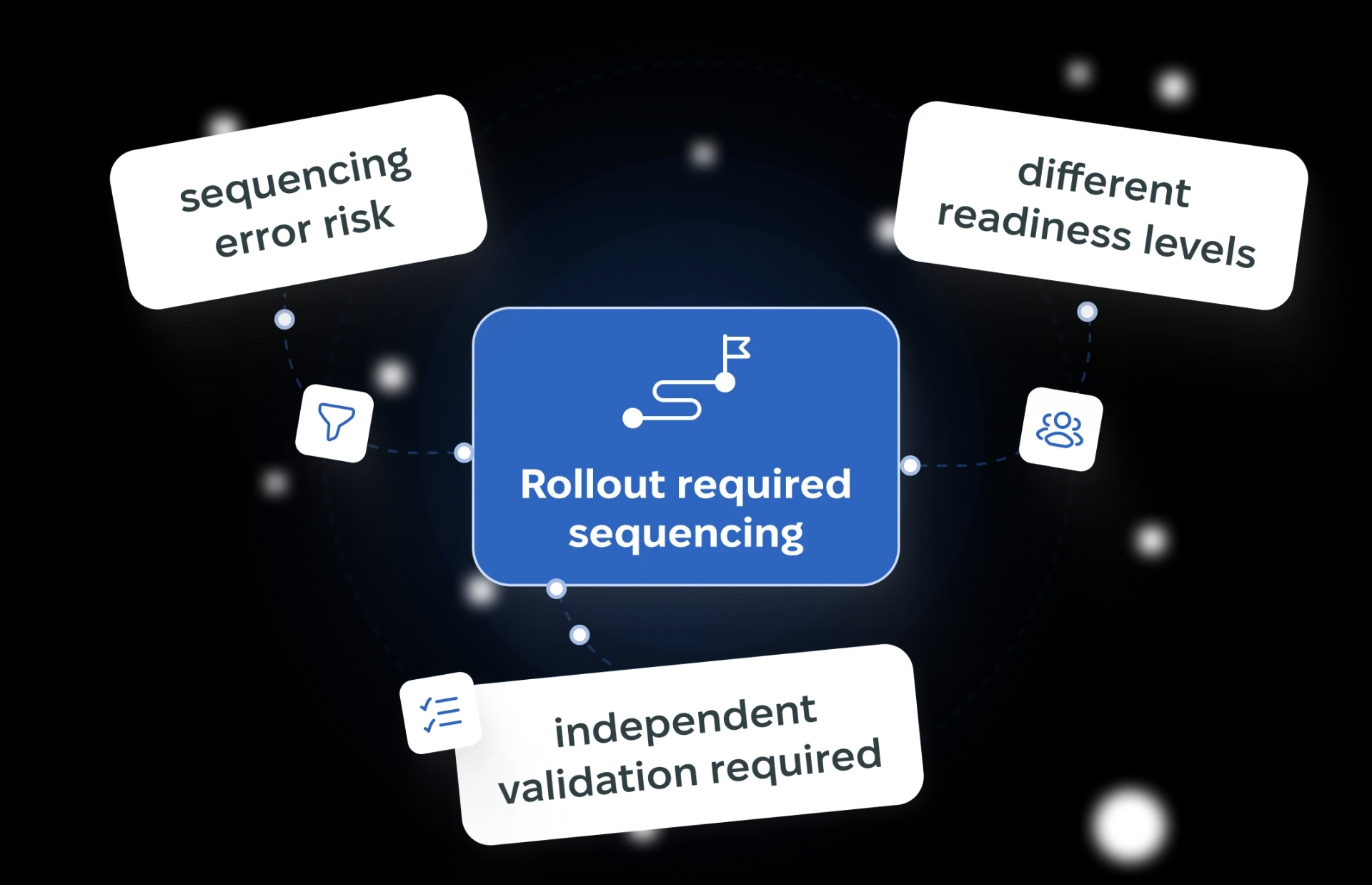
  • Any sequencing error risked breaking active development processes
  • Teams had different levels of readiness for AI tooling
  • Each system required independent validation before broader rollout
Enterprise MCP rollout sequencing with different readiness levels and independent validation

What we did

We started by mapping the organization's AI exposure across systems — identifying where access was uncontrolled, where sensitive data flowed without filtering, and where knowledge remained siloed. This audit shaped the gateway architecture: a layered approach where security, authorization, and observability were built in from the start rather than added later.

From there, we prioritized integrations by risk and business value, deploying read-only access first and introducing write operations only after approval workflows were validated. Each system was onboarded independently, tested against security policies, and connected to a shared knowledge graph that gave AI assistants reliable context without bypassing existing permission structures.

100%

AI interactions governed through centralized access policies

80%

Reduction in time spent searching across engineering systems

20+

Enterprise systems connected through approved MCP tools

1

Unified layer for AI access, authorization, and auditing

Enterprise MCP gateway

A centralized control layer for secure AI access across enterprise systems.
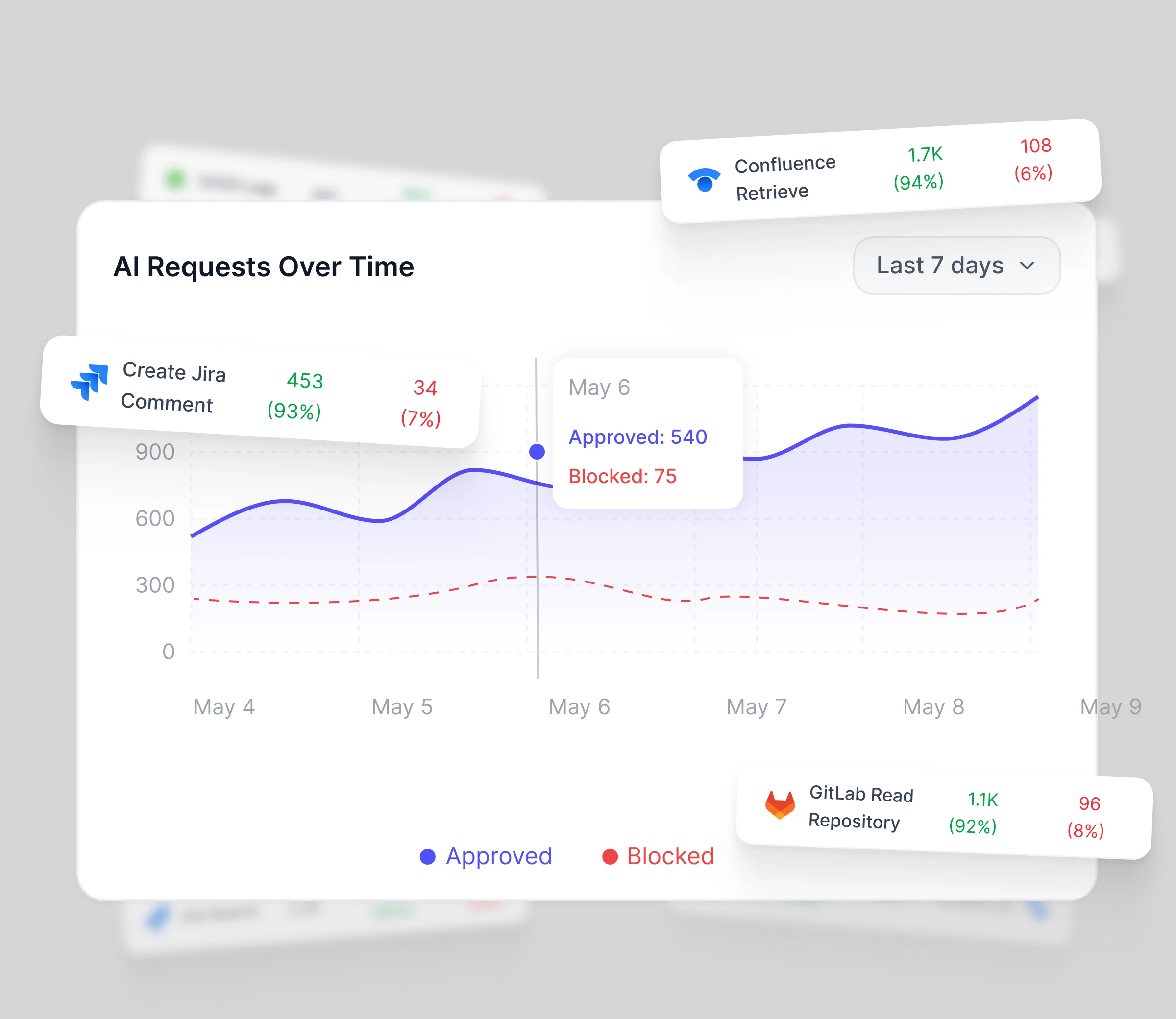
  • Centralized tool registry and governance controls
  • Role-based authorization across projects and teams
  • Secure AI access to approved internal systems
  • Complete audit trail for AI interactions
  • Human approval for sensitive operations
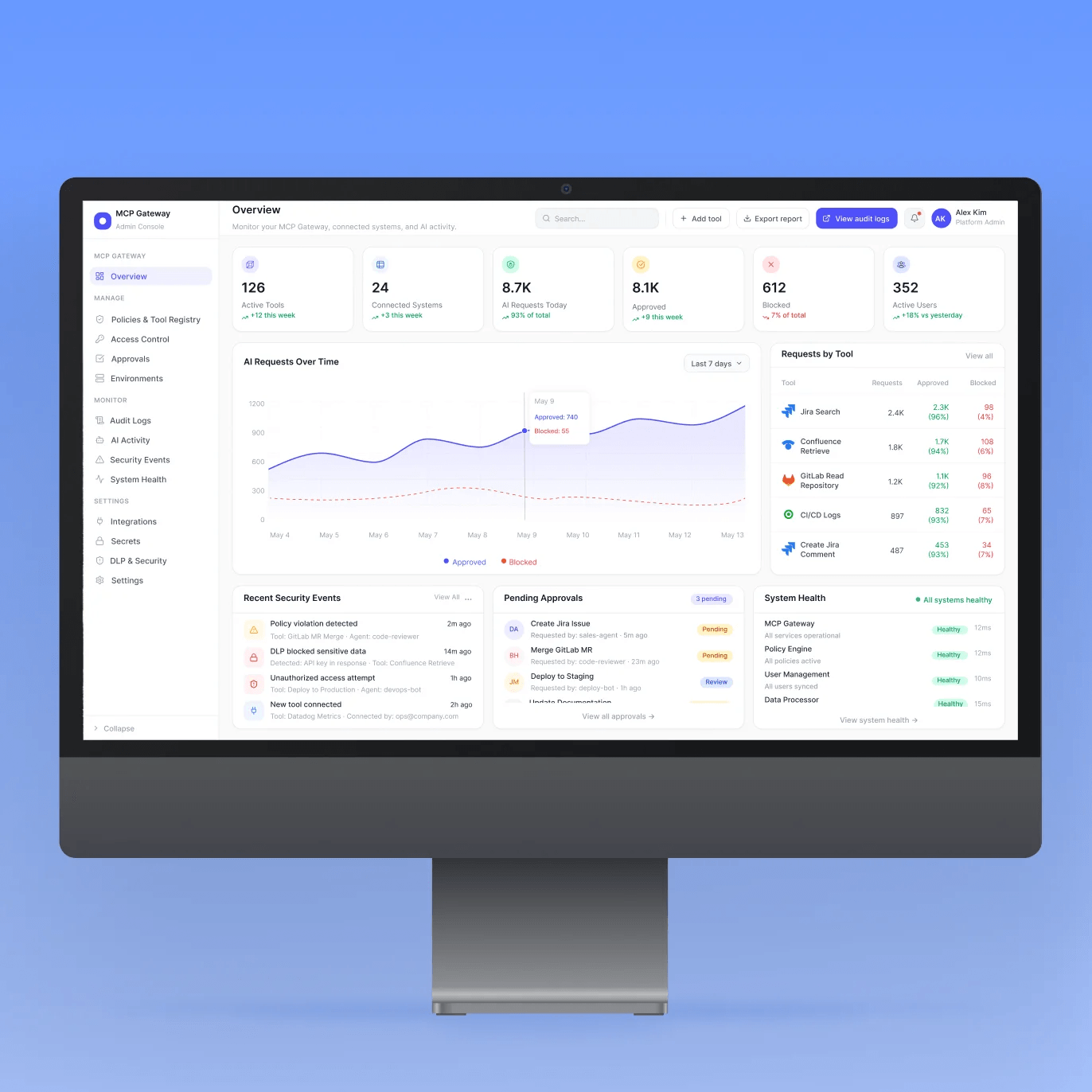
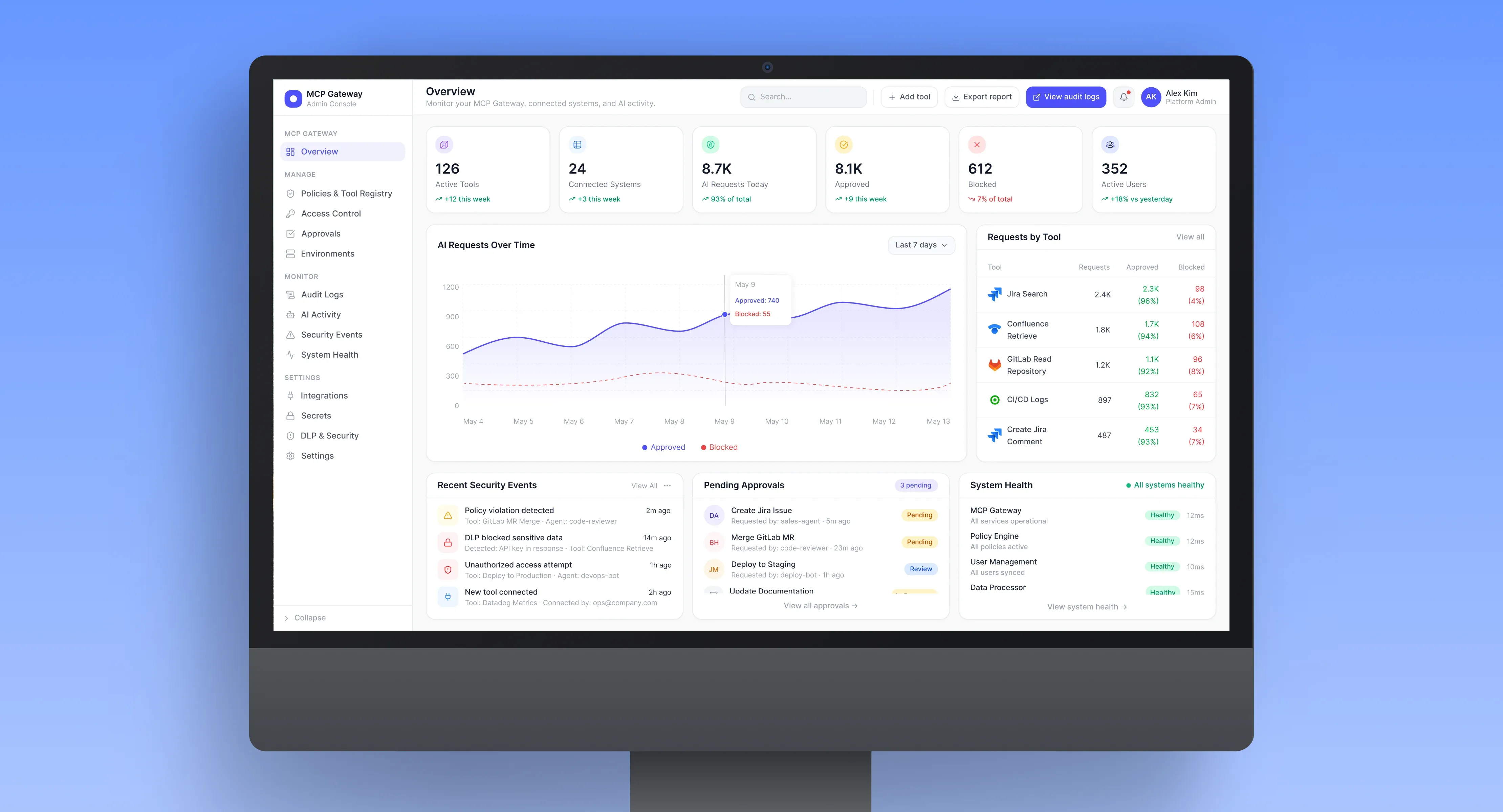
Enterprise MCP gateway dashboard showing AI request approval and blocking activity

AI security framework

Security controls designed specifically for enterprise AI adoption.
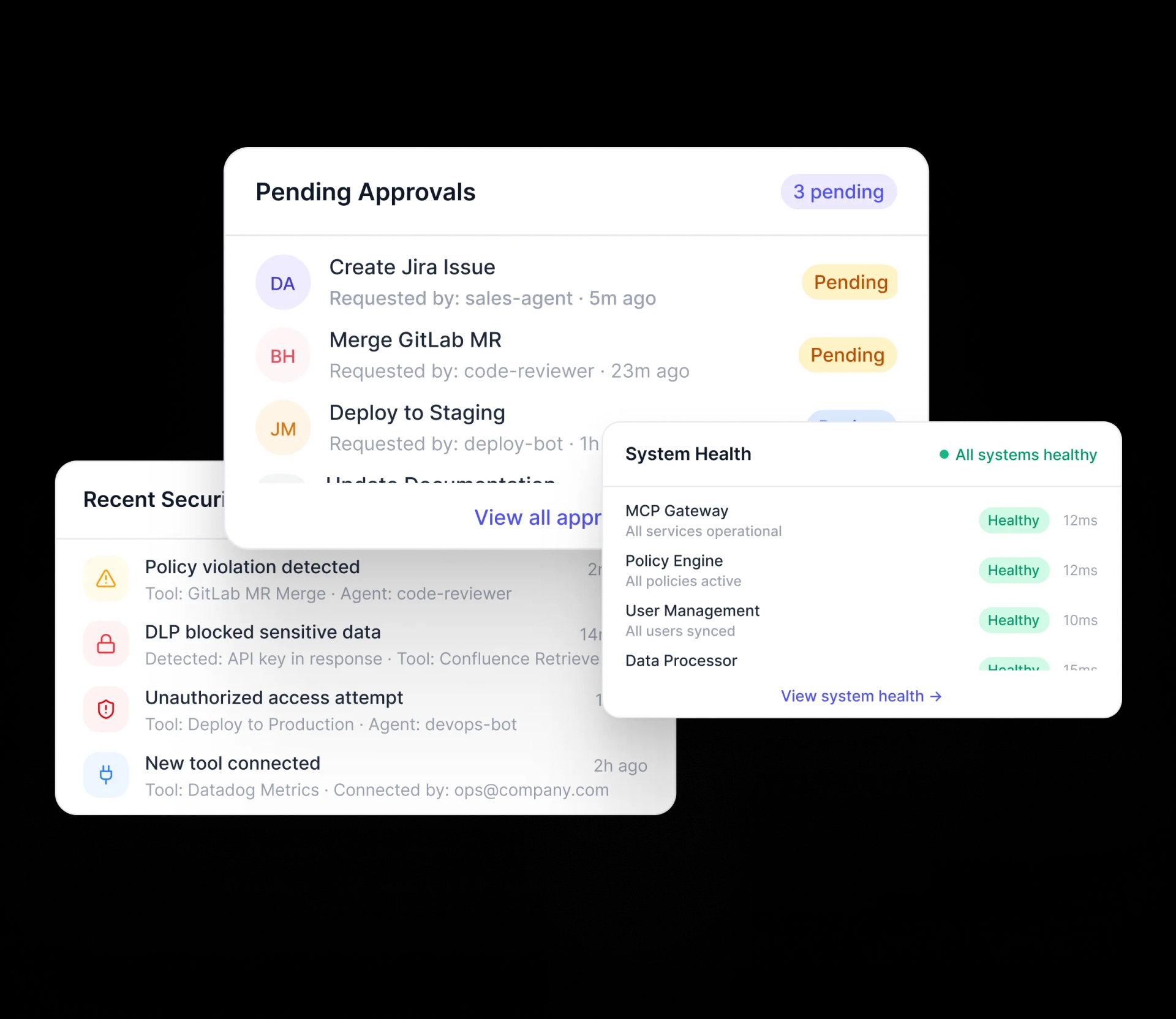
  • Data classification before AI context delivery
  • DLP filtering for sensitive information
  • Secrets and credential redaction mechanisms
  • Source-system permissions remain preserved
  • Full security event monitoring and reporting
AI security framework interface with pending approvals, security events, and system audit records

Knowledge graph infrastructure

A connected enterprise knowledge layer supporting AI reasoning and impact analysis.
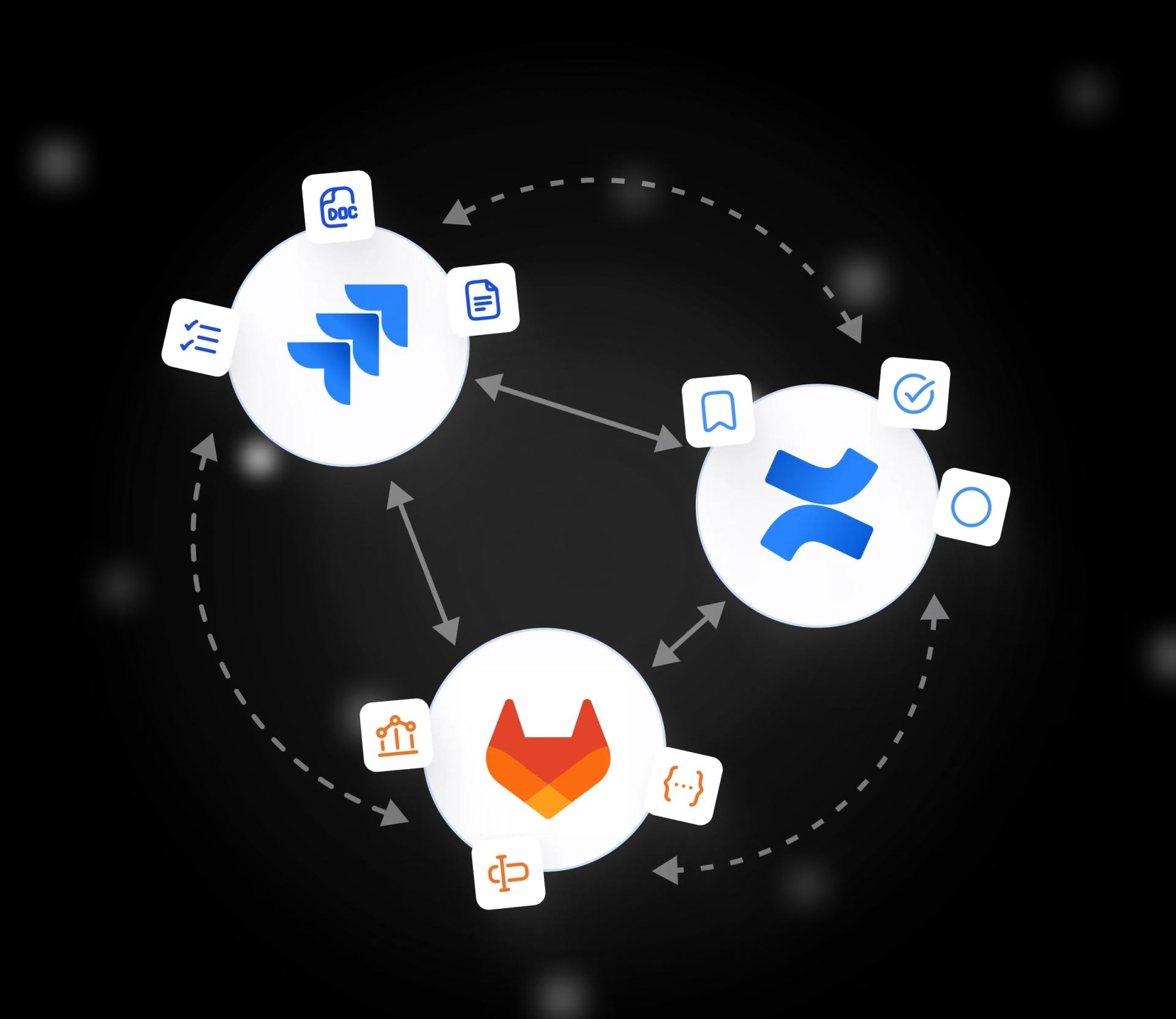
  • Unified relationship mapping across systems
  • Traceability between requirements and implementation
  • Ownership discovery across teams and repositories
  • Context retrieval for engineering workflows
  • Semantic and graph-based information access
Enterprise knowledge graph connecting Jira, Confluence, GitLab, and related engineering context

AI agents for SDLC automation

Governed agents supporting repetitive engineering activities.
  • Automated investigation of development issues
  • Test generation and documentation assistance
  • Vulnerability triage and risk identification
  • CI/CD failure analysis and recommendations
  • Controlled escalation for complex scenarios
AI agents dashboard for automated engineering policies, tasks, and SDLC workflows

GitHub Copilot enablement

Governed rollout of GitHub Copilot across development teams with shared practices and data protection controls.
  • Shared skills library for BA, QA, development, and code review
  • Content exclusions configured for sensitive repositories and folders
  • Data obfuscation and anonymization before code enters Copilot context
  • Pre-commit and CI checks for secrets and sensitive data patterns
  • Team-level playbook defining approved and prohibited Copilot use cases
GitHub Copilot enablement dashboard with approved skills and protected repository controls

Key results and business value

Centralized MCP governance connecting enterprise AI tools and systems

Fragmented AI access replaced by centralized governance
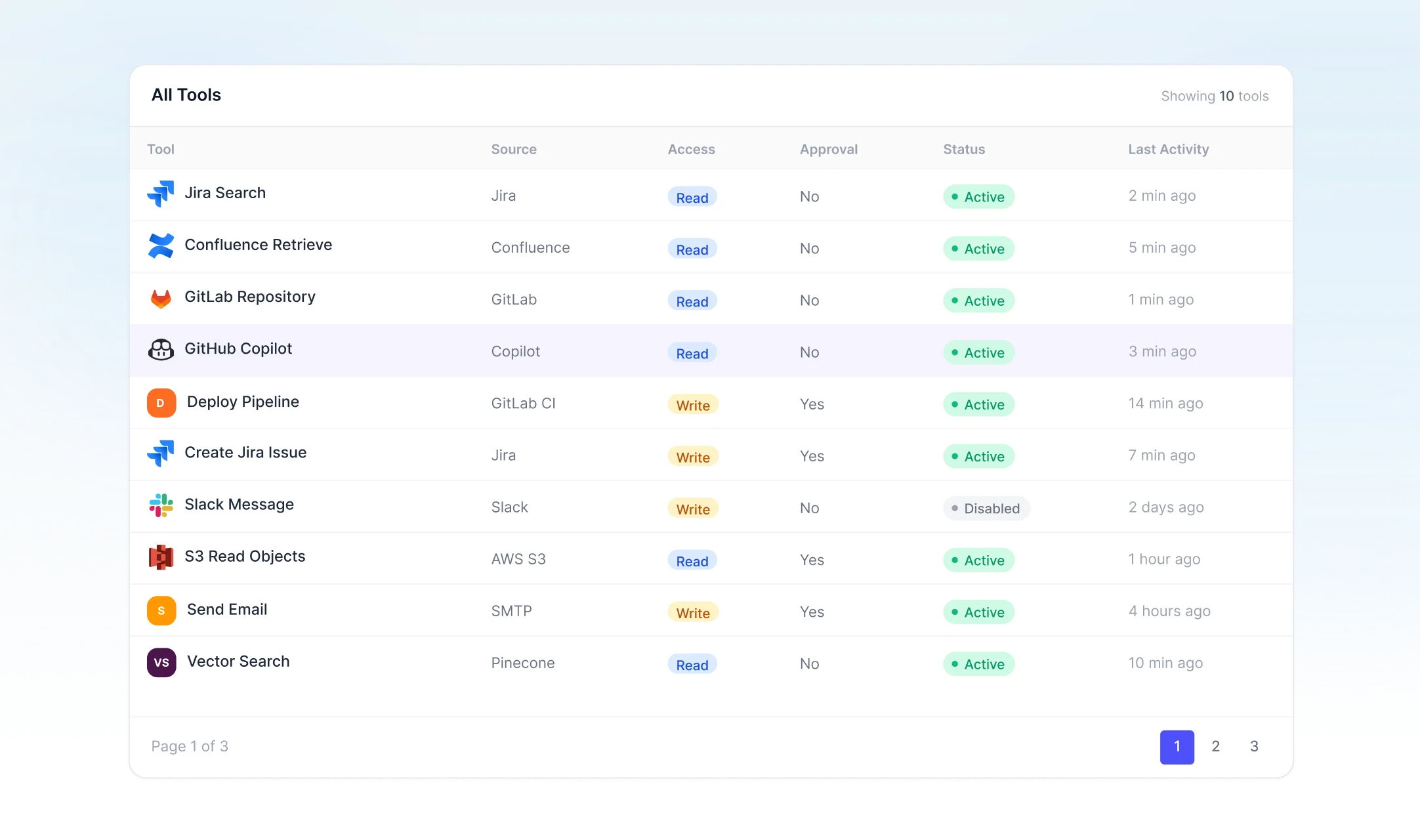
Unified AI-accessible ecosystem dashboard listing connected enterprise systems

Disconnected systems transformed into a unified AI-accessible ecosystem
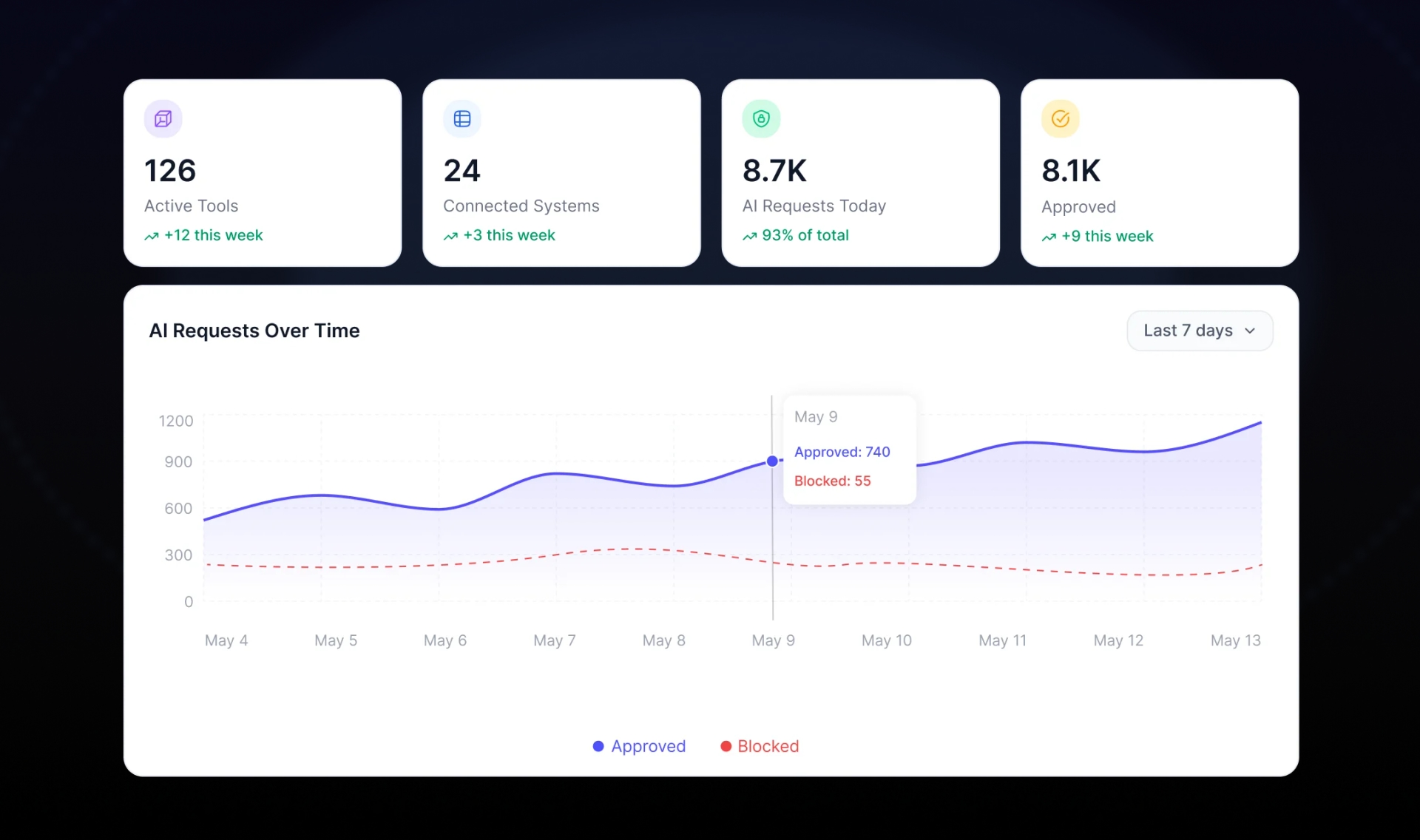
Enterprise AI adoption dashboard with governed usage metrics

Uncontrolled AI experimentation evolved into enterprise-scale adoption
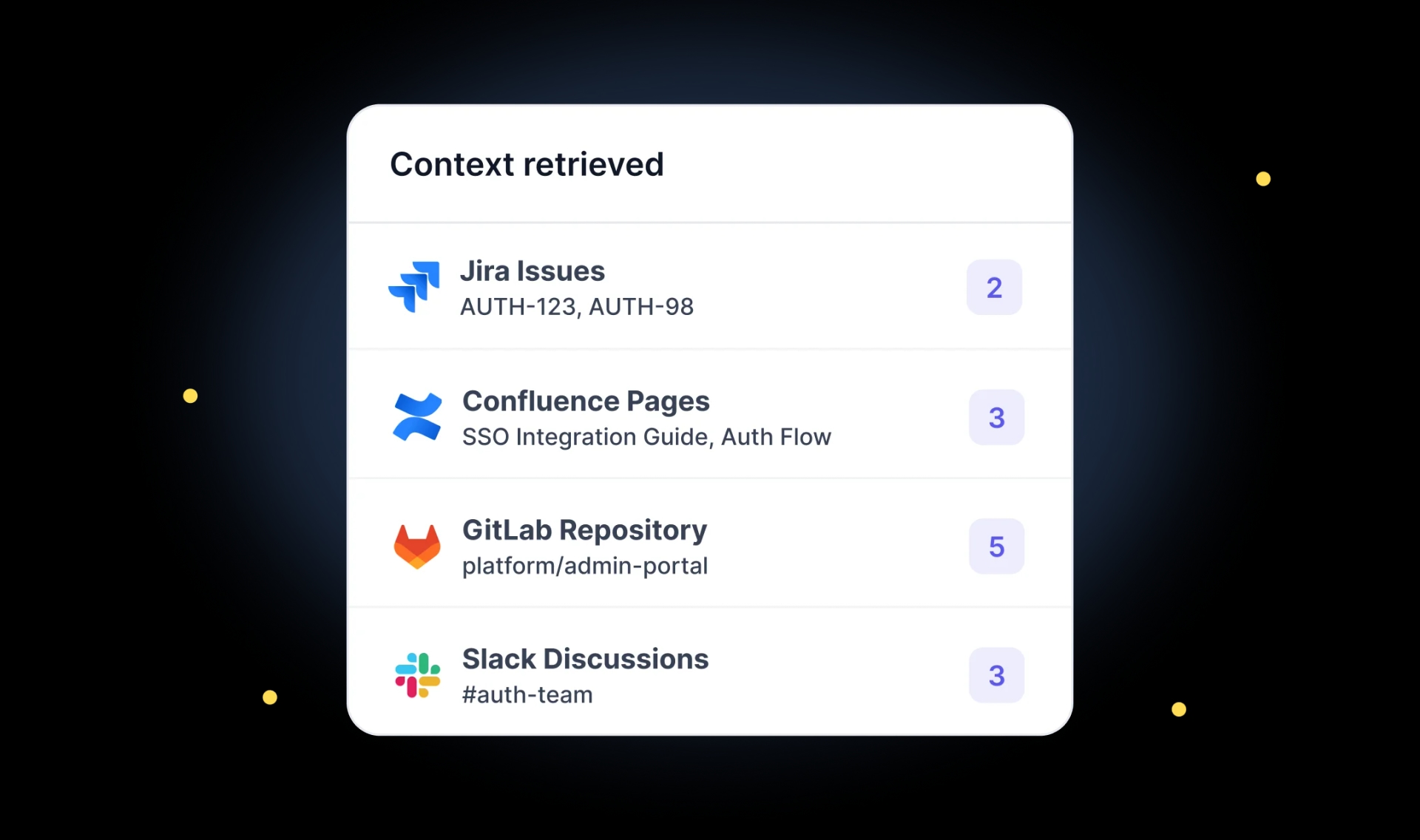
Contextual retrieval results from Jira, Confluence, GitLab, and Slack

Manual knowledge discovery replaced by contextual retrieval
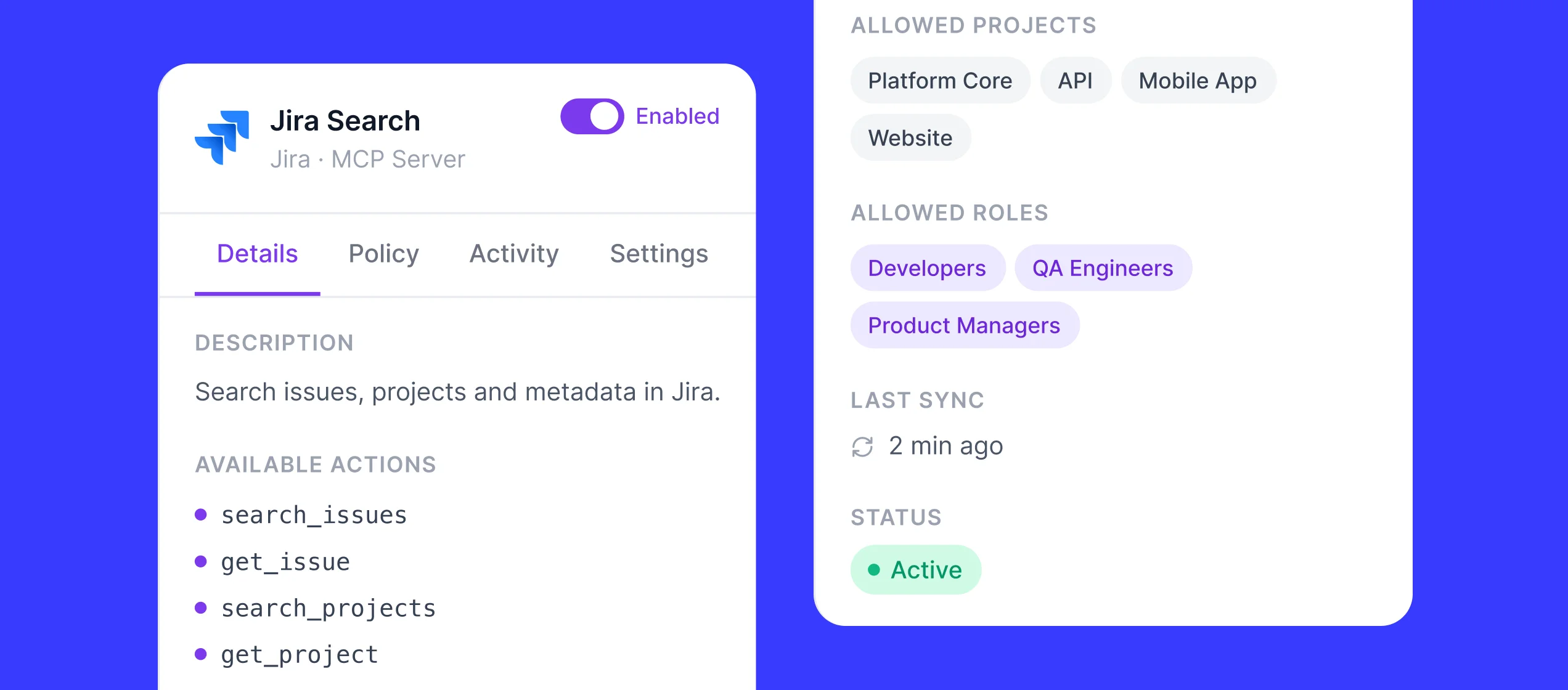
Features Delivered

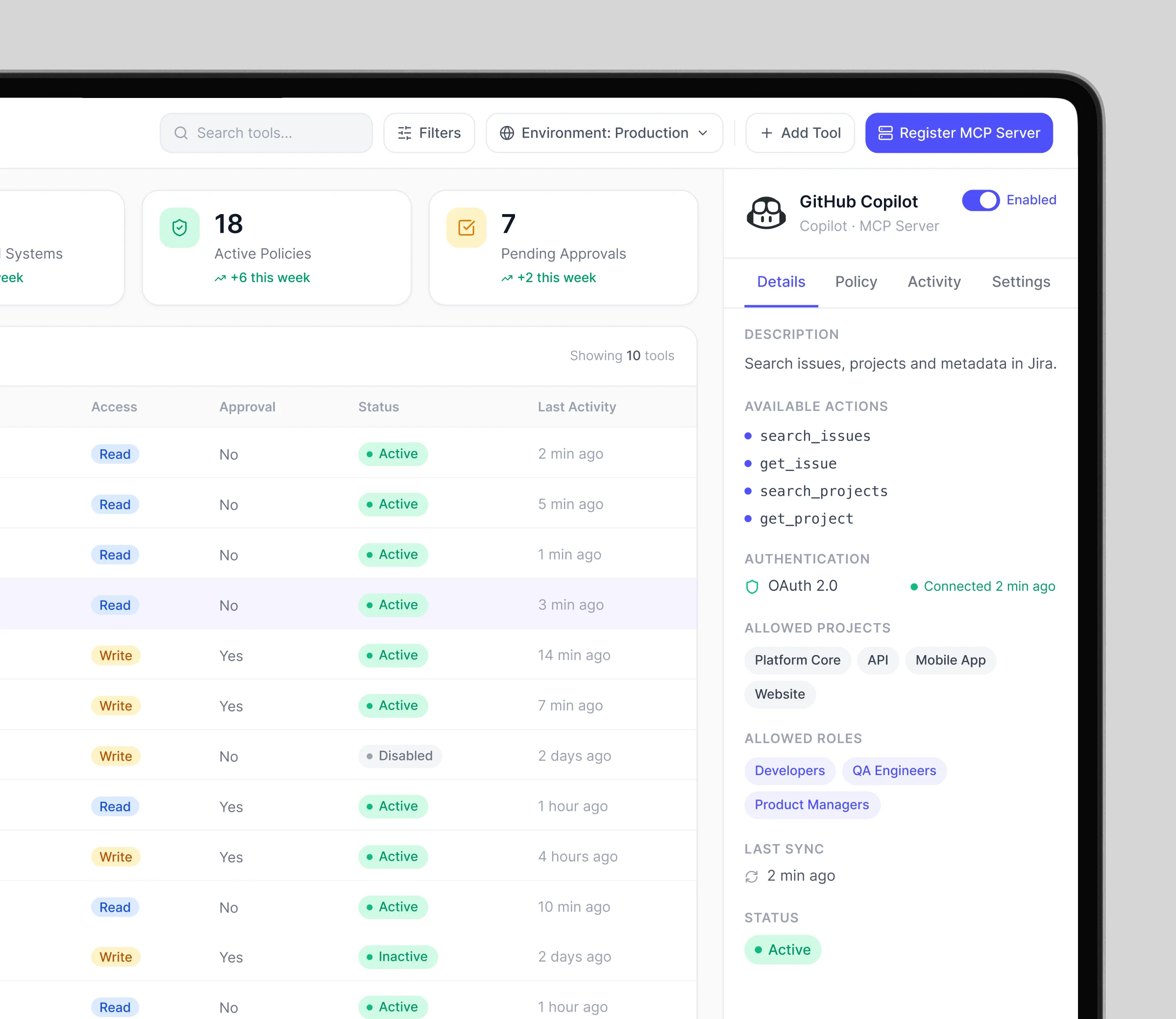
MCP gateway interface showing Jira search and allowed project controls

Key capabilities of the MCP Gateway:

  • Centralized MCP gateway for AI tool access
  • Role-based authorization and policy enforcement
  • Knowledge graph for contextual data retrieval
  • Enterprise audit logging and monitoring
  • Governed AI agents for SDLC workflows
  • Human approval controls for sensitive actions
MCP SDK logo for gateway tool integration

MCP SDK

OAuth 2.1 logo for secure authorization

OAuth 2.1

OpenTelemetry logo for observability

OpenTelemetry

Grafana logo for monitoring dashboards

Grafana

Open Policy Agent logo for policy enforcement

OPA

Vault logo for secrets management

Vault

Neo4j logo for the enterprise knowledge graph

Neo4j

GitHub Copilot logo for governed developer enablement

GitHub Copilot

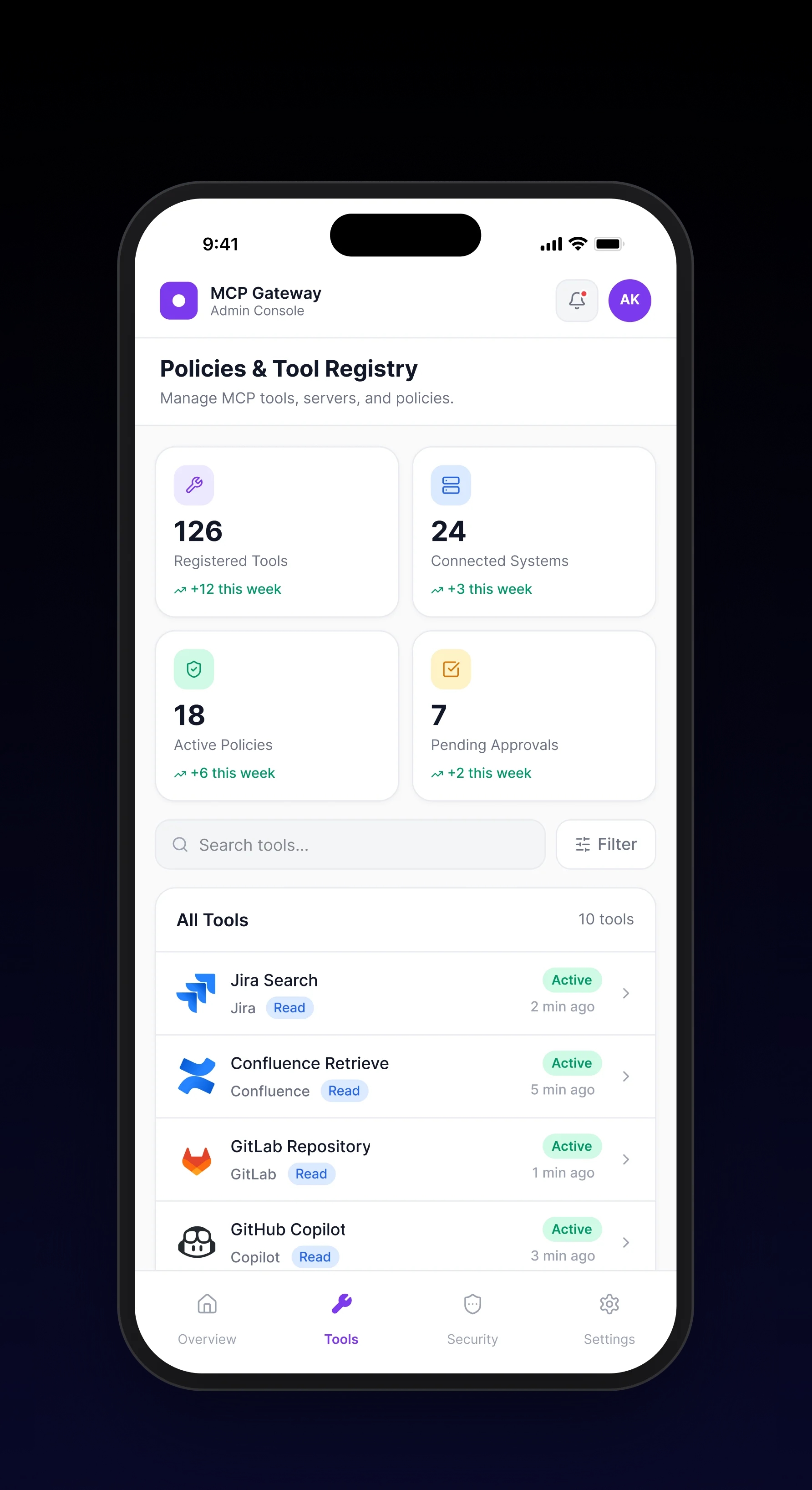
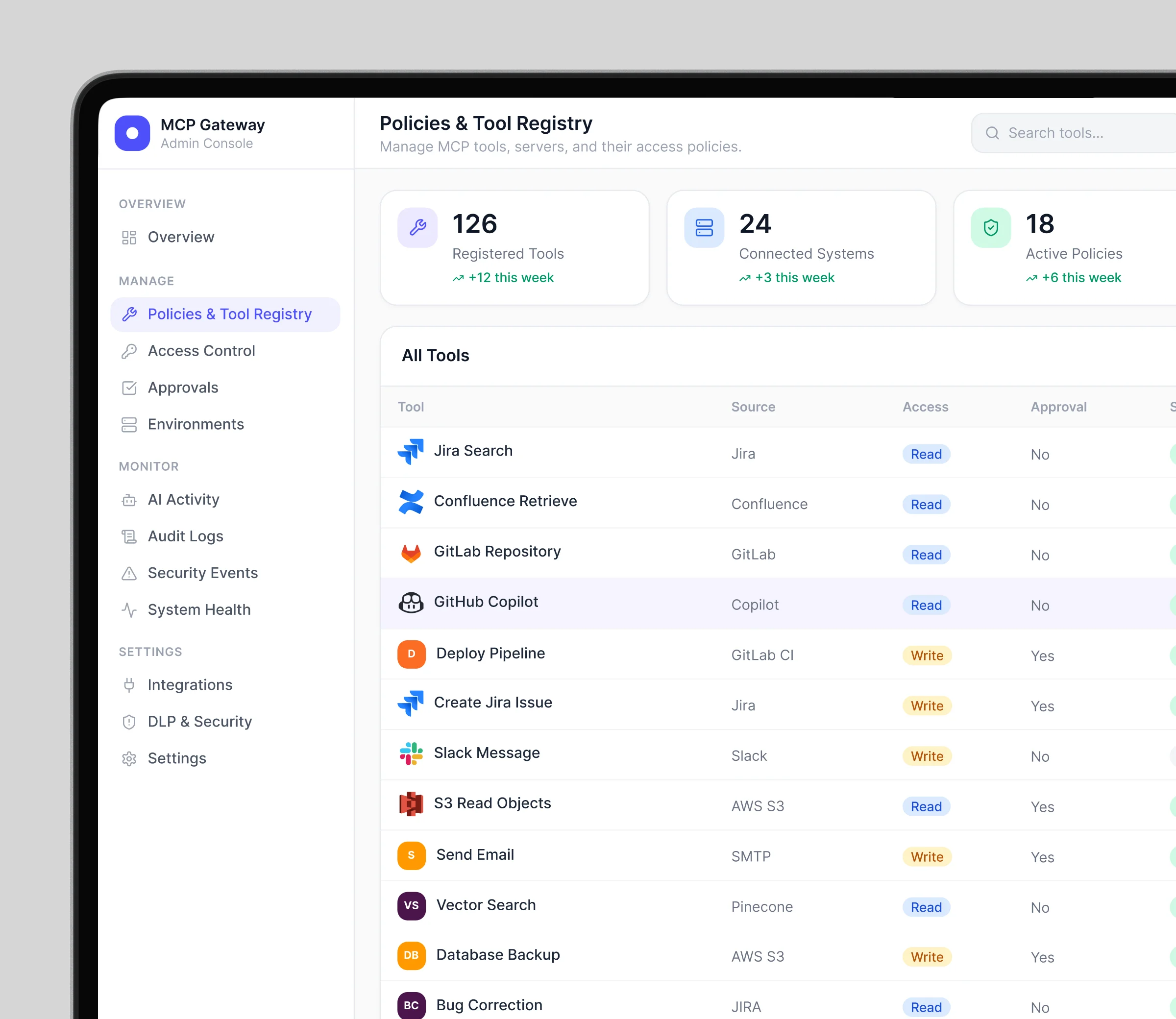
Enterprise MCP policies and tool registry displayed on a mobile phone

Technical Highlights

Enterprise MCP gateway icon

Enterprise MCP gateway

Centralized AI access layer managing authentication, authorization, governance policies, and tool orchestration

Policy-based authorization icon

Policy-based authorization

Role, project, and repository permissions determine which types of tools and data AI can access

Data protection controls icon

Data protection controls

DLP filtering, secret redaction, and classification policies protect sensitive enterprise information

Knowledge graph architecture icon

Knowledge graph architecture

Entity relationships across Jira, GitLab, and Confluence are stored in Neo4j graph traversal for impact analysis

Human-in-the-loop agents icon

Human-in-the-loop agents

AI agents operate within approval workflows to reduce risk while increasing system productivity

Full audit infrastructure icon

Full audit infrastructure

Comprehensive logging and monitoring provide traceability, compliance reporting, and security visibility

Enterprise MCP gateway icon

Enterprise MCP gateway

Centralized AI access layer managing authentication, authorization, governance policies, and tool orchestration

Policy-based authorization icon

Policy-based authorization

Role, project, and repository permissions determine which types of tools and data AI can access

Data protection controls icon

Data protection controls

DLP filtering, secret redaction, and classification policies protect sensitive enterprise information

Knowledge graph architecture icon

Knowledge graph architecture

Entity relationships across Jira, GitLab, and Confluence are stored in Neo4j graph traversal for impact analysis

Human-in-the-loop agents icon

Human-in-the-loop agents

AI agents operate within approval workflows to reduce risk while increasing system productivity

Full audit infrastructure icon

Full audit infrastructure

Comprehensive logging and monitoring provide traceability, compliance reporting, and security visibility

Client Feedback

"The practical value is that we no longer have to solve the same security and access problems for every new AI tool. Once the gateway was in place, connecting assistants, agents, and internal systems became a controlled process instead of a custom integration effort. It gave us a foundation for scaling AI adoption without losing visibility into how company data is being used."

Head of Technology

Client

Unlock new growth opportunities

Discover how custom software with AI-powered features can help your business move faster, improve workflows, and create new competitive advantages.

Similar solutions we implemented

Personalized Media Platform  for Enhanced User Engagement
  • Data
  • CMS
  • AWS
  • Web app

Personalized Media Platform for Enhanced User Engagement

Self-Development  Platform
  • GenAI
  • Data
  • AWS
  • Web app

Self-Development Platform

See all Case Studies

Related blog posts

‌
From experimentation to enterprise capability: the defining AI consulting trends shaping 2026
Industry newsEnterpriseAI

From experimentation to enterprise capability: the defining AI consulting trends shaping 2026

Explore the key AI consulting and adoption trends defining 2026, from enterprise-scale deployment and governance to human-centered, value-driven AI systems.
‌
Thinking Before Doing: A Smarter Way to Work with AI
EducationAIIndustry news

Thinking Before Doing: A Smarter Way to Work with AI

Artificial intelligence has made enormous progress in reasoning, problem-solving, and automation — but even the most advanced AI systems still rely on how we talk to them. A new study, “LLMs Learn Better When They Think First” (AlphaXiv, 2024), challenges the standard way we structure prompts and proposes a deceptively simple idea: instead of telling AI to “answer first, explain later,” we should encourage it to reason before responding. At first glance, that might sound like semantics. But the paper’s findings reveal a consistent and measurable performance boost when large language models (LLMs) are prompted to explicitly reason through a problem before generating the final answer. This structured approach mirrors how humans think — laying out assumptions, exploring possibilities, and validating reasoning before committing to a conclusion. The traditional workflow in AI interaction often looks like this:
‌
Technology on the edge: how AI changes your environment
AIEmbedded solutions

Technology on the edge: how AI changes your environment

Artificial intelligence used to be something we imagined happening “somewhere far away” — in massive data centers, research labs, or behind the walls of big tech companies. But in the last few years, AI has started moving closer. Thanks to advances in edge computing and embedded systems, AI is no longer confined to the cloud. Instead, it is becoming a part of our daily environment: in our homes, our workplaces, and even in critical military operations. This shift — known as AI on the edge — has the potential to completely redefine how humans interact with technology. Decisions are made instantly, devices respond in real time, and intelligence is distributed across countless gadgets and systems that surround us. Let’s explore how this transformation is unfolding and what it means for different spheres of life. Smarter homes: AI as part of everyday living
Read all posts

Related blog posts

Read all
‌
From experimentation to enterprise capability: the defining AI consulting trends shaping 2026
Industry newsEnterpriseAI

From experimentation to enterprise capability: the defining AI consulting trends shaping 2026

Explore the key AI consulting and adoption trends defining 2026, from enterprise-scale deployment and governance to human-centered, value-driven AI systems.
‌
Thinking Before Doing: A Smarter Way to Work with AI
EducationAIIndustry news

Thinking Before Doing: A Smarter Way to Work with AI

Artificial intelligence has made enormous progress in reasoning, problem-solving, and automation — but even the most advanced AI systems still rely on how we talk to them. A new study, “LLMs Learn Better When They Think First” (AlphaXiv, 2024), challenges the standard way we structure prompts and proposes a deceptively simple idea: instead of telling AI to “answer first, explain later,” we should encourage it to reason before responding. At first glance, that might sound like semantics. But the paper’s findings reveal a consistent and measurable performance boost when large language models (LLMs) are prompted to explicitly reason through a problem before generating the final answer. This structured approach mirrors how humans think — laying out assumptions, exploring possibilities, and validating reasoning before committing to a conclusion. The traditional workflow in AI interaction often looks like this:
‌
Technology on the edge: how AI changes your environment
AIEmbedded solutions

Technology on the edge: how AI changes your environment

Artificial intelligence used to be something we imagined happening “somewhere far away” — in massive data centers, research labs, or behind the walls of big tech companies. But in the last few years, AI has started moving closer. Thanks to advances in edge computing and embedded systems, AI is no longer confined to the cloud. Instead, it is becoming a part of our daily environment: in our homes, our workplaces, and even in critical military operations. This shift — known as AI on the edge — has the potential to completely redefine how humans interact with technology. Decisions are made instantly, devices respond in real time, and intelligence is distributed across countless gadgets and systems that surround us. Let’s explore how this transformation is unfolding and what it means for different spheres of life. Smarter homes: AI as part of everyday living

Related blog posts

‌
From experimentation to enterprise capability: the defining AI consulting trends shaping 2026
Industry newsEnterpriseAI

From experimentation to enterprise capability: the defining AI consulting trends shaping 2026

Explore the key AI consulting and adoption trends defining 2026, from enterprise-scale deployment and governance to human-centered, value-driven AI systems.
‌
Thinking Before Doing: A Smarter Way to Work with AI
EducationAIIndustry news

Thinking Before Doing: A Smarter Way to Work with AI

Artificial intelligence has made enormous progress in reasoning, problem-solving, and automation — but even the most advanced AI systems still rely on how we talk to them. A new study, “LLMs Learn Better When They Think First” (AlphaXiv, 2024), challenges the standard way we structure prompts and proposes a deceptively simple idea: instead of telling AI to “answer first, explain later,” we should encourage it to reason before responding. At first glance, that might sound like semantics. But the paper’s findings reveal a consistent and measurable performance boost when large language models (LLMs) are prompted to explicitly reason through a problem before generating the final answer. This structured approach mirrors how humans think — laying out assumptions, exploring possibilities, and validating reasoning before committing to a conclusion. The traditional workflow in AI interaction often looks like this:
‌
Technology on the edge: how AI changes your environment
AIEmbedded solutions

Technology on the edge: how AI changes your environment

Artificial intelligence used to be something we imagined happening “somewhere far away” — in massive data centers, research labs, or behind the walls of big tech companies. But in the last few years, AI has started moving closer. Thanks to advances in edge computing and embedded systems, AI is no longer confined to the cloud. Instead, it is becoming a part of our daily environment: in our homes, our workplaces, and even in critical military operations. This shift — known as AI on the edge — has the potential to completely redefine how humans interact with technology. Decisions are made instantly, devices respond in real time, and intelligence is distributed across countless gadgets and systems that surround us. Let’s explore how this transformation is unfolding and what it means for different spheres of life. Smarter homes: AI as part of everyday living
Read all posts
Logo YTC

We design and build AI-powered software. Strategy first. Same team end-to-end.

Your Technical Companion. All rights reserved. 2026

Contact Us

Email: sales@ytc.company

Location: Kyiv/Ukraine

Industries

FinTechInsurTechEdTechAdTechMarTechMediaTech

Services

AI Product StrategyData EngineeringAI AuditAI Cost OptimisationAI Team AugmentationAI Due DiligenceAI Software Implementation

Company

AboutCase StudiesHelp CenterContact
Privacy PolicyTerms of Service

Contact Us

Email: sales@ytc.company

Location: Kyiv/Ukraine

Privacy PolicyTerms of Service

© 2026, YTC - Your Technical Companion All Rights Reserved